


If you work with plastic pellets, flakes, or regrind, you know that surface moisture is a persistent challenge. Understanding how centrifugal dryers for plastic work is key to solving this problem efficiently. This technology is not about complex heating elements; instead, it uses a powerful physical force to achieve rapid, effective dewatering.
At Energycle, we believe in empowering our partners with clear knowledge. This guide will walk you through the simple yet effective mechanics of a centrifugal dryer, showing you precisely how it separates water from your plastic materials.
The Core Principle: Using Force to Separate Water
A centrifugal dryer operates on a straightforward principle: it uses centrifugal force to throw water droplets off the surface of plastic materials. Imagine spinning a wet lettuce leaf in a salad spinner. The spinning motion forces the water to the outer edge and away from the leaf. A centrifugal dryer does the exact same thing for plastic pellets, but with much greater speed and control.
This method is designed specifically for removing surface moisture, which is common after washing processes in a recycling line. It is a mechanical dewatering process, not a thermal one, which makes it incredibly fast and energy-efficient.
A Step-by-Step Look Inside the Machine
To truly understand the process, let’s follow the plastic material as it travels through the dryer. The entire operation happens in a matter of seconds.
- Material Enters from the Top: Wet plastic pellets or flakes are fed into the dryer through an inlet, typically at the top. Gravity helps guide the material down into the machine’s core.
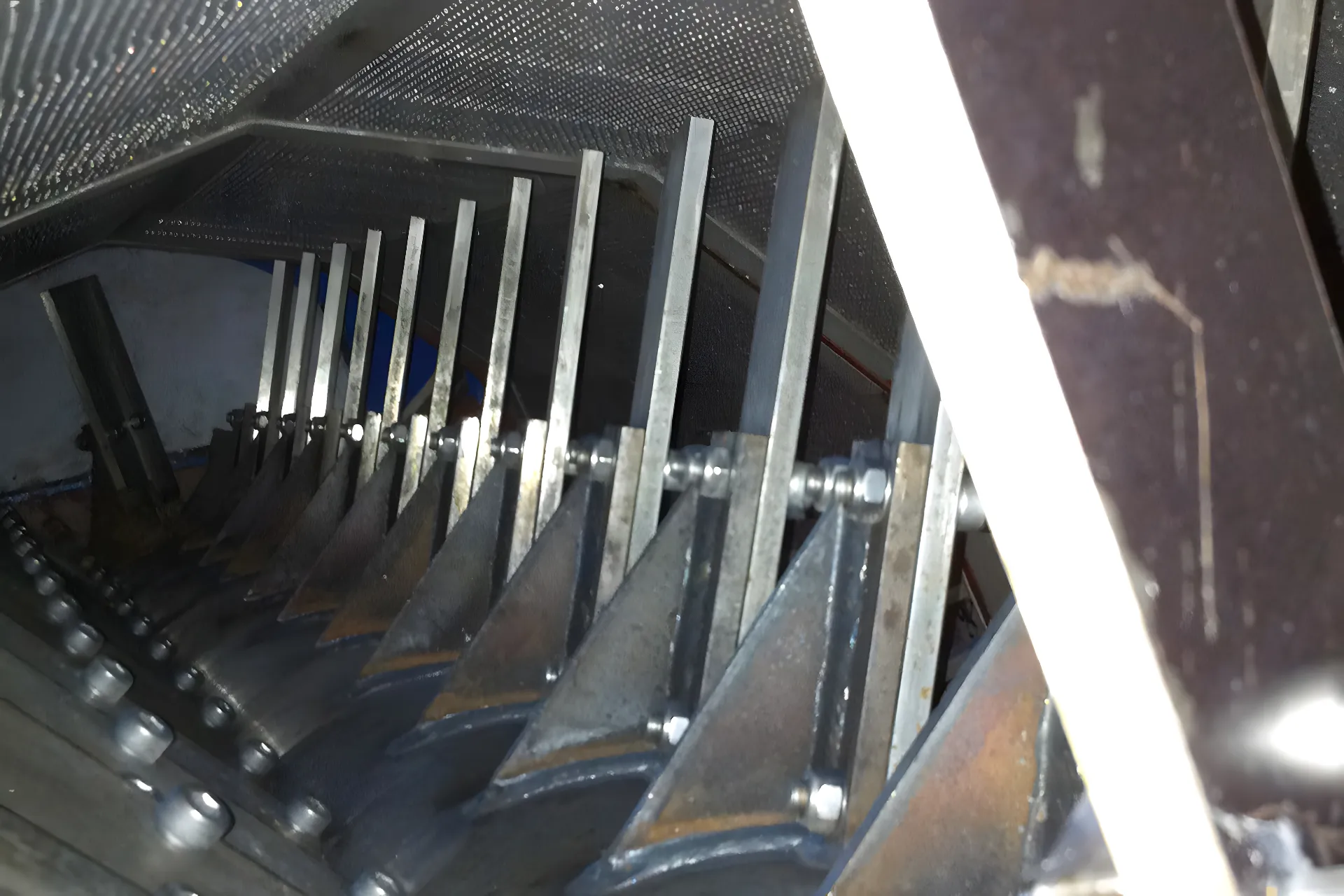
- The Rotor Takes Over: The material immediately encounters a high-speed rotor. This central component, fitted with angled paddles or lifters, begins to spin at several hundred RPM.
- Centrifugal Force in Action: As the rotor spins, it propels the plastic material outwards against a cylindrical screen or sieve. This powerful force is strong enough to overcome the adhesion holding water to the plastic’s surface. Water droplets are flung off the pellets and pass through the screen’s perforations.
- Clean Separation: The screen’s holes are large enough for water to escape but small enough to keep the plastic material contained within. The separated water is collected at the bottom of the unit and discharged through an outlet.
- Dry Material Moves Up and Out: The angled paddles on the rotor do more than just spin the material. They also convey it upwards along the screen. As the plastic moves up, any remaining moisture is continuously removed. Some designs may incorporate an air-knife at the exit to remove any final traces of water. The dry, finished material is then discharged from an outlet at the top, ready for the next stage of production.
Key Components That Make It Work
Understanding the main parts helps clarify the process:
- Rotor with Paddles: This is the heart of the machine. Its speed and the angle of its paddles are engineered to maximize dewatering efficiency for different types of plastic.
- Cylindrical Screen: This component is critical for separation. The size of its perforations is carefully selected based on the size of the plastic pellets being processed.
- Motor: The motor drives the rotor at the high speeds necessary to generate sufficient centrifugal force.
- Housing and Outlets: The housing safely contains the process, directing the separated water and the dry plastic to their respective outlets.
Our range of dewatering and drying equipment is built with these principles in mind, ensuring robust performance and reliability.
Why Choose This Method? The Main Advantages
Opting for a centrifugal dryer offers clear benefits for plastic processors.
- Speed: The process is extremely fast, allowing for a continuous flow of material without the bottlenecks associated with heat-based drying methods.
- Energy Efficiency: Since it relies on mechanical force rather than heat, energy consumption is significantly lower. This directly translates to reduced operational costs.
- Effectiveness: It is exceptionally good at removing surface moisture, often reducing moisture content to less than 1%. For deeper insights into industry standards, resources from organizations like the Plastics Industry Association are highly valuable.
In short, a centrifugal dryer provides a simple, robust, and cost-effective solution for preparing wet plastic for production or storage. It is a fundamental piece of equipment in any modern plastics recycling and processing facility.
Centrifugal Dryer Applications in Different Plastic Recycling Lines
Centrifugal dryers are versatile machines used across multiple types of plastic recycling operations. Each application has specific requirements for rotor speed, screen size, and throughput configuration:
PET bottle recycling: The most demanding application for centrifugal dryers. PET flakes require moisture below 1–2% to prevent IV degradation during extrusion. Horizontal centrifugal dryers with 1,000–1,400 RPM rotor speeds and 0.8–1.2 mm wedge-wire screens are the standard choice. Food-grade rPET production often requires a thermal dryer as a second stage to achieve below 0.5% moisture.
HDPE and PP flake recycling: These materials are less sensitive to moisture than PET, with acceptable extrusion moisture levels of 1–3%. Centrifugal dryers operating at moderate speeds (800–1,200 RPM) efficiently handle HDPE and PP flakes. Most HDPE/PP recycling lines can achieve adequate dryness with centrifugal dewatering alone, without thermal drying.
Plastic film recycling: Standard centrifugal dryers are generally not suitable for thin films, which wrap around the rotor. Instead, high-speed centrifugal dewatering machines designed specifically for film, or film squeezer dryers, are used. For mixed rigid-and-film streams, separate dewatering equipment for each material type is recommended.
Key Factors Affecting Centrifugal Dryer Performance
Several variables influence how effectively a centrifugal dryer removes moisture from plastic materials. Understanding these factors helps operators optimize their drying process:
- Rotor speed: Higher speeds generate greater centrifugal force and remove more moisture, but also increase energy consumption, noise, and wear. The optimal speed balances moisture removal against operational costs.
- Material size and shape: Uniformly sized flakes (10–16 mm) dewater more consistently than mixed-size material. Fines and dust tend to pass through screen openings, while oversized pieces may not dewater completely.
- Feed rate consistency: Surges in material feed create uneven loading on the rotor, reducing dewatering efficiency and causing vibration. A consistent feed rate, controlled by a screw conveyor or vibratory feeder, is essential.
- Screen condition: Worn, clogged, or damaged screens dramatically reduce drainage. Regular maintenance and inspection of screens is the single most important factor in maintaining consistent dryer performance.
- Upstream washing quality: Poorly washed material carrying labels, adhesives, or fine contaminants clogs screens faster and degrades dewatering performance. Investing in effective upstream washing directly improves centrifugal dryer efficiency.
