

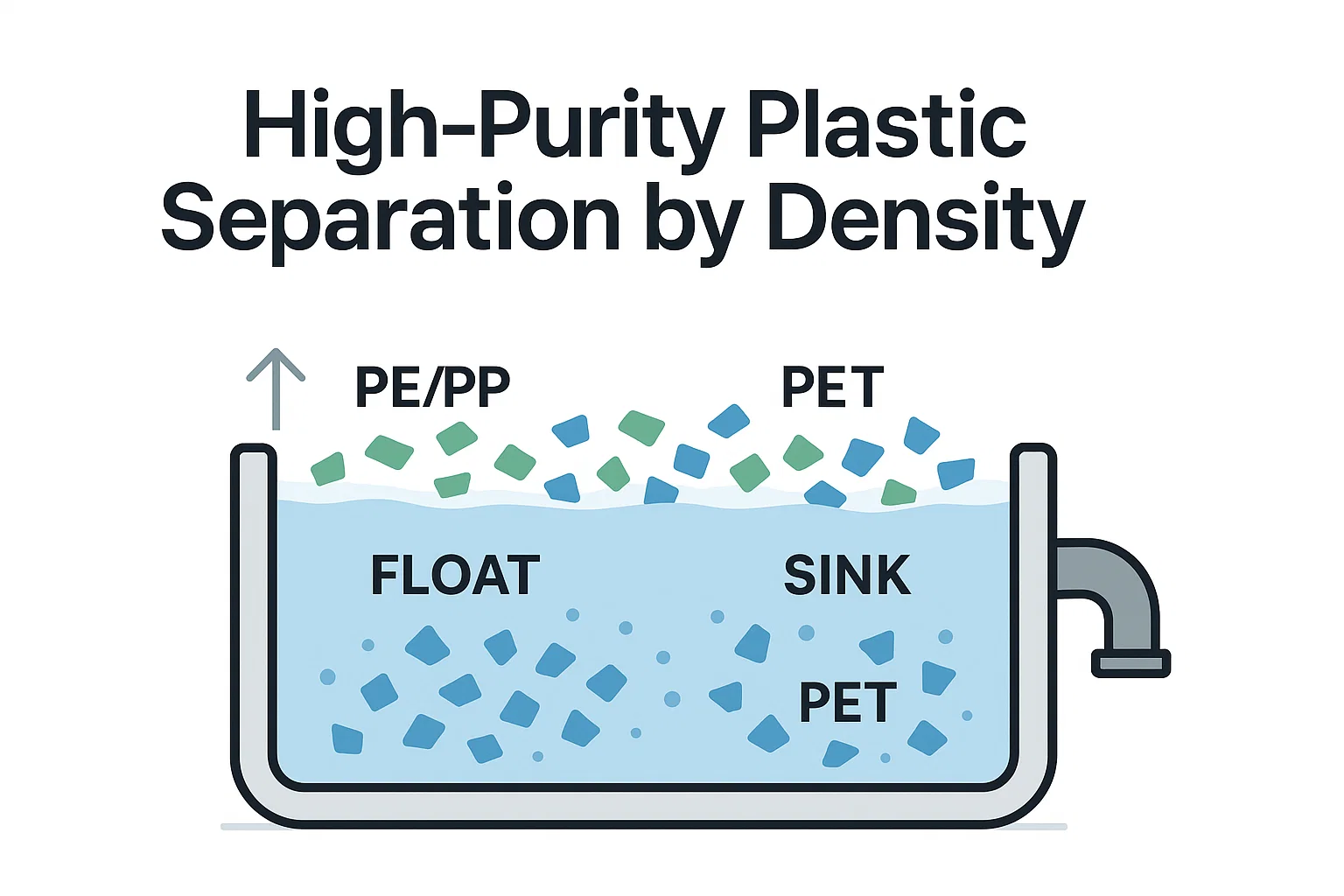
A merülő-felbukó szepítésű tartály a működő sűrűség alapján osztályozza a műanyag részecskéket egy kiválasztott folyadékban. Vízalapú rendszerben sok PP és PE részecske merül fel, míg a sűrűbb PET, PVC, fémek, üveg és szemcsék lefelé merülnek. A tartály hasznos lehet meghatározott anyagpárok esetén, de nem tud minden polimert azonosítani és nem garantálhatja a tisztaságot, ha nincs előző szepítés, mosás és folyamatirányítás.
Hogyan működik a süllyedő-felbukó szétválasztás
A felbukás határozza meg, hogy egy részecske felbukik vagy lefelé merül. Egy olyan részecske, amelynek működő sűrűsége kisebb a folyamatfolyadékénál, felbukni valószínűleg; egy olyan részecske, amelynek működő sűrűsége nagyobb, lefelé merülni valószínűleg. A víz a szilárd műanyagok és a filmmosási vonalak szokásos halmaza, bár a speciális alkalmazások esetén a folyadék sűrűsége megváltozhat.
Az „hatékony sűrűség” fontos, mert a valós hulladék nem laboratóriumi resin minta. Függelékek, címkék, zárt levegő, nedvesség, ételmaradék, kötött rétegek és a részecskék alakja megváltoztathatja a viselkedést. A víz hőfokának és a oldott anyagoknak is befolyásolhatja a folyamatot. Használjon anyagpróbákat és kimeneti teszteket, ne feltételezze, hogy egy resin-kód táblázat minden részecskét előrejelz.
Mely műanyagokat tud egy víztartály szepíteni?
| Material group | Typical behaviour in water | Important limitation |
|---|---|---|
| Unfilled PE and PP | Often float | Általában nem lehet egyszerű víztartály segítségével elkülöníteni őket. |
| PET and PVC | Often sink | Ők ugyanahhoz a lefelé merülő frakcióhoz tartozhatnak, és más szepítési módszerekre van szükség. |
| Metals, glass and grit | Usually sink | A nehéz anyag növelheti a kopást, és megbízhatóan ki kell adni. |
| Foamed plastics | May float because of cellular structure | Bevonatok, vízfelvétel és megszakadt sejtek megváltoztathatják a viselkedést. |
| Filled or composite plastics | Változó | Mineral filler or bonded layers may reverse the expected result. |
| Labels and closures | Depends on polymer, ink, adhesive and construction | Design and contamination determine whether they separate cleanly. |
A Plasztikai Újrahasznosítók Egyesülete tervezési útmutatást nyújt PET merev csomagolásra, természetes HDPE csomagolásra és PE flexible packaging. Ezek az erőforrások bemutatják, miért kell figyelembe venni a csatlakozókat, címkéket, ragasztókat és több rétegű szerkezeteket a fő polimerrel együtt.
Main tank zones and their functions
A szétválasztó tartóknak nedvesíteniük kell az anyagot, elegendő tartózkodási időt kell biztosítaniuk, és el kell távolítaniuk a lebegő és süllyedő frakciókat anélkül, hogy újrakevernék őket. Az exact design változhat, de a folyamat általában a következő funkciókat tartalmazza.
- Táplálás: szétosztja a anyagot a tartályban és megakadályozza, hogy egy sűrű dugó kerülje el a szétválasztást.
- Áztatás és keverés: kiszabadítja a zárt levegőt és a felületi szennyeződést anélkül, hogy mindkét arányt ugyanabba a kimenetbe juttatná.
- Létezési zóna: ad időt a részecskéknek, hogy emelkedjenek vagy leüljenek representative folyási viszonyok között.
- Lebegő anyag eltávolítása: lapátok, csavargépek vagy szűrők mozgatják a lebegő arányt a víztelenítés felé.
- Aljdiszcharge: aljcsavar vagy szállítóberendezés távolítja el a nehéz anyagot, mielőtt összegyűlné és zavarja a tartályt.
- Vízgazdálkodás: szűrők, leülepedés vagy szűrés szabályozza a��ült anyagokat és megőrzi a folyadékot a szétválasztási feladat megfelelő állapotában.
A Energycle eszközoldala süllyedő-felbukkantó szétválasztó tartály lefedezze a elérhető gépbeállításokat. Ez a cikk a folyamatdöntésekre és a hibakeresésre összpontosít.
Készítsük elő az anyagot a tartály előtt
Egyenletes részecskeméret javítja az áztatást, a létezési zónát és a kimenetet. Nagyobb darabok levegőt zárolhatnak vagy hídhatnak; az túl finom anyagok felfüggeszthetők és növelhetik a víztisztítási terhet. A granulátor szűrő, késállapot és táplálás szabályozása tehát befolyásolja a szétválasztást, még akkor is, ha azok az áramlás előtt helyezkednek el.
Előmosás és súrlódási mosás eltávolítsa a szabaduló szennyeződést, olajokat, papírt és ragasztóanyagot, ahol zavarják a sűrűség viselkedését. Egy tartály nem helyettesíti a mosást. A fémek és veszélyes tárgyakat eltávolítsuk a méretcsökkentés előtt, ha lehetséges, hogy védjük mind a vágóberendezést, mind a tartályrendszert.
Áramlás, keverés és létezési idő beállítása
Nagy áramlás elviszi a lebegő szennyeződéseket a lebegő kimenetbe, míg a kis áramlás lehetővé teszi az anyag összegyűlését. Excesszív keverés újrakeverheti az arányokat vagy megtartja a sűrű finom anyagokat felfüggesztve. Elégtelen keverés hagyhatja, hogy a részecskék összenőjenek vagy hogy a zárt levegő lehetővé teszi, hogy a sűrű darabok ideiglenesen lebegjenek.
A rendszert representative anyaggal állítsuk be és mintázzuk mindkét kimenetet. Rendszeresen állítsuk be az adagolási sebességet, a vízállást, a lapát vagy csavar sebességét, az aljdischarge-t és a visszaforgatást. Egy olyan változás, amely javítja az egyik arányt, csökkentheti a másik arány visszaállítását, így nyomon kövessük a tömeg egyensúlyát is, valamint a tisztaságot.
Mérjük a tisztaságot és a visszaállítást külön-külön
A tisztaság leírja, hogy mennyi kívánt anyag található egy kimeneti frakcióban. A helyreállítás leírja, hogy mennyi kívánt anyag érkezik a folyamatba, és eléri azt a frakciót. Egy tartó nagyon tiszta lebegő frakciót állíthat elő, ha túl sok hasznos PE-t utasít el, vagy magas helyreállítást érhet el, ha túl sok szennyeződést visz tovább.
Meghatározott mintavételezési módszert kell alkalmazni, száraz alapokon, ahol megfelelő, és egy futási időtartamot kell biztosítani. Jelentse a beviteli kompozíciót, a folyadékok állapotát, a kapacitást és a részecskeméret tartományt az eredménnyel együtt. Az ilyen feltételek nélkül kialakított univerzális „tiszta” szám nem hasznos berendezési garancia.
Common separation problems
| Tünet | Possible causes | Csekkek |
|---|---|---|
| Heavy contamination in float output | Trapped air, excessive flow, bonded structures, overfeeding or poor wetting | Csökkentse a beviteli hullámokat, vizsgálja meg a keverést és osztályozza a szennyeződéseket anyag és forma szerint. |
| Usable PE or PP in sink output | Töltőanyagok, csatlakoztatott sűrű komponensek, vízkúszás vagy az aljban elkapcsolt anyagok | Vizsgálja meg az elemeket, tesztelje az hatékony tömítettséget és ellenőrizze a kiadási működést. |
| Material accumulation | Inadequate sink discharge, blocked screen, poor geometry or oversized feed | Biztonságosan izolálja, derítse ki az okot és ellenőrizze a felső méretellenőrzést. |
| Unstable separation | Variable feed, water level, solids, temperature or recirculation flow | Kövesse ezeket a változókat és különítse el a nyersanyagváltozásokat a berendezési hibáktól. |
| Excess carry-over water | Skimmer setting, discharge geometry or insufficient downstream dewatering | Egyensúlyozza a következő víztelenítési szakasz anyag eltávolítását. |
Applications in PET and HDPE bottle recycling
PET palackvonalon a PET darabok általában a süllyedő fractionhoz kerülnek, míg sok PE vagy PP fedél és kör süllyed. PVC és más sűrű műanyagok a PET-vel együtt is süllyedhetnek, ezért a palack és darab szortírozás továbbra is fontos. Lásd a teljes PET palack újrahasznosítási folyamat and our article on PVC szennyezés a PET újrahasznosításban.
HDPE palackvonalon a kívánt HDPE általában süllyed, míg a sűrűbb szennyeződések süllyednek. A PP a HDPE-vel együtt is süllyedhet, és forrásellenőrzést vagy más szétválasztási módot igényelhet, ha a vevő korlátozza azt. A módosított HDPE recycling process guide leírja, hogyan illeszkedik a tank a teljes vonalba.
Biztonság és karbantartás
Guard paddles, screws, chains and discharge equipment. Before cleaning a jam or entering any hazardous area, follow the site’s energy-isolation and confined-space assessment procedures as applicable. OSHA’s lockout/tagout guidance provides a baseline for hazardous-energy control.
Ellenőrizze a csapágyakat, zárakat, láncokat, lapátokat, csavart, aljvédőt, szűrőket és vízvezetékeket. Helyezze el az elszállt anyagot, mielőtt megváltoztatná a hatékony tank térfogatát vagy károsítaná a kiadást. A karbantartási gyakoriság követnie kell a bejutó szennyeződést, az üzemeltetési naplókat és a telepített gép műszaki útmutatóját.
Gyakran ismételt kérdések
Még választja el a szink-float tartály a PE-t a PP-től?
Nem megbízhatóan egyszerű vízrendszerben, mert mindkettő gyakran úszik. Egy szükséges PE/PP szétválasztáshoz forrásirányítást vagy más validált szortírozási módszert igényel.
Mehet-e a PVC-t a PET-től a vízmentesítéses szétválasztással?
Nem megbízhatóan, mert mindkettő gyakran süllyed vízben. A PVC irányítása során a műanyag vagy darabok szűrését és minőségellenőrzését kell elvégezni a felolvasztás előtt.
A só hozzáadása minden szétválasztást javítja-e?
A folyadéksűrűség változtatása segíthet egy meghatározott anyagsort, de hozzáadja a korrózió, megfigyelés, öblítés, hulladékvíz és működési megfontolásokat. Tesztelje az aktuális bevitelt a közeg megváltoztatása előtt.
Test both output fractions
Küldje meg az Energycle képviselőjének a műanyagreciklás gépek anyagait, a részecskeméret adatokat, a beviteli összetételt, valamint a szükséges emelkedő és süllyedő specifikációkat. A megfelelő konfiguráció kialakítása kísérleteken és mérhető tömeg egyensúlyon kell alapuljon, nem pedig kizárólag a polimerön.
