

Automated Crumb-to-Powder Processing
Automatic Tire Rubber Powder Grinding Line
Convert clean, pre-sized tire rubber crumb into controlled fine powder with PLC-coordinated feeding, cooled disc grinding, screening, oversize recirculation, and enclosed collection.
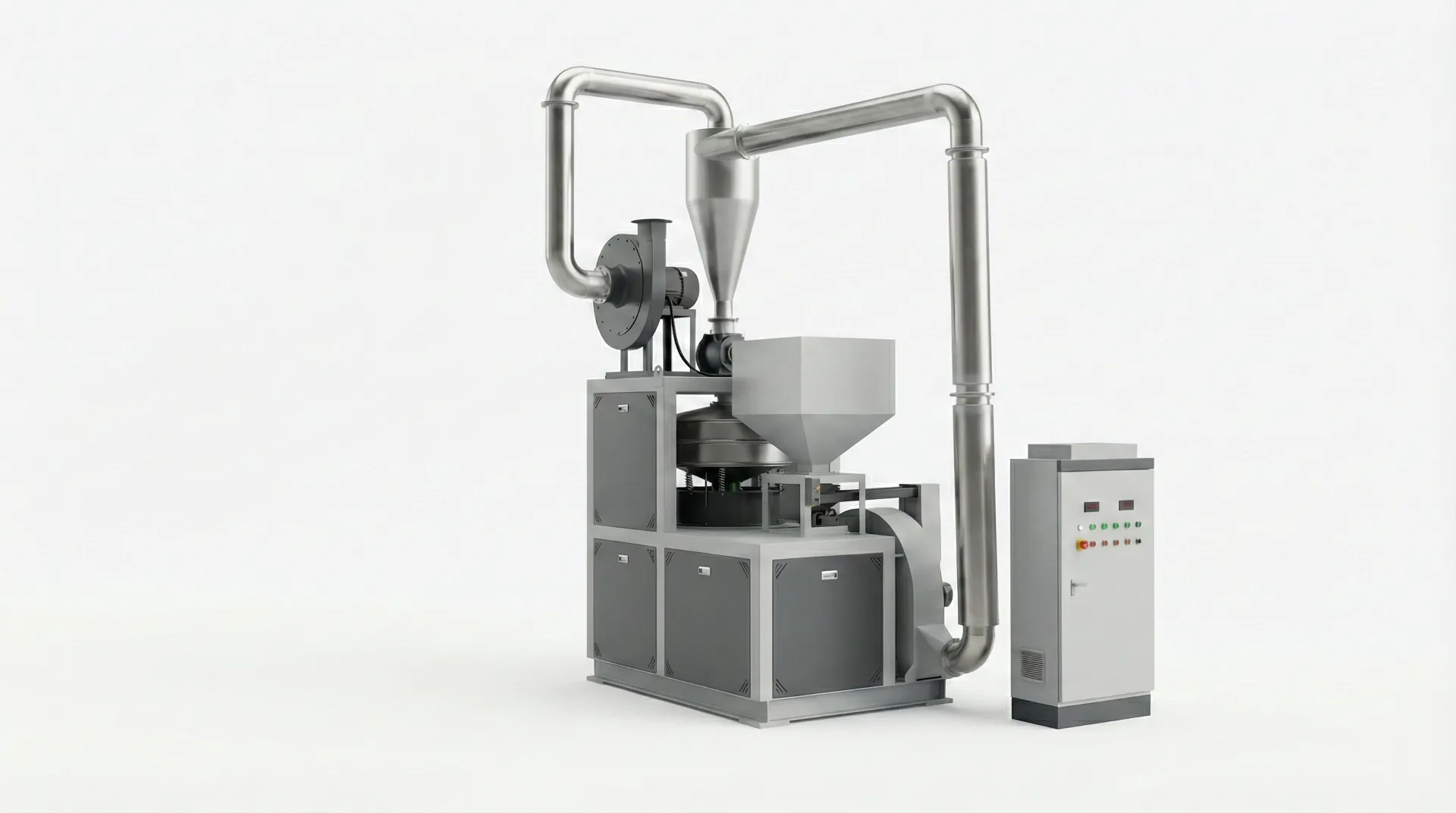
Automated Powder-Stage Line, Not a Standalone Grinder
This page covers a coordinated fine-powder line for prepared tire crumb. If you only need the grinding machine, see the standalone tire rubber pulverizing grinder. If your feed starts as whole tires, plan the upstream shredding, steel separation, granulation, and fiber removal stages through the complete tire recycling machine and line.
PLC-Coordinated Workflow
From Clean Tire Crumb to Controlled Rubber Powder
One responsive process sequence shows the complete powder-stage workflow without duplicating desktop and mobile content.
Buffering & Metered Feeding
A hopper and controlled feeder deliver clean, consistently sized rubber crumb to the mill without sudden load spikes.
Cooled Disc Grinding
Wear-resistant rotor and stator discs reduce the crumb while air and water-assisted cooling help control friction heat and rubber smearing.
Screening & Regrind Return
Classification separates on-spec powder from oversize material. Oversize returns automatically for another grinding pass.
Collection & Packaging
Cyclone and dust-control modules separate conveyed powder before discharge to bags, bulk bags, bins, or a downstream silo.
Integrated Equipment
Modules in the Automatic Rubber Powder Line
The final equipment list is selected around incoming crumb cleanliness, target mesh, expected throughput, collection method, and site utilities.
Buffer Hopper & Feeder
Balances upstream supply and meters crumb into the pulverizer at a controlled rate.
PLC Load Control
Uses motor-load feedback to adjust feed rate and reduce avoidable overload events.
Grinding & Cooling
Coordinates the disc mill, airflow, and cooling circuit for more stable powder behavior.
Classification Loop
Returns oversize rubber automatically instead of mixing it into the finished powder.
Dust-Controlled Conveying
Uses enclosed pneumatic conveying, cyclone separation, and filtration to manage fine rubber dust.
Flexible Final Discharge
Routes qualified powder to bagging, bulk-bag filling, bins, or an existing storage system.
Feed Requirements
Prepared Tire Rubber Crumb Only
Fine grinding is the final size-reduction stage. Correct upstream preparation protects the discs, stabilizes mesh output, and reduces contamination risk.
Consistent Feed Size
Prepared crumb is commonly 6–8 mm or smaller; the acceptable size is confirmed against the selected mill.
Steel Removed
Bead wire, liberated steel, and tramp metal must be removed upstream before fine grinding.
Fiber Reduced
Textile fiber should be separated to the cleanliness level required by the target powder market.
Sample Tested
Final throughput, temperature, and mesh performance should be confirmed with representative feedstock.
Choose the Correct Scope
Automatic Line vs. Standalone Rubber Pulverizer
Both use fine-grinding equipment, but the commercial scope and automation boundary are different.
| Decision 요인 | Automatic Powder Grinding Line | Standalone Pulverizer |
|---|---|---|
| Included Scope | Feeding, grinding, cooling, conveying, classification, recirculation, and collection | Core fine-grinding machine with selected auxiliaries |
| 제어 | PLC coordination across the powder-stage line | Local machine control |
| 최적의 선택 | Continuous production requiring stable mesh and lower operator handling | Existing plants adding or replacing one grinding machine |
| Engineering Work | Layout, utilities, material flow, dust control, and discharge integration | Machine sizing and connection points |
Preliminary Configuration
Technical Configuration
These are selection parameters rather than guaranteed model values. Final data is confirmed after reviewing feedstock and powder requirements.
| 권장 원료 | Clean, pre-sized tire rubber crumb with steel removed and fiber reduced |
|---|---|
| Typical Incoming Size | 6–8 mm or smaller, subject to mill selection |
| Grinding Route | Ambient disc pulverizing with air and water-assisted cooling |
| Common Powder Targets | 20 / 40 / 60 / 80 mesh; custom targets require testing |
| 오토메이션 | PLC feed coordination, motor-load feedback, alarms, and safety interlocks |
| Classification | Vibrating screen or classifier with automatic oversize return |
| 수집 | Cyclone, filtration, and bag, bulk-bag, bin, or silo discharge options |
| Capacity & Power | Model, target mesh, feed cleanliness, and cooling dependent; confirmed after sample evaluation |
Powder-Stage Equipment
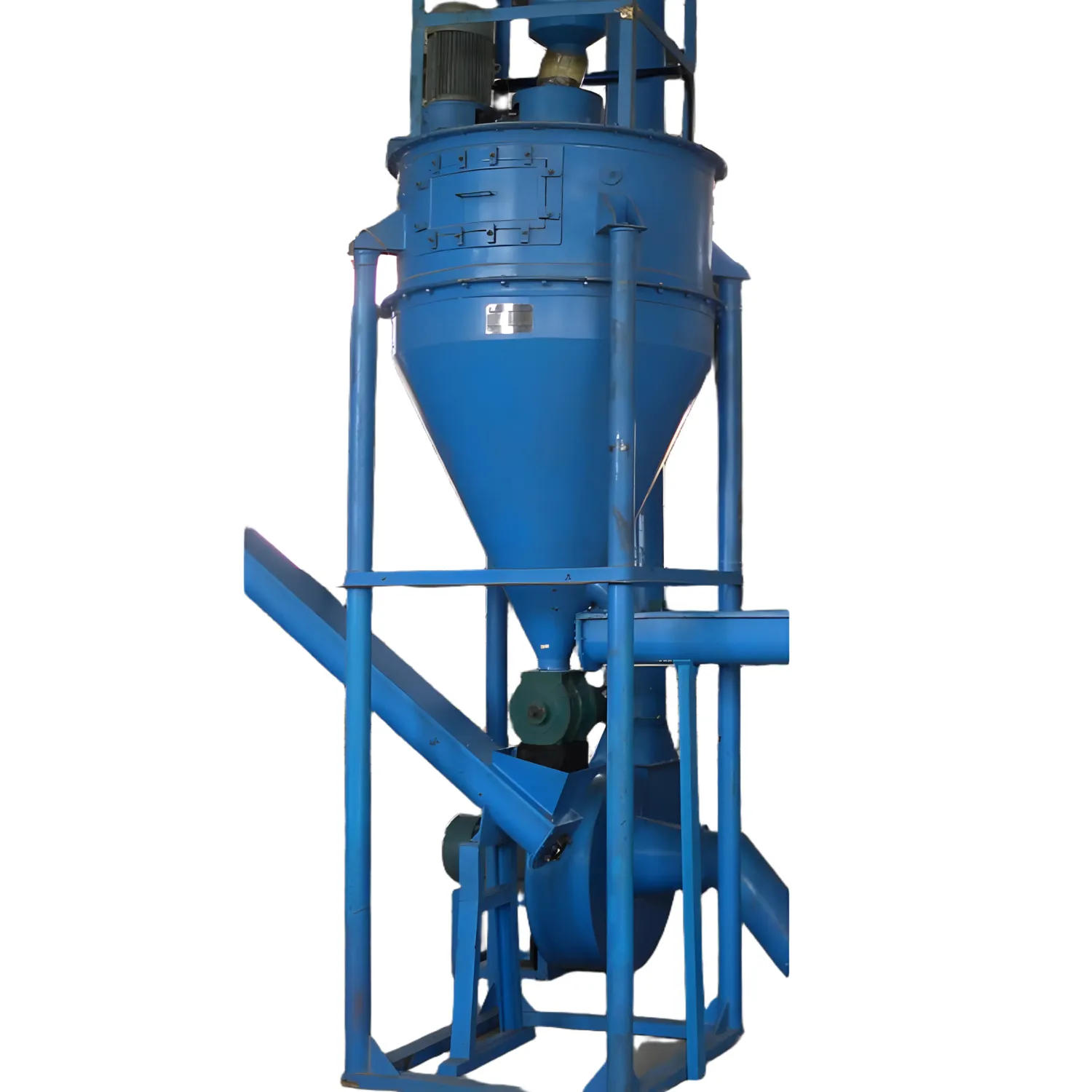
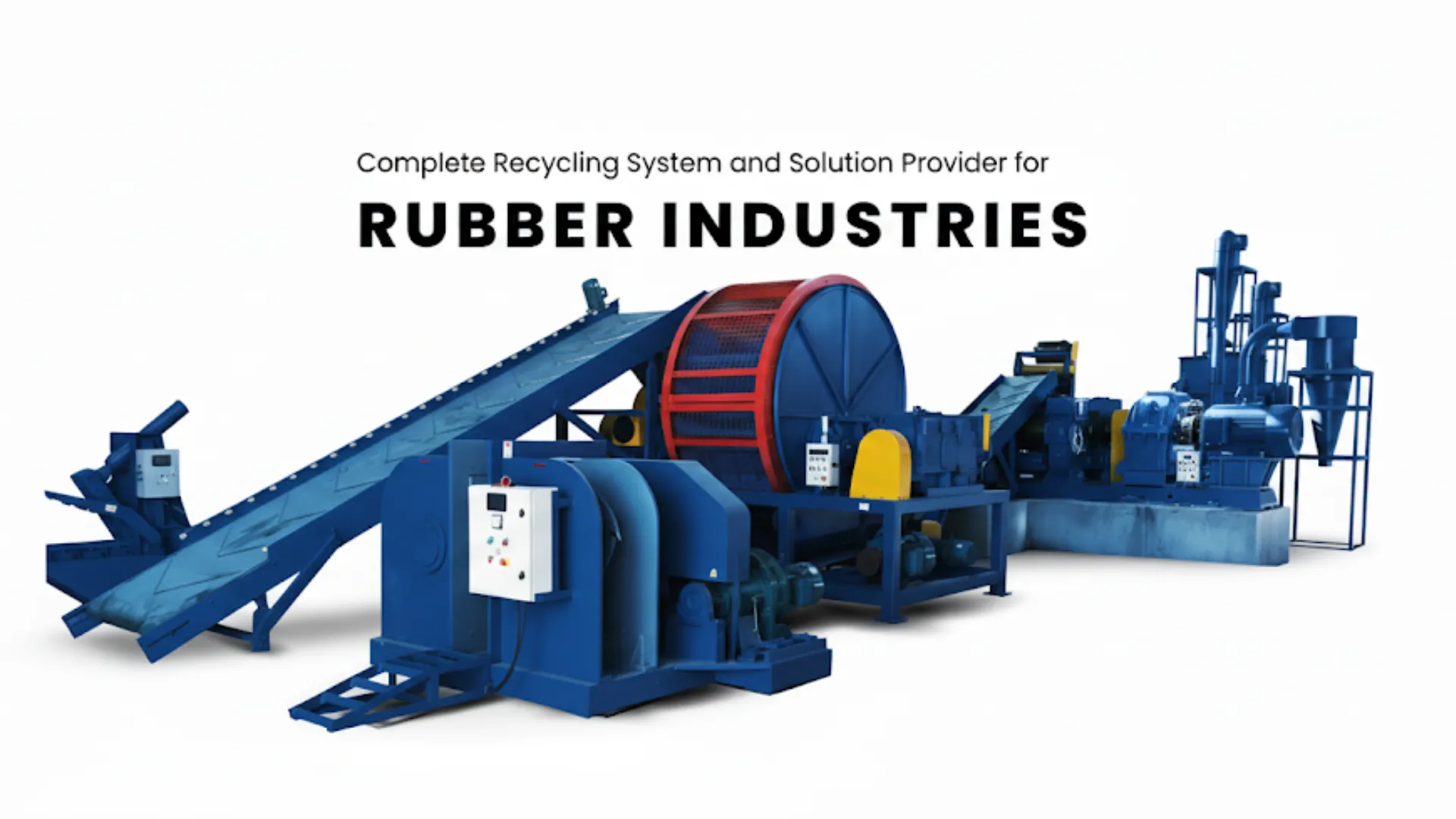
Grinding, Classification & Collection Modules
Representative equipment used in an automated tire rubber powder line.
Questions & Answers
Automatic Rubber Powder Line FAQ
No. This is a powder-stage line for clean, pre-sized tire rubber crumb. Whole tires require upstream debeading or bead-wire handling, shredding, steel separation, granulation, and fiber removal.
The pulverizing grinder page covers the standalone grinding machine. This page covers a coordinated line with feeding, cooling, conveying, screening, oversize recirculation, dust control, and final collection.
Common targets include 20, 40, 60, and 80 mesh. Achievable fineness and throughput depend on feed cleanliness, rubber composition, disc configuration, cooling, and classification settings.
Disc grinding generates friction heat. Controlled air and water-assisted cooling help reduce smearing, agglomeration, unstable flow, and excessive temperature at the mill.
No. Automation reduces continuous manual feeding and handling, but operators must still inspect feed supply, cooling, wear parts, dust collection, alarms, and finished powder quality.
Provide the incoming crumb size, steel and fiber content, target mesh, required hourly output, available utilities, collection method, site layout, and a representative material sample when possible.
Request an Automatic Rubber Powder Line Proposal
Share your incoming crumb condition, target mesh, required throughput, available utilities, and discharge method. We will confirm the appropriate equipment scope and layout.