

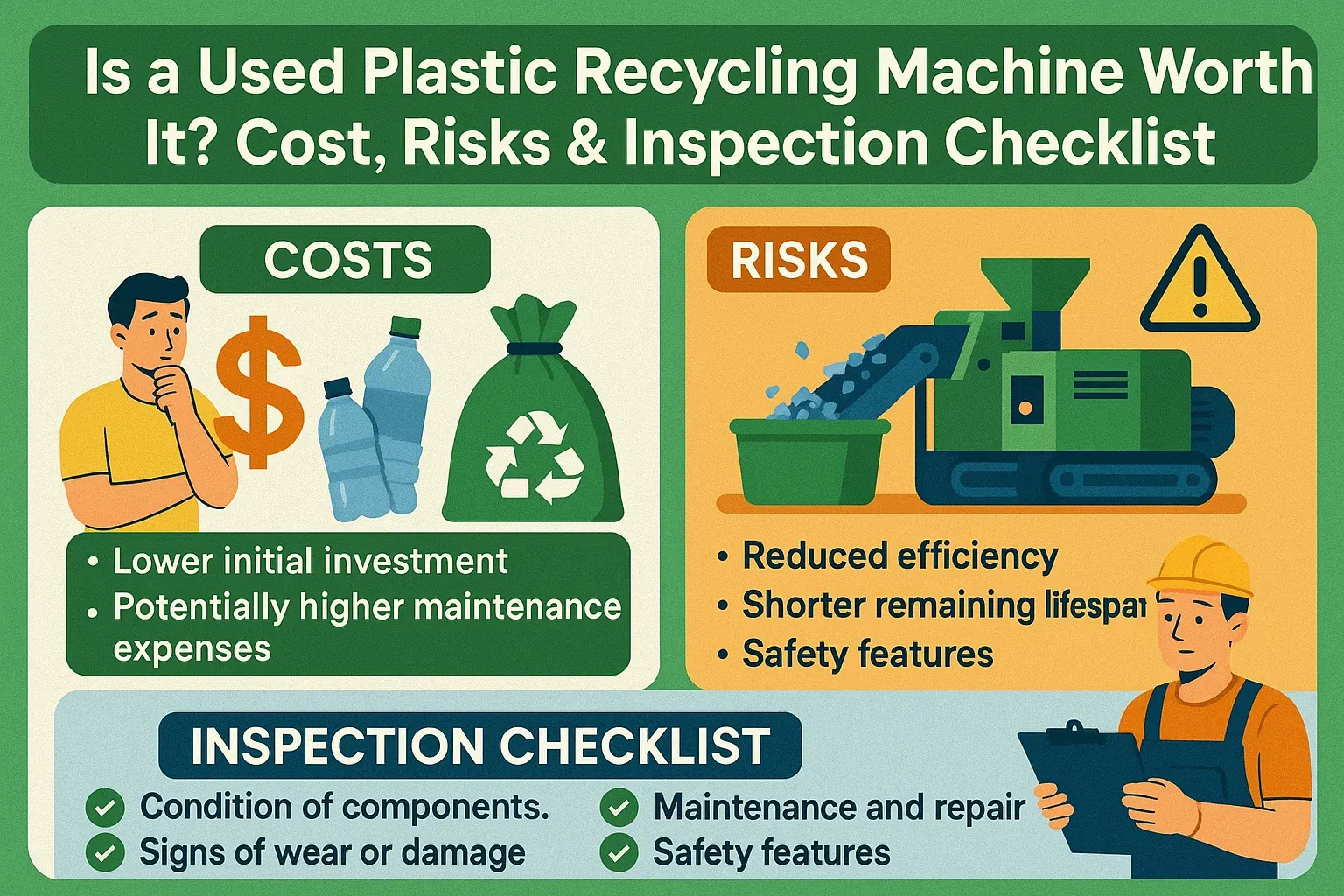
사용된 플라스틱 재활용 기계는 단순히 할인된 구매 대상이 아니라 공학적 자산으로 평가되어야 합니다. 외관상 프레임이 좋아 보일 수 있지만, 벨트박스, 스크류와 바렐, 루터 베어링, 제어판 또는 불완전한 안전 시스템 내에 비싼 위험 요소가 있을 수 있습니다. 이 검사 가이드는 구매자가 가격에 동의하기 전 또는 운송을 조정하기 전에 수집해야 할 증거에 중점을 둡니다.
두 번째 상용 장비가 적합한 경우, 판매자 채널 및 계약 조건에 대한 더 넓은 상업적 결정을 내리는 데는 새로운 used plastic recycling machine buyer’s guide를 사용하세요. 아래의 체크리스트는 의도적으로 좁게 설정되었습니다: 기술 팀이 한 가지 식별된 기계를 검사하고 수용 테스트를 정의하는 데 도움을 줍니다.
방문 전: 기계 식별을 설정하십시오
Ask the seller for clear photographs of the nameplate, serial number, electrical panel and all supplied modules. Confirm the manufacturer, model, year, original function, current location and whether the machine is still connected to utilities. A line advertised as “complete” may exclude conveyors, water tanks, pumps, controls, dies, screens or safety guarding that are essential to operation.
Request these records before travel:
- Original quotation or equipment specification
- Operation, maintenance and parts manuals
- Electrical drawings, P&ID and PLC/HMI backup where applicable
- Service logs, oil records and major-repair invoices
- 운영 시간이나 생산 기록 및 그 확인 방법
- 원래 설치 시 필요한 안전 문서 및 선언서
- A list of included spares, tooling, screens, blades, dies and accessories
사용된 기계가 새로운 현장에서 자동으로 준수 문서를 만족시키는 것을 가정하지 마세요. 이동, 개조, 새로운 공급 시스템 또는 다른 장비와의 통합은 위험 평가와 소유자나 통합자의 의무를 변경할 수 있습니다.
First inspection: condition before power-up
A qualified mechanical and electrical team should inspect the machine in a safe, isolated condition. Follow the site’s energy-control procedure and do not remove guards or open panels unless the equipment has been made safe. OSHA’s control of hazardous energy guidance 서비스가 예상치 못한 전원 공급을 방지해야 하는 이유를 설명합니다; 현지 규칙과 기계별 위험 평가가 우선합니다.
Structure and installation history
- 프레임, 용접 점, 설치 점에 균열, 변형, 부식 및 기록되지 않은 수리가 있는지 확인하세요.
- 충격, 화재, 침수, 장기간 실내 보관 또는 화학 노출의 증거를 찾아보세요.
- 설치된 보호 장치, 플랫폼 및 접근 문을 설계도와 사진과 비교하세요.
- Record missing fasteners, covers, sensors, lubrication lines and support steel.
- Confirm lifting points and the seller’s plan for disconnection, rigging and loading.
Motors, gearboxes and drives
- 모든 모터와 기어박스 이름판을 기록하세요; 전압, 주파수, 단상 및 평가 전류를 확인하세요.
- Inspect mounts, couplings, belts, guards, seals and lubrication condition.
- 예비오일유출태극냄새변색손상된냉각핀비정상적인전선점검하세요
- 오일 분석, 절연 테스트 또는 진동 기록을 요청하되, 조용한 비로드 운전에 의존하지 마세요.
- 대체 베어링, 실리콘, 벨트 및 변속기 부품이 여전히 사용 가능하다는 것을 확인하세요.
Electrical and controls
- 구성 요소 레이블을 전기도면과 비교하고 문서화되지 않은 변경 사항을 기록하세요.
- 열 손상, 오염, 풀린 터미널 및 고대형 PLC 또는 HMI 하드웨어 여부를 검사하세요.
- PLC 프로그램, 비밀번호, 복구에 필요한 라이선스 및 백업에 대한 접근을 확인하세요.
- 긴급 정지, 문 상호 차단 및 보호 장치가 설치되어 있는지 확인하십시오; 기능 검증은 제어된 시험에서 수행되어야 합니다.
- Identify components that will not match the destination plant’s supply or standards.
Machine-specific wear points
셔터와 그란ولا이저
로터 및 정지 날을 치킨, 균열, 불균형 날칼 및 남은 조정 범위를 확인하십시오. 로터, 축, 스크린 지지대, 스크린 구멍, 베어링 및 밀봉을 확인하십시오. 회전 부분과 고정 부분 간의 접촉 증거는 정렬 또는 베어링 문제를 나타낼 수 있습니다. 도면이 있는 경우 원래 크기에 구성 요소를 측정하십시오; 외관만으로는 남은 수명을 확정할 수 없습니다.
인증된 절차와 올바른 도구로만 회전하십시오. 날 작업 시 로터가 어떻게 잠겨 있는지 및 무거운 스크린이나 하퍼가 어떻게 들어올려지는지 확인하십시오. 그란ولا이저 선택 기준선을 위해 기계를 다음과 비교하십시오 플라스틱 granulator 가이드.
Extruders and pelletizing systems
스크류와 바렐의 손상은 출력, 녹화 안정성 및 에너지 사용에 큰 영향을 미칠 수 있습니다. 이전 지름 및 Clearance 측정치, 재생설치 이력 및 이전에 처리된 레지나 필러를 요청하세요. 변속기 상태, 히터, 테르모쿼터, 냉각 회로, 밸브 시스템, 필터링, 디 플레이트, 펠릿제이어 및 모든 포함된 제어를 확인하세요.
부하 없는 짧은 회전만으로는 녹화 성능을 보여줄 수 없습니다. 재료 시험은 합의된 원료를 사용하고 출력, 전류, 온도, 녹화 압력, 공기 및 펠릿 품질의 안정 상태 측정을 포함해야 합니다.
Washing and drying lines
탱크, 용접 점, 스크루, 축, 펌프, 밀봉, 노즐 및 스크린을 녹슬기 및 닳음을 확인하십시오. 포함된 물 처리 장비, 파이프, 열원 및 제어를 확인하십시오. 중력 건조기에서는 로터, 바스켓이나 스크린, 베어링, 접근 문 및 진동 기록을 확인하십시오. 열 건조기에서는 팬, 튜브, 히터, 필터 및 화재 보호 조치를 검사하십시오.
사용된 씻기 라인은 공장의 균형 부품이 부족하기 때문에 비싸게 됩니다. 공급된 모듈을 완전한 것과 비교하여 구매 전에 공간과 가격을 계산하세요. 재활용 세척 시스템 구성하십시오.
Run a representative material trial
기계가 안전하게 운영될 수 있는지 확인할 수 있다면, 목적에 맞는 재료로 테스트하세요. 판매자가 선택한 깨끗한 공장 스쿨프만이 아닌 것을 선택하세요. 배치 질량, 오염, 입자 크기, 습도 및 테스트 지속 시간을 사전에 정의하세요. 판매자와 구매자는 샘플과 읽기 방법에 대해 동의해야 합니다.
Record at least:
- Net acceptable output over a stable period
- Normal and peak motor current
- 기계와 관련된 온도, 압력, 진동 및 유출
- Stops, alarms, overloads and manual interventions
- Output particle size, moisture, contamination or pellet-quality result
- 안전하게 개방, 스크린 또는 날짜에 접근하고 청소하는 데 필요한 시간
Test safety functions under a controlled procedure. A seller’s statement that an interlock “worked last time” is not verification. If a live test is impossible, price the machine as an unverified asset and make inspection, repair and commissioning conditions explicit in the contract.
Build a landed-and-running cost
Do not compare only the seller’s price with a new-machine quotation. Calculate the cost to make the used machine safe, complete and productive at the destination:
- 점검, 퇴역, 청소 및 보존
- 장비 설치, 포장, 운송, 보험, 관세 및 저장
- 기초, 공공 시설, 플랫폼, 파이프 및 보호 장치
- 전기 변환, 제어 통합 및 소프트웨어 복구
- 와이어 부품, 알려진 수리 및 숨겨진 결함에 대한 예비
- 취역, 운영자 훈련 및 초기 생산 손실
- 예상 에너지, 노동 및 유지보수
사용된 기계는 여전히 더 나은 구매가 될 수 있지만, 이 사이트 특정 계산 없이는 일반적인 절감 비율이나 상환 기간은 신뢰할 수 없습니다. 협상 전에 가장 큰 수리 항목에 대한 단정한 가격을 확보하세요.
점검 결과를 보존하는 계약 조건
점검된 장비 목록, 사진 및 시리얼 번호를 구매 계약서에 첨부하세요. 포함된 액세서리, 제어 장치, 설명서 및 부품을 명시하세요. 분해 시 합의된 상태를 정의하고, 설치 후 재검토할 수 있는 손상 책임자 및 수용 기준을 정의하세요.
보증 또는 수리 의무에 대한 경우, 기간, 보장된 부품, 노동, 여행, 운송 및 기계가 합의된 시험을 거치지 못한 경우의 보완 조치를 명시하세요. 법적 조건은 관할 구역에 따라 다릅니다 따라서 거래에 대한 전문적인 상업적 및 법적 조언을 받으세요.
구매를 중단하는 이유가 되는 경고 신호
- 시리얼판, 문서 또는 소유권이 확인되지 않습니다.
- 판매자는 설명 없이 안전한 점검이나 합리적인 재료 시험을 거부합니다.
- 필수 보호 장치, 상호 차단 장치 또는 긴급 기능이 없으며, 재설치가 설계되지 않았습니다.
- PLC 접근, 독점 소프트웨어 또는 중요한 부품이 사용할 수 없습니다.
- cracks, major weld repairs, fire or water damage lack a documented engineering assessment.
- 최종 공급 범위는 사진과 설계와 일치하지 않습니다.
사용된 기계 점검 결정
결정은 확인된 상태, 목적 재료에 적합, 재설치 범위 및 도착 및 운영 비용에 기반해야 합니다. 잘 기록된 기계 장비와 사용 가능한 부품이 있으면 경험 있는 공장에서 관리할 수 있는 프로젝트일 수 있습니다. 문서화되지 않은 라인이 오래된 제어 장치와 안전한 생산 시험 없이도 저렴한 구매 가격에도 불구하고 비용이 많이 들 수 있습니다.
검사를 통해 서면으로의 결함 목록, 수리 예산 및 수용 시험을 작성하십시오. 증거가 불충분하다면, 가정으로 결함을 메우기보다는 불확실성을 비용과 위험으로 처리하십시오.
Frequently asked questions
사용된 플라스틱 재활용 기계를 사는 가치가 있을까요?
그 상태가 문서화되고, 목표 원료에 적합하며, 수리와 통합 후에도 경쟁력이 유지되는 경우 가능합니다. 단순히 구매 가격만으로는 결정이 되지 않습니다.
What is the most important used-equipment test?
합의된 조건 하의 대표적인 재료 시험은 가장 강력한 성능 검사입니다. 넷 아웃�puta, 전류, 온도나 압력, 중지 및 필요한 출력 품질 측정치를 기록해야 합니다.
판매자가 기계를 운영할 수 없다면 어떻게 될까요?
성능과 상태는 확인되지 않음을 유의하십시오. 가능한 한 독립적인 검사를 받고, 수리 및 공사 위험을 평가하고, 계약서에 문서화, 부족한 부품 및 수용 보완 방법을 명확히 하십시오.
