

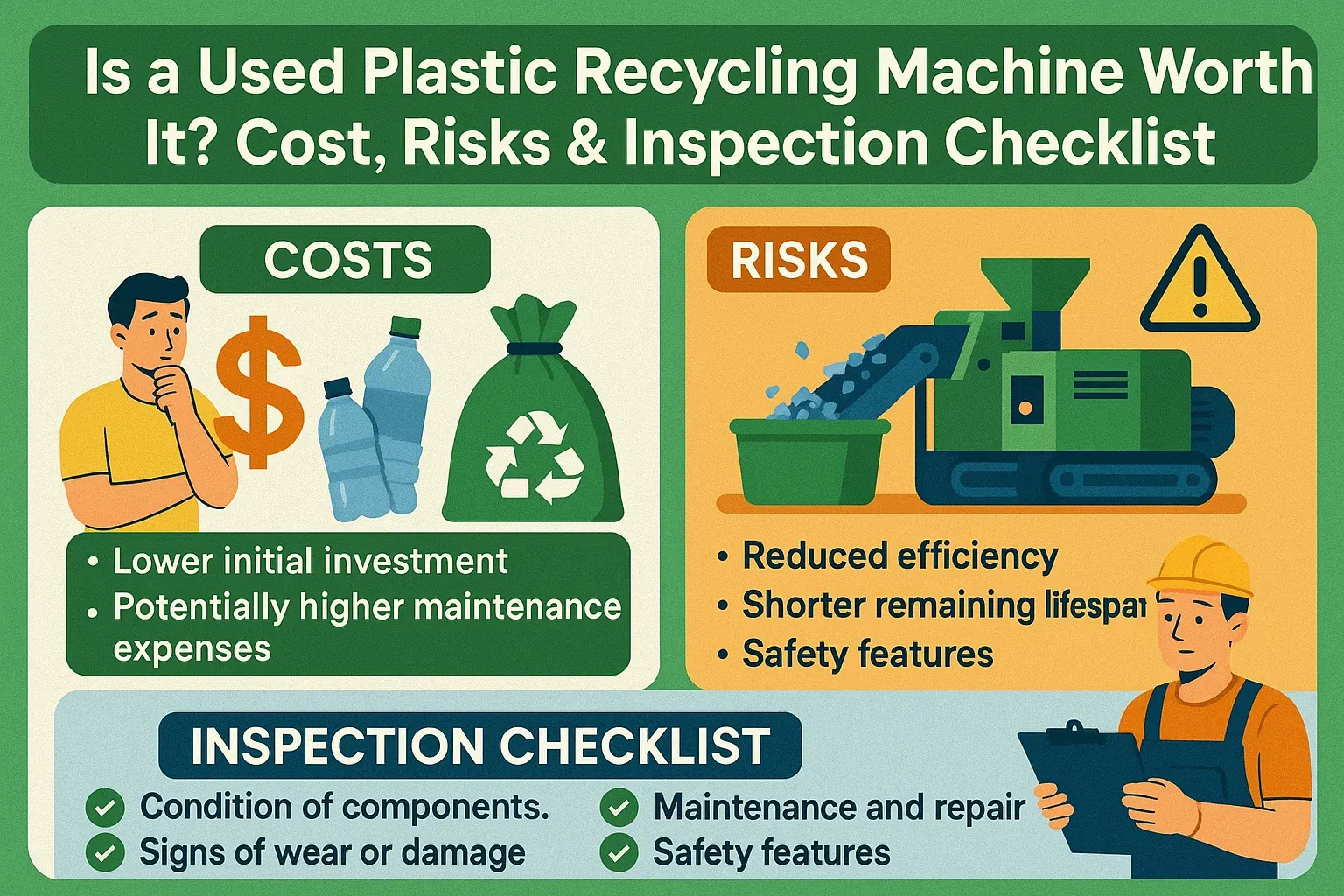
A used plastic recycling machine should be evaluated as an engineering asset, not only as a discounted purchase. The visible frame may look sound while the expensive risks sit inside a gearbox, screw and barrel, rotor bearings, control panel or incomplete safety system. This inspection guide focuses on the evidence a buyer should collect before agreeing on price or arranging shipment.
For the wider commercial decision—when second-hand equipment fits, seller channels and contract terms—use the newer used plastic recycling machine buyer’s guide. The checklist below is intentionally narrower: it helps a technical team inspect one identified machine and define an acceptance test.
Before visiting: establish the machine identity
Ask the seller for clear photographs of the nameplate, serial number, electrical panel and all supplied modules. Confirm the manufacturer, model, year, original function, current location and whether the machine is still connected to utilities. A line advertised as “complete” may exclude conveyors, water tanks, pumps, controls, dies, screens or safety guarding that are essential to operation.
Request these records before travel:
- Original quotation or equipment specification
- Operation, maintenance and parts manuals
- Electrical drawings, P&ID and PLC/HMI backup where applicable
- Service logs, oil records and major-repair invoices
- Operating-hour or production records and the method used to verify them
- Safety documentation and declarations required at the original installation
- A list of included spares, tooling, screens, blades, dies and accessories
Do not assume the original compliance documentation automatically makes the used machine compliant at a new site. Relocation, modification, a new feed system or integration with other equipment can change the risk assessment and the obligations of the owner or integrator.
First inspection: condition before power-up
A qualified mechanical and electrical team should inspect the machine in a safe, isolated condition. Follow the site’s energy-control procedure and do not remove guards or open panels unless the equipment has been made safe. OSHA’s control of hazardous energy guidance explains why servicing requires protection against unexpected energization; local rules and the machine-specific risk assessment take precedence.
Structure and installation history
- Check frames, welds and mounting points for cracks, distortion, corrosion and unrecorded repairs.
- Look for evidence of impact, fire, flooding, long outdoor storage or chemical exposure.
- Compare installed guards, platforms and access doors with drawings and photographs.
- Record missing fasteners, covers, sensors, lubrication lines and support steel.
- Confirm lifting points and the seller’s plan for disconnection, rigging and loading.
Motors, gearboxes and drives
- Record every motor and gearbox nameplate; confirm voltage, frequency, phase and rated current.
- Inspect mounts, couplings, belts, guards, seals and lubrication condition.
- Check for oil leakage, burnt odor, discoloration, damaged cooling fins and improvised wiring.
- Ask for oil-analysis, insulation-test or vibration records rather than relying on a quiet no-load run.
- Confirm that replacement bearings, seals, belts and gearbox parts remain available.
Electrical and controls
- Compare component labels with the electrical drawing and note undocumented changes.
- Inspect for heat damage, contamination, loose terminals and obsolete PLC or HMI hardware.
- Verify access to the PLC program, passwords, licenses and backups required for recovery.
- Check that emergency stops, door interlocks and protective devices are present; functional validation belongs in the controlled test.
- Identify components that will not match the destination plant’s supply or standards.
Machine-specific wear points
Shredders and granulators
Inspect rotor and stationary knives for chips, cracks, uneven sharpening and remaining adjustment range. Check the rotor, shafts, screen supports, screen holes, bearings and seals. Evidence of contact between rotating and fixed parts may indicate alignment or bearing problems. Measure components against original dimensions where drawings are available; appearance alone cannot establish remaining life.
Rotate only under an approved procedure and with the correct tools. Ask how the rotor is locked for knife work and how heavy screens or hoppers are lifted. For a granulator selection baseline, compare the machine with the plastic granulator guide.
Extruders and pelletizing systems
Screw and barrel wear can materially change output, melt stability and energy use. Request previous diameter and clearance measurements, rebuild history and the resin/filler previously processed. Check gearbox condition, heaters, thermocouples, cooling circuits, vacuum system, filtration, die plate, pelletizer and all included controls.
A brief unloaded rotation cannot demonstrate melt performance. The material trial must use an agreed feedstock and include steady-state readings for output, current, temperatures, melt pressure, vacuum and pellet quality.
Washing and drying lines
Inspect tanks, welds, screws, shafts, pumps, seals, nozzles and screens for corrosion and abrasion. Confirm which water-treatment equipment, piping, heat source and controls are included. On centrifugal dryers, check the rotor, basket or screen, bearings, access doors and vibration history. On thermal dryers, inspect fans, ducts, heaters, filters and fire-protection provisions.
A used washing line often becomes expensive because of missing balance-of-plant items. Compare the supplied modules with a complete recycling washing system layout and price the gaps before purchase.
Run a representative material trial
If the machine can be operated safely, test it with material representative of your intended feed—not only clean factory scrap selected by the seller. Define the batch mass, contamination, particle size, moisture and test duration in advance. The seller and buyer should agree on how samples and readings will be taken.
Record at least:
- Net acceptable output over a stable period
- Normal and peak motor current
- Temperatures, pressures, vibration and leakage relevant to the machine
- Stops, alarms, overloads and manual interventions
- Output particle size, moisture, contamination or pellet-quality result
- Time required for safe opening, screen or blade access and cleaning
Test safety functions under a controlled procedure. A seller’s statement that an interlock “worked last time” is not verification. If a live test is impossible, price the machine as an unverified asset and make inspection, repair and commissioning conditions explicit in the contract.
Build a landed-and-running cost
Do not compare only the seller’s price with a new-machine quotation. Calculate the cost to make the used machine safe, complete and productive at the destination:
- Inspection, decommissioning, cleaning and preservation
- Rigging, packaging, freight, insurance, customs and storage
- Foundations, utilities, platforms, piping and guarding
- Electrical conversion, controls integration and software recovery
- Wear parts, known repairs and a contingency for hidden defects
- Commissioning, operator training and initial production loss
- Expected energy, labor and maintenance under the planned duty
A used machine may still be the better purchase, but no universal percentage saving or payback period is credible without this site-specific calculation. Obtain firm prices for the largest known repair items before negotiating.
Contract terms that preserve the inspection result
Attach the inspected equipment list, photographs and serial numbers to the purchase agreement. State which accessories, controls, manuals and spares are included. Define the agreed condition at dismantling, the party responsible for damage during rigging and the acceptance criteria to be repeated after installation.
For any warranty or repair commitment, specify duration, covered parts, labor, travel, freight and the remedy if the machine misses the agreed test. Legal terms vary by jurisdiction, so use qualified commercial and legal advice for the transaction.
Red flags that justify stopping the purchase
- Serial plates, documentation or ownership cannot be verified.
- The seller refuses safe inspection or a reasonable material trial without explanation.
- Essential guards, interlocks or emergency functions are missing and no retrofit has been engineered.
- PLC access, proprietary software or critical spare parts are unavailable.
- Cracks, major weld repairs, fire or water damage lack a documented engineering assessment.
- The final supplied scope cannot be reconciled with the photographs and drawings.
Used-machine inspection decision
The decision should be based on verified condition, fit for the intended material, retrofit scope and landed-and-running cost. A well-documented mechanical machine with available parts may be a manageable project for an experienced plant. An undocumented line with obsolete controls and no safe production trial can be expensive even at a low purchase price.
Use the inspection to create a written defect list, repair budget and acceptance test. If the evidence is incomplete, treat the uncertainty as a cost and risk rather than filling the gaps with assumptions.
Frequently asked questions
Is a used plastic recycling machine worth buying?
It can be when its condition is documented, it fits the intended feedstock and the landed-and-running cost remains competitive after repairs and integration. The purchase price alone is not enough to decide.
What is the most important used-equipment test?
A representative material trial under agreed conditions is the strongest performance check. It should record net output, current, temperatures or pressures, stops and the required output-quality measures.
What if the seller cannot run the machine?
Treat performance and condition as unverified. Obtain an independent inspection where possible, price the repair and commissioning risk, and make documentation, missing parts and acceptance remedies explicit in the contract.
