

Small-Batch Recycled Filament Extrusion
3D Filament Extruder for Recycled Polymer Feedstock
Compact twin-screw filament extruder for small-batch material reuse. Supports common polymers (PLA, ABS, TPU, Nylon, PC and more) with 0-350°C heating, VFD speed control, and 0.1-3 kg/h output (material dependent).
Material Compatibility
Suitable for common plastics used in prototyping, functional parts, and recycled feedstock streams.
3D Printing Polymers
PLA, ABS, TPU, Nylon, PC, and related blends. For consistent filament, keep material dry and avoid mixing incompatible polymers.
General Plastics
PE, PP, PVC and similar commodity plastics. Output stability depends on melt behavior and feedstock cleanliness.
Recycled Feedstock
Regrind or flakes prepared from prints, caps, and bottles. Screening and drying improve hopper feeding and reduce diameter variation.
Process Notes
Remove metal, stones, and abrasive dirt. Moisture is a common failure mode for filament consistency. Store sealed and dry before extrusion.
Temperature and Speed Control
Control melt stability and output consistency with multi-zone heating and VFD speed regulation.
0-350°C heating range
Designed for common thermoplastics used in 3D printing and recycled applications. Setpoints depend on polymer grade and moisture level.
3 heating zones
Multi-zone heating supports more stable melt development from feed to die, reducing risk of partial melting and flow instability.
VFD speed control
Variable-frequency control adjusts screw speed to match melt behavior and puller/winder conditions for a smoother, repeatable process.
110 V / 220 V options
Voltage is customizable for local mains. Confirm your region and plug type when checking availability and pricing.
Recycled Filament Workflow
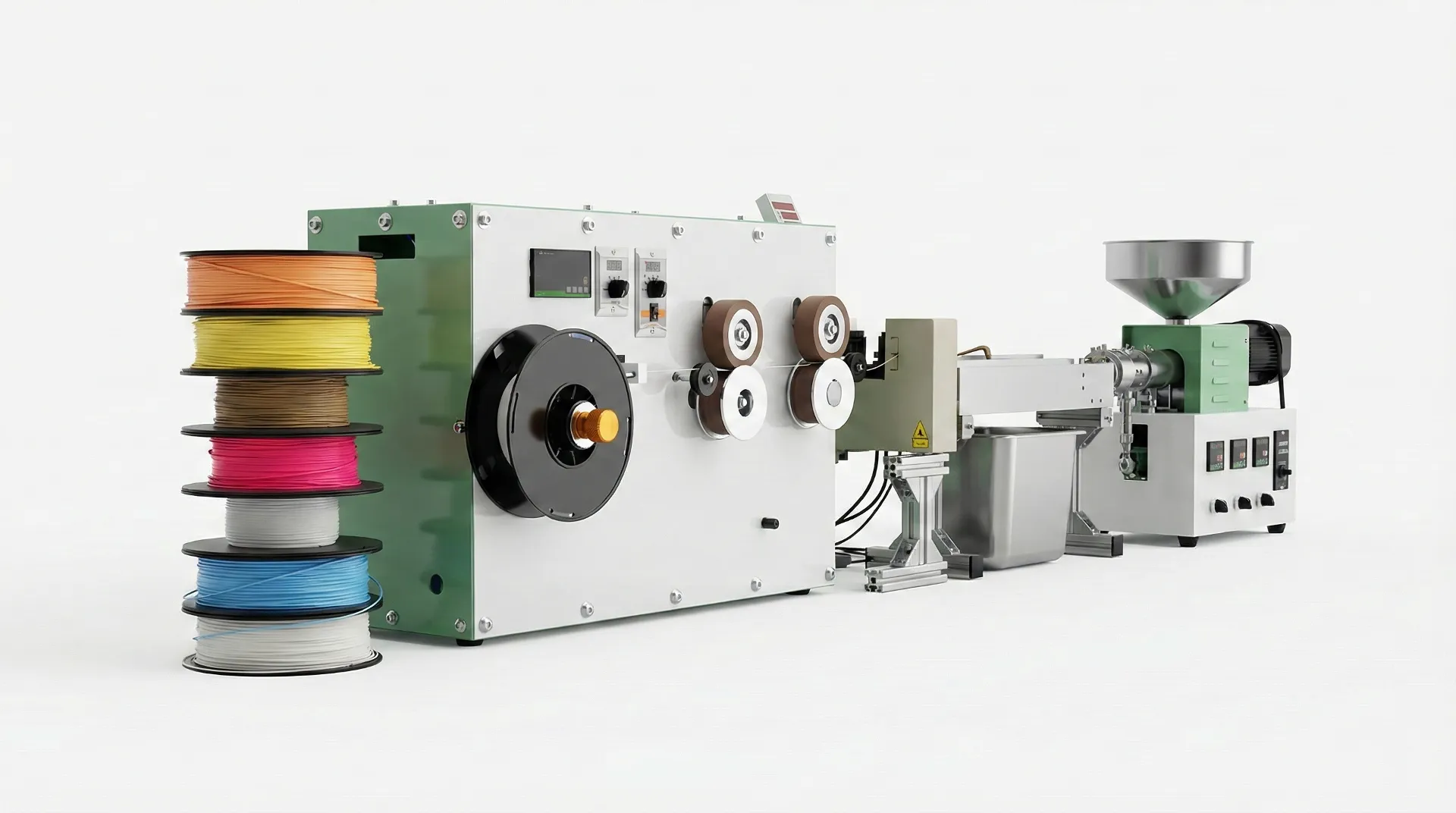
A practical setup for turning waste prints and plastic scrap into usable extrusion feedstock. If your input is 3D printing scrap, bottle caps, or prepared PET bottles, start with consistent feedstock. Shredding to a manageable regrind size and keeping material dry significantly improves hopper feeding and melt stability.
Prepare and Dry
Prepare and dry feedstock. Keep polymer types separated and remove abrasives and metal before extrusion.
Extrude
Extrude with stable temperature and screw speed across the three heating zones and VFD control.
Cool and Guide
Cool and guide filament so diameter stays consistent before winding.
Wind onto a Spool
Wind filament onto a spool. Best results come from clean, unmixed polymers and dry regrind.
Prepare and Dry
Prepare and dry feedstock. Keep polymer types separated and remove abrasives and metal before extrusion.
Extrude
Extrude with stable temperature and screw speed across the three heating zones and VFD control.
Cool and Guide
Cool and guide filament so diameter stays consistent before winding.
Wind onto a Spool
Wind filament onto a spool. Best results come from clean, unmixed polymers and dry regrind.
Available Extruder Options
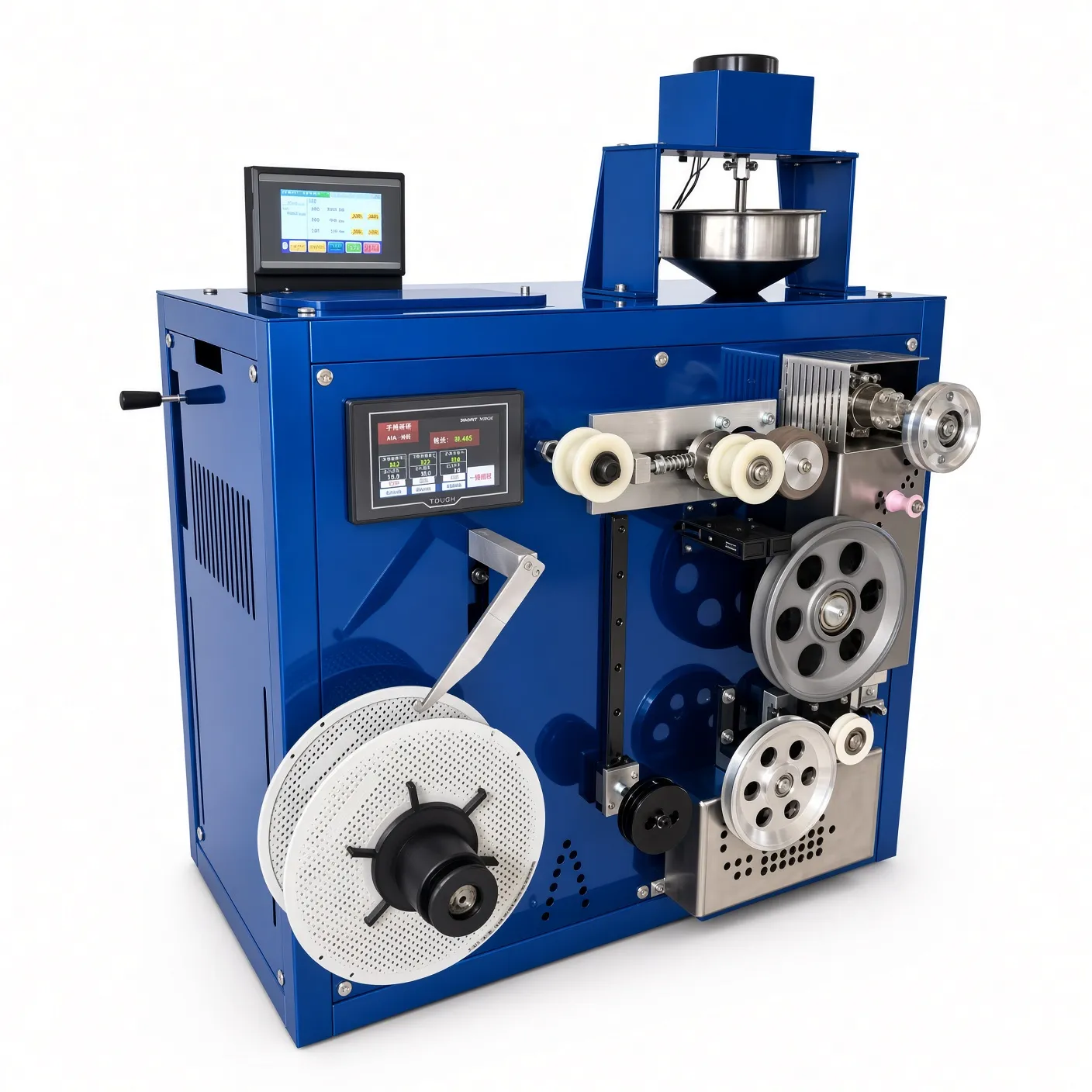
Choose the compact twin-screw filament extruder or the desktop consumables extruder. Share the selected model when requesting price and voltage confirmation.
Technical Specifications
Reference data for the desktop consumables extruder. The filament extruder column lists only the values already published on this page.
| Parameter | 3D Filament Extruder | Desktop Consumables Extruder |
|---|---|---|
| Model | 3D Filament Extruder | Desktop Consumables Extruder |
| Screw Diameter | — | 16 mm |
| Designed Output | 0.1-3 kg/h | 0.01-2 kg/h |
| Motor | — | 400W servo motor |
| Voltage | 110 V / 220 V, customizable | 220 V, customizable on request |
| Heating Temperature Range | 0-350°C | Ambient to 350°C |
| Machine Overall Dimension | — | 0.65 x 0.4 x 0.6 m |
| Gross Weight in Wooden Case | — | 80 kg |
| Extrusion Center Height | — | 300 mm |
| Extrusion Direction | — | Feed from the right side, discharge downwards |
Swipe to compare models
Video Overview
See the 3D filament extruder in action, including feeding, melt control, and filament winding.
Photos
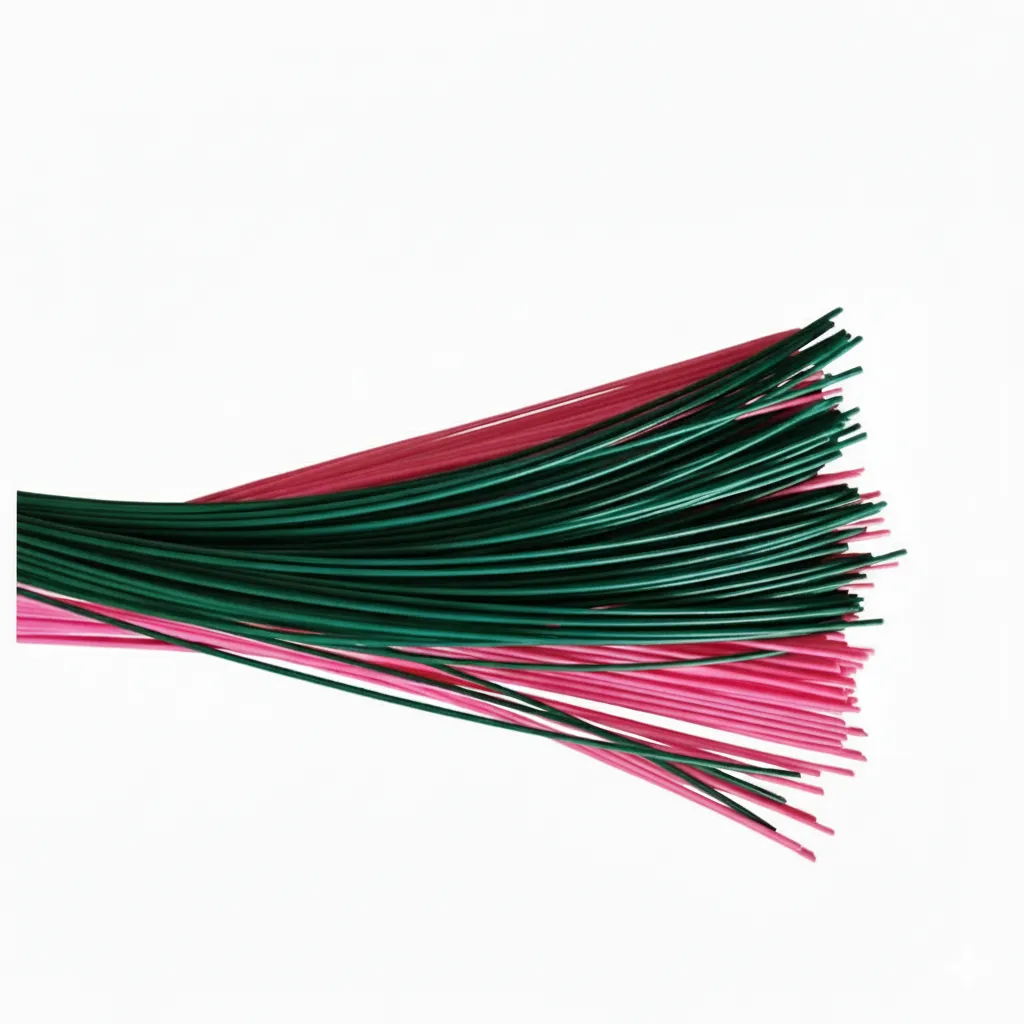
Use these photos to confirm the overall layout and filament presentation. For recycled feedstock, keep input clean and dry with stable particle size. For order validation, request a short sample run on your target polymer.
Recommended Companion Equipment
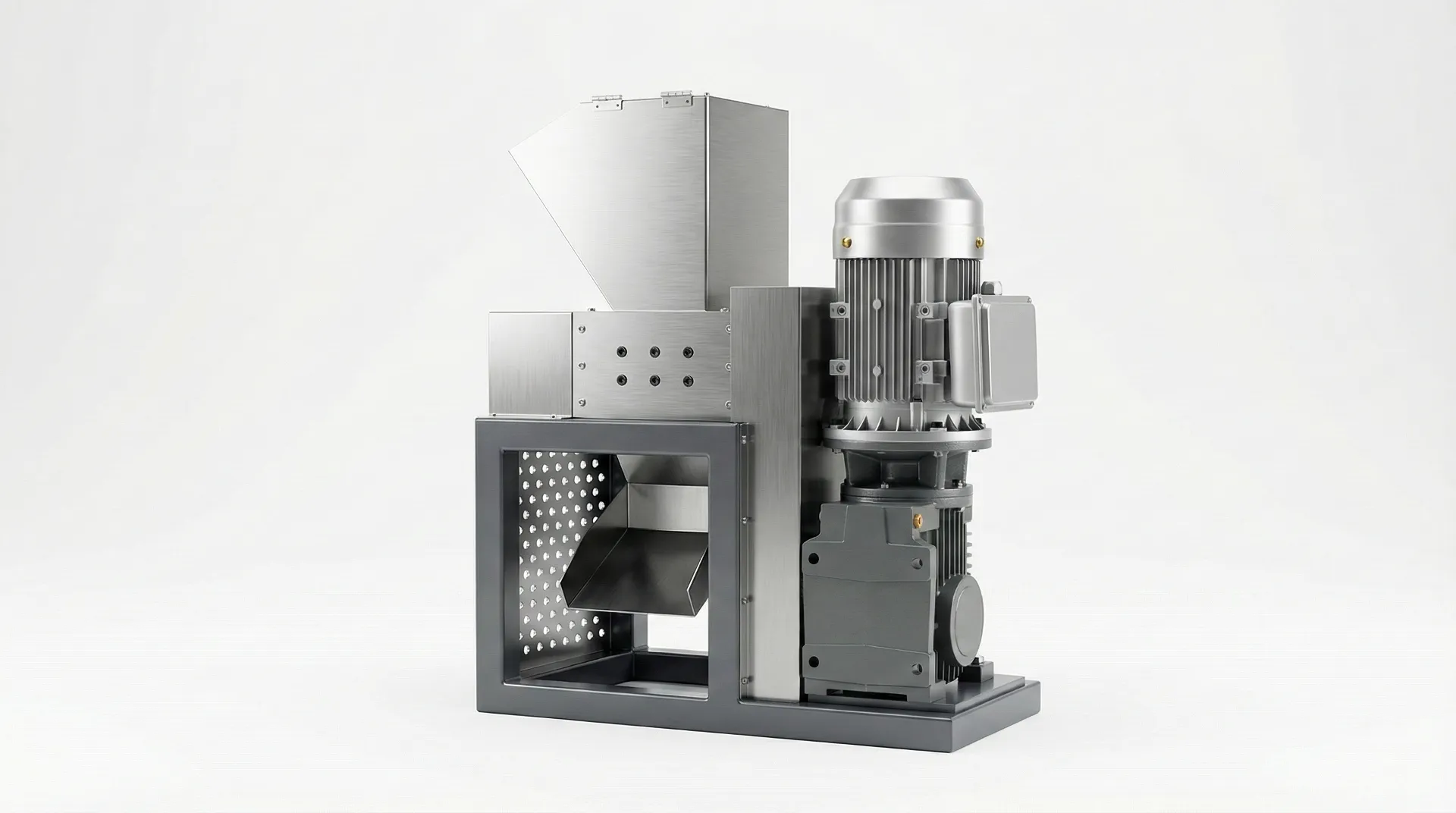
For 3D printing scrap preparation before extrusion. Sorting polymers and controlling moisture before extrusion will improve diameter stability and spool consistency.
Frequently Asked Questions
Selection and setup questions for small-batch filament production.
Applicable materials include PE, PP, PVC, PLA, PC, TPU, ABS, and Nylon. Filament stability depends on polymer grade, moisture control, and whether you keep input material sorted by polymer type.
Typical output is 0.1-3 kg/h depending on polymer type, temperature profile, screw speed, and how consistently feedstock enters the extruder.
The heating range is 0-350°C with three heating zones. Actual setpoints depend on polymer type and moisture level.
Yes. Power supply is customizable (110 V / 220 V, 50/60 Hz, single-phase). Confirm your region and plug type when checking price.
Yes, if feedstock is prepared properly. Dry the material, keep particle size consistent, and remove contaminants. Many users pair a shredder to create uniform regrind before extrusion.
Use dry, consistent input material, keep temperature stable across the three zones, and tune screw speed via VFD control to match cooling and winding. Avoid mixing incompatible polymers and keep feedstock free of abrasives.
The desktop consumables extruder is an option with a 16 mm screw, 0.01-2 kg/h designed output, 400W servo motor, 220 V supply (customizable), ambient to 350°C heating, 0.65 x 0.4 x 0.6 m overall size, and 80 kg packed weight. Confirm this model when requesting a quote.
Pricing and Availability
Select the 3D Filament Extruder or the Desktop Consumables Extruder, then share your target polymer(s), expected output, and local power supply. If you plan to process recycled feedstock, include the feed form and whether you will dry the material.