

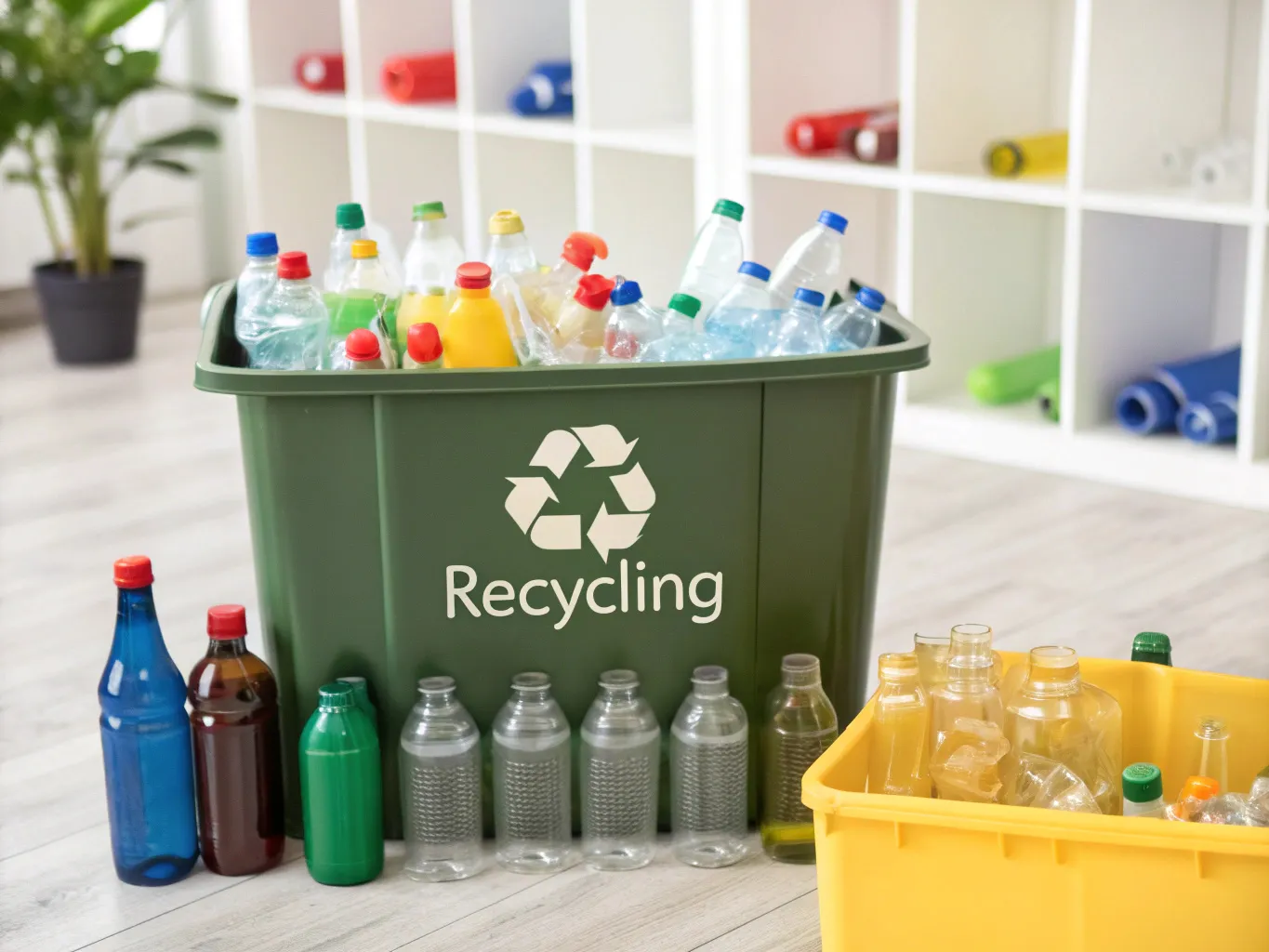
The global recycled PET market hit an estimated $14.3 billion in 2026 and is on track to reach $25.9 billion by 2033. The EU’s Single-Use Plastics Directive now requires 25% recycled content in PET beverage bottles — rising to 30% by 2030. In the US, California’s legislated minimum has already escalated to 25% in 2025. These are not projections; they are binding law creating sustained, policy-backed demand for clean rPET flakes.
A PET bottle washing line is the equipment system that makes this supply possible. It takes baled, contaminated post-consumer PET bottles and converts them into uniform, dry flakes ready for pelletizing, fiber spinning, or direct bottle-to-bottle reuse. Choosing the wrong configuration — wrong washing method, wrong capacity, wrong infrastructure — locks in operating costs and limits the markets you can sell into for the next decade.
This guide walks through every decision in sequence: how the process works, which washing method fits your target market, how to size capacity, what utilities you need, how to plan maintenance, and what to verify before issuing your RFQ. It draws on our experience commissioning PET bottle washing lines from 500 kg/h starter operations to 5,000 kg/h industrial-scale plants across 60+ countries.
Why rPET Demand Makes This a Strategic Investment
Three converging forces are driving sustained demand for clean rPET flakes — and by extension, for the washing lines that produce them.
Regulatory mandates are now legally binding. The EU’s Single-Use Plastics Directive (SUPD) requires 25% recycled content in PET beverage bottles as of 2025, increasing to 30% by 2030. Collection rate targets accompany these mandates: 77% separate collection by 2025, rising to 90% by 2029. As of February 2026, the EU’s Waste Technical Adaptation Committee has voted on the implementing decision that defines how recycled content is calculated and verified — removing the ambiguity that previously allowed manufacturers to delay compliance. In the US, California’s SB 270 mandates 25% post-consumer recycled content in plastic beverage containers starting 2025, with other states following.
The economics favor recycling over virgin production. Producing rPET consumes approximately 60% less energy than virgin PET — roughly 32 MJ per kilogram versus 80 MJ/kg. Carbon emissions drop proportionally: about 2.6 kg CO₂/kg for rPET compared to 6.5 kg CO₂/kg for virgin material. Water use falls from approximately 3.5 liters/kg to 1.5 liters/kg. At industrial throughputs of 1,000–3,000 kg/hr running 6,000+ hours per year, these per-kilogram savings translate into six-figure annual operating cost advantages — and increasingly, into ESG-linked procurement preferences from major brand buyers.
Market pricing reflects the supply gap. The global rPET market was valued at approximately $14.3 billion in 2026 and is projected to reach $25.9 billion by 2033 at an 8.9% CAGR. Asia Pacific accounts for roughly 45% of global demand. Food-grade rPET in European spot markets has commanded premiums of up to 100% over virgin PET during supply-constrained periods. The structural demand signal — backed by legislation rather than voluntary brand pledges — makes a capacity investment defensible over a 7–10 year equipment lifecycle.
Key Takeaway: rPET demand is not cyclical — it is regulation-driven. A properly specified PET bottle washing line producing food-grade output positions you at the premium end of a market growing at nearly 9% annually.
What a PET Bottle Washing Line Does — Stage by Stage
A PET bottle washing line is not a single machine. It is a sequenced set of process stages, each targeting a specific contaminant type or material fraction. Understanding what happens at each stage — and where bottlenecks form — is essential for both equipment selection and daily operations.
Stage 1: Debaling and Pre-Screening
Post-consumer bottles arrive in dense, compressed bales. A debaler (bale breaker) uses high-torque rotating arms to break bales apart, releasing individual bottles onto a conveyor at a controlled feed rate. A trommel screen — a rotating cylindrical sieve — then tumbles bottles while fine debris (sand, dirt, broken glass, small metal fragments) falls through calibrated perforations. This first-pass cleaning reduces contamination load on all downstream equipment and extends machinery service intervals.
Stage 2: Pre-Sorting
Manual or automated sorting removes obvious non-PET materials: PVC bottles, HDPE containers, metal cans, and paper. For high-throughput lines, near-infrared (NIR) optical sorters handle this step at speeds exceeding what manual sorting can sustain. Removing non-PET contaminants here prevents costly contamination problems downstream — especially PVC, which cannot be separated from PET by density alone.
Stage 3: Label Removal
Shrink-sleeve and pressure-sensitive labels are among the most problematic contamination streams in PET recycling. Many shrink labels contain PVC, which will degrade melt quality if carried into the final flake. A friction-type label remover uses high-speed rotation and mechanical friction to strip labels from bottle surfaces before crushing. Pre-crush removal is significantly more effective than trying to separate label fragments from flakes later. Achieving PVC content below 30 ppm in the final output — the threshold for food-grade applications — depends heavily on this stage.
Stage 4: Wet Crushing / Granulation
Whole bottles enter a wet granulator fitted with rotating and stationary blades that shear material into flakes, typically 8–14 mm. A screen with 12–18 mm holes retains material in the cutting chamber until it reaches target size. Water injection during crushing begins the cleaning process and reduces friction heat that could degrade the PET polymer. The increased surface area of flakes (versus whole bottles) directly improves washing effectiveness in subsequent stages.
Stage 5: Sink-Float Separation
PET has a density of approximately 1.33–1.38 g/cm³. PP and HDPE cap materials have densities below 1.0 g/cm³. A sink-float tank exploits this difference: PET flakes sink to the bottom for collection, while cap plastics and label fragments float and are mechanically skimmed off. This single stage eliminates the bulk of non-PET plastics. For operations targeting consistent food-grade output, a second float-sink pass or a complementary optical sorting step is often added.
Stage 6: Cold or Hot Washing
This is the most consequential process decision in the entire line (covered in detail in the next section). Cold washing removes surface dirt and light residue. Hot washing — using water at 50–95°C with caustic soda or food-grade detergent — dissolves adhesive residues, fats, oils, and organic contamination that cold water cannot reliably remove.
Stage 7: Rinsing
Multiple rinse stages flush detergent, caustic residue, and loosened contaminants from the flake surface. Effective rinsing prevents chemical carry-over into downstream processing.
Stage 8: Dewatering and Drying
A centrifugal dryer removes surface moisture mechanically through high-speed spinning. A thermal dryer using hot air circulation then brings final moisture content below 1% — a non-negotiable specification for extrusion and pelletizing. Excess moisture at the extruder causes hydrolytic degradation of the PET molecular chain, reducing intrinsic viscosity (IV) and compromising the mechanical properties of finished products.
Stage 9: Storage and Bagging
Clean, dry flakes move to a storage silo or bagging station for downstream transfer. Some lines add an optical color sorter at this point to separate clear, light-blue, and colored fractions — clear flake commands the highest spot price.
Each stage is a potential bottleneck. A clogged spray nozzle, a worn crusher blade, or a flooded sink-float tank drops quality at every point downstream. Equipment sizing and maintenance planning carry equal weight in any serious procurement.
View our complete PET bottle washing line configurations →
Key Takeaway: A PET bottle washing line processes material through 8–9 distinct stages. Each stage targets a specific contaminant. Skipping or under-specifying any stage compounds quality problems downstream.
Cold vs. Hot Washing: The Core Process Decision
The choice between cold and hot washing shapes your capital cost, installed power, water chemistry, and — most importantly — the output grades your buyers will accept. Get this decision wrong and no amount of downstream optimization recovers it.
Cold washing uses water at roughly 10–20°C. It removes loose soil, labels, and light surface residue effectively. No heating system is required, so energy consumption is lower and thermal stress on the PET polymer is minimal. Cold washing is appropriate for flakes destined for fiber, strapping, or non-food rigid packaging where contamination thresholds are less strict.
Hot washing raises wash water to 50–95°C, typically with caustic soda (NaOH) or a food-grade detergent dosed at controlled concentrations. The alkaline bath dissolves adhesive residues, saponifies fats and oils, and removes organic contamination absorbed into the flake surface. It also reduces microbial load — a prerequisite for food-contact certification. Hot washing carries higher installed power requirements and needs steam or electric heating infrastructure, but it is the standard configuration for bottle-to-bottle (B2B) rPET.
| Parameter | Cold Washing Line | Hot Washing Line |
|---|---|---|
| Wash water temperature | 10–20°C | 50–95°C |
| Detergent / caustic dosing | Not required | NaOH or food-grade detergent |
| Adhesive and fat removal | Limited | Effective |
| Microbial reduction | Partial | Significant |
| Typical output grade | Fiber, strapping, non-food packaging | Food-grade rPET, bottle-to-bottle |
| Residual glue in output | Variable (may exceed 50 ppm) | < 10 ppm achievable |
| Installed power (relative) | Lower | Higher (heating adds 15–25% to load) |
| Capital cost (relative) | Lower | ~15–25% premium over cold line |
| Water treatment complexity | Basic | Requires detergent/caustic management |
The decision rule is straightforward: If your downstream buyer requires EFSA-compliant food-grade rPET, a hot washing line is the minimum configuration. EU Regulation (EU) 2022/1616 — in force since September 2022 — tightened decontamination thresholds considerably. Permissible residual levels for toluene, chlorobenzene, and methyl salicylate were reduced by up to 50% versus prior limits. Cold washing alone cannot meet those thresholds reliably.
If your target market is fiber, strapping, or non-food thermoforming, a cold washing line keeps capital and operating costs lower while delivering acceptable output quality.
Many operators choose a hot washing line even when targeting non-food markets initially — because retrofitting a cold line to hot washing later requires adding heating infrastructure, water treatment capacity, and often a building extension. The capital premium at initial purchase is far lower than the retrofit cost.
Key Takeaway: Cold washing saves money upfront but limits you to non-food markets. Hot washing costs 15–25% more but opens the door to food-grade rPET premiums. If there is any chance you will need food-grade certification within 5 years, specify hot washing from the start.
Output Quality Specifications and End Markets
The flake grade you target determines your addressable market and the line configuration you need. Define the end market before the RFQ goes out — pivoting to a higher-value grade mid-project is expensive.
Food-Grade Specifications
A well-configured PET bottle washing line with hot washing should consistently produce flakes meeting these food-grade specifications:
| Parameter | Food-Grade Target |
|---|---|
| Moisture content | < 1% |
| PVC content | < 30 ppm |
| Label contamination | < 15 ppm |
| Residual glue | < 10 ppm |
| PP/PE content | < 15 ppm |
| Metal content | < 10 ppm |
| Inorganic compounds | < 10 ppm |
| Total impurity | < 100–250 ppm |
| Flake size | ~12 mm (customizable) |
Lines equipped with optical flake sorters downstream of the dryer can push total impurity levels toward the lower end of this range, enabling consistent supply to FDA-approved bottle-to-bottle applications.
Three Primary End Markets
Bottle-to-bottle (food-grade packaging) is the highest-value application. rPET flakes meeting food-contact specifications are pelletized and processed through solid-state polycondensation (SSP) to restore intrinsic viscosity, then blow-molded into new beverage bottles. Under EU Regulation (EU) 2022/1616, recyclers must operate a technology that has received a positive EFSA scientific opinion and a formally issued Recycling Process Authorization Number (RAN). For US markets, the equivalent is an FDA no-objection letter tied to the specific recycling process.
Polyester fiber and textile manufacturing is the largest end market by global volume. rPET is melt-spun into staple fiber or continuous filament yarn for apparel, carpet, geotextile, and industrial fabrics. Fiber-grade applications have somewhat more tolerance for color variation and minor contamination, making this market accessible even with modest optical sorting capability.
Strapping, sheets, and non-food packaging absorbs rPET not meeting food-contact thresholds. Flakes are extruded into strapping bands, thermoformed trays, clamshells, and rigid packaging films. This secondary market provides revenue continuity when food-grade yield drops due to variable input bale quality.
Color Sorting and Flake Value
Adding an optical color sorter separates clear, light-blue, and colored fractions. Clear flake commands the highest spot price; mixed-color material is typically absorbed by fiber producers at a discount. Whether the capital cost is justified depends on your off-take contract terms and regional market pricing — run the numbers with actual quotes before finalizing the line spec.
Key Takeaway: Food-grade bottle-to-bottle commands the highest margins but requires hot washing, regulatory documentation, and tighter process controls. Define your target market first — the equipment configuration follows.
How to Size Your PET Bottle Washing Line
Sizing errors in either direction carry cost. An oversized line runs at partial load, inflating specific energy consumption per ton. An undersized line becomes a permanent ceiling on your collection volume and revenue.
The Sizing Formula
Required capacity (kg/h) = Total daily feedstock (kg) ÷ Operating hours per day
A plant processing 10,000 kg/day over 20 operating hours needs a nominal 500 kg/h line. Before specifying to a supplier, add a 20–25% buffer for planned maintenance windows, seasonal peak volumes, and unplanned stoppages.
Capacity Bands
| Scale | Capacity | Typical Application | Reference Footprint |
|---|---|---|---|
| Small | 500–1,000 kg/h | Regional collectors, startups, limited space | ~60 m × 6 m × 5 m |
| Medium | 1,000–2,000 kg/h | Mid-scale recyclers with established off-take | ~90 m × 8 m × 6 m |
| Large | 2,000–5,000 kg/h | National collection programs, industrial scale | ~120 m × 10 m × 8 m |
A reference 1,000 kg/h PET bottle washing line draws approximately 215 kW of installed power. Power scales roughly linearly with capacity.
Plan for Expansion
If expansion is likely within five years, build the facility to accommodate a larger crusher and additional dryer capacity during initial construction. Pre-rating electrical circuits, conveyor runs, and building shell dimensions costs significantly less than retrofitting after the fact. A common approach: install a 1,000 kg/h line in a building sized for 2,000 kg/h, with electrical conduit and water connections pre-installed for the expansion.
Key Takeaway: Use the formula (daily feedstock ÷ operating hours × 1.25 buffer) to set your nominal capacity. Then confirm that your building shell, electrical supply, and water infrastructure can support one capacity band above your initial spec.
Utilities and Infrastructure Checklist
A PET bottle washing line is a process facility, not just machinery. Under-specifying utilities before civil works begin is one of the most common causes of commissioning delays and cost overruns.
Electrical supply. A 1,000 kg/h hot washing line draws approximately 215 kW installed. Confirm available transformer capacity and phase balance with your utility provider before signing the site lease. For larger lines, three-phase industrial power is required.
Fresh water and recirculation. Closed-loop recirculation cuts fresh water demand to approximately 1–2 m³ per ton of processed PET. Without recirculation, water demand rises substantially and wastewater volume increases proportionally. Modern systems with water-saving technology can operate below 1 m³ per ton of output flake.
Effluent discharge. Wash water carries dissolved adhesives, detergent residues, and fine particulates. Pre-treatment to meet local discharge consent limits for COD, pH, and suspended solids is required in all EU member states and most other jurisdictions. Confirm consent conditions before finalizing the water circuit design.
Compressed air. Optical sorters, pneumatic conveyors, and valve actuators require a stable compressed air supply, typically at 6–8 bar. Flow rate depends on the number of sorter ejectors installed.
Steam or electric heating (hot lines only). The hot wash tank requires a dedicated heating circuit. If steam is used, pressure-rated pipework and a condensate return system add to the civil scope. Electric heating is simpler to install but may require additional transformer capacity.
Ceiling clearance. This is frequently overlooked. Thermal dryers and storage silos often require 6–8 m of clear internal height. Verify this dimension before signing a lease or starting civil works.
Key Takeaway: Confirm electrical capacity, water supply/discharge, compressed air, and ceiling height before site design. Utility shortfalls discovered during commissioning cost 3–5x more to fix than pre-planning them.
Wear Parts, Maintenance, and Uptime Planning
A PET bottle washing line processes abrasive, contaminated feedstock continuously for 6,000–8,000 hours per year in a well-run operation. Wear is predictable. The failure to plan for it is what makes downtime expensive.
Primary Wear Items and Diagnostic Signals
Crusher blades are the highest-frequency wear item. Dull blades increase motor current draw, produce irregular flake size distribution, and generate more fines. Injecting rinsing water into the cutting chamber during operation reduces friction and extends blade service life. Monitor motor current at constant feed rate — a sustained upward trend signals that replacement is due.
Crusher screens deform over time and alter flake size distribution. Inspect at each planned maintenance stop. Replace when hole geometry exceeds tolerance — oversized flakes reduce washing effectiveness; undersized flakes (fines) represent yield loss.
Friction washer paddles wear down and reduce scrubbing intensity, which directly increases residual contamination on output flakes. Check paddle thickness at each 500-hour service interval.
Conveyor belts should be inspected for edge fraying and uneven tracking. A failed belt stops the entire line.
Spray nozzles create uneven washing zones when blocked. Flush at each shift change or after any high-contamination batch.
Bearings and drives require lubrication per manufacturer intervals. Over-greasing damages seals as readily as under-greasing.
Maintenance Schedule and Spare Parts Strategy
Schedule a comprehensive maintenance window every 500–1,000 operating hours, timed to coincide with planned feedstock gaps where possible. Stock critical consumables — blades, screens, belts, and nozzles — on site. Lead times for machined components from non-stocked suppliers can run 4–12 weeks depending on origin.
A single unplanned multi-day shutdown typically costs more in lost production than a full year of preventive parts inventory. When evaluating suppliers, confirm that key wear parts are available from EU or US stocking distributors — not just shipped from the original factory.
Key Takeaway: Track crusher motor current as your leading indicator. Stock blades, screens, belts, and nozzles on site. A 500–1,000 hour maintenance cycle prevents the unplanned shutdowns that destroy margins.
RFQ Checklist — What to Confirm Before You Buy
Use this list to structure your request for quotation and qualify suppliers before entering commercial discussions.
Process and Output Specification
- Target output grade confirmed with downstream buyer (food-contact vs. non-food)
- Required flake size range (typically 12–14 mm; adjust for end use)
- Moisture content at line exit (target below 1%)
- PVC tolerance in output (below 100 ppm standard; below 30 ppm for food-grade)
- Color sorting requirement confirmed (yes/no, and target grade split)
Capacity and Utilities
- Nominal capacity (kg/h) with 20–25% upside buffer stated in RFQ
- Available installed power (kW) and transformer headroom confirmed
- Fresh water supply rate and discharge consent verified
- Footprint constraints (L × W × H, including ceiling height) communicated to supplier
Mechanical and Supply Chain Risk
- Key wear parts (blades, screens, belts) available from regional stocking distributors
- Quoted lead time for replacement blades and screens from the manufacturer
- PLC/control system compatibility with existing plant SCADA confirmed
- FAT (Factory Acceptance Test) procedure and acceptance criteria agreed in writing before manufacturing
Regulatory and Commercial
- Warranty duration, scope, and exclusions reviewed
- On-site commissioning support: days included, travel costs, escalation path
- For food-grade lines: EFSA process authorization reference or FDA no-objection letter confirmed
- Installation layout options (“I,” “L,” or “U” shaped) matched to your workshop dimensions
Key Takeaway: Complete this checklist before talking price. An incomplete RFQ leads to misquoted lines, change orders during manufacturing, and commissioning delays.
Technology Advances Worth Tracking in 2026
The current generation of PET bottle washing lines integrates several advances that meaningfully improve output quality and operating economics:
AI-powered optical sorting uses machine vision and near-infrared (NIR) sensors to identify and eject non-PET contaminants, PVC-containing labels, and off-color bottle streams at high throughput — both pre-wash and post-wash. The latest systems achieve sorting accuracy above 99% at line speeds exceeding 3 tons/hour.
Closed-loop water treatment recirculates process water through filtration, settling, and chemical treatment systems. Modern installations reduce freshwater consumption to below 1 m³ per ton of output flake — critical for operations in water-stressed regions and increasingly expected by ESG-focused off-takers.
Inline quality monitoring provides continuous measurement of flake purity, moisture, and color. Real-time data feeds into PLC-based process control, reducing the risk of off-spec product reaching downstream customers and enabling faster process adjustments when input bale quality changes.
Chemical recycling integration is emerging as a complementary pathway. Some facilities couple mechanical washing lines with enzymatic or solvent-based depolymerization to process bottles too contaminated for mechanical recycling alone. The EU’s February 2026 SUPD implementing decision now includes accounting rules for chemically recycled content — signaling regulatory acceptance that may accelerate adoption.
Frequently Asked Questions
What moisture content should clean PET flakes reach before pelletizing?
A properly specified drying section — centrifugal dryer followed by a thermal dryer — should deliver flakes at below 1% moisture by weight. Moisture above this level accelerates intrinsic viscosity (IV) loss during melt processing, increases die pressure variation, and introduces surface defects in finished pellets or fiber.
How long do crusher blades last in a PET bottle washing line?
Service life depends on feedstock abrasiveness, blade material hardness, and whether rinsing water is injected during operation. Typical intervals range from several hundred to several thousand operating hours. The most reliable field indicator is a sustained rise in motor current at constant feed rate — that signals blades are approaching end-of-life.
What is the difference between cold and hot PET washing?
Cold washing (10–20°C) removes surface dirt and light residue at lower energy cost. Hot washing (50–95°C with caustic soda) dissolves adhesives, fats, and oils while reducing microbial load. Hot washing is required for food-grade rPET output. See the detailed comparison table in the “Cold vs. Hot Washing” section above.
Does a PET bottle washing line need environmental permits?
Most PET washing operations fall under national waste management licensing. Wastewater discharge from the wash circuit requires a discharge consent from the relevant water authority in every EU member state. Compressed air use, noise levels, and chemical storage may trigger additional permit conditions. Engage an environmental consultant before selecting a site.
What does food-grade PET washing require beyond equipment?
Equipment is necessary but not sufficient. Under EU Regulation (EU) 2022/1616, the recycler must operate a technology with a positive EFSA scientific opinion and a Recycling Process Authorization Number (RAN). The operator must maintain input material controls, process logs, and challenge test records. For US markets, the equivalent is an FDA no-objection letter tied to the specific process.
How much does a PET bottle washing line cost?
Pricing varies with capacity, washing method, and automation level. A small cold washing line (500 kg/h) represents a lower capital investment; a large hot washing line (3,000+ kg/h) with optical sorting and closed-loop water treatment is a substantially larger investment. Contact our engineering team with your capacity target and output grade requirement for a project-specific quote.
Can I upgrade a cold washing line to hot washing later?
Technically yes, but the retrofit cost is significant — it requires adding heating infrastructure, upgrading water treatment, and often expanding the building footprint. If food-grade output is a possibility within your planning horizon, specifying hot washing at initial purchase is far more cost-effective.
What capacity PET bottle washing line do I need?
Use this formula: daily feedstock (kg) ÷ operating hours × 1.25 buffer = required capacity (kg/h). For example: 10,000 kg/day ÷ 20 hours × 1.25 = 625 kg/h nominal. A 1,000 kg/h line would be appropriate to provide headroom for growth and peak volumes.
Your Next Step
Selecting a PET bottle washing line comes down to aligning three variables: your feedstock contamination profile, your output grade commitment, and your site infrastructure. The decisions you make before the RFQ — washing method, capacity with buffer, utility pre-planning, maintenance strategy — determine your operating cost and market access for the equipment’s entire lifecycle.
Ready to specify a PET bottle washing line for your operation? Request a technical consultation and material-specific process recommendation — provide your feedstock composition, contamination level, throughput target, and output grade requirement, and our engineers will recommend the right configuration with a detailed facility layout and power analysis.
Related Resources
Related: For a side-by-side comparison of capacity tiers, 3-year TCO, and regional fit, see our PET recycling machines buyer’s guide.
