

Separador de corrientes de Foucault de alta recuperación para aluminio fino
Recupere valioso aluminio fino y metales no ferrosos de escamas de PET, calcín de vidrio, cenizas de fondo de incineración (IBA), residuos electrónicos y flujos de reciclaje mixtos. Diseñado para una alta pureza del producto, máximo rendimiento de metal y una clasificación continua y confiable.
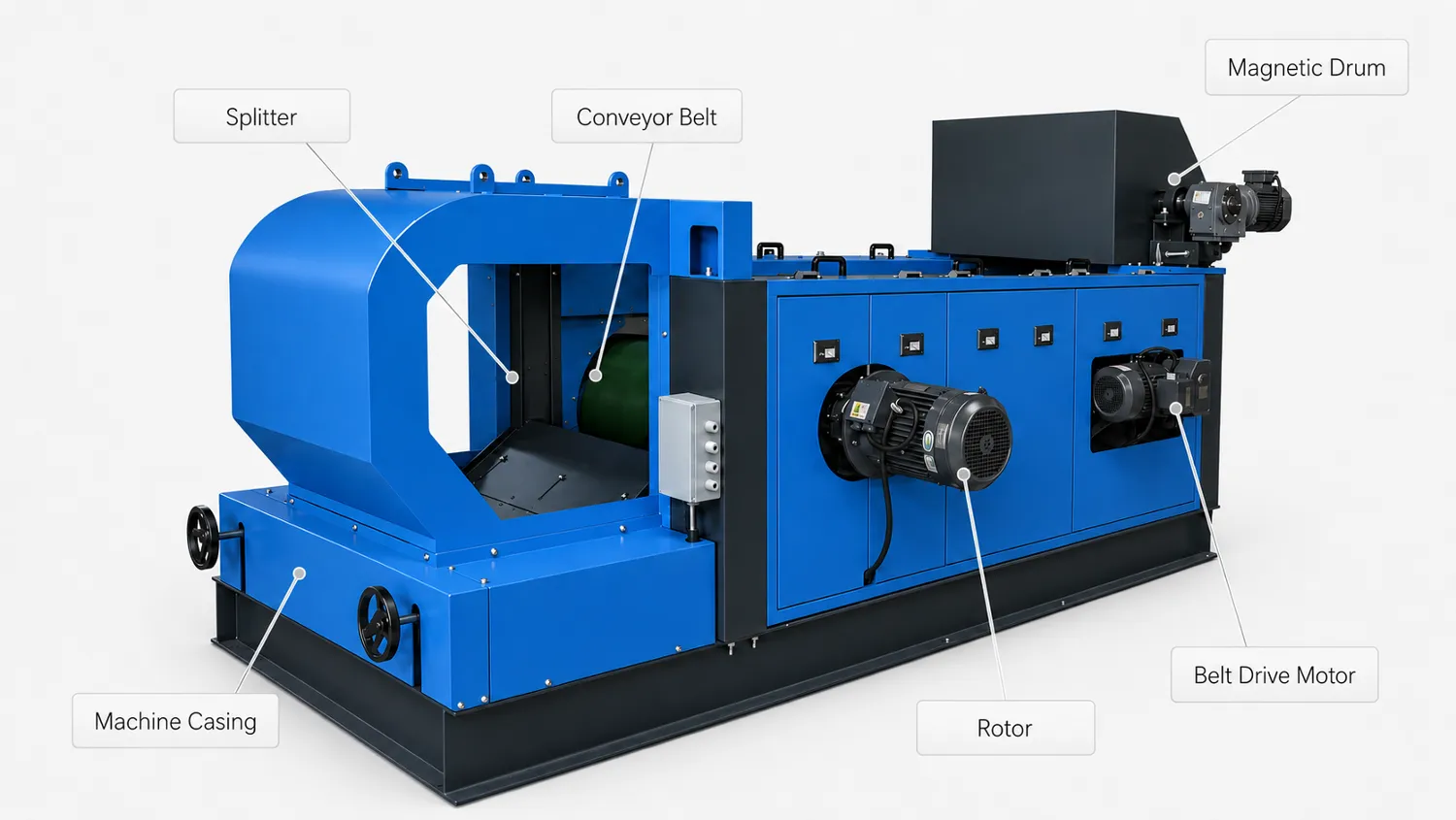
Separación de metales no ferrosos finos en acción
Para garantizar la máxima eficiencia en el proceso de reciclado, nuestras máquinas de reciclaje de plástico están equipadas con un rotor de alta frecuencia que genera corrientes de Foucault para expulsar las partículas de aluminio y otras partidas no ferrosas del flujo principal de material.
Maximice la pureza y el valor de recuperación
El aluminio fino se pierde fácilmente en la clasificación convencional. Este diseño de ECS ayuda a las plantas de reciclaje a obtener un mayor valor al tiempo que mejora la pureza de las fracciones de plástico, vidrio, cenizas y metal en las fases posteriores del proceso.
Recuperación de partículas finas
Optimizado para pequeños fragmentos no ferrosos, el separador puede recuperar partículas finas de aluminio de hasta aproximadamente 2 mm en flujos de alimentación adecuados.
Mayor pureza del producto
La eliminación de aluminio, latón, cobre y otros contaminantes no ferrosos contribuye a mejorar la calidad de las escamas de PET, los residuos de vidrio, los productos de cenizas y la chatarra valorizada.
Rotor de alta intensidad
El rotor de imanes concéntricos de tierras raras genera un campo magnético potente y uniforme que permite la expulsión fiable de pequeñas partículas conductoras a lo largo de todo el ancho de la cinta.
Punto de separación ajustable
La velocidad del rotor, la velocidad de la correa transportadora y las condiciones de alimentación, así como la posición del divisor, se pueden ajustar para adaptarse a los cambios en las mezclas de materiales y a los objetivos de recuperación deseadados.
Diseño apto para uso industrial
Los motores de alta resistencia, los componentes resistentes al desgaste y un práctico bastidor en voladizo permiten que el sistema se adapte a entornos de reciclaje exigentes.
Mayor rentabilidad de los flujos de residuos
La recuperación de pequeñas fracciones de aluminio puede convertir el material que antes se perdía en un flujo de metal comercializable y reducir las sanciones por contaminación.
Cómo funciona el separador de corrientes de Foucault
El material se extiende en una capa delgada, se acelera sobre un rotor magnético de alta velocidad y se separa por las diferentes rutas de vuelo de las partículas no ferrosas y no metálicas. Para la física del rotor y el sistema de banda, consulte nuestra guía sobre cómo funciona un separador de corriente inducida.
Alimentación uniforme
La alimentación de una sola capa estable garantiza una mejor exposición al campo magnético y favorece una separación fiable y reproducible.
Rotor de alta velocidad
El rotor magnético gira a alta velocidad e induce corrientes parásitas en el interior de las partículas no ferrosas conductoras.
Expulsión de partículas
El aluminio y otros metales conductores son lanzados hacia delante, mientras que los materiales no metálicos siguen una trayectoria más corta.
Colección Splitter
Para garantizar la máxima eficiencia en el proceso de reciclaje, nuestra máquina de reciclaje de plástico está equipada con un divisor de chorro ajustable que permite separar el metal recuperado del material limpio en función de los requisitos específicos de pureza y nivel de recuperación deseados.
Dónde aporta valor la recuperación de aluminio fino
Para recuperar metales no ferrosos de pequeño tamaño o eliminar contaminantes conductores antes del proceso posterior de transformación.
Escamas de plástico PET
Para mejorar la pureza de las escamas de rPET antes de la extrusión o la conversión en material de grado alimentario, esta unidad elimina contaminantes finos de aluminio y metales no ferrosos.
Purificación de plásticosCenizas de fondo de incineradora
Recupera aluminio fino de gran valor y otros metales no ferrosos a partir de fracciones de cenizas procesadas.
Recuperación de metalesReciclaje de vidrio
Para purificar el vidrio triturado, esta máquina de reciclaje de vidrio es capaz de eliminar las tapas de aluminio, los fragmentos de papel aluminizado y otros contaminantes conductores.
Limpieza de vidrio trituradoActualización de ZORBA
Para mejorar la calidad de las virutas de chatarra no ferrosa, esta máquina de reciclaje de plástico separa las fracciones ricas en aluminio de los flujos de metal mezclado.
Valorización de chatarraTratamiento de residuos electrónicos
Para recuperar metales conductores finos a partir de desechos electrónicos triturados y residuos generados durante el procesamiento de placas de circuito impreso.
Separación de residuos de aparatos eléctricos y electrónicos (RAEE)Residuos de fundición
Para separar las partículas no ferrosas de la arena de colada y otros flujos de retorno de fundición.
Residuos industrialesConfiguración del separador de corrientes de Foucault
Imágenes representativas de las máquinas y diagramas de principio para aplicaciones de recuperación de metales no ferrosos finos.
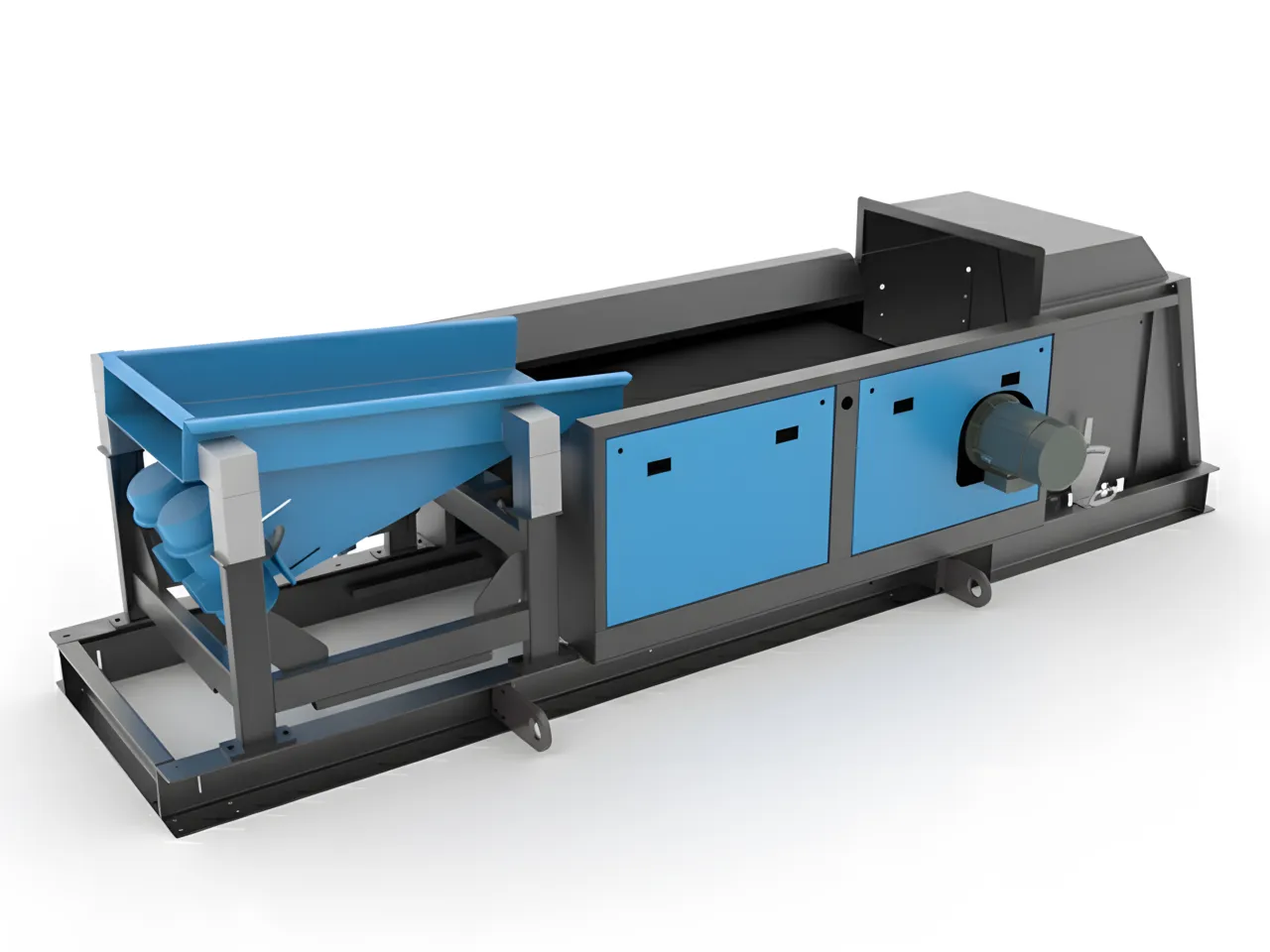
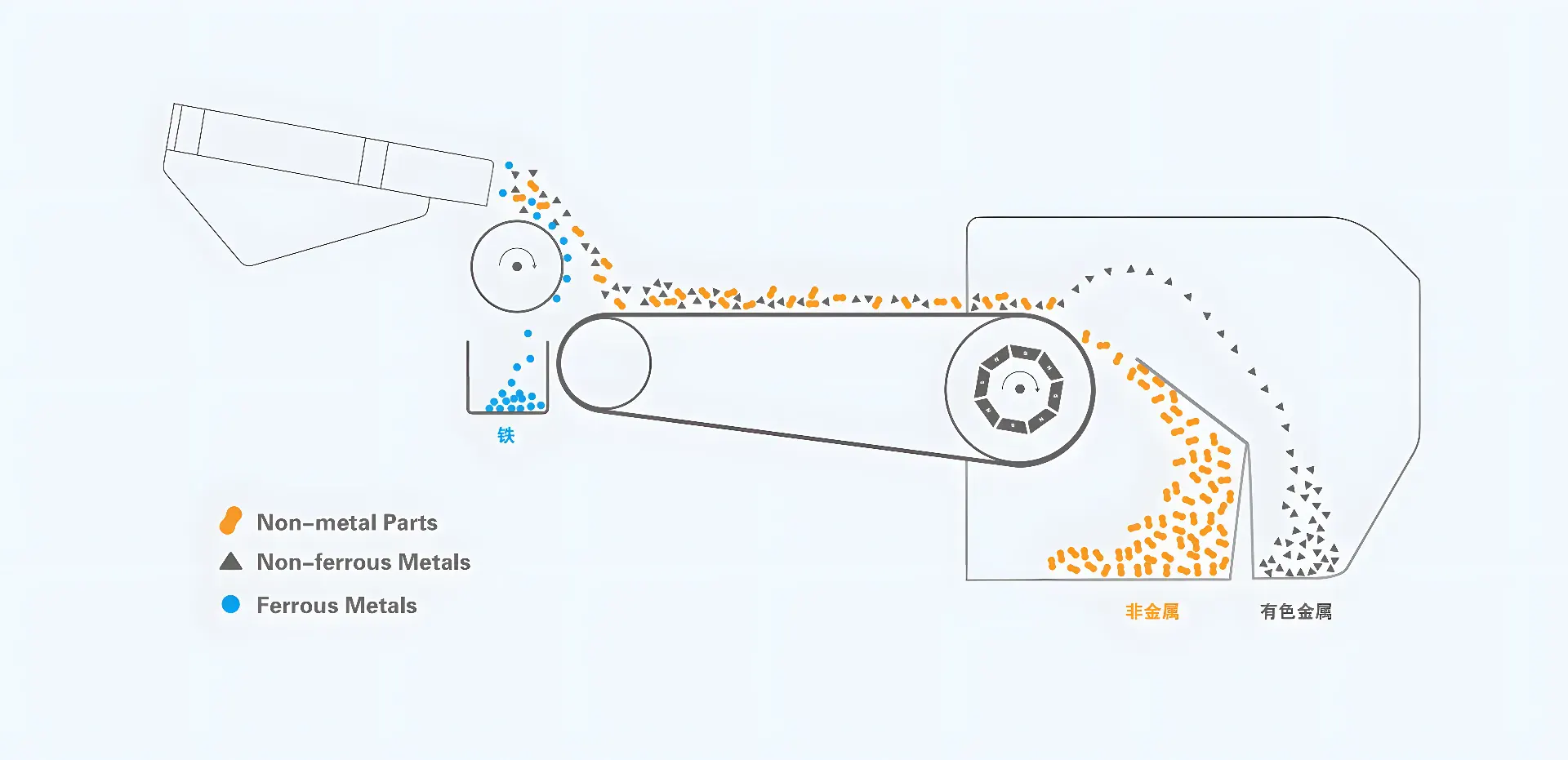
Diseñado para la separación de fracciones finas
La máquina combina un elevado rendimiento del rotor, una alimentación estable, un ajuste práctico y un diseño que facilita el mantenimiento para operaciones de reciclaje continuas.
Rotor de alta frecuencia
Los imanes de tierras raras NdFeB de alto rendimiento proporcionan una elevada intensidad magnética superficial a velocidades del rotor de hasta 4000 RPM.
Alimentador vibratorio uniforme
La alimentación vibratoria opcional permite obtener una capa uniforme de material en una sola capaña, lo que garantiza un rendimiento homogéno en la separación.
Placa divisoria ajustable
Para lograr un equilibrio óptimo entre la pureza del material reciclado y la tasa de recuperación, es posible ajustar la posición del divisor mediante el ángulo, la altura y la distancia.
Sistema de correa de cambio rápido
El diseño de marco en voladizo permite un reemplazo más rápido de la cinta transportadora y disminuye el tiempo de inactividad por mantenimiento.
Especificaciones del separador de corrientes de Foucault
Para garantizar un funcionamiento estable y un alto rendimiento, todas nuestras máquinas de reciclaje de plástico están diseñadas con componentes de primera calidad y materiales resistentes que aseguran una vida úlula larga y un mantenimiento reducido.
| Modelo | Dimensions L x W x H | Ancho efectivo de la correa | Velocidad del rotor | Velocidad de Cinta | Potencia de Motor |
|---|---|---|---|---|---|
| 40A | 2080 x 1357 x 1100 mm | 330 milímetros | 0-3000 RPM | 0-2 m/s | 0.75 kW |
| 65A | 3300 x 1500 x 1200 mm | 520 milímetros | 0-4000 RPM | 0-2 m/s | 1,5 kW |
| 80A | 3300 x 1700 x 1200 mm | 670 milímetros | 0-4000 RPM | 0-2 m/s | 2,2 kW |
| 100A | 3300 x 1900 x 1200 mm | 840 milímetros | 0-4000 RPM | 0-2 m/s | 2,2 kW |
| 120A | 3300 x 2000 x 1200 mm | 1040 milímetros | 0-4000 RPM | 0-2 m/s | 2,2 kW |
| 140A | 3300 x 2130 x 1587 mm | 1200 milímetros | 0-4000 RPM | 0-2 m/s | 2,2 kW |
Deslice horizontalmente para ver la tabla completa en dispositivos móviles.
Asistencia fiable durante todo el ciclo de vida del equipo
Desde la planificación de la instalación hasta el mantenimiento rutinario, nuestro equipo de servicio le ayuda a mantener su equipo en funcionamiento de forma segura, constante y eficiente.
Garantía limitada de 1 año.
La garantía cubre los defectos de fabricación en los principales componentes mecánicos y eléctricos durante un año. Las piezas sujetas a desgaste normal y los daños causados por un funcionamiento inadecuado se tratan por separado.
Instrucciones de instalación
Ofrecemos asesoramiento sobre diseño, cimentación, servicios, espacios libres, integración de líneas y puesta en marcha para garantizar una instalación sin contratiempos y un arranque fiable.
Suministro de piezas de recambio
Se dispone de piezas de recambio sujetas a desgaste, cojinetes, juntas, sensores, componentes eléctricos y otros elementos de mantenimiento para el mantenimiento programado y el funcionamiento a largo plazo.
Asistencia técnica
Si su proyecto requiere asistencia adicional, ponemos a su disposición servicios de resolución de averías a distancia, recomendaciones de funcionamiento, orientación sobre el mantenimiento y un servicio opcional in situ.
Preguntas Frecuentes sobre Separador de Corriente Eddy de Alta Recuperación
Respuestas a preguntas clave sobre recuperación de aluminio fino, selección del rotor, tamaño de partícula y protección magnética del flujo ascendente.
Recupera Más Aluminio Fino de tu Flujo de Reciclaje
Envíanos los detalles de tu material y tu objetivo de capacidad de producción. Nuestro equipo te ayudará a ajustar el ancho del rotor, el método de alimentación, la configuración del divisor y la protección magnética del flujo ascendente a tu aplicación.
- Consultoría de Recuperación de Aluminio Fino
- Soporte de purificación de escamas de PET y vidrio
- Aplicaciones IBA, e-waste y ZORBA
- Asesoramiento de selección de modelo y disposición