

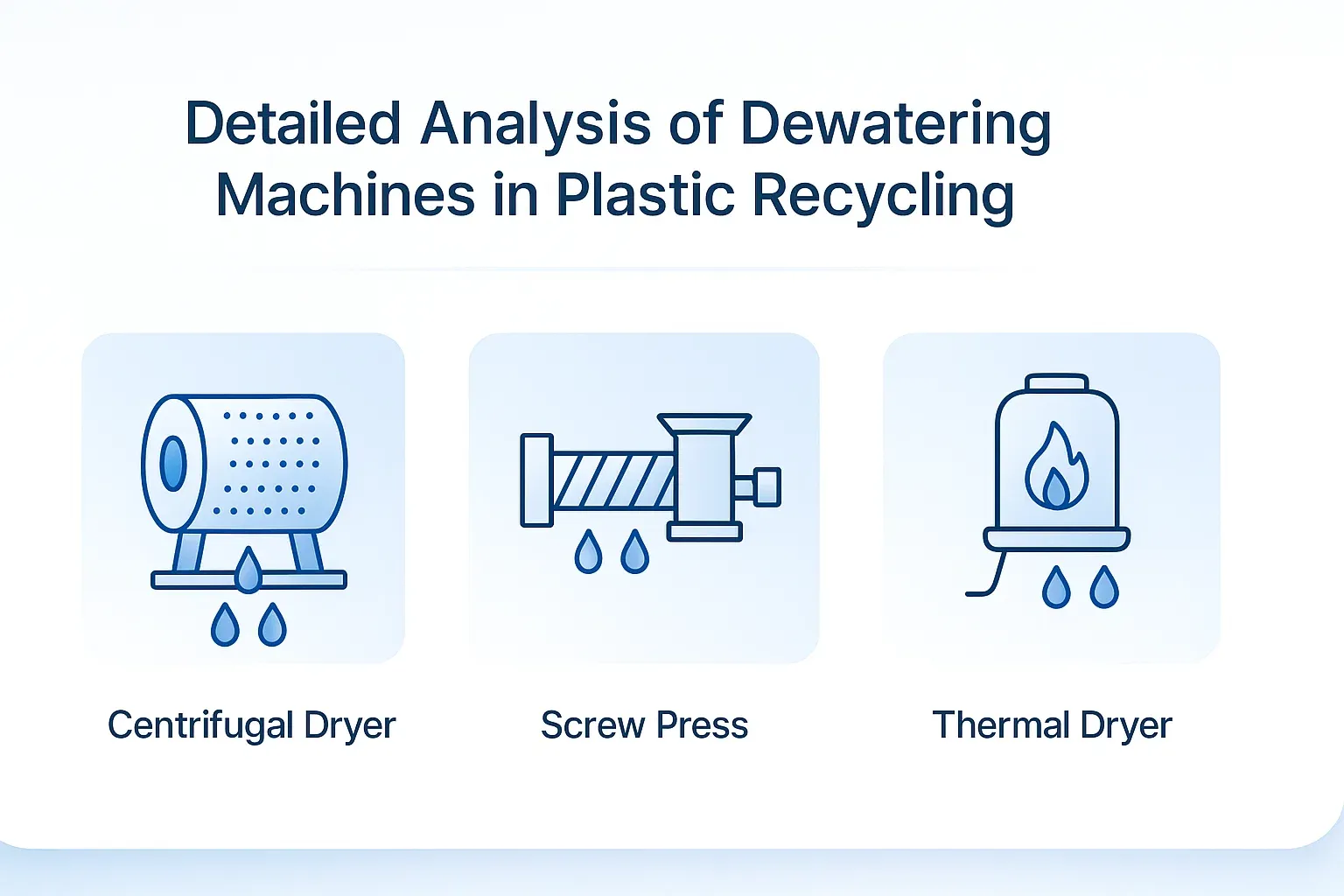
A stroj za odvodnjavanje plastike mechanically removes water from washed plastic flakes, film, or regrind before they enter thermal drying, pelletizing, or extrusion. Without it, your recycling line either spends 4–6× more on energy (trying to evaporate water thermally) or produces off-spec output. This guide covers the three main types of plastic dewatering machines, their target materials, specifications, and a 5-step selection framework for sizing the right unit for your recycling line.
For the broader drying process — including thermal drying, crystallization, and full system design — see our plastic drying system pillar guide. For PET-specific moisture targets, see the PET flake dryer guide.
What Is a Plastic Dewatering Machine?
A plastic dewatering machine is a mechanical water-removal device that takes washed plastic at 30–70% moisture and discharges it at 2–15% moisture, depending on machine type and material. It is the bridge between the washing line and the thermal drying or extrusion stages of any plastic recycling operation.
The reason every production-grade recycling line uses a plastic dewatering machine comes down to energy economics. Removing 1 kg of water mechanically (centrifugal or screw press) takes 30–60 kWh per ton of plastic processed. Evaporating the same water thermally takes 250+ kWh per ton. Skipping mechanical dewatering and trying to dry flakes thermally directly from the washer is the single most common cause of overspending on energy in plastic recycling — see our centrifugal vs. thermal drying energy comparison for the calculations.
A typical recycling process places the plastic dewatering machine in stage 3:
1. Collection & Sorting — Plastic waste is gathered and separated by polymer type (PET, HDPE, LDPE, PP, PVC).
2. Pranje — Sorted plastics are washed to remove dirt, food residue, labels, and adhesives.
3. Mechanical Dewatering — A plastic dewatering machine removes free water from the washed material at low energy cost.
4. Thermal Drying — A hot air dryer evaporates residual surface moisture if the application requires it.
5. Pelletizing or Extrusion — Dry plastic is melted and converted to pellets or directly extruded into new products.
Utočna vlažnost se dramatično razlikuje ovisno o materijalu: tvrdi plastični prahovi (PET, HDPE, PP) napuštaju friccionu očistiteljicu s vlažnošću 30–40%; plastične folije s vlažnošću 50–70%. Plastična odvjetna mašina smanjuje to na 2–5% za tvrdi prahove (centrifugalno) ili 8–15% za folije (štapni pritisak), pripremajući materijal za sljedeću fazu.
3 Types of Plastic Dewatering Machines
The plastic recycling industry uses three distinct dewatering technologies, each engineered for specific material characteristics and throughput requirements.
1. Centrifugal Plastic Dewatering Machine
A centrifugal plastic dewatering machine spins washed flakes at 800–1,500 RPM inside a perforated screen drum. Centrifugal force throws water radially through the screen while plastic flakes discharge dewatered. Two configurations exist: vertical (compact, sub-1 ton/h) and horizontal (higher capacity, more uniform output). For the orientation comparison, see our horizontal vs. vertical centrifugal dewatering machine guide.
• Best Material: Rigid plastic flakes — PET bottle flakes, HDPE crate regrind, PP injection scrap, ABS housings
• Outlet Moisture: 2–5% (ovisno o materijalu i brzini rotora)
• Protok: 200–3,500 kg/h
• Snaga motora: 22–90 kW
• Troškovi kapitala: $8,000–$45,000 USD
Centrifugalna stroj za odvajanje vode od plástika je standardni izbor za bilo koju tvrdu liniju za recikliranje plástika. Ne može efikasno obraditi film jer dugačak fleksibilan materijal se zaokružuje oko rotorovih valjaka i zaustavlja stroj.
2. Film stisičar / Valjni pritisak stroj za odvajanje vode od plástika
Za PE i PP film, valjni pritisak ili film stisičar stroj za odvajanje vode od plástika stisi vodu mehaničkim pritiskom. Rotirajući val prenosu vlažan film kroz koničnu komoru, stvarajući pritisak protiv perforirane mreže i prisiljavajući vodu da izlazi kroz perforacije. Film je u isto vrijeme stiskan u neprekidni vijak ili briket koji je spreman za sljedeći aglomerator ili extruder.
• Best Material: PE/PP film, LDPE poljoprivredni film, PP vezane torbe, raffia, mekani plástik
• Outlet Moisture: 8–15% (obično kombiniran s termičkom fazom koja je obično potrebna)
• Protok: 300–2,500 kg/h
• Snaga motora: 30–110 kW
• Troškovi kapitala: $15,000–$80,000 USD
Za velike količine film operacija iznad 1.5 tona/h, alternativom je centrifugalni stroj za odvodnjavanje plastične folije velike brzine sa dizajnom rotora koji se ne zaokružuje — kombinira centrifugalnu brzinu s rotorskom geometrijom kompatibilnom s filmom.
3. Teški valjni pritisak sustav za odvajanje vode od plástika
Za mješoviti otpad, kontaminirane tokove, ili predodvajanje vode za debeli materijali, teški valjni pritisak stroj za odvajanje vode od plástika obavlja ulaz koji bi zaglavljuio centrifugalni sustav. Slabiji kompresijski djelovanje (30–80 RPM valni rotaciji) tolerira kamenje, metalne odlomke i nepravilne dijelove koji se povremeno prođu kroz predproizvođačku mrežu.
• Best Material: Mješoviti kontaminirani otpad, predodvajanje vode za debeli baleni materijali, papir-plast kompoziti
• Outlet Moisture: 10–25% (uvijek s dodatnim odvajanjem ili sušenjem)
• Protok: 500–3,000 kg/s
• Snaga motora: 22–90 kW
• Troškovi kapitala: $20,000–$100,000 USD
Kakavikakav tip stroja za odvajanje vode od plástika adrešuje različite izazove materijala. Izbor pravog ovisi o obliku ulaznog materijala (tvrdi vs. film), količini, ciljanoj vlažnosti izlaza i razini kontaminacije.
Tabela usporedba strojeva za odvajanje vode od plástika
| Tip | Mehanizam | Outlet Moisture | Propusnost | Najbolje za |
|---|---|---|---|---|
| Centrifugalni | Visokospećnostni rotor (800–1,500 RPM) unutar perforirane mreže | 2–5% | 200–3,500 kg/h | PET, HDPE, PP tvrdi prahovi |
| Cjedilo za film | Konični valni pritisak protiv mreže | 8–15% | 300–2,500 kg/h | PE/PP film, LDPE poljoprivredni film, raffia |
| Vijčana preša | Spora kompresija za kontaminirane/mješovite tokove | 10–25% | 500–3,000 kg/s | Mješoviti otpad, predodvajanje, papir-plast |
Zašto svaka reciklacijska linija treba stroj za odvajanje vode od plástika
1. Smanjuje troškove energije za 4–6×
Mehaničko uklanjanje vode koristi 30–60 kWh po toni plastike. Termička evaporacija iste mase vode koristi više od 250 kWh po toni. Za liniju kapaciteta 1 t/h koja radi 4.000 sati godišnje po cijeni od 0,10 €/kWh, ugradnja stroja za odvodnjavanje plastike godišnje štedi 80.000–100.000 € u usporedbi s isključivo termičkim sušenjem.
2. Smanjuje težinu materijala 50–60% Prije transporta
Example: 1 tona sušenog plastičnog materijala s utočnom vlažnošću 70% = ~3,330 kg vlažnog materijala. Nakon odvjetanja do 20% vlažnosti, ukupna težina se smanjuje na 1,250 kg — smanjenje od 62%. To se direktno prevodi na niže troškove goriva, manje transportnih vozila i smanjeni radni napor.
3. Sprječava oštećenje ekstrudera i nedostatke kvalitete
Vlažne pahuljice koje ulaze u ekstruder uzrokuju probleme s vlagom u ventilaciji, nestabilnost taljenja, eksplozije pare u cilindru vijače i vidljive nedostatke u izlazu (srebrne pruge, praznine, krhkost). Kod PET-a, preostala vlaga iznad 50 ppm na ulazu ekstrudera uzrokuje hidrolitičku degradaciju IV — polimer postaje slabiji i mutniji pri svakom prolasku.
4. Uklanja lagane nečistoće zajedno s vodom
Centrifugalne plastične mašine za odvodnjavanje također izbacuju fragmente etiketa, sitne čestice i čestice prljavštine kroz perforiranu mrežu zajedno s vodom. Time se pročišćava tok pahuljica i smanjuje opterećenje onečišćenjem na nizvodnom postrojenju.
5. Omogućuje modularni dizajn linije
Plasticna mašina za odvodnjavanje stvara međustanicu u liniji — pahuljice se mogu nakratko pohraniti između odvodnjavanja i termičkog sušenja bez gubitka kvalitete, što omogućuje serijsko rad i prekide u CIP čišćenju bez zastoja cijele linije.
Okvir za odabir plastične mašine za odvodnjavanje u 5 koraka
Korak 1 — Identificirajte obrazac za materijal. Tvrde ljuske (PET, HDPE, PP, ABS) → centrifugalna plastična mašina za odvodnjavanje. Folija (PE, PP, LDPE) → preša za foliju ili centrifugalna protiv zamatanja. Miješano/kontaminirano → robusna vijčana preša za primarno odvodnjavanje.
Korak 2 — Izračunajte vršni protok. Linije recikliranja rade u serijama s prekidima za čišćenje. Vršna brzina dovoda obično je 1,5–2 puta veća od dnevnog prosjeka. Linija koja obrađuje 10 tona tijekom osmosatne smjene ima vršni dovod od oko 1.500–1.800 kg/h. Dimenzionirajte stroj za odvodnjavanje za vršni, a ne za prosječni protok.
Korak 3 — Odredite ciljanu vlažnost na izlazu. Za direktnu ekstrudaciju HDPE/PP, prihvatljiva je vlažnost 3–5%. Za peliranje PET ili bilo koji cilj sub-1% vlažnosti, izlaz odvjetne mašine mora biti ≤4% kako bi se veličina termičke faze održala u redu. Svaki dodatni postotak vlažnosti izlaza odvjetanja dodaje 60–80 kWh/tone termičke opterećenosti.
Korak 4 — Usklađivanje materijala za konstrukciju s polimerom. SS304 nehrđajući čelik za PET (kontakt s hranom), ugljični čelik prihvatljiv za HDPE/PP, kiselinski otporni legura za PVC (isparavanje klora). Neusklađena konstrukcija uzrokuje prijevremenu koroziju i kontaminira izlazni tok.
Korak 5 — Provjerite pristup za održavanje. Vertikalne centrifugalne plastične mašine za odvodnjavanje imaju pristup s vrha (promjena sita za 30 minuta). Horizontalne jedinice zahtijevaju uklanjanje krajnjeg poklopca (1–2 sata, dva tehničara). Vijačne preše zahtijevaju pristup komori vijka za čišćenje začepljenja. Uskladite složenost održavanja s vašim internim kapacitetima.
Uobičajeni problemi i rješenja
Vlažnost na izlazu iznad specifikacija. Uzrok: tupa ili istrošena rešetka, nedovoljno snažan motor ili prekoračenje vršnog protoka. Rješenje: pregledajte i zamijenite perforiranu rešetku, provjerite ampernu potrošnju motora pri vršnom opterećenju i potvrdite da je stroj dimenzioniran za vaš vršni protok (a ne za prosječni).
Lom pahuljica tijekom odvodnjavanja. Uzrok: brzina rotora previsoka za materijal (posebno PET, koji je krhak). Rješenje: smanjite brzinu rotora na 1.000–1.200 o/min za PET, prebacite na horizontalnu konfiguraciju za ispuštanje vode pri nižoj brzini, provjerite da veličina perforacija na sita odgovara dimenzijama pahuljica.
Film se omotava oko rotora. Uzrok: standardna centrifugalna plastična mašina za odvodnjavanje koja se koristi na filmskom materijalu. Rješenje: prijeđite na prešu za film ili centrifugu za film protiv namotavanja dizajniranu za fleksibilni materijal.
Prekomjerni troškovi energije. Uzrok: nedovoljne veličine mašina za odvodnjavanje prisiljava termalnu fazu da isparava većinu vode. Rješenje: nadogradnja na plastičnu mašinu za odvodnjavanje veće kapacitete ili rad dviju jedinica u seriji prije termalne faze. Vlažnost u centrifugalnoj fazi treba biti 2–5%, a ne 8–10%.
Cesto postavljana pitanja
Što je sušilna mašina za plastični otpad?
Stroj za odvodnjavanje plastike je mehanički uređaj za uklanjanje vode koji se koristi u linijama za reciklažu plastike za smanjenje vlažnosti u opranim peletima ili foliji s 30–70% (nakon pranja) na 2–15% (ovisno o vrsti stroja i materijalu) prije termičkog sušenja ili izravne ekstruzije. Tri glavne vrste su centrifugalne mašine za odvodnjavanje krutih pahuljica, preše za fleksibilne folije i robusne vijčne preše za miješane kontaminirane tokove.
Kako činjenje vodootpornog stroja za recikliranje plástika spašava energiju?
Mechanical water removal uses 30–60 kWh per ton of plastic. Thermal evaporation of the same water mass uses 250+ kWh per ton — roughly 4–6× more. Installing a plastic dewatering machine before a thermal dryer typically saves $80,000–$100,000 per year for a 1 ton/h line running 4,000 hours annually. The capital cost of a centrifugal dewatering unit pays back in 6–18 months for most production lines.
Kakav nivo vlažnosti može postići stroj za odvajanje vode iz plástika?
Centrifugalne plastične odvjetne mašine postizaju izlaznu vlažnost 2–5% na tvrdim prahovima (PET, HDPE, PP) u jednom prolazu. Film stješnjivači dosežu 8–15% na fleksibilnim folijama. Teške štapne pritiske za mješoviti otpad obično ispuštaju na 10–25%. Za niže ciljeve vlažnosti (sub-1%), mehaničko odvjetanje sledi termičkom sušenju — pogledajte naš vodena sustava za sušenje plastike vodič.
Koliko košta stroj za odvodnju plástika?
Vertical centrifugal plastic dewatering machines cost $8,000–$18,000 USD for 200–1,000 kg/h capacities. Horizontal centrifugal units cost $15,000–$45,000 for 800–3,500 kg/h. Film squeezers cost $15,000–$80,000. Heavy-duty screw press dewatering systems cost $20,000–$100,000. Final price depends on motor power, rotor diameter, construction material, and automation level.
Centrifugal dewatering vs. screw press: which is better?
It depends entirely on material form. Centrifugal plastic dewatering machines achieve lower outlet moisture (2–5% vs. 10–25%) and use less energy per ton, but cannot handle film. Screw presses handle film, mixed waste, and contaminated streams that would jam a centrifugal unit, but discharge at higher moisture and need a downstream stage. For rigid flakes, choose centrifugal. For film and mixed waste, choose screw press or film squeezer.
Moram li potrebni termički sušilac nakon mojeg stroja za odvodnju vode za plastični materijal?
For HDPE/PP destined for low-spec extrusion (pipe, pallet), no — centrifugal dewatering at 3–5% moisture is sufficient for most HDPE/PP extruders. For PET (any grade), film with extrusion-grade output, or any application requiring sub-1% moisture, a thermal dryer is required after the plastic dewatering machine. See our PET flake dryer guide for PET-specific moisture targets by end application.
Zaključak
A plastic dewatering machine is the cheapest water-removal step in any plastic recycling line — typically 4–6× lower energy cost per kg of water removed compared to thermal drying. Specify it based on input material form (rigid flake vs. film vs. mixed), peak throughput, target outlet moisture, and downstream process requirement. For rigid flakes, choose a centrifugal unit; for film, a squeezer or anti-wrap centrifuge; for contaminated mixed streams, a heavy-duty screw press.
Energycle manufactures the full range of plastic dewatering machines for recycling lines from 200 kg/h to 3,500 kg/h: centrifugal plastic dewatering machines, film stiskacima, high-speed film centrifugal units, i screw press dewatering systems. Kontaktirajte našu inžinjerijsku tim with your material type, throughput target, and downstream process — we will recommend the right plastic dewatering machine and integrate it with your existing or planned linija za pranje rublja ili sustav sušenja.
Related Plastic Dewatering & Drying Equipment
- Centrifugalni stroj za odvodnjavanje plastičnih pahuljica
- Haute Vitesse Machine de Dégorgement Centrifuge pour Film en Plastique
- Plastic Film Squeezer / Densifier
- Screw Press Dewatering System
- Termalna sušilica za recikliranje plastike
- Plastic Drying System: Complete Pillar Guide
- Horizontalna protiv uspravne centrifugalne odvajalice vode
- PET Flake Dryer: Complete Guide
- Centrifugal vs. Air Drying Energy Comparison
