


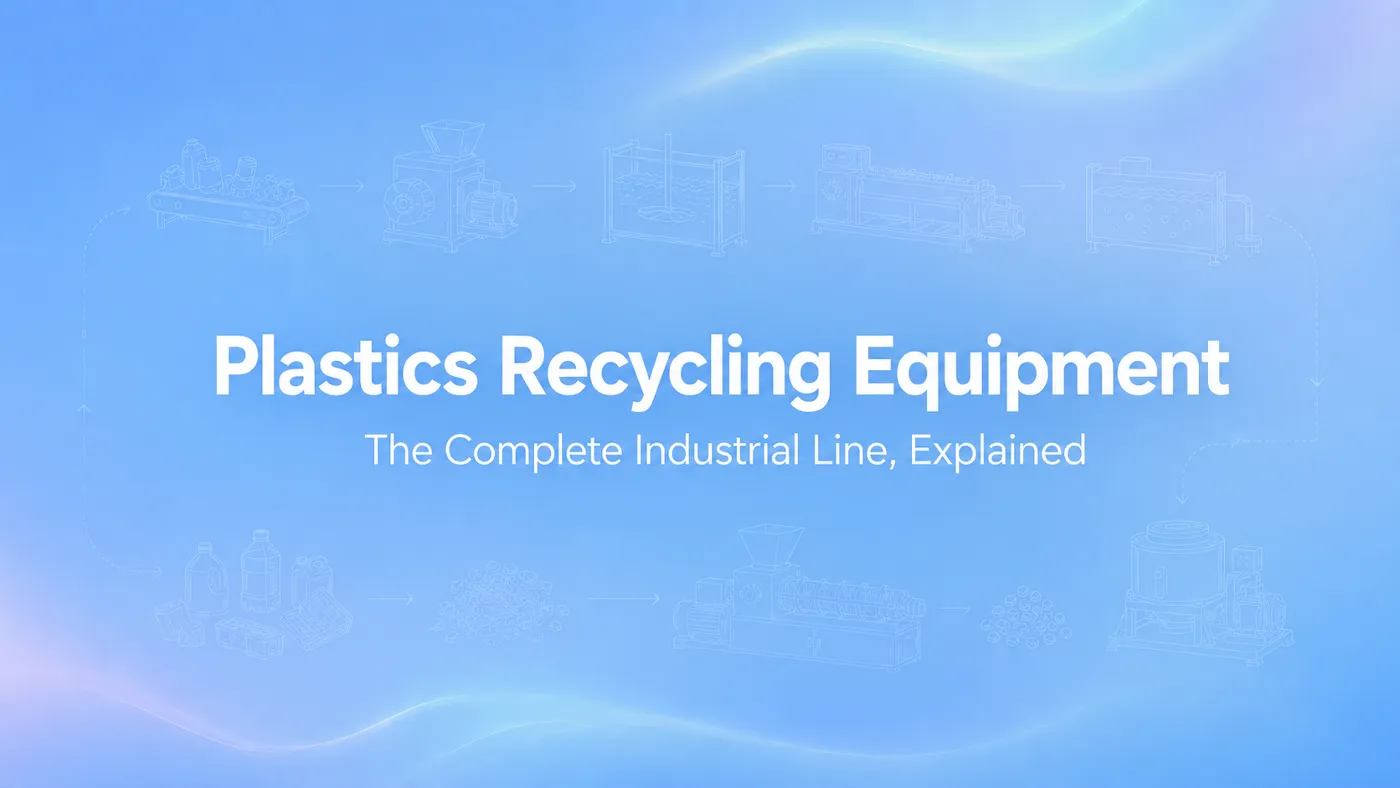
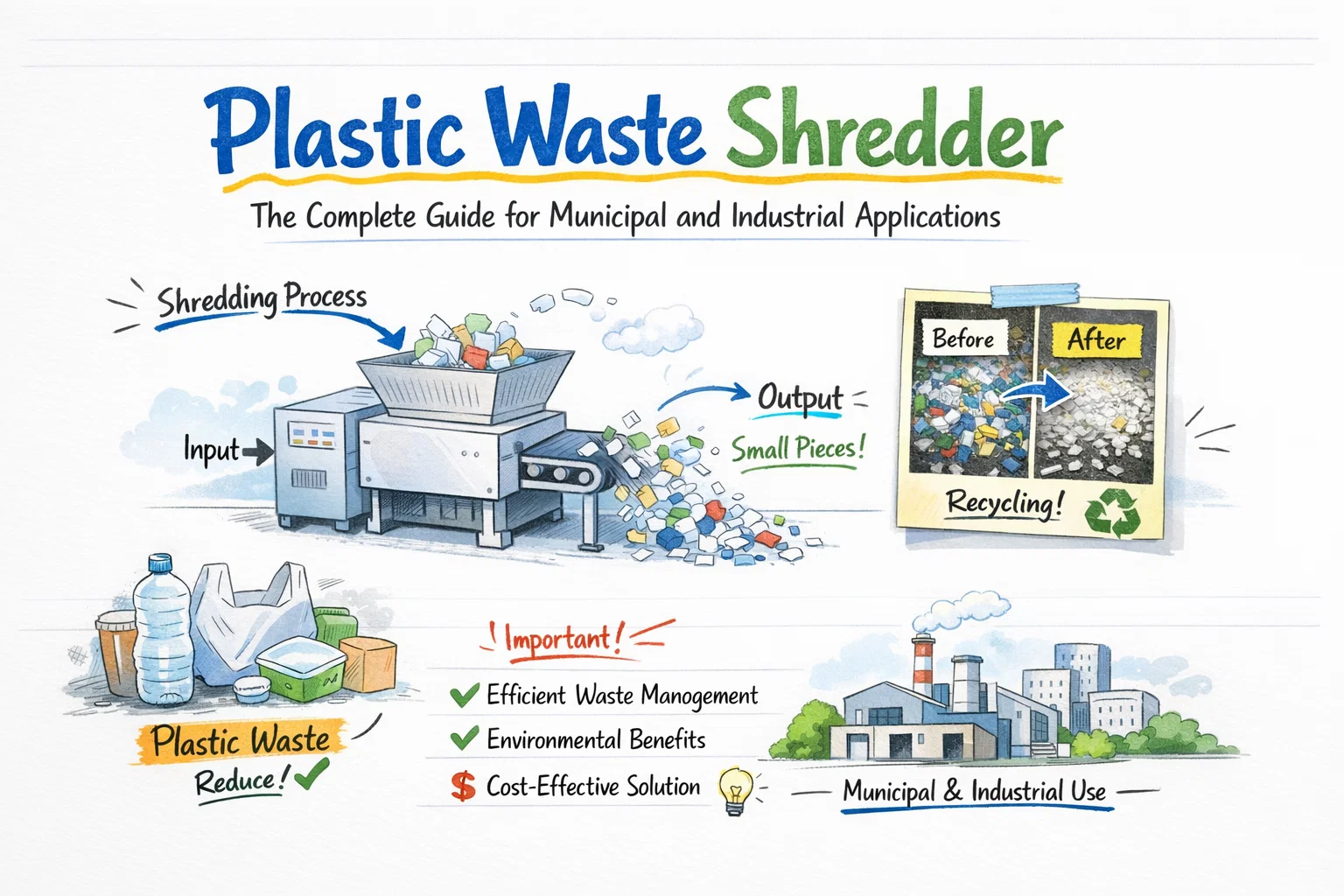
에이 플라스틱 폐기물 분쇄기 is a heavy-duty machine that tears, cuts, or crushes plastic waste into uniform particles for downstream sorting, washing, or recycling. If you run a Material Recovery Facility (MRF), a plastic recycling plant, or an industrial waste operation, choosing the wrong shredder — or placing it incorrectly in your line — will bottleneck every process after it.
This guide covers everything procurement and operations managers need: machine types, pre-sorting requirements, throughput planning, MRF/MSW line integration, and real pricing benchmarks.
What Is a Plastic Waste Shredder?
A plastic waste shredder is industrial size-reduction equipment designed to break down plastic items — bottles, drums, pipes, film, pallets — into consistent output fragments, typically 30–150 mm in size. According to equipment specialists, shredders serve as the critical first stage in almost every plastic recycling process, making downstream washing, optical sorting, and pelletizing significantly more efficient.
Unlike granulators, which operate at high speed and require pre-shredded input, plastic waste shredders use low-speed, high-torque cutting action — typically 20–80 RPM — that handles bulky, contaminated, or mixed feed without pre-cutting. This makes them the entry point for both municipal solid waste (MSW) streams and industrial post-production scrap.
Types of Plastic Waste Shredder Machines
Not every shredder handles every plastic type equally. Choosing the wrong configuration is one of the most common and costly mistakes in recycling plant design.
단일 샤프트 분쇄기
A single-shaft shredder uses one rotating shaft with fixed blades against a stationary counter-knife. It excels at film, bags, lightweight rigid plastics, and post-consumer packaging because output size is controlled by a bottom screen.
- Throughput range: 200 kg/h – 2,000 kg/h
- Motor power: 15–75 kW
- 가장 적합한 용도: PET bottle bales, LDPE film rolls, injection molding scrap
- 가격대: $10,000 – $40,000
이중 샤프트 분쇄기
A double-shaft (twin-shaft) shredder uses two counter-rotating shafts that pull material inward and shear it. It delivers higher torque and handles rigid, thick-walled plastics — HDPE drums, PVC pipes, automotive bumpers — that would stall a single-shaft unit.
- Throughput range: 500 kg/h – 5,000 kg/h
- Motor power: 30–200 kW
- 가장 적합한 용도: Mixed rigid plastic bales, large hollow containers, industrial plastic scrap
- 가격대: $25,000 – $80,000
4축 분쇄기
A four-shaft shredder adds two secondary shafts for a second shearing pass, producing tighter, more uniform particle sizes in a single machine. This design is preferred in RDF (Refuse-Derived Fuel) production and high-purity recycling lines where output consistency is critical.
- Throughput range: 1,000 kg/h – 10,000+ kg/h
- Motor power: 75–1,250 kW
- 가장 적합한 용도: Mixed MSW plastics, large MRF pre-treatment, RDF/SRF preparation
- 가격대: $60,000 – $250,000+
Choosing the Right Type: Quick Reference
| 기준 | 싱글 샤프트 | 이중 샤프트 | Four-Shaft |
|---|---|---|---|
| Best plastic types | Film, light rigid | Rigid, thick-walled | Mixed/heterogeneous |
| Output size control | Screen-controlled | 보통의 | Tightest uniformity |
| Handles contamination | 낮은 | 중간 | 높은 |
| MSW/MRF integration | Secondary stage | Primary + secondary | Primary large-scale |
| Entry price | $10K | $25K | $60K+ |
The Challenge of Processing Mixed Plastic Waste
Mixed plastic waste is the hardest feed stream a shredder will face. Contamination, variable density, and incompatible polymer types all reduce effective throughput and increase blade wear. According to Reworld, mixed plastics cannot be efficiently recycled without proper sorting into individual polymer types — and shredding is the step that makes sorting possible in the first place.
Three specific challenges drive most operational headaches:
- Density variation: A single feed batch may contain lightweight LDPE film (density ~0.92 g/cm³) alongside rigid HDPE drums (density ~0.95 g/cm³) and heavy PVC pipe (density ~1.4 g/cm³). The shredder must handle all without jamming.
- Contamination load: Soil, food residue, metal fasteners, and glass shards inside plastic waste accelerate blade wear. Budget for blade replacement at 800–1,500 operating hours for heavily contaminated streams.
- Oversized or tangled materials: Long plastic pipes, strapping bands, and baled film wrap around shafts. Machines with automatic reverse rotation (standard on most twin-shaft models) prevent most jams without operator intervention.
Pre-Sorting Requirements Before Shredding
Running unsorted waste directly into a shredder without pre-conditioning is the fastest way to damage cutting blades and create dangerous jams. For both municipal and industrial operations, a pre-sorting stage protects your shredder and extends its service life.
Minimum pre-sort steps for MRF applications:
- Bag breaking: Open garbage bags with a dedicated bag-breaker machine before the shredder receives feed. Intact bags trap air and cause inconsistent shredding.
- Coarse trommel screening: A rotating drum screen (typically 80–150 mm mesh) removes fines, organics, and undersized material that don’t need shredding — reducing the load on the shredder by 15–30%.
- Ferrous metal removal: Install an 오버밴드 자기 분리기 above the infeed conveyor. Metal fragments left in the feed destroy cutting blades in hours.
- Manual pick station: A human inspection point (or AI-assisted vision system) removes hazardous items — gas cylinders, batteries, large glass — that could cause catastrophic machine failure.
을 위한 industrial post-production plastic scrap, pre-sorting requirements are simpler: separate by resin type (PET vs. HDPE vs. PP) if purity of the shredded output matters. If the output feeds an RDF line, mixed resins are acceptable.
Throughput Planning: How to Calculate Real Output
Manufacturer-rated capacity figures are almost always higher than real-world output. A shredder rated at 1,000 kg/h on clean HDPE flakes will deliver far less on contaminated mixed municipal plastics.
Use this two-step adjustment formula to calculate realistic throughput:
Step 1 — Material Hardness Index (MHI) adjustment: Real output = Rated capacity × MHI
Common MHI values:
- Clean PET/HDPE bottles: 0.80–0.90
- Mixed rigid plastics: 0.60–0.70
- Mixed MSW plastics (contaminated): 0.45–0.60
Step 2 — System Efficiency Coefficient (SEC) adjustment: Effective output = Step 1 result × SEC (typically 0.70–0.85 for continuous operations)
Example: A shredder rated at 2,000 kg/h on mixed rigid plastics (MHI = 0.65) operating with a SEC of 0.75:
- Step 1: 2,000 × 0.65 = 1,300 kg/h
- Step 2: 1,300 × 0.75 = 975 kg/h real output
This means a plant planning to process 15 tonnes/day (two 8-hour shifts) actually needs a machine rated at approximately 2,000 kg/h minimum — not 1,000 kg/h. Always size up, not down. An undersized shredder bottlenecks the entire line; an oversized one adds only marginal cost per tonne.
Plastic Waste Shredder in MRF and MSW Sorting Lines
에이 plastic waste shredder machine sits at the pre-treatment stage of a Material Recovery Facility — before optical sorters, air classifiers, and density separators. Its job is not to separate plastics; it is to reduce particle size so that separation equipment can work accurately.
Typical MRF Integration Sequence
- Receiving hopper → raw mixed waste input
- Bag breaker + trommel screen → pre-conditioning
- Plastic waste shredder → size reduction to 50–150 mm
- Overband magnet → ferrous metal removal
- 에디커런트 분리기 → non-ferrous metal removal
- Air classifier / ballistic separator → light vs. heavy fraction separation
- NIR optical sorter → PET / HDPE / PP / PVC identification and ejection
- Baler or conveyor to downstream → baled plastic fractions to recycler
The shredder’s output size directly determines the accuracy of every separation stage that follows. A NIR optical sorter, for example, performs best on particles between 40–120 mm — feed that is too large or too small reduces sort purity.
Integration with Energycle’s plastic shredders
Energycle’s plastic waste shredder line is designed for direct integration with downstream MRF sorting equipment. The shredders include PLC control and adjustable output screens, allowing operators to dial in particle size to match the requirements of their NIR sorters or washing lines. For plants processing rigid containers, the 단단한 플라스틱 분쇄기 series handles HDPE, PVC, and ABS at industrial scale.
Plastic Waste Shredder Cost: What to Budget in 2026
According to Energycle’s pricing data, plastic waste shredder machines range from $10,000 to $80,000 depending on shaft configuration, rotor width, blade material, and motor power.
| 기계 유형 | 용량 | 가격 범위 (USD) | Best Application |
|---|---|---|---|
| 단일 샤프트 분쇄기 | 200–2,000 kg/h | $10,000 – $40,000 | Film, bottles, light rigid |
| 이중축 파쇄기 | 500–5,000 kg/h | $25,000 – $80,000 | Rigid, thick-walled, drums |
| Four-shaft shredder | 1,000–10,000+ kg/h | $60,000 – $250,000+ | MSW, MRF, RDF production |
| Starter system (shredder + granulator + conveyor) | 100–500 kg/h | $15,000 – $60,000 | Small recyclers, pilot lines |
Key cost drivers beyond the machine price:
- Blade material: D2 tool steel costs more upfront but lasts 2–3× longer than standard carbon steel blades on abrasive feeds.
- Motor power: Every 15 kW of added motor power adds roughly $3,000–$8,000 to machine cost.
- Hydraulic pusher: An integrated pusher adds $5,000–$15,000 but is essential for low-bulk-density materials like film bales.
- 설치 및 커미셔닝: Budget 10–15% of machine cost for on-site installation, especially for MRF integration with conveyor systems.
Key Takeaways and Next Steps
Selecting a plastic waste shredder is a capacity and integration decision, not just a machine purchase. Match your shredder type to your plastic feed stream, apply the MHI and SEC adjustments to size it correctly, and specify pre-sort equipment to protect it. When integrated correctly into a MRF or MSW sorting line, a properly specified shredder cuts downstream processing costs, improves sort purity, and extends the life of every machine after it.
Ready to specify the right machine for your operation? Explore Energycle’s plastic shredder range or contact the engineering team for a throughput assessment tailored to your waste stream.
자주 묻는 질문
What is a plastic waste shredder?
A plastic waste shredder is an industrial machine that uses low-speed, high-torque rotating blades to tear and cut plastic waste into uniform fragments, typically 30–150 mm, for recycling or waste processing. It handles all plastic types — from thin film to rigid drums — and serves as the primary size-reduction step in MRF and recycling plant workflows.
Can a shredder handle mixed plastic waste?
Yes, a double-shaft or four-shaft plastic waste shredder machine can process mixed plastic waste streams, including contaminated and heterogeneous municipal plastic waste. However, effective pre-sorting — bag breaking, magnetic metal removal, and coarse trommel screening — is required beforehand to protect the blades and maintain consistent throughput. A contaminated mixed stream reduces effective capacity by 40–55% compared to clean single-resin input.
How much does a plastic waste shredder cost?
Plastic waste shredder prices range from $10,000 for a small single-shaft unit to over $250,000 for a high-capacity four-shaft industrial system. According to Energycle’s 2026 pricing data, the most common range for a production-ready double-shaft shredder for MRF or recycling plant use is $25,000–$80,000, with total installed system cost (including conveyors and controls) typically 25–40% higher than the machine price alone.
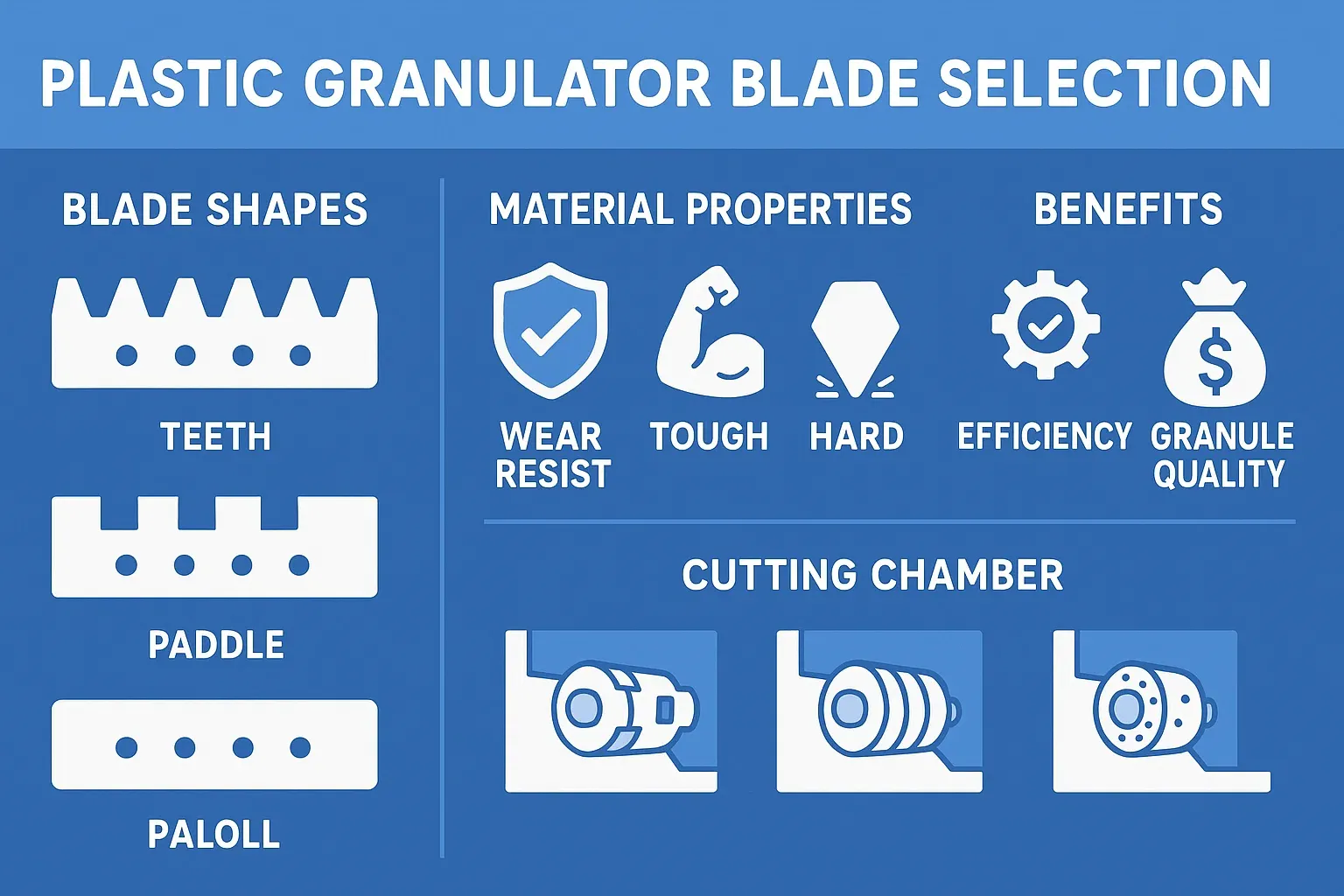
에이 금속 스크랩 파쇄기 는 자동차 차체, 백색 가전, 알루미늄 압출물, 구리선, 강철 드럼 등 부피가 큰 철 및 비철 금속 폐기물을 자기 분리, 와류 분류 및 다운스트림 용융에 적합한 주먹 크기의 파편으로 줄여줍니다. 시간당 5톤 이상을 처리하는 고철 야적장 및 금속 재활용 업체의 경우 산업용 금속 분쇄기는 처리량, 파편 품질 및 톤당 수익을 결정하는 단일 장비 투자입니다.
Energycle manufactures 고강도 금속 스크랩 파쇄기 30~200톤 이상의 절단력으로 철 및 혼합 스크랩 스트림에서 24시간 연중무휴로 작동하도록 설계되었습니다. 이 가이드에서는 파쇄기 유형, 구동 시스템, 절단 챔버 설계, 용량 크기 조정, 다운스트림 분리, 유지보수 및 총 소유 비용 등 스크랩 혼합물과 목표 생산량에 적합한 기계를 지정하는 데 필요한 모든 것을 다룹니다.
산업용 금속 분쇄기의 기능은 무엇입니까?
안 산업용 금속 파쇄기 는 경화 절삭 공구가 장착된 고토크 저속 로터를 사용하여 금속 물체를 찢고, 전단하고, 분쇄하여 일반적으로 50-150mm 크기의 균일한 파편으로 만듭니다. 파쇄된 결과물은 크기 조정 스크린을 통과하여 자기 분리기로 공급되는 컨베이어로 전달됩니다, 와전류 분리기, 및 깨끗한 철, 알루미늄, 구리 및 아연 분획을 회수하는 밀도 선별 시스템입니다.
사전 파쇄가 없으면 다운스트림 분리 장비는 혼합 스크랩을 효율적으로 분류할 수 없습니다. 크고 불규칙한 모양의 물체는 컨베이어를 막고, 자기 드럼을 우회하며, 제련소에서 불이익을 주거나 거부하는 오염된 결과물을 생성합니다. 적절한 크기의 금속 슈레더는 이 세 가지 문제를 동시에 해결합니다: 볼륨 감소 (10:1 ~ 15:1 압축 비율), 해방 (금속과 비금속 어태치먼트 분리) 및 균질화 (일관된 정렬을 위해 균일한 조각 크기 생성).
금속 스크랩 파쇄기의 종류
금속 분쇄기는 절단 메커니즘, 로터 구성, 대상 재료에 따라 분류됩니다. 각 유형은 처리량, 파편 크기, 자본 비용의 균형을 다르게 맞춥니다.
금속용 단일 샤프트 슈레더
에이 단일 샤프트 분쇄기 고정된 모루에 고정된 절삭 공구가 있는 하나의 회전축을 사용합니다. 유압 푸셔가 제어된 속도로 절단 챔버에 재료를 공급합니다. 단일 샤프트 모델은 시간당 2~15톤의 처리량으로 가전제품 하우징, 판금 오프컷, 알루미늄 캔, 전자 폐기물 등 가벼운 혼합 스크랩을 처리하는 데 탁월합니다. 아래 고정 스크린이 출력 입자 크기를 제어하며, 스크린을 교체하면 로터를 조정하지 않고도 파편 치수를 변경할 수 있습니다.
금속용 이중 샤프트 슈레더
에이 이중 샤프트 분쇄기 는 맞물리는 커팅 디스크가 있는 두 개의 역회전 샤프트를 사용합니다. 자재는 샤프트 사이의 틈으로 당겨지고 반대쪽 디스크 모서리에 의해 절단됩니다. 이 설계는 차체, 구조용 강철, 엔진 블록, 철근 콘크리트 철근 등 가장 무거운 스크랩을 처리할 수 있습니다. 처리량은 시간당 5톤에서 30톤 이상이며 절단력은 100톤을 초과합니다. 이중 샤프트 기계는 자동차 재활용 및 무거운 철 스크랩 작업의 표준 기본 파쇄기입니다.
해머 밀 파쇄기
해머 밀은 고속 회전 해머(1,000~1,500RPM)를 사용하여 전단력이 아닌 운동 에너지로 금속에 충격을 가하고 파쇄합니다. 가장 작고 균일한 파편 크기(20~80mm)를 생산하며 시간당 30~100톤 이상을 처리하는 자동차 파쇄 공장에서 표준으로 사용됩니다. 단점: 더 높은 에너지 소비(500~3,000kW 모터), 더 큰 소음 수준, 해머와 라이너의 빠른 마모. 해머 분쇄기에는 일반적으로 차체를 관리하기 쉬운 조각으로 먼저 줄이는 사전 파쇄기(단일 또는 이중 샤프트)가 선행됩니다.
주요 구성 요소와 이들이 성능에 미치는 영향
커팅 챔버 및 로터 설계
커팅 챔버는 가장 많은 응력을 받는 부품입니다. 고강도 강판(무거운 스크랩 용도의 경우 최소 50mm 벽 두께)으로 제작된 챔버 본체와 Hardox 450/500 또는 이와 동등한 내마모성 강철로 제작된 볼트 체결 마모 라이너를 찾으십시오. 로터 샤프트는 절삭력이 50톤 이상인 장비의 경우 최소 직경 400mm의 합금강으로 단조(용접이 아닌) 제작해야 합니다.
절삭 공구 형상이 중요합니다. 후크 스타일 커터는 재료를 전단 영역으로 강력하게 끌어당기므로 차체나 드럼과 같은 부피가 큰 품목에 이상적입니다. 사각 프로파일 커터는 먼지가 적은 균일한 파편을 생성하므로 오염으로 인해 가치가 감소하는 알루미늄 및 비철 가공에 더 적합합니다. Energycle의 금속 분쇄기는 교체 가능한 커터 카세트를 사용하므로 로터를 제거하지 않고도 프로파일을 교체할 수 있습니다.
구동 시스템
금속 분쇄기는 저속에서 엄청난 토크를 필요로 합니다. 두 가지 드라이브 구성이 주를 이룹니다:
- 유압식 다이렉트 드라이브: 유압 모터가 로터 샤프트에 직접 연결됩니다. 무한 속도 제어, 걸림 발생 시 자동 반전, 기계적 충격 없이 과부하 보호 기능을 제공합니다. 예측할 수 없는 혼합 스크랩을 처리하는 단일 샤프트 슈레더에 선호됩니다.
- 기어박스가 있는 전기 모터: 고출력 전기 모터(75~500kW)가 유성 또는 헬리컬 기어박스를 통해 로터를 구동합니다. 지속적인 높은 처리량에서 유압식 드라이브보다 에너지 효율이 높습니다. 이중 샤프트 슈레더와 해머 밀에 표준으로 사용됩니다.
화면 크기 조정
절단 챔버 아래의 스크린이 출력 조각 크기를 결정합니다. 구멍 직경이 50-150mm인 천공 플레이트 스크린이 표준입니다. 구멍이 작을수록 더 미세하고 깨끗한 파편을 생산하지만 재료가 챔버에서 더 오래 재순환하기 때문에 처리량이 30~50% 감소합니다. 대부분의 철 스크랩 응용 분야의 경우 80-120mm 스크린 구멍이 파편 품질과 처리량 간에 최상의 균형을 제공합니다.
재료 응용 분야: 철 대 비철, 비철 대 혼합 스크랩
| 스크랩 유형 | 예시 | 권장 파쇄기 | 처리량 범위 | 핵심 과제 |
|---|---|---|---|---|
| 무거운 철 | 차체, 구조용 강철, 엔진 블록 | 이중축 또는 해머 밀 | 10-100+ t/h | 극한의 절삭력 필요 |
| 경철 | 가전제품, 판금, 드럼, 캔 | 싱글 또는 더블 샤프트 | 3-20 t/h | 가변 밀도 및 모양 |
| 비철 | 알루미늄 압출, 구리선, 황동 피팅 | 단일 샤프트(저속) | 2-10 t/h | 과도한 파쇄 방지, 가치 보존 |
| 전자 스크랩 | PCB, 하드 드라이브, 서버, 케이블 | 미세 스크린이 있는 싱글 샤프트 | 1-5 t/h | 귀금속 회수, 리튬 이온 배터리 안전 |
| 혼합/ASR | 파쇄기 후 잔여물, 혼합 철거 | 이중축 + 보조 과립기 | 5-15 t/h | 다중 재료 해방 |
철과 비철 금속이 모두 포함된 혼합 스크랩을 처리하는 작업의 경우, 분쇄기는 완전한 분리 라인의 첫 번째 단계로 작동합니다. 파쇄 후 마그네틱 드럼이 철 조각을 제거합니다. 와전류 분리기 는 비철금속(알루미늄, 구리, 아연)을 배출하고 밀도 또는 광학 선별기는 나머지 분획을 처리합니다.
용량 크기 조정: 작업에 맞는 분쇄기 선택
올바른 것을 선택하다 산업용 금속 파쇄기 기계 는 일일 톤수, 시간당 최대 처리량, 입력 자재 치수, 목표 조각 크기 등 네 가지 숫자로 시작됩니다.
| 일일 부피 | Recommended Type | 모터 파워 | 챔버 너비 | 일반적인 투자 |
|---|---|---|---|---|
| 5–20 t/일 | 단일 샤프트(유압식) | 55–110 kW | 800-1,200mm | $80,000–$180,000 |
| 20–80 t/일 | 더블 샤프트 | 110-250kW(2×) | 1,200-1,800 mm | $150,000–$400,000 |
| 80-300 t/일 | 더블 샤프트 + 프리 파쇄기 | 250-500kW(2×) | 1,800~2,500mm | $300,000–$800,000 |
| 300+ t/일 | 해머 밀 + 프리 파쇄기 | 500-3,000kW | 2,000mm 이상 | $500,000–$2,000,000+ |
중요한 크기 조정 규칙: 항상 평균 처리량이 아닌 처리해야 하는 가장 큰 단일 품목을 기준으로 파쇄기를 지정하십시오. 가벼운 스크랩을 10t/h 처리할 수 있는 기계는 고밀도 엔진 블록에서는 3t/h만 처리할 수 있습니다. 제조업체에 일반적인 등급이 아닌 재료 혼합에 맞는 처리량 데이터를 요청하십시오.
다운스트림 분리: 파편에서 깨끗한 금속 조각까지
파쇄는 1단계입니다. 진정한 가치는 그 다음 단계인 분리 장비에서 창출됩니다. 완전한 금속 스크랩 파쇄기 라인에는 일반적으로 다음이 포함됩니다:
- 마그네틱 드럼 분리기: 가공된 흐름에서 철제 부속물(강, 철)을 제거합니다. 적절한 크기의 부속물에 대해 회수율은 98% 이상입니다.
- 와전류 분리기: 교번 자기장을 사용하여 비철금속(알루미늄, 구리, 황동, 아연)을 배출합니다. 혼합 스크랩 작업에 필수 - 단일 ECS로 톤당 $50-100톤의 비철 회수 가치를 추가할 수 있습니다.
- 공기 분류기/밀도 분리기: 공기 흐름을 사용하여 금속 스트림에서 가벼운 비금속 조각(거품, 직물, 종이)을 제거합니다.
- 광학/센서 분류기: 고순도 애플리케이션의 경우, XRF 또는 컬러 기반 센서는 합금 등급별로 알루미늄을 분류하거나 구리와 황동을 분리합니다.
Energycle는 처리량 등급이 일치하는 통합 슈레더-플러스 분리 라인을 제공합니다. 당사의 와전류 분리 장치 가이드 비철 회수에 대해 자세히 다룹니다.
안전 및 환경 고려 사항
폭발 및 화재 예방
혼합 스크랩을 처리하는 금속 파쇄기는 밀폐된 용기(에어로졸 캔, 가스통), 전자 스크랩의 리튬 이온 배터리, 페인트 또는 코팅된 금속의 휘발성 유기 잔류물로 인해 실제 화재 및 폭발 위험에 직면해 있습니다. 필수 안전 시스템에는 다음이 포함됩니다: 인피드 검사 및 사전 정렬 (파쇄하기 전에 가스통과 밀폐된 용기를 제거하세요), 화재 진압 (배출 컨베이어의 워터 미스트 또는 불활성 가스 시스템), 폭발 환기 패널 절단 챔버에서 온도 모니터링 베어링 및 오일 시스템에서.
소음 및 먼지 제어
금속 파쇄는 소스에서 95-115dB의 소음을 발생시킵니다. 음향 인클로저는 작업자 스테이션에서 이를 80~85dB로 줄여줍니다. 사이클론 사전 분리기와 백 필터가 장착된 먼지 추출 시스템은 미세한 금속 입자와 비금속 먼지를 포집합니다. 엄격한 미립자 배출 제한(EU 산업 배출 지침)이 있는 지역에서는 배기 가스에서 HEPA 등급 여과가 필요할 수 있습니다.
유지보수 및 마모 부품
금속 분쇄기는 극심한 마모 및 충격 하중에서 작동합니다. 지속적인 가동 시간을 위해서는 체계적인 유지보수 프로그램이 필수적입니다.
절단 도구
로터 커터는 주요 마모 품목입니다. 공구 수명은 재료 경도에 따라 500~5,000시간까지 다양하며, 알루미늄 캔은 공구가 거의 마모되지 않는 반면 망간강판은 빠르게 마모됩니다. 대부분의 커터는 4면으로 되어 있어 한쪽 모서리가 무뎌지면 커터를 90° 회전시켜 새 모서리로 교체하면 교체 전 수명을 4배 늘릴 수 있습니다. Energycle는 55-60 HRC로 경화된 커터 강철을 사용하며 극한의 마모 응용 분야를 위한 텅스텐 카바이드 팁을 옵션으로 제공합니다. 중형 장비에서 커터 교체를 위해 연간 $5,000-$20,000의 예산을 책정합니다.
스크린 및 라이너
사이징 스크린과 챔버 라이너는 지속적인 마모로 인해 마모됩니다. Hardox 450 스크린은 철 스크랩에서 2,000~4,000시간 동안 지속됩니다. 매주 스크린에 구멍이 확대되었는지 검사하십시오 - 마모된 스크린은 대형 파편을 통과시켜 다운스트림 분리 효율을 떨어뜨립니다. 챔버 라이너는 매월 점검하고 원래 두께의 절반으로 마모되면 교체해야 합니다.
베어링 및 씰
메인 샤프트 베어링(일반적으로 구형 롤러 베어링)은 자동 윤활 시스템을 통해 작동 8~24시간마다 그리스를 보충해야 합니다. 샤프트 씰은 금속 먼지가 베어링 하우징으로 들어가는 것을 방지하며, 씰이 고장 나면 며칠 내에 베어링이 파손될 수 있습니다. 그리스 오염의 첫 징후가 보이면 씰을 교체하세요.
자주 묻는 질문
금속 분쇄기와 금속 파쇄기의 차이점은 무엇인가요?
금속 파쇄기는 회전하는 절단 도구를 사용하여 재료를 제어된 크기의 파편으로 절단합니다. 금속 파쇄기는 압축력(유압 프레스 또는 죠 메커니즘)을 사용하여 크기를 줄이지 않고 금속을 평평하게 하거나 압축합니다. 파쇄기는 다운스트림 분류 및 제련에 적합한 파편을 생성하고, 분쇄기는 운송을 위해 압축된 베일 또는 납작한 몸체를 생성합니다. 제련소에서는 압축된 블록이 아니라 크기가 맞는 파편이 필요하기 때문에 대부분의 금속 재활용 작업에서는 분쇄기가 아닌 파쇄기를 사용합니다.
산업용 금속 분쇄기의 가격은 얼마입니까?
가격은 5~10t/h의 경량 스크랩을 처리하는 단일 샤프트 기계의 경우 $80,000에서 프리 슈레더, 자기 분리, 와전류 분리기, 먼지 추출을 갖춘 완전한 해머 밀 슈레더 라인의 경우 $2,000,000 이상까지 다양합니다. 대부분의 중형 스크랩 작업장은 자기 분리 기능이 있는 이중 샤프트 슈레더에 $150,000-$400,000을 투자합니다.
금속 스크랩 파쇄기에서 어떤 처리량을 기대할 수 있습니까?
처리량은 재료 유형, 밀도 및 대상 파편 크기에 따라 다릅니다. 200kW 이중 샤프트 슈레더는 일반적으로 8~15t/h의 혼합 경량 스크랩, 5~10t/h의 중철 또는 3~6t/h의 고밀도 엔진 블록을 처리합니다. 스크린 구멍이 작을수록 재료가 더 오래 재순환하기 때문에 처리량이 감소합니다. 항상 제조업체에 재료별 처리량 데이터를 요청하세요.
분쇄기 칼날은 금속에서 얼마나 오래 사용할 수 있나요?
칼날 수명은 500시간(망간강 또는 연마 합금 가공)에서 5,000시간(알루미늄 캔 또는 가벼운 혼합 스크랩 가공)까지 다양합니다. 대부분의 철 스크랩 작업은 블레이드 세트당 1,500~3,000시간을 달성합니다. 4면 리버서블 커터는 유효 수명을 4배로 늘립니다. 연간 블레이드 비용은 일반적으로 중형 슈레더의 경우 $5,000-$20,000입니다.
금속 파쇄기로 자동차 전체를 처리할 수 있나요?
예, 하지만 대형 기계가 필요합니다. 전체 차량 파쇄는 일반적으로 1,000kW 이상의 모터 출력을 가진 해머 밀을 사용하고, 그 전에 차량을 2~4조각으로 분할하는 프리 슈레더를 사용합니다. 더 작은 이중 샤프트 슈레더(200~500kW)는 미리 평평한 차체 또는 4분의 1 차체 섹션을 처리할 수 있습니다. 프리 슈레더, 해머 밀, 자기 분리기, 와전류 분리기, 공기 분류기를 포함한 전체 자동차 파쇄 라인의 가격은 $1,000,000-$3,000,000 이상입니다.
금속 스크랩 파쇄기에는 어떤 안전 기능이 필수인가요?
최소 요구 사항: 모든 측면의 비상 정지, 걸림 감지 시 자동 로터 반전, 배출 컨베이어의 화재 진압 시스템, 폭발 환기 패널, 잠금/태그아웃 조항, 작업자 위치 소음을 85dB 미만으로 유지하기 위한 방음 인클로저가 있어야 합니다. 전자 스크랩 작업의 경우 인피드 컨베이어에 리튬 이온 배터리 감지 및 불활성 가스 화재 진압 기능을 추가합니다.
금속 세절기는 플라스틱 세절기와 어떻게 다른가요?
금속 분쇄기는 훨씬 더 높은 절단력(30-200톤 이상 대 플라스틱의 경우 5-30톤), 더 무거운 로터 구조, 더 단단한 절단 도구(55-60 HRC 대 45-52 HRC)를 사용합니다. 금속 분쇄기 챔버는 벽이 더 두껍고 충격을 견디기 위해 라이너를 착용합니다. 구동 모터는 3~10배 더 강력합니다. A 플라스틱 분쇄기 절삭 공구를 손상시키고 로터 샤프트에 균열을 일으킬 수 있으므로 절대로 금속 스크랩에 사용해서는 안 됩니다.
금속 분쇄기의 ROI 투자 회수 기간은 어떻게 되나요?
투자 회수는 스크랩 양, 구매 가격 차이(파쇄 스크랩과 비파쇄 스크랩), 비철 회수 가치에 따라 달라집니다. 하루 50톤의 혼합 스크랩을 처리하는 일반적인 중형 작업장의 경우, 주로 철 스크랩 판매 가격 상승(1톤당 20~40달러 프리미엄), 비철 금속 회수(알루미늄/구리 혼합에 따라 1톤당 50~200달러), 운송 비용 절감(파쇄된 재료로 트럭당 3~5배 무게 증가)을 통해 12~24개월 내에 투자금을 회수합니다.
다음 단계
올바른 산업용 금속 분쇄기를 선택한다는 것은 절삭력, 챔버 크기, 드라이브 구성을 특정 스크랩 혼합 및 처리량 목표에 맞추는 것을 의미합니다. Energycle의 엔지니어링 팀은 금속 재활용 작업에 대한 무료 용량 평가를 제공합니다. 일일 톤수, 재료 유형, 목표 파편 크기를 공유하면 자세한 비용 및 ROI 예측과 함께 완벽한 분쇄기+분리 구성을 추천해 드립니다. 당사의 중장비 금속 분쇄기 제품군 보기 를 클릭하거나 저희에게 연락하여 평가를 시작하세요.
관련 자료
- 대형 금속 스크랩 분쇄기
- 범용 싱글 샤프트 분쇄기
- 플라스틱, 금속 및 타이어용 이중 샤프트 파쇄기
- 와전류 분리기 가이드
- 산업용 플라스틱 파쇄기
- 타이어 재활용 기계 가이드
- 텅스텐 카바이드 분쇄기 로터 나이프
- 데이터 파기용 전자 스크랩 분쇄기
- 산업용 베일러 가이드
안 산업용 압축기 compresses loose recyclable materials — cardboard, plastics, textiles, metals — into dense, uniform bales that are easier and cheaper to store, transport, and sell. For recycling facilities processing more than a few tonnes per day, a baler is not optional equipment; it is the single machine that turns bulky waste streams into revenue-generating commodities.
At Energycle, we manufacture horizontal and vertical industrial baling machines rated from 10 to 120+ tonnes of pressing force. This guide covers every decision point — baler types, hydraulic systems, material-specific configurations, energy efficiency, capacity sizing, and maintenance — so you can select the right machine for your throughput, material mix, and budget.
What Does an Industrial Baler Do?
에이 압축기 uses hydraulic pressure to compact loose recyclables into rectangular bales bound with steel wire or polyester strapping. A single bale of cardboard typically weighs 400–600 kg and measures roughly 1,100 × 800 × 750 mm, compared to the 6–8 m³ of loose material it replaces. That compression ratio — often 8:1 to 15:1 depending on the material — slashes freight costs, reduces warehouse footprint, and meets the density specifications that downstream buyers require.
Without a baler, recyclers face three compounding problems: high transport costs (trucks leave half-empty because loose material fills volume before reaching weight limits), low commodity prices (정리된 재료는 정상적으로 밀어진 재료보다 톤당 20–40% 더 적게 판매됩니다), safety hazards (loose piles of cardboard and plastic film create fire risks and block emergency exits). A well-matched industrial baler eliminates all three.
Types of Industrial Balers: Horizontal vs. Vertical
The two main categories are 수평 압축기 그리고 수직 압축기. The choice depends primarily on throughput volume, available floor space, and the degree of automation your operation requires.
Horizontal Baler Machines
에이 horizontal baler machine feeds material from one end, compresses it horizontally, and ejects finished bales from the opposite end — often onto a conveyor or directly into a truck. Horizontal models handle higher throughput (typically 3–30+ tonnes/hour) and integrate easily with conveyor-fed production lines. They are the standard choice for MRFs, paper mills, plastics recycling plants, and any facility processing more than 10 tonnes per shift.
에너지클의 fully automatic horizontal baler operates with minimal operator intervention: material feeds continuously via conveyor, the compression cycle triggers automatically when the chamber is full, and finished bales eject without stopping the infeed. For operations that need operator control over cycle timing, our 반자동 수평 포장기 provides manual cycle initiation at a lower capital cost.
수직 압축기
Vertical balers compress material downward into a chamber beneath the ram. They occupy a small footprint (typically 1.5–3 m²), cost less than horizontal models, and suit facilities processing 1–5 tonnes per day. Retail stores, distribution centers, and small recycling yards often start with a vertical baler before scaling up.
에너지클의 vertical PET bottle and can baler is designed specifically for beverage container recycling, while our vertical fiber and textile baler handles post-consumer garments, fabric scraps, and nonwoven offcuts with bale weights up to 250 kg.
Automatic vs. Semi-Automatic: Choosing the Right Level
Automation level affects labour costs, throughput consistency, and capital expenditure. Here is a practical comparison:
| 특징 | 전자동 수평 압축기 | 반자동 수평 박스 패킹기 | 수직 압축기 |
|---|---|---|---|
| 사료 공급 방식 | Conveyor (continuous) | 컨베이어 또는 수동 | 수동 상부 로드 |
| サイ클 시작 | 자동 센서로 인해 | 운영자 버튼 누르기 | 운영자 버튼 누르기 |
| 베일 투출 | Automatic | 자동 또는 수동 | 수동(forklift) |
| 처리량 | 5–30+ t/h | 3–15 t/h | 0.5–3 t/h |
| 노동 필요 | 0–1 운영자 | 1 운영자 | 1 운영자 |
| типical press force | 60–120+ 톤 | 40–80 톤 | 10–60 톤 |
| 지면 공간 | 대형(8–15 m 길이) | 중형(6–10 m) | 소형(1.5–3 m²) |
| 가장 좋은 | MRFs, 대량 생산 공장 | 중간량 재활용자 | 리테일, 소형 공원 |
하이드로릭 베일러 작동 방식: 주요 구성 요소
모든 유압식 압축기 동일한 핵심 작동 원리를 공유합니다: 하이드로릭 시ylinder가 ram plate를 압축 방공실로 밀어서 재료를 압축하여 목표 밀도에 도달할 때까지squeeze합니다. 주요 구성 요소를 이해하면 제조업체를 비교할 때 건축 품질과 장기 신뢰성을 평가하는 데 도움이 됩니다.
유압 시스템
모든 베일러의 중심. 전기 모터가 하이드로릭 펌프를 운전하여 16–25 MPa의 압력을 가진öl을 압축하여 주요 시ylinder를 밀어줍니다. 비교할 주요 사양: 시ylinder 구경 직경 (최대 힘을 결정합니다), pump displacement (determines cycle speed), and oil tank capacity (affects heat dissipation during continuous operation). Energycle uses Rexroth and Parker hydraulic components across its baler range for proven reliability in 24/7 recycling environments.
Compression Chamber and Ram
The chamber walls and ram plate endure enormous repeated stress. Look for hardened steel construction (typically Hardox 400 or equivalent) with a minimum wall thickness of 12 mm on the chamber and 20 mm on the ram plate. Wear liners on the chamber floor extend service life in abrasive applications like metal and glass recycling.
Tying System
Finished bales are secured with 아연 도금 강철 와이어 또는 quick-lock baling wire. Automatic tying systems on horizontal balers insert and knot 4–6 wires per bale without stopping the compression cycle. Manual tying on vertical balers requires the operator to thread wire through channels — slower but adequate for low-volume operations.
제어 시스템
Modern industrial balers use PLC control (Siemens S7-1200 or equivalent) with touchscreen HMI. The controller manages ram pressure, cycle timing, bale length, wire tension, and safety interlocks. Remote monitoring via 4G/Ethernet lets plant managers track cycles per hour, hydraulic oil temperature, and maintenance alerts from any device.
Material-Specific Baler Configurations
Different recyclable materials have different bulk densities, friction coefficients, and moisture levels. A baler optimised for OCC cardboard will underperform on PE film or wet textiles. Below are the configurations we recommend by material stream.
산업용 골판지 압축기
OCC (Old Corrugated Containers) is the highest-volume material for most MRFs. An 산업용 카드보드 밀기 typically needs 40–80 tonnes of press force to achieve the 400–500 kg/m³ bale density that paper mills require. Chamber dimensions of 1,100 × 800 mm produce standard “mill-size” bales accepted globally. Energycle’s cardboard and paper baler processes 5–15 tonnes per hour with automatic tying and ejection.
Plastic Film and PET Bottle Balers
Plastic film (LDPE stretch wrap, HDPE bags) is springy and resists compression. Balers for film need higher press force per chamber area (60–100+ tonnes) and retraction dwell time to prevent bale expansion after the ram retracts. For PET bottles, Energycle’s vertical PET baler achieves bale densities of 300–400 kg/m³. Facilities running a complete PET line often pair the baler with a PET 병 세척 라인 for flake-grade output.
Textile Baler
Post-consumer textiles and industrial fabric waste require balers with extra-wide feed openings (to accommodate bulky garments) and moderate press force (30–60 tonnes). Bale weights of 200–350 kg are standard for the second-hand clothing and fibre recycling markets. Energycle’s 섬유 압축기 pairs well with our 섬유 분쇄기 for operations that need to shred before baling.
Metal Balers
Aluminium cans, steel scrap, and copper wire need 80–200+ tonnes of press force due to the material’s rigidity. Chamber walls must be reinforced to withstand metal-on-metal impact. Cycle times are longer (30–60 seconds vs. 15–25 seconds for cardboard) because the ram must build pressure gradually to avoid hydraulic shock.
용량 및 톤수: Baler의 크기를 어떻게 설정하나요?
적절한 baler 크기를 선택하는 것은 세 가지 숫자로 시작합니다: 일일 재료 부피 (톤/일), 최대 시간당 처리량 (톤/시간), 목표 baler 밀도 (kg/m³). 과소 설계는 bottle neck를 만들고, 과대 설계는 자본과 에너지를 낭비합니다.
| 일일 부피 | 추천 baler 유형 | 압력력 범위 | 모터 파워 | 시간당 baler 수 |
|---|---|---|---|---|
| 1–5 t/일 | 가로 baler | 10–40 톤 | 5.5–15 kW | 3–8 |
| 5–20 t/일 | 반자동 가로 baler | 40–80 톤 | 18.5–37 kW | 8–20 |
| 20–80 t/일 | 전자동 가로 baler | 60–100 톤 | 37~55kW | 15–35 |
| 80+ t/일 | 두 개의 ram 또는 채널 baler | 80–120+ 톤 | 55–110 kW | 25–50+ |
Practical tip: 120%의 현재 최대 생산량에 맞게 밀러를 규모화하세요. 재활용 운영은 연간 10–15% 성장하며, 최대 용량에서 지속적으로 밀러를 운영하면 밀봉, 펌프, 결합 시스템의 손상이 가속화됩니다. 20%의 헤드룸 쿤션은 구성 요소의 수명을 연장하고, 최대 시즌 중간 시간에 비용이 많이 드는 중단을 피합니다.
Energy Efficiency in Industrial Baling Machines
Energy-efficient balers 운영 비용을 크게 줄일 수 있습니다 — 전기는 10년 수명 주기 동안 밀러 운영 비용의 30–45%를 차지합니다. 에너지 소비에 가장 큰 영향을 미치는 3가지 설계 요소는 다음과 같습니다:
Variable-Frequency Drive (VFD) Motors
VFD는 실시간로드 요구에 맞춘 모터 속도를 조정합니다. 각 축동의 시작 단계에서 저항이 낮은 단계에서는 모터가 감속 운전하고 전류를 적게 흡수합니다. VFD 장착 밀러는 전체 생산 시간 동안 고정 속도 모델보다 25–40% 더 적은 전기를 소비합니다. 동남아시아와 유럽 재활용 공장 설치 데이터를 기반으로 합니다.
Servo-Hydraulic Pump Systems
서보 펌프는 요구 시에만 기름을 공급합니다. 축동 사이에 램이 비활성화된 상태에서는 펌프가 근접 0 전류를 흡수합니다. VFD 제어와 함께 서보-수압 시스템은 전통적인 고정 변위 펌프에 비해 에너지 소비를 50%까지 절감하며, 동시에 수압 기름 온도를 15–20°C까지 낮추어 밀봉과 호스의 수명을 연장합니다.
Standby and Auto-Off Features
Balers with intelligent standby mode shut down the motor after a configurable idle period (typically 3–5 minutes) and restart automatically when material triggers the infeed sensor. In facilities where the baler runs intermittently — common in retail and distribution — this alone can reduce annual energy cost by 10–15%.
How to Choose the Right Industrial Baler for Your Operation
Selecting a 재활용 압축기 involves more than matching press force to material type. Use this seven-point checklist when evaluating baler suppliers:
- Define your material mix. A single-stream operation (e.g., OCC only) has different requirements than a multi-material MRF handling cardboard, film, PET, and metals. Multi-material operations often need a baler with adjustable pressure settings and quick-change feed configurations.
- Calculate throughput with growth margin. Use the 120% rule described above. If your current peak is 10 t/h, size for 12 t/h minimum.
- Check bale specifications from your buyer. End-market buyers (paper mills, rPET processors, textile sorters) have specific bale weight, density, and size requirements. Confirm your baler can produce bales that meet these specs — a bale that’s 50 kg underweight may be rejected or price-penalised.
- Evaluate total cost of ownership. 캐피털 가격은 10년 총 비용의 40–50%입니다. 나머지 비용: 전기(30–35%), 손상 부품 — 밀봉, 날, 전선(10–15%), 유지보수 노동(10–15%). 각 공급업체에서 TCO 분석을 요청하세요.
- Inspect hydraulic and electrical components. European or Japanese hydraulic components (Rexroth, Parker, Yuken) and PLC controllers (Siemens, Schneider) offer better durability and global parts availability than unbranded alternatives.
- Confirm safety features. Minimum requirements: emergency stop buttons on all sides, light curtains or safety edges on the feed opening, lockout/tagout provisions, and CE or equivalent certification.
- Request references and trial-run video. Ask for contact details of 2–3 existing customers running similar materials at similar volumes. A reputable manufacturer will provide these without hesitation.
Integration with Upstream and Downstream Equipment
A baler rarely operates in isolation. In a complete recycling line, it sits after shredding, washing, or sorting stages and before logistics/warehousing. Understanding the interfaces between these stages prevents throughput mismatches.
Upstream: Shredders and Granulators
Oversized materials (furniture, large boxes, bulky plastic items) need size reduction before baling. A 플라스틱 분쇄기 breaks material to a consistent particle size that feeds evenly into the baler chamber, improving bale density and reducing void spaces. For plastic recycling lines that process material into pellets rather than bales, a 플라스틱 분쇄기 follows the shredder stage.
Downstream: Debalers
At the receiving end, paper mills and plastic processors use a 탈지기 to break bales apart for further processing. When specifying bale wire type and bale density, consider what debaling equipment the buyer uses — over-compressed bales with heavy-gauge wire take longer to debale and can damage downstream equipment. Energycle also manufactures vertical debaler machines for high-volume receiving operations.
Maintenance and Safety Best Practices
Industrial balers operate under extreme hydraulic pressure and process abrasive materials. A structured maintenance program prevents unplanned downtime and protects operators.
일일 점검
- Inspect hydraulic oil level and check for leaks at cylinder seals and hose fittings
- Verify emergency stop buttons function correctly on all sides of the machine
- Clear material jams from the feed opening and tying area
- Check wire or strapping supply levels to prevent mid-cycle stoppages
Weekly Checks
- Grease all pivot points and guide rail surfaces
- Inspect tying needles and knotters for wear or misalignment
- Check hydraulic oil temperature — sustained temperatures above 65°C indicate cooling system issues
- Test light curtains and safety interlocks
분기별 및 연간 유지 관리
- Replace hydraulic oil filter elements (quarterly) and full oil change (annually or per manufacturer schedule)
- Inspect cylinder seals and replace at first sign of external leakage
- Check chamber wall wear — walls worn below minimum thickness compromise bale density
- Calibrate pressure sensors and PLC safety parameters
- Inspect electrical cabinets: tighten connections, check for heat damage, clean cooling fans
Safety Protocols
Baler-related injuries most commonly involve hands and arms caught in the feed opening or tying area. Enforce these non-negotiable rules: never reach into the compression chamber while the machine is powered, always use lockout/tagout procedures before clearing jams, and ensure all operators complete manufacturer-specific training before operating the machine unsupervised. Position balers so that the feed area is visible from the operator station — blind spots invite accidents.
Cost and ROI: What to Expect
산업 밀봉기 가격은 유형, 크기, 자동화 수준에 따라 widely 다릅니다:
| 밀봉기 유형 | типичное ценовое диапазон (USD) | 회수 기간 |
|---|---|---|
| 수직 밀봉기 (10–30 t) | $8,000 – $25,000 | 6–18 개월 |
| 반자동 수평 밀봉기 (40–80 t) | $30,000 – $80,000 | 12–24 개월 |
| 전자동 수평 밀봉기 (60–120 t) | $60,000 – $180,000 | 12–30 개월 |
| 두 개의 램/채널 밀봉기 | $120,000 – $350,000 | 18~36개월 |
ROI 드라이버: 가장 큰 절감은 운송 비용 감소(밀봉된 재료는 무게가 높은 트럭으로 배송됨 3–5× vs. 흩어진 것)와 상품 가격 상승(적절히 밀봉된 OCC는 시장 상황에 따라 $120–180/톤과 $80–120 흩어진 것보다 판매됨)에서 나옵니다. 일반적으로 하루에 20 톤의 혼합 재활용물을 처리하는 시설은 운송 비용만으로도 12–18 개월 안에 밀봉기 투자를 회수합니다.
자주 묻는 질문
horizonital baler와 vertical baler의 차이점은 무엇인가요?
수평형 밸러는 한쪽에서 재료를 공급하고 다른쪽에서 밸을 배출하는 것을 지원하며, 지속적인 고용량 운영(5–30+ t/h)이 가능합니다. 수직형 밸러는 재료를 위쪽에서 하향으로 압축하고, 작은 공간을 차지하며, 낮은 용량(0.5–3 t/h)에 적합합니다. 수평형 모델은 비용이 더 많지만, 더 높은 투출량과 더 적은 노동력을 제공합니다.
산업용 밀봉기의 가격은 얼마인가요?
Prices range from $8,000 for a small vertical baler to $350,000+ for a large two-ram automatic channel baler. Most mid-size recycling operations invest $30,000–$80,000 in a semi-automatic horizontal baler. Total cost of ownership over 10 years is typically 2–2.5× the purchase price when including electricity, wear parts, and maintenance.
공업 baler가 처리할 수 있는 재료는 무엇인가요?
일반적인 재료로는 OCC 카드보드, 혼합지, 플라스틱 필름(LDPE, HDPE), PET 병, 알루미늄 캔, 철스crap, 텍스타일, 비 woven 텍스타일, 농업 쓰레기(초, 수수, 면)가 포함됩니다. 각 재료는 최적의 밀봉 밀도를 위해 특정 압력력과 챔버 구성이 필요합니다.
제 공장에 맞는 박스기 크기를 어떻게 계산하나요?
일일 톤수를 운영 시간으로 나누어 필요한 시간당 처리량을 계산하세요. 성장 및 최고 기간을 위한 20% 헤드룸을 추가하세요. 그런 다음 이 숫자를 baler 처리량 등급에 맞추세요. 예를 들어, 8시간에 걸쳐 30톤/일 = 3.75 t/h → 4.5+ t/h로 평가된 baler를 목표로하세요.
What are the energy costs of running an industrial baler?
37 kW의 반자동 수평 밀봉기가 하루 8 시간 동안 작동하면 하루에 약 200–250 kWh를 소비합니다. $0.10/kWh의 전기료로는 하루에 $20–25/day 또는 약 $6,000–7,500/년입니다. VFD 장비가 있는 모델은 이를 25–40% 줄여서 연간 $1,500–3,000을 절약합니다.
baler 를 얼마나 자주 유지보수해야 합니까?
일일 시각 검사는 10–15분 소요됩니다. 주간 체크 및 기름주입은 30–60분 소요됩니다. 히드로릭 오일 필터 교체는 분기별, 전체 오일 교체는 연간입니다. 셰이크 밸브 교체는 3–5년에 한 번이며, 일반적으로 부품 및 노무비를 포함하여 $2,000–$5,000입니다.
하나의 밀봉기가 여러 종류의 재료를 다 처리할 수 있나요?
네, 밀봉기가 압력 설정을 조절할 수 있고 재료가 서로 오염되지 않는다면. 많은 MRF가 OCC 카드보드, 혼합지, 플라스틱 필름을 단일 수평 밀봉기로 사용하여 재료 운행 중 압력 предустановок을 전환합니다. 그러나 금속 밀봉에는 강화된 챔버 벽이 필요합니다 — 카드보드 밀봉기로 설정된 밀봉기는 스틸 스크랩을 처리할 수 없습니다.
산업 밀봉기에 필요한 안전 인증은 무엇인가요?
최소한, EU 시장에서 필수로 요구되는 기계 지침 2006/42/EC를 포함한 CE 마크를 찾아야 합니다. 북미 설치용으로는 UL이나 CSA 등록이 추가적인 보장을 제공합니다. 주요 안전 기능으로는 모든 운영자 위치에서 접근할 수 있는 긴급 정지 장치, 공급 개구부에 설치된 라이트 커튼, 수압 이완 밸브, 그리고 OSHA 29 CFR 1910.147에 따른 lockout/tagout 조치가 포함됩니다.
다음 단계
적절한 산업 밀봉기를 선택하려면, 특정 재료 혼합물과 성장 계획에 맞는 압력, 처리량, 자동화 수준을 맞춰야 합니다. Energycle의 엔지니어링 팀은 무료 용량 평가를 제공합니다 — 하루에 처리하는 톤수, 재료 유형, 사용 가능한 바닥 공간을 공유하면, 상세한 TCO 예상을 포함한 구성을 추천합니다. 우리 전체 밀봉기 범위 보기 또는 직접 연락하여 평가를 시작하세요.
관련 자료
- 산업 밀봉기 — 전체 제품 범위
- 완전 자동 수평 유압식 베일러
- 반자동 수평 박스 패킹기
- 산업 카드보드 및지지지 밀봉기
- 수직 PET 병 및 캔 밀봉기
- 수직 섬유 및 텍스타일 밀봉기
- 반자동 폐지 박스 패킹기
- 밀봉기용 갈vanized 철망
- 플라스틱 재활용용 탈포기
- 섬유 써터 머신 가이드
- PET 병 세척 라인 가이드
- 플라스틱 파쇄기
- 플라스틱 그란ولا이저 기계
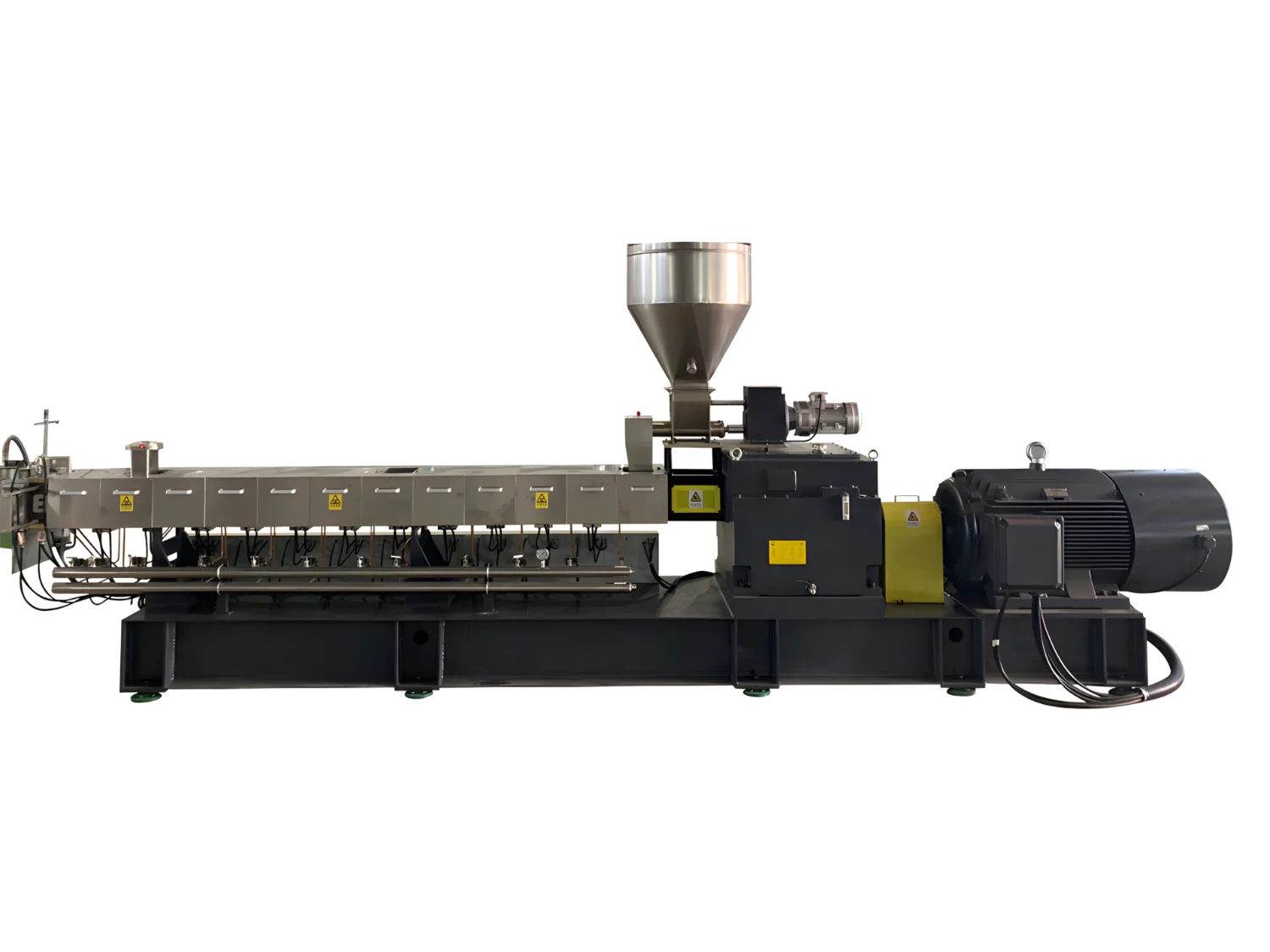
에이 플라스틱 펠릿화 기계 펠릿화 공정은 파쇄, 세척 또는 압축된 플라스틱 폐기물을 녹여 균일한 펠릿 형태로 재성형하는 공정입니다. 펠릿은 사출 성형기, 압출기, 필름 블로우 성형기에서 구매 및 가공하는 표준 원료 형태입니다. 펠릿화는 플라스틱 재활용의 최종 부가가치 창출 단계로, 저가의 플레이크 또는 재분쇄 플라스틱을 폴리머 종류 및 품질에 따라 톤당 $400~$1,200의 가치를 지닌 시장성 있는 펠릿으로 변환합니다. 이 가이드에서는 모든 펠릿화 장비 유형, 실제 사양, 재료와 장비의 매칭, 절단 시스템 선택, 그리고 귀사의 운영에 적합한 펠릿화 라인을 선정하기 위한 프레임워크를 다룹니다.
플라스틱 펠릿 제조기란 무엇인가요?
플라스틱 펠릿 성형기(펠릿 제조기 또는 과립 압출기라고도 함)는 가열된 스크류-배럴 시스템을 통해 플라스틱 원료를 녹이고, 스크린 체인저를 통해 오염 물질을 걸러낸 다음, 용융된 플라스틱을 다이 플레이트로 밀어 넣어 절단 시스템으로 직경 2~5mm의 원통형 또는 구형 펠릿으로 자릅니다. 펠릿은 (물이나 공기로) 냉각하고 건조시킨 후 자루나 사일로에 담아 보관합니다. 본 가이드에서 기본 원리를 알아보세요. 플라스틱 펠릿 제조기란 무엇이며 어떻게 작동하는가?
모든 펠릿 제조 라인의 핵심 구성 요소:
- 공급 시스템 — 압출기에 재료를 압축하여 공급하는 강제 공급기, 압축 성형기 또는 절단 압축기
- 압출기 — 플라스틱을 녹이고 균질화하고 가압하는 단일 스크류 또는 이중 스크류 배럴
- 화면 변경 — 용융물에서 오염물질(종이, 금속, 먼지)을 제거하는 유압식 또는 수동식 필터
- 다이 플레이트 — 용융물을 가닥 모양이나 직접 펠릿 모양으로 성형하는 천공판
- 절단 시스템 — 최종 펠릿 모양을 만드는 스트랜드 커터, 워터 링 커터 또는 수중 펠릿 성형기
- 냉각 및 건조 — 수조식 건조기, 공기 냉각식 건조기 또는 원심 분리식 건조기를 사용하여 펠릿을 고형화 및 건조합니다.
플라스틱 펠릿화 기계의 유형
Single-Screw Pelletizer
재활용 분야에서 가장 흔하게 사용되는 유형입니다. 가열된 배럴 내부의 회전하는 스크류 하나가 플라스틱을 녹여 이송합니다. 트윈 스크류 시스템보다 간단하고 신뢰성이 높으며 비용도 저렴합니다. 깨끗하고 사전 분류된 원료(PE, PP, PET 플레이크, PS)에 가장 적합합니다. 처리량: 100~1,500kg/h. 자세한 내용은 당사 웹사이트를 참조하십시오. 단일 스크류 펠릿 성형기 범위.
트윈스크류 펠릿화기
동일 방향 또는 반대 방향으로 회전하는 두 개의 스크류는 탁월한 혼합, 통풍 및 탈기 기능을 제공합니다. 집중적인 배합이 필요한 재료(착색제, 충전 플라스틱, 엔지니어링 플라스틱) 또는 수분이나 휘발성 물질 함량이 높은 재료에 적합합니다. 단일 스크류 방식보다 비용이 1.5~2.5배 높지만, 까다로운 용도에 필요한 우수한 품질의 펠릿을 생산할 수 있습니다. 처리량은 시간당 200~3,000kg입니다.
절단 압축기 펠릿화기
고속 절단 압축기(응집기)를 압출기 바로 앞에 통합했습니다. 절단 압축기는 마찰을 이용하여 필름, 섬유 및 경량 소재를 파쇄, 밀도화 및 예열한 후 압출기 배럴에 직접 공급합니다. 따라서 별도의 응집기나 밀도화 장치가 필요 없어 설치 공간과 에너지를 절약할 수 있습니다. PE/PP 필름, 직조 백, 부직포 및 라피아 생산에 이상적입니다. 자세한 내용은 당사 웹사이트를 참조하십시오. 절단기 압축기 펠릿화 라인.
2단계 펠릿화기
두 개의 압출기를 직렬로 연결하여 사용합니다. 첫 번째 압출기는 용융 및 여과를 담당하고, 두 번째 압출기는 균질화 및 펠릿 성형을 위한 압력을 형성합니다. 2단계 설계는 용융물 여과를 강화하고, 탈기(두 개의 배출구)를 개선하며, 용융물의 품질을 더욱 일관되게 유지합니다. 인쇄량이 많은 필름, 재활용 플라스틱 혼합물, 오염도가 높은 재료에 적합합니다. 초기 투자 비용은 높지만, 고품질 펠릿을 생산할 수 있습니다.
펠릿화 장치 유형 비교
| 유형 | 처리량 | 모터 파워 | 가장 적합한 | 상대적 비용 |
|---|---|---|---|---|
| 단일 나사 | 100~1,500kg/시간 | 22~250kW | 깨끗한 PE/PP/PET 플레이크, 재분쇄 | 1× (baseline) |
| 트윈 스크류 | 200~3,000kg/시간 | 37~400kW | 배합, 엔지니어링 플라스틱, 고습도 | 1.5–2.5배 |
| 커터 콤팩터 | 200~1,500kg/시간 | 55~300kW | PE/PP 필름, 직조 백, 부직포, 라피아 | 1.2–1.8배 |
| 2단계 | 300–2,000 kg/h | 75~400kW | 인쇄 필름, 사용 후 폐기물 혼합물, 오염도 높음 | 1.5–2.0× |
절단 시스템: 스트랜드 방식 vs. 워터링 방식 vs. 수중 방식
절단 시스템은 펠릿의 모양, 품질 및 생산량을 결정합니다. 적합한 시스템을 선택하는 것은 사용되는 폴리머 유형, 필요한 펠릿 형상 및 생산 속도에 따라 달라집니다. 자세한 비교는 다음을 참조하십시오. rPET의 스트랜드 펠릿화 vs. 수중 펠릿화.
| 컷팅 시스템 | 펠릿 모양 | 가장 적합한 | 처리량 범위 | 장점 | 단점 |
|---|---|---|---|---|---|
| 가닥 절단 | 원통형 | PE, PP, PET, PS - 대부분 재활용 가능 | 100~1,500kg/시간 | 간단하고 저렴하며 유지 관리가 쉽습니다. | 용융 강도가 낮은 재료의 가닥 파손 |
| 물 고리 절단 | 반구형 | PE, PP - 특히 필름 재활용 | 200~1,500kg/시간 | 컴팩트하고, 실을 다룰 필요가 없으며, 균일한 펠릿 형태입니다. | 용융 유동성이 높은 재료에는 적합하지 않습니다. |
| 수중(UWP) | 구의 | PET, PA, TPE, 엔지니어링 플라스틱 | 500~5,000kg/시간 이상 | 완벽한 펠릿 모양, 고속 회전, 먼지 발생 없음 | 비싸고, 복잡하고, 유지 관리가 더 많이 필요합니다. |
저희 웹사이트를 방문하세요 수중 링 펠릿화 시스템 PP/PE 직조 백 용도에 적합합니다.
재료와 펠릿화기 매칭
플라스틱 종류에 따라 압출기 구성, 온도 및 절단 시스템이 다릅니다. 500건 이상의 설치 경험을 바탕으로 다음과 같은 권장 사항을 제시합니다.
| 재료 | 추천 펠릿 제조기 | 컷팅 시스템 | 주요 내용 |
|---|---|---|---|
| PE 필름 (LDPE/LLDPE) | 커터 컴팩터 + 단일 스크류 | 물 고리 또는 가닥 | 필름을 압축해야 합니다. 커터 컴팩터가 이상적입니다. 자세한 내용은 다음을 참조하십시오. PE/PP 필름 펠릿화기 |
| PP 직조 백 / 라피아 | 커터 컴팩터 + 단일 스크류 | 물 고리 | 대량 생산 - 압출 전 압축 필수 |
| PET 병 플레이크 | 단일 스크류 (결정화기/건조기 포함) | 해변 또는 수중 | 건조해야 합니다 <50 ppm moisture; iv loss control critical. see PET 펠릿 제조기 |
| 견고한 HDPE/PP 재질 (상자, 드럼통) | 단일 나사 | 바닷가 | 펠릿화하기 쉽고, 강제 급이기만으로도 충분합니다. 참조. 경질 PP/HDPE 펠릿화기 |
| 부직포/멜트블로운 | 커터 컴팩터 + 단일 스크류 | 물 고리 | 초경량 소재는 강력한 밀도화 공정을 필요로 합니다. 자세한 내용은 다음을 참조하십시오. 부직포 펠릿화 라인 |
| PA/나일론 | 트윈 스크류(진공 배기 방식) | 수중 또는 좌초 | 흡습성 - 건조 및 진공 탈기 필요 |
| Mixed Post-Consumer | 2단계 | 해변 또는 물 고리 | 오염도가 높을 경우 이중 여과 및 탈기 처리가 필요합니다. |
자세한 재료 호환성 정보는 다음을 참조하십시오. 펠렛타이저로 어떤 유형의 플라스틱을 처리할 수 있나요?.
펠릿화기 사양 참조
Energycle의 단축 펠릿화기 라인에서의 대표적인 규격:
| 모델 | 나사 직경 | L/D 비율 | 처리량 | 모터 파워 | 일반적인 응용 프로그램 |
|---|---|---|---|---|---|
| SJ-65 | 직경 65mm | 28:1–33:1 | 80~150kg/시간 | 22~37kW | 소량 생산, 견고한 재분쇄 |
| SJ-85 | 직경 85mm | 28:1–33:1 | 150~300kg/시간 | 37~55kW | PE/PP 필름, 직조 백 |
| SJ-100 | 직경 100mm | 28:1–33:1 | 250~500kg/시간 | 55~90kW | 중형 재활용 라인 |
| SJ-120 | 직경 120mm | 28:1–33:1 | 400~800kg/시간 | 90–132 kW | 대량 재활용 |
| SJ-150 | 직경 150mm | 28:1–33:1 | 600~1,200kg/시간 | 132~200kW | 대규모 산업 라인 |
| SJ-180 | 직경 180mm | 28:1–33:1 | 800~1,500kg/시간 | 200~250kW | 최대 처리량 |
저희를 방문하세요 플라스틱 펠릿 제조기 제품 페이지 자세한 사양 및 구성 옵션은 다음을 참조하십시오. 가격 안내는 다음을 참조하십시오. 플라스틱 펠릿 제조기 비용 요인 그리고 보급형 펠릿 제조기와 고급형 펠릿 제조기 비교.
5-Step Selection Framework
1단계: 투입 재료 정의
폴리머 종류(PE, PP, PET, PS, PA 등), 형태(필름, 플레이크, 재생 폴리머, 섬유), 오염 수준(자체 처리된 깨끗한 폴리머 vs. 사용 후 폐기물을 사용한 오염된 폴리머), 수분 함량을 파악하십시오. 이를 통해 압출기 종류, 단수, 절단 압축기 또는 예비 건조기 필요 여부를 결정할 수 있습니다.
2단계: 처리량 목표 설정
필렐 생산량을 kg/h로 계산하세요. 상류의 씻기/건조 라인의 출력을 필렐화기 용량에 맞추세요. 항상 필렐화기를 현재 투입량보다 20~30% 더 크게 규모를 잡아서 급증 용량과 미래 성장을 위한 공간을 확보하세요. 필렐화기를 평균 용량의 80%로 운영하면 스크류와 바렐의 수명이 하게 연장됩니다.
3단계: 절단 시스템 선택
단순성과 대부분의 재활용 용도에 적합한 스트랜드 절단 방식. 필름 재활용 업체에서 조밀하고 균일한 펠릿을 원하는 경우 워터링 방식. PET, 엔지니어링 플라스틱 및 최종 고객에게 펠릿 모양이 중요한 고속 생산에 적합한 수중 방식.
4단계: 펠릿 품질 지정
목표 펠릿 크기(일반적으로 3~4mm)와 허용 가능한 수분 함량을 정의합니다.<0.5% 대부분의 응용 분야에 대해, PET의 경우 50ppm 미만의 불순물 함량), 색상 일관성 요구 사항 및 최대 오염 수준을 충족해야 합니다. 이러한 사양은 스크린 체인저 메쉬 크기, 여과 단계 수 및 냉각/건조 시스템 설계를 결정합니다.
5단계: 투자수익률(ROI) 계산
펠릿은 폴리머 종류와 품질에 따라 톤당 1,400~1,200페소에 판매되며, 이는 세척 플레이크 가격의 2~5배에 달합니다. 시간당 500kg 용량의 펠릿 제조기를 하루 8시간, 연 300일 가동하면 연간 1,200톤을 생산할 수 있습니다. 플레이크 가격 대비 톤당 200페소의 마진을 고려하면, 8만~20만페소의 기계 투자로 연간 24만 페소의 총 마진을 얻을 수 있으며, 투자금은 6~12개월 내에 회수할 수 있습니다.
유지보수 필수 사항
- 일일다이 플레이트의 막힌 구멍이 있는지 검사하고, 스크린 체인저를 청소하고, 냉각 시스템의 물 온도를 확인합니다.
- 주간스크류 토크와 모터 전류량을 확인하십시오(전류량 증가는 배럴 마모를 나타냅니다). 펠릿 절단기 날을 점검하십시오.
- 월간 간행물기어박스 윤활; 각 구역의 히터 밴드 작동 점검; 스크린 체인저 씰 점검
- 2,000~4,000시간마다나사와 배럴의 마모 상태를 측정하십시오 (양쪽 측면의 간극이 0.5mm를 초과하면 교체하십시오).
- 매년스크류, 배럴, 다이 플레이트, 기어박스 및 전기 시스템에 대한 전체 검사
종합적인 유지보수 프로그램에 대해서는 당사 웹사이트를 참조하십시오. 펠릿 제조기 유지보수 체크리스트 그리고 펠릿화 방법 안내.
Energycle와 함께 시작하세요
Energycle manufactures 플라스틱 펠릿 제조기 80kg/h 규모의 실험실용 장비부터 1,500kg/h 규모의 생산 라인까지, 그리고 세척부터 펠릿화까지 완벽한 턴키 방식의 재활용 시스템을 제공합니다. 당사는 다음과 같은 서비스를 제공합니다.
- 무료 재료 검사 플라스틱 샘플을 보내주시면 저희 기계로 펠릿 품질을 테스트해 드립니다.
- 맞춤형 라인 디자인 — 압출기, 절단 시스템 및 공급 시스템은 특정 재료 및 처리량에 맞게 구성됩니다.
- 설치 및 교육 — 현장 시운전 및 운영자 교육 포함
- 사후 지원 — 예비 나사, 배럴, 다이 플레이트 및 커터 날을 신속하게 배송해 드립니다.
재료 유형, 처리량 요구 사항, 원하는 출력 크기를 가진 귀사의 재료 유형, 처리량 요구 사항 및 원하는 펠릿 사양을 알려주시면 48시간 이내에 적합한 구성을 추천하고 견적을 제공해 드리겠습니다.
자주 묻는 질문
플라스틱 펠릿 제조기는 얼마인가요?
소형 단일 축 펠릿화기(100–200 kg/h)은 25,000–60,000달러에 판매됩니다. 중간형 시스템(300–800 kg/h)은 60,000–150,000달러에 판매됩니다. 대형 생산선(800–1,500 kg/h)은 150,000–350,000달러에 판매됩니다. 씻기, 건조, 펠릿화를 포함한 완성형 전문 라인은 200,000–800,000달러에 판매됩니다. 컷터 컴파클러 시스템은 기본 단일 축 모델에 비해 20–50% 추가 비용이 발생합니다.
펠릿라이저와 그라나레이터의 차이점은 무엇입니까?
펠릿 성형기는 플라스틱을 녹여 다이를 통해 압출하여 균일한 펠릿 형태로 만듭니다. 즉, 가열을 통해 재료의 물리적 형태를 변화시키는 과정입니다. 반면, 과립 성형기는 고체 플라스틱을 녹이지 않고 기계적으로 잘게 자릅니다(재분쇄). 펠릿은 시장에 바로 판매할 수 있는 원료이며, 재분쇄물은 중간 제품입니다. 자세한 비교는 다음을 참조하십시오. 펠릿 제조기 vs. 과립 제조기.
PE 필름 재활용에 가장 적합한 펠릿화기 유형은 무엇입니까?
커터 컴팩터 펠릿화기는 PE/PP 필름에 가장 적합한 선택입니다. 통합형 커터 컴팩터는 마찰열을 이용하여 가벼운 필름을 압축한 후 압출기에 투입함으로써 필름 재활용의 가장 큰 문제점(낮은 부피 밀도)을 해결합니다. 수냉식 링 절단 시스템은 균일하고 먼지 없는 펠릿을 생산합니다. 모델 크기에 따라 시간당 200~1,500kg의 처리량을 기대할 수 있습니다.
플라스틱 펠릿 제조기의 예상 처리량은 어느 정도입니까?
Throughput depends on screw diameter, motor power, and material type. A Ø65 mm single-screw handles 80–150 kg/h; a Ø120 mm handles 400–800 kg/h; a Ø180 mm reaches 800–1,500 kg/h. Film materials pelletize faster than rigid flakes due to easier melting. Actual throughput is typically 75–85% of rated maximum during sustained production.
가닥가르기와 물고리형 커팅 중 어떤 것을 선택해야 할까요?
스트랜드 커팅은 더 간단하고 저렴합니다. 용융된 플라스틱이 다이에서 가닥 형태로 나와 수조를 통과한 후 회전 칼날로 절단됩니다. 용융 강도가 좋은 경질 플라스틱에 가장 적합합니다. 워터 링 커팅은 용융된 플라스틱을 수조 내에서 다이 표면에서 직접 절단하는 방식으로, 가닥 취급 문제 없이 더 둥근 형태의 펠릿을 생산할 수 있습니다. 가닥 파손이 문제가 될 수 있는 필름 등급 PE/PP에 가장 적합합니다.
PET 병을 펠릿 형태로 만들 수 있을까요?
네, 하지만 PET는 특별한 취급이 필요합니다. 플레이크는 압출 전에 결정화 및 건조 과정을 거쳐 수분 함량이 50ppm 미만이 되어야 합니다(PET는 용융 온도에서 수분에 의해 빠르게 분해됩니다). 진공 배출 기능이 있는 단일 스크류 또는 이중 스크류 펠릿 성형기를 사용하십시오. 스트랜드 절단 또는 수중 펠릿 성형 방식이 가장 효과적입니다. IV(고유 점도) 손실을 모니터링해야 하며, 압출기를 통과하는 동안 0.02dL/g 미만의 감소를 목표로 해야 합니다. 자세한 내용은 당사 웹사이트를 참조하십시오. PET 플레이크 펠릿화기 크기 가이드.
펠릿 제조기는 어떤 유지 보수가 필요합니까?
매일: 스크린 체인저를 청소하고 다이 플레이트를 점검하십시오. 매주: 모터 전류와 커터 날의 날카로움을 확인하십시오. 매월: 기어박스에 윤활유를 주입하고 히터 밴드를 점검하십시오. 2,000~4,000시간마다: 스크류와 배럴의 마모도를 측정하십시오. 스크류와 배럴은 가장 비용이 많이 드는 소모품입니다. 크기에 따라 $3,000~$15,000의 교체 비용을 예상하십시오. 깨끗한 재료를 사용하고 적절한 온도를 유지하면 마모 수명이 2~3배 연장됩니다.
플라스틱 펠릿화는 수익성이 있을까요?
네, 펠릿화 공정은 세척 플레이크에 비해 톤당 $200~$600의 부가가치를 창출합니다. 시간당 500kg 생산 라인을 1교대(하루 8시간, 연 300일)로 가동하면 연간 1,200톤의 펠릿을 생산할 수 있습니다. 보수적으로 톤당 $200의 부가가치를 가정할 때, $100,000~$200,000의 설비 투자로 연간 $240,000의 총이익을 얻을 수 있습니다. 대부분의 사업장은 6~12개월 내에 투자금을 회수합니다. 식품 등급 인증을 받은 재활용 펠릿은 훨씬 더 높은 가격에 판매됩니다.
관련 자료
- 플라스틱 Pelletizers — 제품 범위
- 단일 스크류 플라스틱 펠렛화 기계
- PP/PE 필름 펠렛화기
- 고정성 PP/HDPE 펠릿화 기계
- 수중 링 펠릿화 시스템
- PET 플레이크 단일 스크류 펠릿화기
- PET용 단일 스크류 펠릿 제조기: 크기 가이드
- 절단 압축기 펠릿화 라인
- PP 멜트블로운 부직포 펠릿화 라인
- rPET의 스트랜드 펠릿화 vs. 수중 펠릿화
- 펠릿 제조기 비용 요인
- 보급형 펠릿 제조기 vs. 고급형 펠릿 제조기 비교
- 펠릿화기 유지보수 체크리스트
- 펠렛라이터와 그란ولا이터 차이점
- 어떤 플라스틱을 펠릿 형태로 만들 수 있나요?
- 플라스틱 재활용 기계: 전체 가이드
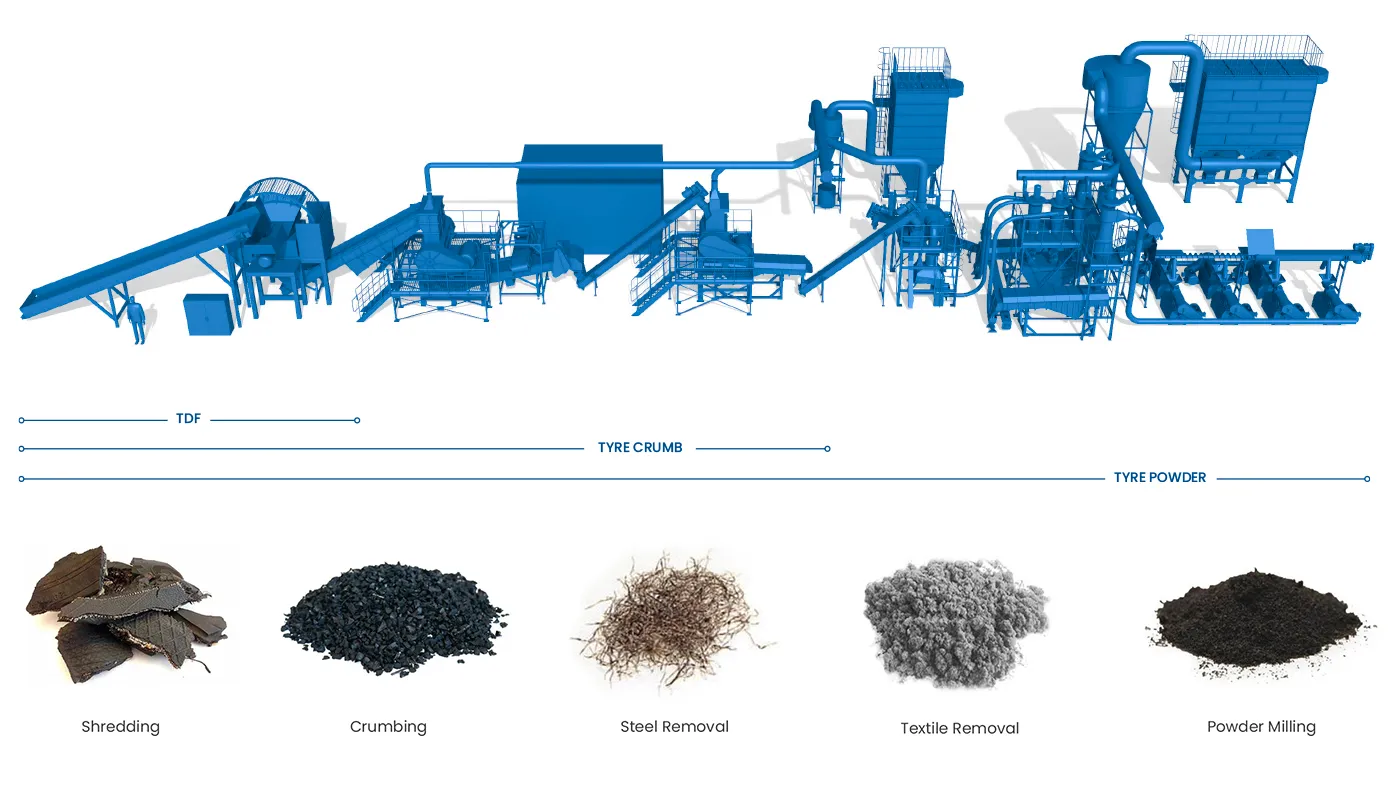
에이 타이어 재활용 기계 폐타이어(승용차, 트럭, 오프로드 차량, 산업용 타이어 등)를 재활용 가능한 재료인 고무 분말, 고무 가루, 철선, 섬유로 변환하는 공정입니다. 전 세계적으로 매년 약 15억 개의 폐타이어가 발생하고 북미, 유럽, 아시아 전역에서 매립 규제가 강화됨에 따라 타이어 재활용은 환경적으로 필수적인 동시에 수익성 있는 사업입니다. 이 가이드에서는 타이어 재활용 공정에 사용되는 모든 기계 유형, 실제 사양, 생산 제품 및 시장, 그리고 타이어 재활용 라인을 구축하거나 업그레이드하는 단계별 프레임워크를 다룹니다.
타이어 재활용 기계란 무엇인가요?
타이어 재활용 기계는 폐타이어를 재사용 가능한 원자재로 분해하는 데 사용되는 모든 장비를 말합니다. 단 하나의 기계로 타이어 전체를 완제품으로 만들 수는 없으며, 타이어 재활용에는 여러 장비가 필요합니다. 특수 기계들의 연속, 각 장비는 특정 단계를 담당합니다. 즉, 비드 제거(강철 비드 와이어 제거), 파쇄(1차 크기 감소), 과립화(2차 크기 감소), 강철 분리, 섬유 분리 및 분쇄(미세 분말 생산)를 수행합니다. "타이어 재활용 기계"라는 용어는 일반적으로 전체 라인 또는 시스템의 핵심인 1차 파쇄기를 지칭합니다.
타이어 재활용 과정: 단계별 안내
전체 과정을 이해하면 각 단계에 맞는 적절한 장비를 선택하는 데 도움이 됩니다. 다음은 상온에서 진행되는 표준 기계식 타이어 재활용 공정입니다.
1단계: 수집 및 검사
폐타이어는 타이어 판매점, 자동차 정비소, 차량 관리 업체 및 지자체 수거 장소에서 수거됩니다. 오염 여부(휠 장착 여부, 과도한 진흙, 화학 물질 오염)를 검사하고 승용차 타이어(PCT), 트럭 및 버스 타이어(TBT), OTR 타이어 등 종류별로 분류합니다. 각 종류는 크기와 강재 함량 차이로 인해 서로 다른 처리 기준이 필요합니다.
2단계: 구슬 제거
에이 타이어 비드 제거기 각 타이어 측면에서 강철 비드 와이어를 제거합니다. 이 단계는 매우 중요합니다. 타이어에 비드 와이어가 남아 있으면 파쇄기 날이 손상되고 고무 파쇄물이 오염됩니다. 단일 후크 비드 제거기는 시간당 60~120개의 승용차 타이어를 처리할 수 있습니다. 비드 와이어를 제거하면 파쇄기가 경화된 강철 케이블을 절단할 필요가 없으므로 후속 파쇄 작업(30~40%)의 에너지 효율이 향상됩니다.
3단계: 측벽 절단 (선택 사항)
대형 트럭 및 OTR 타이어의 경우, 타이어 절단기 측벽과 트레드를 분리합니다. 이렇게 하면 1차 파쇄기에 투입되는 재료의 크기가 줄어들고 측벽과 트레드를 별도로 처리하거나 특정 용도(예: 컨베이어 벨트 라이너용 측벽 고무)로 그대로 판매할 수 있습니다. 자세한 내용은 다음을 참조하십시오. 타이어 재활용에서 측면 절단이 중요한 이유.
4단계: 1차 파쇄
그만큼 타이어 분쇄기 타이어 재활용 라인의 핵심 장비입니다. 저속 고토크 방식입니다. 이중 샤프트 분쇄기 타이어 전체(또는 미리 절단된 부분)를 50~100mm 크기의 거친 조각으로 파쇄합니다. 타이어 재활용용 1차 파쇄기는 일반적으로 30~110kW 모터를 사용하며 타이어 종류와 기계 크기에 따라 시간당 500~3,000kg을 처리합니다. 이 단계에서는 타이어 유래 연료(TDF) 칩이라고 불리는 이 결과물은 대체 연료로서 이미 상업적 가치를 지닙니다.
5단계: 2차 파쇄/과립화
에이 타이어 분쇄기 50~100mm 크기의 칩을 5~20mm 크기의 알갱이로 줄입니다. 이 단계에서, 강철선이 고무 매트릭스에서 분리됩니다. 자석 분리기를 통해 제거할 수 있습니다. 섬유질 또한 분리되어 공기 분류기나 진동 스크린을 통해 제거됩니다. 최종 생성물은 고무 알갱이, 느슨한 강철선 및 섬유의 혼합물입니다. 자세한 내용은 당사의 안내서를 참조하십시오. 폐타이어 분쇄기 및 생산 사양.
6단계: 강철 및 섬유 분리
오버밴드 마그넷 분리기와 마그넷 드럼은 레이버 granules에서 스틸 wire fragment를 제거하여 일반적으로 99% 이상의 스틸 제거를 달성합니다. 공기 분류기와 진동 스크린은 텍스틸 섬유(니론, 폴리에스터 코드)를 제거합니다. 분리된 스틸은 scrap metal로 판매됩니다 ($100-$200/톤); 섬유는 점전체나 연료 보조로 사용될 수 있습니다.
7단계: 미세 분쇄 (선택 사항)
고부가가치 애플리케이션의 경우, 고무 분쇄기/분쇄기 과립을 더욱 미세하게 분쇄하여 40~80메쉬(0.2~0.4mm)의 미세 고무 분말을 얻습니다. 미세 고무 분말은 성형 고무 제품, 아스팔트 개량제, 스포츠 표면재 등에 사용되어 높은 가격(톤당 $300~$600)에 거래됩니다. 극저온 분쇄(분쇄 전에 액체 질소로 고무를 동결시키는 방식)를 통해 더욱 미세한 분말을 얻을 수 있지만, 가공 비용이 톤당 $50~$100 추가됩니다.
타이어 재활용 기계 종류
다음은 Energycle의 제조 범위에서 사용되는 모든 타이어 재활용 라인용 기계 유형과 사양입니다.
| 기계 | 기능 | 처리량 | 모터 파워 | 출력 크기 |
|---|---|---|---|---|
| 타이어 디비더 | 타이어 측면에서 비드 와이어를 빼냅니다. | 시간당 60~120개 타이어 | 7.5~15kW | 타이어 전체 (와이어 제거됨) |
| 타이어 절단기 | 타이어 측면 부분을 잘라냅니다. | 시간당 40~80개 타이어 | 5.5~11kW | 측면 스트립 + 트레드 링 |
| 1차 파쇄기(이중축) | 타이어를 통째로 갈거나 잘게 잘라서 조각내세요. | 500–3,000 kg/h | 30–110 kW | 50~100mm 칩 |
| 타이어 분쇄기 | 칩을 미세한 알갱이로 줄이고, 전선을 분리합니다. | 300–2,000 kg/h | 22~75kW | 5~20mm 크기의 과립 |
| 자기 분리기 | 과립에서 강철선을 제거하세요 | 라인 속도와 일치합니다 | 1.5–4 kW | 깨끗한 과립 + 강철선 |
| 공기 분류기/섬유 분리기 | 과립에서 섬유질을 제거합니다. | 라인 속도와 일치합니다 | 3~7.5kW | 깨끗한 알갱이 + 섬유질 |
| 고무 분쇄기 | 알갱이를 곱게 갈아 가루로 만드세요 | 200~800kg/시간 | 37~75kW | 40~80 메쉬 분말 |
생산품 및 시장 가치
타이어 재활용 라인은 다양한 수익원을 창출합니다. 생산 제품과 시장을 이해하면 재활용 공정을 어느 단계까지 진행하고 어떤 장비에 투자할지 결정하는 데 도움이 됩니다.
| 출력물 | 크기 | 시장 가격 | 적용 분야 |
|---|---|---|---|
| TDF Chips | 50~100mm | $30–$80/톤 | 시멘트 소성로 연료, 발전소 연료 (석탄 대체재) |
| 크럼 러버(거친 입자) | 5~20mm | $120–$250/톤 | 놀이터 바닥, 스포츠 트랙, 조경용 멀치 |
| 분말 고무(미세) | 1~5mm | $200–$400/톤 | 아스팔트 고무(도로 포장용), 성형 제품, 운동장 |
| Rubber Powder | 40~80 메쉬 | $300–$600/톤 | 고무 화합물 첨가제, 방수, 자동차 부품 |
| Steel Wire | — | $100–$200/톤 | 고철 재활용(제조 공장, 소형 제철소) |
| Textile Fiber | — | $20–$50/톤 | 단열재, 연료 보충제, 지오텍스타일 충전재 |
일반적인 승용차 타이어는 8–10 kg의 무게를 가지고 있으며, 무게의 약 70%가 루비어, 15%가 강철, 15%가 텍스틸 섬유로 구성되어 있습니다. 1,000개의 타이어를 처리하면 약 7톤의 루비어, 1.5톤의 강철, 1.5톤의 섬유가 생산됩니다.
TDF, TDA, 그리고 크럼 러버: 최종 제품 비교
타이어 재활용의 세 가지 주요 제품 범주는 매우 다양한 시장을 대상으로 합니다. 처리 수준에 따라 판매 가능한 제품이 결정됩니다.
| 제품 | 처리 필요 | 초기 투자 | 톤당 수익 | 시장 수요 |
|---|---|---|---|---|
| TDF(타이어 유래 연료) | 분쇄만 (1단계) | 낮음($80K–$200K) | $30–$80 | 안정적인 시설 — 시멘트 소성로, 발전소 |
| TDA(타이어 유래 골재) | 파쇄 + 선별 | 저-중간 ($100K–$250K) | $50–$120 | 성장 - 토목 공사, 매립 및 배수 |
| 부스러기 고무 | 파쇄 + 과립화 + 분리 | 중고급 ($200K–$600K) | $120–$600 | 강함 — 스포츠 경기장, 아스팔트, 성형 제품 |
신규 운영에 대한 권장 사항은 다음과 같습니다. 가장 낮은 초기 투자 비용으로 즉시 수익을 창출할 수 있는 TDF 생산부터 시작하고, 현금 흐름이 허락하는 대로 과립화 및 분리 장비를 추가하십시오. TDF 생산을 위해 구입한 파쇄기는 크럼 고무 생산 라인의 1단계가 되므로 투자 낭비가 전혀 없습니다. 자세한 시장 분석은 당사 가이드를 참조하십시오. 타이어 재활용 시장: TDF vs. TDA vs. CRM.
승용차 vs. 트럭 vs. OTR 타이어 가공
타이어 종류에 따라 필요한 장비 크기와 처리 방식이 다릅니다.
| 매개변수 | 승용차 타이어 | 트럭/버스 타이어 | OTR 타이어 |
|---|---|---|---|
| 무게 | 8~10kg | 40~70kg | 200~4,000kg |
| 지름 | 550~700mm | 900~1,200mm | 1,800~4,000mm |
| 강철 함량 | 10–15% | 15–25% | 10–20% |
| 디비딩 | 표준형 싱글 훅 | 고강도 디비더 | 유압식 OTR 디비더 |
| 사전 절단 | 선택 과목 | 추천 | 필수의 |
| 분쇄기 크기 | 30~55kW | 55~90kW | 90~200kW 이상 |
| 처리량(분쇄기) | 500~2,000kg/시간 | 800~2,500kg/시간 | 프로젝트별 맞춤 설정 |
타이어 재활용 라인 전체 구성
기본 TDF 라인(최저 투자 비용)
비드 제거기 → 1차 파쇄기 → 자석 분리기 → 선별기. 생산물: 50~100mm TDF 칩 + 강선. 처리량: 500~2,000kg/시간. 투자 비용: $80,000~$200,000. 투자 회수 기간: 하루 8시간 가동 기준 12~24개월.
고무 분말 생산 라인 (중간 투자)
디비더 → 1차 파쇄기 → 과립기 → 자석 분리기 → 공기 분류기 → 진동 스크린. 생산물: 1~5mm 크기의 깨끗한 고무 + 강철 + 섬유 분말. 처리량: 완제품 분말 300~1,500kg/시간. 투자 비용: $ 200,000~600,000. 투자 회수 기간: 8~18개월. 자세한 내용은 당사 웹사이트를 참조하십시오. 타이어 재활용 라인 시범 가동.
고운 고무 분말 라인 (최고가)
고무 분말 생산 라인(완전 분쇄 설비 + 고무 분쇄기 + 미세 선별기 + 포장 설비). 생산량: 40~80메쉬 고무 분말. 처리량: 시간당 200~800kg 분말. 투자 비용: $ 40만~100만 이상. 투자 회수 기간: 12~24개월. 톤당 최고 수익을 창출하지만, 더 많은 자본과 숙련된 작업자가 필요합니다.
5-Step Selection Framework
1단계: 원료를 정의하세요
승용차 타이어, 트럭 타이어, 아니면 OTR 타이어인가요? 혼합형인가요, 아니면 단일형인가요? 예상 일일/월간 처리량은 톤 단위인가요? 타이어 종류는 생산 라인의 모든 기계 사양을 결정합니다. 예를 들어, 시간당 500kg의 승용차 타이어 라인은 시간당 500kg의 트럭 타이어 라인과는 완전히 다른 설비가 필요합니다.
2단계: 최종 제품 선택
TDF 칩(가장 단순함), 크럼 러버(투자 대비 수익의 균형이 가장 좋음), 또는 파인 러버 파우더(가장 높은 가치, 가장 높은 투자) 중 어떤 것이 더 나을까요? 지역 시장 수요를 조사하십시오. 경제적인 운송 거리 내에 구매자가 없다면 크럼 러버 생산 라인은 무의미합니다. 투자하기 전에 최소 2~3곳의 잠재 구매자를 파악하십시오.
3단계: 선 굵기 결정
타이어 공급량에서 필요한 처리량을 계산하세요. 일일 50톤의 승용차 타이어를 처리하는 공장은 8시간 근무와 80%의 업타임을 고려할 때, 3,000–4,000 kg/h의 원본 쇼딩 용량이 필요합니다. 항상 장비를 최대 용량에 추가 20% 마진으로 규모를 잡아야 합니다.
4단계: 레이아웃을 계획하세요
완전한 고무 분말 생산 라인을 구축하려면 500~2,000m²의 실내 공간과 야외 타이어 보관 공간이 필요합니다. 자재 흐름은 타이어 입고 → 비드 제거 → 파쇄 → 과립화 → 분리 → 선별 → 제품 보관 순으로 계획해야 합니다. 유지 보수, 예비 부품 보관 및 향후 확장을 위한 공간도 확보해야 합니다.
5단계: 투자수익률(ROI) 계산
수익 = (루비어 톤수 × 루비어 가격) + (강철 톤수 × 강철 가격) + 타이어 수용료(타이어 수용에 부과되는 경우). 비용 = 장비 감가상각 + 전기 + 노동 + 유지보수 + 임대료. 대부분의 타이어 재활용 운영은 타이어 수용료로 1–3달러를 부과하며, 이는 운영 비용의 30–50%를 커버할 수 있습니다. 1,000 kg/h의 크럼 루비어 라인은 연간 300,000–600,000달러의 순이익을 생성하고, 40–60%의 마진을 가집니다.
유지보수 필수 사항
타이어 재활용 장비는 마모성이 강한 고무, 박혀 있는 강철 와이어, 높은 토크 부하 등 가혹한 환경에서 작동합니다. 따라서 체계적인 유지 보수 프로그램은 필수적입니다.
- 일일파쇄기 날의 파편 발생 여부를 점검하고, 막힌 재료를 제거하고, 유압 시스템의 오일 레벨을 확인하십시오.
- 주간자석 분리기의 강도를 확인하고, 컨베이어 벨트의 장력과 정렬 상태를 점검하고, 과립기 스크린의 마모 여부를 검사합니다.
- 월간 간행물베어링에 윤활유를 바르고, 전기 연결 상태와 모터 온도를 점검하고, 파쇄기 축의 밀봉 상태를 확인하십시오.
- 500~1,000시간마다파쇄기 날을 회전시키거나 교체하십시오 (타이어 파쇄는 강철 와이어와의 접촉으로 인해 일반 플라스틱 파쇄보다 날이 2~3배 더 빨리 마모됩니다).
- 매년기계 전체 점검, 마모된 스크린 및 라이너 교체, 기어박스 오일 점검, 안전 시스템 확인
블레이드 비용은 유지보수 비용 중 가장 큰 부분을 차지하며, 중간 규모 생산 라인의 경우 연간 5,000~15,000달러의 예산을 책정해야 합니다. 내마모성 블레이드 재질(D2, DC53 또는 경화 표면 처리)을 사용하면 블레이드 수명이 40~80% 연장됩니다. 자세한 내용은 당사 웹사이트를 참조하십시오. 파쇄기 날 야금 가이드.
Energycle와 함께 시작하세요
Energycle는 완제품을 제조합니다. 타이어 재활용 기계 탈곡부터 파쇄, 과립화, 분리 및 분쇄에 이르는 모든 공정을 제공합니다. 아프리카, 동남아시아, 중동 및 남미 전역에 설비를 갖추고 다음과 같은 서비스를 제공합니다.
- 무료 프로젝트 상담 타이어 공급량, 목표 제품, 예산을 알려주시면 최적의 생산 라인 구성을 설계해 드립니다.
- 턴키 방식의 라인 공급 — 모든 기계, 컨베이어, 전기 패널 및 제어 장치를 단일 공급원에서 제공합니다.
- 설치 및 시운전 — 저희 엔지니어들이 현장에 설치하고 운영자 교육을 제공합니다.
- 예비 부품 및 날 공급 — 소모품의 신속한 배송을 통해 가동 중지 시간을 최소화합니다.
재료 유형, 처리량 요구 사항, 원하는 출력 크기를 가진 타이어 종류, 일일 생산량, 목표 최종 제품을 알려주시면 1주일 이내에 생산 라인을 설계하고 전체 견적서를 제공해 드리겠습니다.
자주 묻는 질문
타이어 재활용 기계의 비용은 얼마인가요?
기본 TDF 파쇄 라인(탈비더 + 파쇄기 + 자석 분리기)은 $80,000~$200,000입니다. 완전한 고무 분말 라인은 $200,000~$600,000입니다. 분쇄기가 포함된 미세 고무 분말 라인은 $400,000~$1,000,000 이상입니다. 개별 기계는 타이어 파쇄기 $30,000~$150,000, 탈비더 $8,000~$25,000, 과립기 $20,000~$80,000입니다. 투자 회수 기간은 구성 및 현지 시장 가격에 따라 8~24개월입니다.
타이어 재활용 과정은 무엇인가요?
표준 기계식 타이어 재활용 공정은 6~7단계로 구성됩니다. (1) 수집 및 분류, (2) 비드 제거(강철 비드 와이어 제거), (3) 선택적 측면 절단, (4) 50~100mm 칩으로 1차 파쇄, (5) 5~20mm로 과립화, (6) 강철 와이어 및 섬유를 제거하기 위한 자석 및 공기 분리, (7) 선택적 40~80메쉬 분말로 미세 분쇄. 각 단계는 생산물의 가치를 높입니다.
타이어 재활용은 수익성이 있을까요?
네 — 타이어 재활용은 다양한 수익원을 통해 수익을 창출합니다: 크램버터 루브(미세도에 따라 톤당 $120–$600), 철 wire(톤당 $100–$200), 티퍼링 비(받은 타이어당 $1–$3), 그리고 섬유(톤당 $20–$50). 1,000 kg/h 처리량을 가진 중형 크램버터 운영은 운영 비용을 감안한 후 연간 총 수익 $300,000–$600,000과 40–60%의 이익 마진을 기록합니다.
타이어 재활용을 위해 어떤 크기의 파쇄기가 필요합니까?
승용차 타이어용: 30–55 kW의 더블 샤프트 쇼더가 500–2,000 kg/h를 처리합니다. 트럭 타이어용: 55–90 kW로 800–2,500 kg/h를 처리합니다. OTR 타이어용: 90–200+ kW, 맞춤형 설계. 항상 최대 용량 plus 20% 마진을 고려하고, 80%의 운영 시간을 계산하십시오(정비, 셔틀 변경, 공급 간격).
TDF, TDA, 그리고 크럼 러버의 차이점은 무엇인가요?
TDF(타이어 유래 연료)는 시멘트 소성로에서 대체 연료로 연소되는 거칠게 파쇄된 타이어 조각(50~100mm)입니다. TDA(타이어 유래 골재)는 토목 공사에서 경량 충전재로 사용되는 파쇄된 타이어 조각입니다. 크럼 러버는 스포츠 경기장 표면, 아스팔트 개량 및 성형 제품에 사용되는 미세한 과립형 고무(1~5mm)입니다. 각각의 원료는 점점 더 많은 가공 장비를 필요로 하지만 가격 또한 높아집니다.
트럭 타이어와 승용차 타이어를 같은 라인에서 재활용할 수 있나요?
네, 하지만 라인 크기는 더 큰 타이어에 맞춰야 합니다. 트럭 타이어용으로 설계된 파쇄기는 승용차 타이어도 쉽게 처리할 수 있지만, 그 반대는 불가능합니다. 가장 큰 차이점은 비드 제거 작업입니다. 트럭 타이어에는 고성능 비드 제거기가 필요합니다. 큰 타이어를 처리할 때는 각 타이어를 파쇄하는 데 시간이 더 오래 걸리기 때문에 공급 속도가 떨어집니다. 많은 업체에서 승용차 타이어와 트럭 타이어를 별도의 배치로 처리합니다.
타이어 파쇄기 날은 얼마나 오래 사용할 수 있나요?
타이어 파쇄기 날은 회전 또는 교체가 필요하기 전까지 500~1,000시간 동안 사용할 수 있으며, 이는 하루 8시간 기준으로 약 2~4개월에 해당합니다. 타이어에 포함된 강철 비드 와이어는 일반 플라스틱 파쇄물에 비해 날 마모 속도를 2~3배 빠르게 합니다. D2 및 DC53 공구강 날은 수명 대비 가격 효율이 가장 우수하며, 텅스텐 카바이드 팁 날은 수명이 더 길지만 초기 구매 비용이 4~6배 더 높습니다.
타이어 재활용을 위해서는 어떤 허가가 필요합니까?
관할 구역에 따라 요구 사항은 다르지만 일반적으로 폐기물 처리/재활용 허가, 환경 허가(대기 배출, 소음, 수질 오염 방지), 화재 안전 승인(타이어 보관은 화재 위험이 높음), 사업 운영 허가 등이 포함됩니다. 일부 지역에서는 타이어 보관 제한(현장 최대 타이어 개수)도 요구합니다. 장비를 구입하기 전에 해당 지역 환경 당국에 문의하십시오.
관련 자료
- 타이어 재활용 기계 — 제품군
- 타이어 분쇄기
- 타이어 재활용 시장: TDF, TDA, CRM 사양 비교
- 폐타이 그란레이터: 작동 방식
- 타이어 분쇄기: 강선 분리 및 고무 분말 사양
- 단일 핀 타이어 와이어 데비딩 기계
- 폐타이어 절단기
- 타이어 고무 재활용 분쇄기
- 타이어 재활용 과정에서 측면을 절단하는 이유는 무엇인가요?
- 폐타이어 재활용 라인 시범 운영
- 플라스틱, 금속 및 타이어용 이중 샤프트 파쇄기
- 파쇄기 날 야금 가이드
- 플라스틱 재활용 기계: 전체 가이드
안 와전류 분리기 (ECS)는 전자기 반발력을 이용하여 혼합 폐기물에서 알루미늄 캔, 구리선, 황동 부품, 아연 다이캐스팅과 같은 비철금속을 회수합니다. 재활용 라인에서 생활폐기물(MSW), 자동차 파쇄 잔류물(ASR), 전자 폐기물, 소각재(IBA) 또는 알루미늄 마개로 오염된 PET 병 조각을 처리하는 경우, 와전류 분리기를 사용하면 비철금속을 효과적으로 분리할 수 있습니다. 이 가이드에서는 기술의 물리적 원리, 모든 ECS 유형 Energycle, 실제 작동 매개변수, 그리고 용도에 맞는 분리기를 선정하는 단계별 지침을 다룹니다.
와전류 분리기는 무엇인가요?
와전류 분리기는 컨베이어 벨트 상에서 비철금속과 비금속 재료를 분리하는 전자기 선별기입니다. 핵심 메커니즘은 비금속 재질의 드럼 내부에서 고속으로 회전하는 자기 로터가 빠르게 교류하는 자기장을 생성하는 것입니다. 전도성 금속이 이 자기장을 통과할 때, 금속 조각 내부에 와전류가 유도되어 로터의 자기장에 반대되는 자체 자기장을 생성합니다. 이로 인해 발생하는 반발력으로 비철금속은 벨트에서 앞으로 튕겨 나가고, 비전도성 재료(플라스틱, 유리, 목재, 종이)는 중력에 의해 벨트 끝에서 떨어집니다.
분리력은 재료의 특성에 따라 달라집니다. 전도도 대 밀도 비율. 알루미늄(높은 전도성, 낮은 밀도)은 와전류 분리가 가장 쉽습니다. 구리와 황동(높은 전도성이지만 밀도가 높음)은 더 강한 자기장이나 더 느린 벨트 속도가 필요합니다. 스테인리스강과 납은 낮은 전도성이나 매우 높은 밀도 때문에 와전류 분리에 잘 반응하지 않습니다.
와전류 분리기는 어떻게 작동하나요?
작동 원리는 패러데이의 전자기 유도 법칙과 렌츠의 법칙을 따릅니다. 단계별 과정은 다음과 같습니다.
1단계: 재료 공급
사전 선별된 재료(자석 드럼 또는 오버밴드 분리기를 통해 철 금속이 이미 제거됨)는 얇고 균일한 층으로 ECS 컨베이어 벨트에 공급됩니다. 상류의 진동 공급기는 단층 분포를 보장하며, 입자가 쌓이면 분리 효율이 30~50% 감소합니다.
2단계: 자기장 노출
이송 재료가 헤드 풀리에 도달하면 고정된 쉘 내부에서 2,000~5,000RPM으로 회전하는 자기 로터를 지나갑니다. 로터의 원주에는 교대로 배열된 NSNS 영구 자석(일반적으로 NdFeB 희토류)이 포함되어 있습니다. 이로 인해 벨트 표면에 빠르게 변화하는 자기장이 생성됩니다.
3단계: 와전류 유도
전도성 금속 조각이 교류 자기장에 들어가면 금속 내부에 순환 전류(와전류)가 유도됩니다. 렌츠의 법칙에 따라 이러한 와전류는 외부 자기장에 반대되는 자체 자기장을 생성하여 금속 조각을 회전자에서 밀어내는 반발력(로렌츠 힘)을 발생시킵니다.
4단계: 궤적 분리
각 입자에는 세 가지 힘이 동시에 작용합니다. (1) 와전류 반발력(앞쪽/위쪽), (2) 벨트 컨베이어의 운동량(앞쪽), (3) 중력(아래쪽). 비철금속은 추가적인 반발력을 받아 더 긴 궤적을 따라 이동하여 "금속" 수집통에 떨어집니다. 비전도성 물질은 벨트 끝에서 떨어져 별도의 "비금속" 수집통에 담깁니다. 두 수집통 사이에 있는 조절 가능한 분리판을 통해 작업자는 분리 지점을 미세 조정할 수 있습니다.
와전류 분리기의 종류
적용 분야에 따라 ECS 설계가 달라집니다. 주요 차이점은 로터 형상(동심형 vs. 편심형)으로, 이는 자기장 패턴과 최적의 입자 크기 범위를 결정합니다.
동심극 로터 ECS
자기 회전자는 쉘 드럼 내부에 중앙에 위치합니다.これにより 균일하고 대칭적인 자기장 패턴이 생성되어 이상적인 성능을 발휘합니다. 표준 재활용 적용 입자 크기가 20~150mm 범위인 경우에 사용되는 동심형 ECS 장치는 산업 현장에서 널리 사용되는 핵심 장비로, 생활폐기물 재활용, 건설 및 철거 폐기물, 자동차 파쇄 잔여물, 일반 고철 처리 등에 활용됩니다. 높은 처리량과 낮은 유지보수 비용으로 안정적인 분리 성능을 제공합니다.
편심극 로터 ECS
자기 회전자는 쉘 내부에서 편심되어 있어 강렬하지만 국부적인 자기장 영역을 생성합니다. 이는 분리 지점에 최대 자기 에너지를 집중시켜 편심형 ECS 장치를 효과적으로 만듭니다. 최대 5mm 크기의 미세 입자. 응용 분야에는 소각로 바닥재(IBA) 처리, 조르바/주릭 분류, 폐전기전자제품(WEEE) 회수, 유리 파편에서 미세 알루미늄 회수 등이 있습니다. 고회수율 ECS를 이용한 정밀 알루미늄 가공 이 디자인을 사용합니다.
고주파 ECS
표준 장치의 12~16극 대비 더 많은 자기극(일반적으로 18~30극)과 더 높은 회전 속도를 사용하여 빠른 자계 교대를 생성합니다. 이 설계는 표준 동심형 장치가 효율성을 잃는 미세 비철 입자(5~20mm)를 처리하는 데 적합합니다. 고주파 ECS는 IBA 공장, 전선 절단 라인 및 소형 WEEE 재활용 시설에서 미세 입자 처리에 필수적입니다.
습식 와류 분리기
건식 벨트 방식이 아닌 수성 슬러리 상태에서 재료를 처리합니다. 공급 원료가 이미 습한 경우(예: 슬래그 담금질수, 중액 처리 공장 폐기물) 또는 분진 제어가 중요한 경우에 사용됩니다. 건식 ECS 방식보다 사용 빈도는 낮지만 특정 야금 및 광업 분야에서는 필수적입니다.
와전류 분리기 유형 비교
| 유형 | 입자 크기 범위 | 로터 속도 | 폴스 | 최고의 응용 프로그램 | 회수율 |
|---|---|---|---|---|---|
| 동심원형(표준형) | 20~150mm | 2,000~3,500 RPM | 12~16세 | 생활폐기물, 건설폐기물, 자동차 파쇄기, 일반 고철 | 90–95% |
| 별난 | 5~50mm | 3,000~5,000 RPM | 14~22세 | IBA, WEEE, 조르바/주릭, 고급 알루미늄 | 85–93% |
| 고주파 | 5~20mm | 3,500~5,000 RPM | 18~30세 | 미세 분획 IBA, 전선 절단, 소형 WEEE | 80–90% |
| 젖은 | 5~80mm | 1,500~3,000 RPM | 12~18세 | 슬래그 처리, 습식 광산 폐기물 | 75–88% |
주요 작동 매개변수
에이드커런트 분리기 성능을 결정하는 다섯 가지 매개변수가 있습니다. 이를 귀하의 특정 재료 흐름에 최적화함으로써 70%와 95%의 회수율 차이를 낼 수 있습니다.
1. 회전 속도(RPM)
회전 속도가 높을수록 자계 교류 주파수와 반발력이 증가하지만, 일정 한계까지만 그렇습니다. 특정 입자 크기에 대한 최적 회전 속도를 넘어서면 입자가 자계에 노출되는 시간이 너무 짧아져 성능이 정체되거나 저하됩니다. 일반적인 작동 범위: 2,000~5,000 RPM. 3,000RPM에서 시작하여 회수 결과에 따라 조정하십시오. 미세 입자는 더 높은 RPM이 필요하고, 큰 알루미늄 캔은 낮은 속도에서 잘 분리됩니다.
2. 벨트 속도
벨트 속도는 재료 적재 깊이(속도가 빠를수록 층이 얇아짐), 자기장 내 체류 시간(속도가 빠를수록 노출 시간이 짧아짐), 분리 후 입자 궤적 등 세 가지 요소를 제어합니다. 최적의 벨트 속도는 단일 입자 두께의 층을 생성합니다. 적재 없이. 일반적인 범위: 1.5~3.0m/s. 처리량이 많은 작업에는 벨트 속도를 높이고, 미세 입자 회수에는 속도를 낮추십시오.
3. 분배기 위치
금속 및 비금속 수집통 사이의 칸막이를 조절할 수 있습니다. 칸막이를 벨트에 더 가깝게 배치하면 금속 순도는 높아지지만 회수율은 낮아지고, 더 멀리 배치하면 회수율은 높아지지만 비금속 오염이 더 많이 발생할 수 있습니다. 회수율 극대화(재활용 수익) 또는 순도 극대화(후처리 공정 요구 사항) 중 어느 것을 우선시하느냐에 따라 칸막이 위치를 설정하십시오.
4. 공급층 균일성
가장 간과하기 쉬운 매개변수입니다. 적층된 물질은 자기장이 하부층으로 접근하는 것을 차단하여 회수율을 30~50% 감소시킵니다. 진동 공급기를 사용하여 ECS 헤드 풀리에 도달하기 전에 물질을 균일한 단층으로 펼쳐주십시오. 습하거나 점착성이 있는 물질의 경우, 브리징을 유발하는 미세 입자를 제거하기 위해 사전 선별 단계를 설치하십시오.
5. 철분 사전 제거
ECS(전자식 냉각 시스템)를 설치하기 전에 철(강철, 철)을 제거해야 합니다. 철 조각은 자기 로터 쉘에 달라붙어 감싸지면서 벨트를 손상시키고, 비철 금속 분리 효율을 떨어뜨리며, 값비싼 가동 중단을 초래합니다. 항상 ECS를 설치하십시오. 자기 분리기 상류에서는, 오버밴드 마그넷, 마그넷 드럼, 또는 페러렐 마그넷이 철제 오염물을 99% 이상 제거합니다.
물질 분리 성능
모든 비철금속이 동일하게 분리되는 것은 아닙니다. 주요 요인은 다음과 같습니다. 전도도 대 밀도 비율(σ/ρ) — 비율이 높을수록 분리력이 강해집니다. 일반적인 재료의 순위는 다음과 같습니다.
| 재료 | 전도도(MS/m) | 밀도 (kg/m³) | σ/ρ 비율 | ECS 분리 |
|---|---|---|---|---|
| 알류미늄 | 37.7 | 2,700 | 14.0 | 우수함 — 주요 목표 금속 |
| 마그네슘 | 22.6 | 1,740 | 13.0 | 훌륭한 |
| 구리 | 59.6 | 8,960 | 6.7 | 좋음 - 벨트 속도를 낮추거나 회전수를 높여야 함 |
| 놋쇠 | 15.9 | 8,500 | 1.9 | 보통 - 큰 조각만 해당 |
| 아연 | 16.6 | 7,130 | 2.3 | 보통의 |
| 선두 | 4.8 | 11,340 | 0.4 | 열악함 - 밀도가 너무 높음 |
| 스테인리스 스틸 | 1.4 | 7,900 | 0.2 | 매우 미흡함 - 센서 기반 분류 방식을 사용하세요 |
이 표는 알루미늄 캔이 ECS(가장 높은 σ/ρ 비율)를 사용하여 회수하기 가장 쉬운 재료인 반면, 스테인리스강은 센서 기반 분류 기술이 필요한 이유를 설명합니다.
사양 참조
Energycle는 600mm에서 2,000mm까지의 작동 폭을 가진 와전류 분리기를 제조합니다. 다음은 당사 제품군의 대표적인 사양입니다.
| 모델 | 벨트 폭 | 처리량 | 모터 파워 | 로터 직경 | 로터 속도 |
|---|---|---|---|---|---|
| ECS-600 | 600mm | 1~3톤/시간 | 4kW | 직경 300mm | 최대 4,000RPM |
| ECS-800 | 800mm | 2~5톤/시간 | 5.5kW | 직경 300mm | 최대 4,000RPM |
| ECS-1000 | 1,000mm | 3~8톤/시간 | 7.5kW | 직경 350mm | 최대 3,800RPM |
| ECS-1200 | 1,200 mm | 5~12톤/시간 | 11kW | 직경 350mm | 최대 3,800RPM |
| ECS-1500 | 1,500 mm | 8~18톤/시간 | 15kW | 직경 400mm | 최대 3,500RPM |
| ECS-2000 | 2,000 mm | 12~25톤/시간 | 22kW | 직경 400mm | 최대 3,500RPM |
모든 모델에는 회전 속도 조절용 VFD(가변 주파수 드라이브), NdFeB 희토류 자석, 교체 가능한 비자성 외피 및 조절 가능한 분배판이 장착되어 있습니다. 당사 웹사이트를 방문하십시오. 와전류 분리기 제품 페이지 자세한 사양 및 구성 옵션은 다음을 참조하십시오.
산업 응용 분야
와전류 분리기는 혼합 물질 흐름에서 비철금속을 회수해야 하는 모든 산업 분야에 사용됩니다.
도시 고형 폐기물(MSW) 재활용
재활용 재료 회수 시설(MRF)에서는, 마그넷 분리가 철을 제거한 후 ECS가 알루미늄 캔 및 다른 비철금속을 회수합니다. 일반적인 MRF는 20–50 t/h를 처리하고 단일 ECS 패스로 95% 이상의 알루미늄 캔을 회수합니다. 회수된 알루미늄은 1톤당 $800–$1,500의 수익을 생성하며, MSW 재활용에서 가장 높은 가치를 제공하는 흐름으로 자리 잡고 있습니다. 자세한 내용은 확인해 주세요. MSW 분류기 라인업.
자동 파쇄기 잔류물(ASR)
사용 후 차량이 쇼드러리되면, 혼합된 출력에는 알루미늄 엔진 부품,銅 전선, 브라스 조각, 그리고 플라스틱과 유리 사이에 존재하는 접착금속 부품이 포함됩니다. 다단계 ECS 처리(초유분 + 미세 분자)는 ASR에서 85–92%의 비철금속을 회수하여, 회수된 금속 가치를 차량당 $50–$120으로 증가시킵니다.
소각 바닥재(IBA)
폐자원 에너지 공장의 바닥灰에는 무게로 5~12%의 비철금속이 포함되어 있으며, 주로 알루미늄과銅이 있습니다. IBA를 분쇄, 자기분리, 중앙축/고주파 ECS를 통해 처리하면, 처리된灰 1톤당 €40~€80 가치의 금속을 회수할 수 있습니다. 이 애플리케이션은 IBA의 입자성 때문에 5mm까지의 미세입자 ECS 능력이 필요합니다.
전자 폐기물(WEEE)
분쇄된 전자폐기물은銅, 알루미늄, 브라스, 귀금속이 플라스틱과 회로판 파편과 혼합되어 있습니다. ECS는 대부분의 비철금속을 회수하며, 하류의 센서 기반 정리나 밀도 분리는 출력을 추가로 정화합니다. 일반 회수율: 분쇄된 WEEE에서 알루미늄과銅의 80~90%
PET 병 재활용
PET 파이프 스트림에서 알루미늄 캡슐과 루프를 제거하여 식품 등급의 정화를 달성해야 합니다. 압축과 씻기 후에 배치된 ECS는 98% 이상의 알루미늄 오염을 제거하여, 병에서 병으로 재활용을 위한 50ppm 이하의 금속 내용물 제한을 충족합니다. 더 알아보기 재활용 펠릿의 금속 함량 ≤50 ppm.
건설 및 철거(C&D) 폐기물
철거 폐기물에는 알루미늄 창틀, 구리 파이프 및 전선, 황동 부속품 및 기타 비철금속이 포함되어 있습니다. ECS는 1차 파쇄 및 철 제거 과정을 거쳐 혼합 골재, 목재 및 콘크리트 폐기물에서 이러한 고부가가치 금속을 회수합니다.
재활용 라인에서 ECS의 역할
와전류 분리기는 절대 단독으로 작동하지 않습니다. 다음은 재활용 라인에서 와전류 분리기가 일반적으로 위치하는 곳과 함께 작동하는 장비들입니다.
일반적인 처리 순서:
- 크기 감소 — 파쇄기 또는 분쇄기는 재료를 가공 가능한 크기로 부순다.
- 상영 트롬멜 또는 진동 스크린은 재료를 크기별로 분리합니다.
- 철 제거 — 자기 분리기 (오버밴드, 드럼 또는 풀리)는 강철과 철을 제거합니다.
- 와전류 분리 — ECS는 잔류 스트림에서 비철금속을 회수합니다.
- 추가 정렬 센서 기반 분류, 밀도 분리 또는 수동 품질 관리(QC)를 통한 최종 순도 확인
최대 회수율을 위해 많은 시설에서는 두 개의 ECS 장치를 직렬로 연결하여 사용합니다. 하나는 조립 입자(>20mm)용 동심형 장치이고, 다른 하나는 미립 입자(5~20mm)용 편심형 또는 고주파 장치입니다. 이러한 이중 단계 방식은 단일 통과 시스템보다 비철금속을 15~25% 더 많이 회수할 수 있습니다.
5-Step Selection Framework
작업에 사용할 와전류 분리기를 지정할 때 이 프레임워크를 사용하십시오.
1단계: 사료 원료의 특성 파악
비철금속(알루미늄, 구리, 황동, 아연)의 종류, 입자 크기 분포, 공급 원료 내 중량 비율, 수분 함량을 파악합니다. 이를 통해 동심형, 편심형 또는 고주파 ECS 설계가 필요한지, 그리고 예상 회수율은 얼마인지 결정합니다.
2단계: 필요한 처리량 결정
시간당 공급량을 톤 단위로 측정하십시오. ECS 벨트 폭은 단층 공급을 유지하면서 이 용량을 처리할 수 있어야 합니다. 1,000mm 벨트는 재료의 부피 밀도에 따라 시간당 3~8톤을 처리할 수 있으며, 처리량을 높이려면 더 넓은 벨트를 사용하십시오. 항상 최대 용량에 20%의 여유를 더하여 벨트 크기를 결정하십시오.
3단계: 로터 구성 선택
동심형 로터는 20mm 초과 입자(표준 용도)에 적합합니다. 편심형 로터는 5~50mm 입자(미세 입자, IBA, WEEE)에 적합합니다. 고주파 로터는 5~20mm 입자(미세 입자 최대 회수)에 적합합니다. 공급 원료에 조립 및 미립 입자가 모두 포함된 경우, ECS 장치 두 대를 직렬로 연결하여 사용하는 것이 좋습니다.
4단계: 상류 장비 검증
확실하게 철분 전처리가 충분하도록 확인하십시오 (ECS 공급물에 0.5% 이하의 철분). ECS 유형에 맞는 정확한 크기 분포를 생성하는 필터링/사이즈링을 확인하십시오. 일관된 단층 분포를 위해 진동식 공급기나 퍼셔링 콘베이어가 포함되어야 합니다. 상류 단계가 누락되면 ECS 성능이 크게 저하됩니다.
5단계: 투자수익률(ROI) 계산
연간 비철금속 회수량 × 톤당 금속 가치 = 총 수익. 여기서 ECS 운영 비용(전기료, 12~18개월마다 벨트 교체, 3~5년마다 로터 쉘 교체, 유지보수 인건비)을 차감합니다. 대부분의 ECS 설비는 회수된 금속 가치만으로 6~18개월 이내에 투자금을 회수합니다. 알루미늄을 951톤/7톤 회수할 경우 톤당 1,800~1,500달러의 수익이 발생합니다.
유지보수 및 문제 해결
와전류 분리기는 다른 재활용 장비에 비해 유지보수가 비교적 적게 들지만, 정기적인 점검을 통해 비용이 많이 드는 가동 중단을 방지할 수 있습니다.
| 간격 | 일 | 세부 |
|---|---|---|
| 일일 | 육안 검사 | 벨트 트래킹, 분배기 위치 및 배출구의 자재 축적 여부를 점검하십시오. |
| 주간 | 벨트 장력 점검 | 벨트 장력과 정렬 상태를 확인하십시오. 정렬이 잘못되면 마모가 고르지 않게 되고 벨트 간격이 줄어듭니다. |
| 월간 간행물 | 베어링 윤활 | 제조사 권장 일정에 따라 로터 및 구동 베어링에 그리스를 주입하십시오. |
| 월간 간행물 | 쉘 검사 | 비자성 외피에 철 오염으로 인한 마모 흔적이 있는지 확인하고, 마모가 심한 경우 교체하십시오. |
| 분기별 | 자기장 점검 | 구아스미터로 루터 마그네틱 필드 강도를 확인하십시오 — NdFeB 마그넷은 매년 1% 미만으로 저하됩니다 |
| 매년 | 벨트 교체 | 컨베이어 벨트를 교체하고 구동 부품, 롤러 및 베어링을 점검하십시오. |
| 3~5년 | 쉘 교체 | 비자성 로터 쉘(탄소 섬유 또는 스테인리스강)이 최소 두께 이하로 마모되면 교체하십시오. |
일반적인 문제점 및 해결책:
- 낮은 회복률 → 공급층 균일성 확인(가장 흔한 원인), 로터 속도가 입자 크기와 일치하는지 확인, 분할기 위치 점검
- 금속이 아닌 물건들을 담는 통에 금속을 넣으세요 → 로터 회전 속도를 높이거나, 벨트 속도를 낮추거나, 분배기를 벨트에서 더 멀리 이동시키십시오.
- 금속통 안의 비금속 → 로터 속도를 낮추거나, 벨트 속도를 높이거나, 분배기를 벨트에 더 가깝게 이동시키십시오.
- 벨트 손상 → 로터에 철 오염 물질이 유입됨; 상류 자기 분리 성능 개선
- 과도한 진동 → 로터 밸런스, 베어링 상태 및 벨트 트래킹 정렬을 점검하십시오.
Energycle와 함께 시작하세요
Energycle manufactures 와전류 분리기 동심원형 및 편심원형 구성으로 벨트 폭은 600mm에서 2,000mm까지 다양합니다. 또한 다음과 같은 완벽한 분류 및 재활용 라인 통합 솔루션을 제공합니다.
- 무료 재료 검사 — 귀사의 폐수 샘플을 보내주시면 당사의 ECS 장치를 사용하여 분리 성능을 테스트해 드립니다.
- 맞춤형 로터 구성 — 극 수, 자석 등급 및 회전 속도는 특정 재료에 맞게 최적화됩니다.
- 완전한 라인 설계 — 파쇄부터 선별, 자력 분리, 와전류 분리, 센서 분류에 이르기까지
- 사후 지원 — 예비 벨트, 교체용 외피, 원격 문제 해결 및 현장 시운전
재료 유형, 처리량 요구 사항, 원하는 출력 크기를 가진 귀사의 자재 유형, 처리량 및 목표 금속 회수율을 고려하여 적합한 ECS 구성을 추천해 드리고 48시간 이내에 자세한 견적을 제공해 드립니다.
자주 묻는 질문
와전류 분리기는 어떻게 작동하나요?
와전류 분리기는 비자성 드럼 내부에 회전하는 자성 로터를 2,000~5,000RPM으로 회전시켜 작동합니다. 비철금속이 컨베이어 벨트를 따라 로터를 지나갈 때, 급격하게 변화하는 자기장이 금속 내부에 와전류를 유도합니다. 이 와전류는 렌츠의 법칙에 따라 서로 반대되는 자기장을 생성하여 반발력을 발생시키고, 이 반발력으로 금속은 벨트에서 떨어져 별도의 수집통으로 모이게 됩니다. 반면, 비전도성 물질은 벨트 끝에서 자연스럽게 떨어집니다.
와전류 분리기는 어떤 금속을 회수할 수 있습니까?
와전류 분리기는 알루미늄(캔, 압출재, 주조품), 구리(전선, 파이프, 부속품), 황동, 아연 다이캐스팅, 마그네슘 및 기타 전도성 비자성 금속을 포함한 비철금속을 회수합니다. 알루미늄은 높은 전도도 대 밀도 비율 덕분에 가장 높은 회수율(95% 이상)을 보입니다. 적절한 로터 속도와 벨트 속도 최적화를 통해 구리와 황동의 회수율 또한 우수합니다(85~92%).
동심형 와전류 분리기와 편심형 와전류 분리기의 차이점은 무엇입니까?
동심형 ECS는 로터가 쉘 중앙에 위치하여 20~150mm 크기의 입자에 이상적인 균일한 전자기장을 생성하며, 이는 대부분의 재활용 용도에 적합한 표준 방식입니다. 편심형 ECS는 로터의 위치를 조정하여 분리 지점에 최대 전자기장 강도를 집중시킴으로써 5mm까지의 미세 입자를 효과적으로 회수할 수 있습니다. 일반적인 재활용에는 동심형을, IBA(산업용 폐기물), WEEE(폐전기전자제품), 미세 입자 분리 용도에는 편심형을 선택하십시오.
와전류 분리기는 어떤 크기의 입자를 처리할 수 있습니까?
표준 동심형 ECS 장치는 20mm에서 150mm 크기의 입자를 효과적으로 분리합니다. 편심형 및 고주파 모델은 분리 가능 범위를 5mm까지 확장합니다. 5mm 미만의 입자는 일반적으로 ECS로 분리할 수 없으므로 정전기 분리 또는 습식 중력 농축과 같은 다른 기술을 사용해야 합니다. 최상의 결과를 얻으려면 재료를 크기별로 선별하고 각 크기에 맞는 ECS 장치를 사용하십시오.
와전류 분리기의 가격은 얼마인가요?
소형 ECS 장치(벨트 폭 600mm, 시간당 1~3톤 처리)는 약 15,000~25,000페소부터 시작합니다. 중형 모델(벨트 폭 1,000~1,200mm, 시간당 5~12톤 처리)은 30,000~65,000페소입니다. 대형 산업용 장치(벨트 폭 1,500~2,000mm, 시간당 12~25톤 처리)는 70,000~150,000페소입니다. 대부분의 설비는 회수된 금속 가치로 6~18개월 이내에 투자금을 회수할 수 있습니다. 현재 시장 가격으로 시간당 100kg의 알루미늄을 회수하는 시설은 연간 80,000~150,000페소의 수익을 창출합니다.
와전류 분리기를 사용하기 전에 철을 제거해야 하는 이유는 무엇입니까?
철제 및 철(강)은 ECS 마그넷 로터에 끌리며, 방향을 돌리는 것이 아니라. 그들은 케이스에 둘러싸여 belt를 손상시키고, 비철금속 분리를 방해하고, 제거를 위해 비용이 많이 드는 긴급 중단이 필요합니다. 항상 마그넷 드럼, 오버밴드 마그넷, 또는 푸알리 매그넷을 상류에 설치하여 ECS 전기 회로를 통해 99%+의 철제를 제거하세요.
와전류 분리기로 구리를 회수할 수 있을까요?
네, 하지만 구리는 알루미늄보다 분리가 어렵습니다. 그 이유는 구리의 밀도가 높기 때문입니다(알루미늄의 2,700 kg/m³ 대비 8,960 kg/m³). 구리의 우수한 전도성에도 불구하고, 전도성-밀도 비율이 낮아서 중력에 비해 방향을 돌리는 힘이 약합니다. 더 높은 구리 회수를 위해 더 느리는 belt 속도, 높은 로터 RPM, 비정형 로터 디자인을 사용하세요. 적절한 최적화로 85–92% 구리 회수를 기대하세요.
와전류 분리기는 어떤 유지보수가 필요합니까?
매일: belt 추적 및 배출의 시각 검사. 주간: belt 튼튼함 검사. 월간: 베어링 보수 및 케이스 손상 검사. 연간: belt 교체. 3–5년 간격으로: 로터 케이스 교체. NdFeB 마그넷은 1% 미만으로 소모되며, 일반적으로 15–20+ 년이 지속됩니다. 총 연간 유지보수 비용은 일반적으로 장비 구매 가격의 3–5%로, 대부분의 재활용 기계보다 훨씬 낮습니다.
관련 자료
- 와전류 자기 분리기 — 제품 페이지
- 재활용을 위한 고급 와전류 분리 장치
- 고회수율 ECS를 이용한 정밀 알루미늄 가공
- 현수형 자가방전 자기 분리기
- 플라스틱 재활용 분류 기계
- MSW 분류기
- MSW 분류용 가방 파쇄기
- 폐전자제품(WEEE)용 전자폐기물 파쇄기
- 재활용 펠릿에서 금속 함량을 50ppm 이하로 줄이는 방법
- 플라스틱 재활용 기계: 전체 가이드