
Reliable Support Throughout the Equipment Lifecycle
From installation planning to routine maintenance, our service team helps keep your equipment operating safely, consistently, and efficiently.
1년 제한 보증
Coverage includes manufacturing defects in major mechanical and electrical components for one year. Normal wear parts and damage caused by improper operation are handled separately.
1-year parts and workmanship coverage
Installation Guidance
We provide layout, foundation, utility, clearance, line-integration, and commissioning guidance to support a smooth installation and reliable startup.
Commissioning support
Spare Parts Supply
Replacement wear parts, bearings, seals, sensors, electrical components, and other service items are available for scheduled maintenance and long-term operation.
Long-term availability
Technical Assistance
Remote troubleshooting, operating recommendations, maintenance guidance, and optional on-site service are available when your project needs additional support.
Global service
Common Questions
고회복 와전류 분리기 FAQ
미세 알루미늄 회수, 로터 선택, 입자 크기 및 업스트림 자기 보호에 대한 주요 질문에 대한 답변입니다.
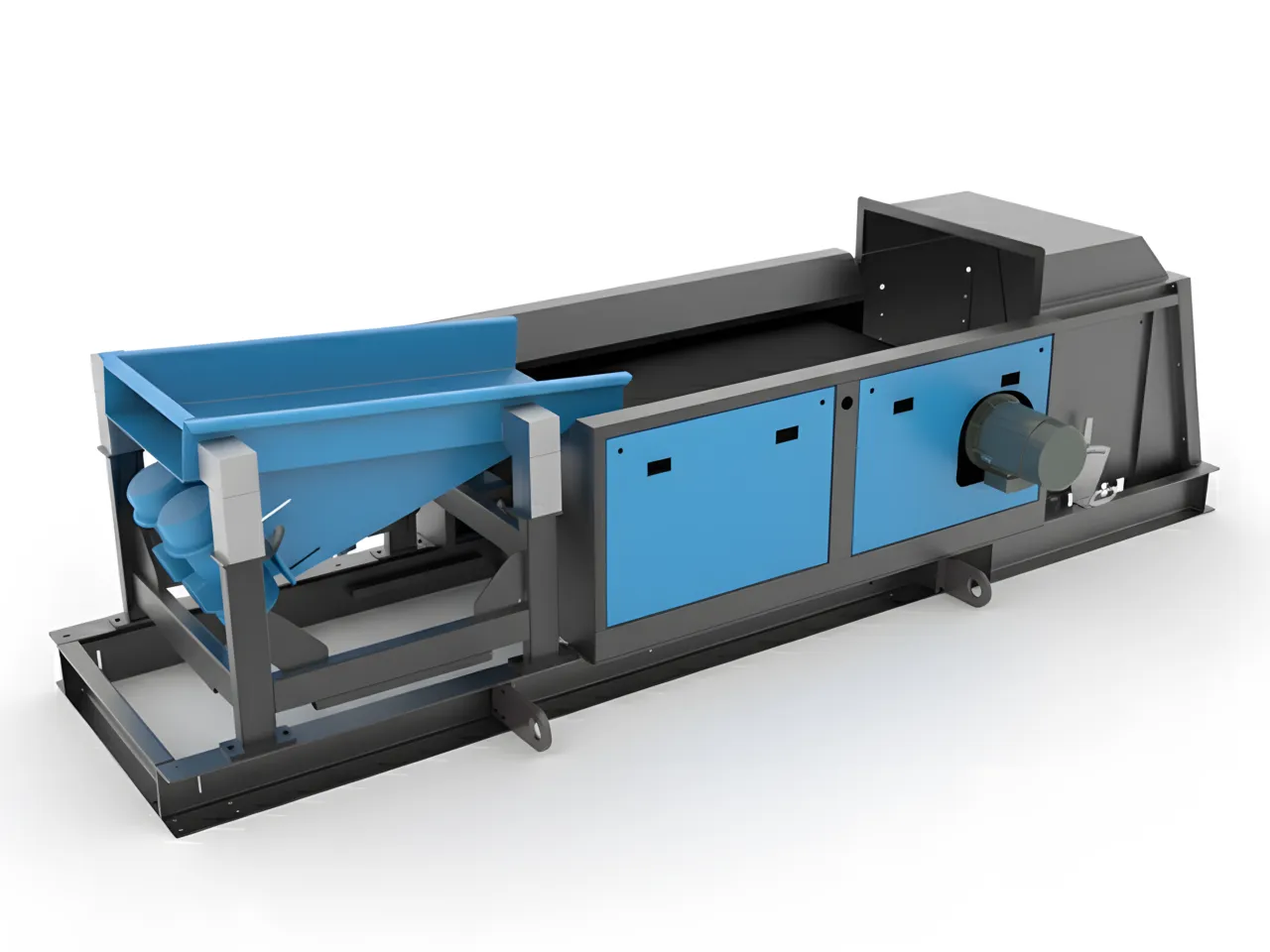
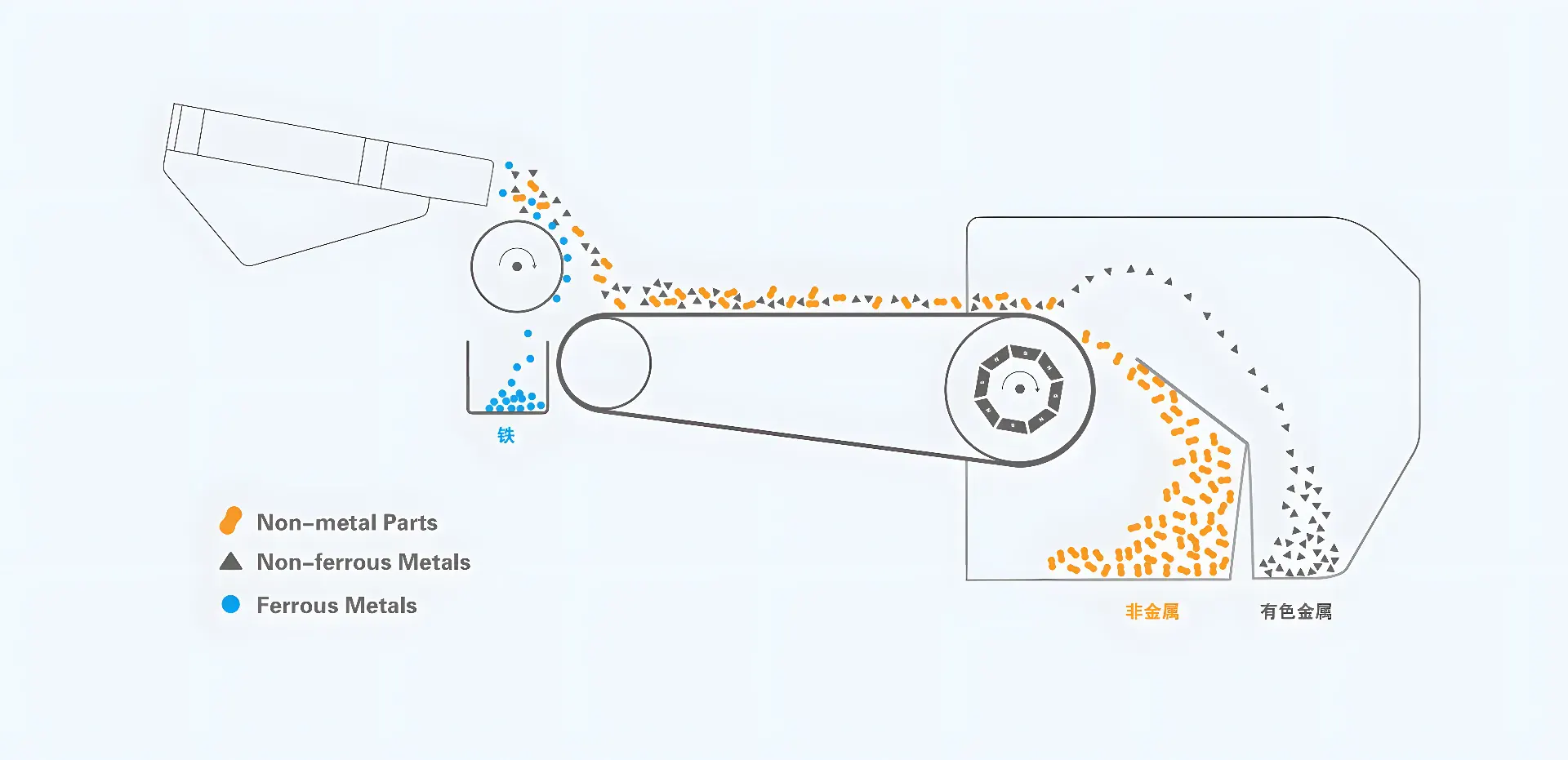
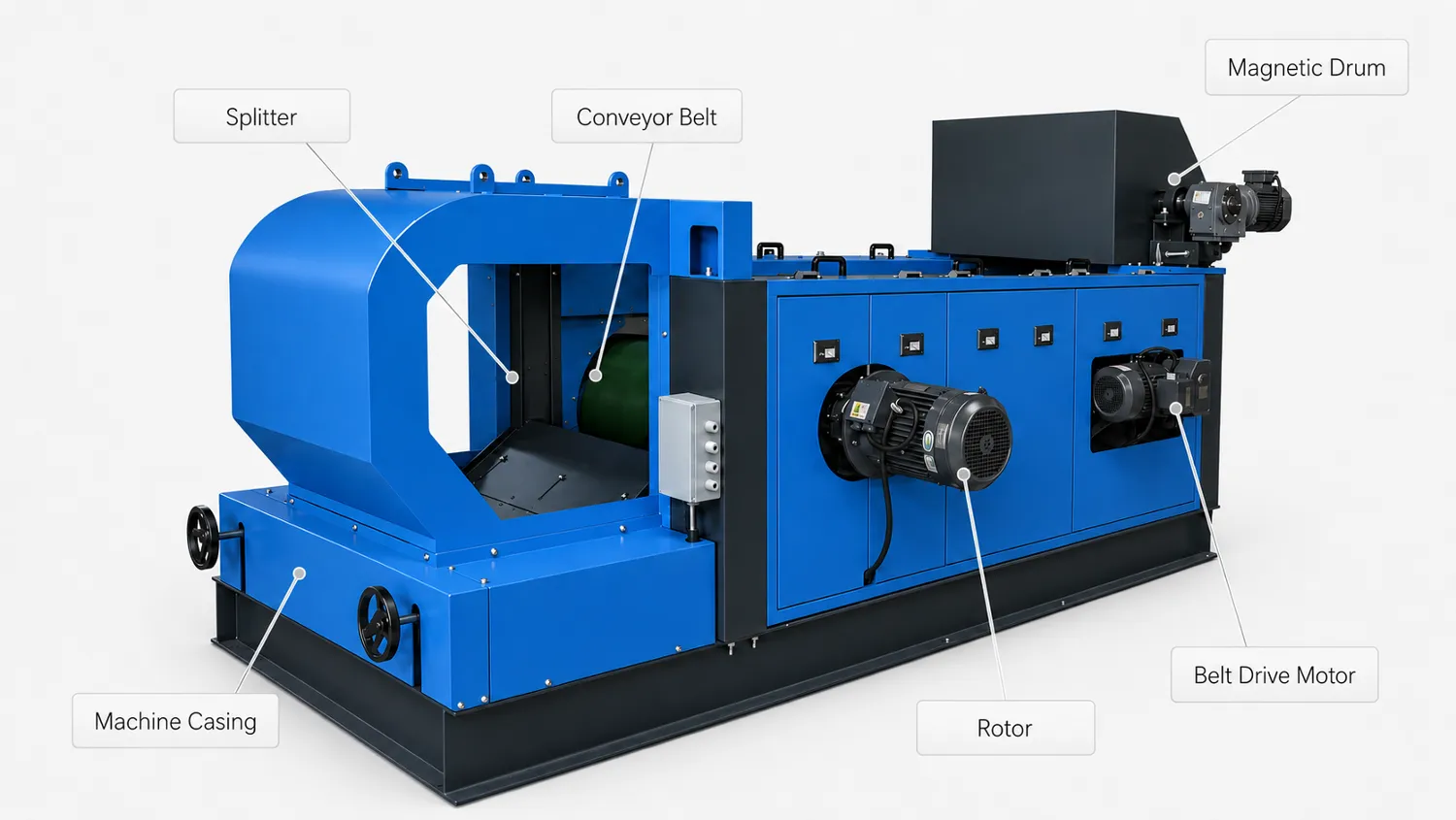
표준 분리기가 놓칠 수 있는 작은 알루미늄 및 기타 비철 금속 입자를 회수하는 데 최적화된 와전류 분리기입니다. 고주파 마그네틱 로터, 제어된 벨트 속도, 조절 가능한 스플리터 설정을 사용하여 미세한 분획을 회수합니다.
적절하고 잘 준비된 공급 스트림에서 분리기는 약 2mm 정도의 작은 비철 금속 입자를 회수할 수 있습니다. 실제 성능은 입자 모양, 전도도, 수분, 공급층 두께 및 업스트림 스크리닝에 따라 달라집니다.
동심 로터는 드럼 전체에 자극을 배치하여 강력하고 균일한 자기장을 생성하므로 비금속 스트림에서 비철을 미세하게 회수하는 데 적합합니다. 편심 로터는 자극 영역을 상쇄하며 철 오염이 심한 곳에서 자주 사용됩니다.
예, 강력히 권장합니다. ECS 전에 철 금속을 제거하면 로터를 보호하고 벨트 손상 위험을 줄이며 비철 분리의 안정성을 향상시킬 수 있습니다.
재료 유형, 입자 크기 범위, 수분 수준, 목표 처리량, 현재 업스트림 장비, 주요 목표가 더 높은 알루미늄 회수율인지, 더 높은 제품 순도인지 또는 둘 다인지 공유해 주세요.
(function () {
var section = document.getElementById(‘ecs-faq’);
if (!section) return;
var items = section.querySelectorAll(‘.energycle-faq-accordion-item’);
items.forEach(function (item) {
var header = item.querySelector(‘.energycle-faq-accordion-header’);
var panel = item.querySelector(‘.energycle-faq-accordion-content’);
var icon = item.querySelector(‘.energycle-faq-accordion-icon’);
if (!header || !panel || !icon) return;
panel.setAttribute(‘aria-hidden’, ‘true’);
header.addEventListener(‘click’, function (event) {
event.preventDefault();
event.stopImmediatePropagation();
var wasOpen = item.classList.contains(‘active’);
items.forEach(function (entry) {
entry.classList.remove(‘active’);
var entryHeader = entry.querySelector(‘.energycle-faq-accordion-header’);
var entryPanel = entry.querySelector(‘.energycle-faq-accordion-content’);
var entryIcon = entry.querySelector(‘.energycle-faq-accordion-icon’);
if (entryHeader) entryHeader.setAttribute(‘aria-expanded’, ‘false’);
if (entryPanel) {
entryPanel.setAttribute(‘aria-hidden’, ‘true’);
entryPanel.style.maxHeight = null;
}
if (entryIcon) {
entryIcon.classList.remove(‘fa-minus’);
entryIcon.classList.add(‘fa-plus’);
}
});
if (!wasOpen) {
item.classList.add(‘active’);
header.setAttribute(‘aria-expanded’, ‘true’);
panel.setAttribute(‘aria-hidden’, ‘false’);
panel.style.maxHeight = panel.scrollHeight + ‘px’;
icon.classList.remove(‘fa-plus’);
icon.classList.add(‘fa-minus’);
}
}, true);
});
}());
재활용 흐름에서 더 많은 미세 알루미늄 회수
재료 세부 정보와 처리량 목표를 보내주세요. 로터 폭, 공급 방법, 스플리터 설정 및 업스트림 자기 보호 기능을 애플리케이션에 맞게 조정할 수 있도록 도와드립니다.
미세 알루미늄 회수 상담PET 플레이크 및 유리 정화 지원IBA, 전자 폐기물 및 ZORBA 애플리케이션모델 선택 및 레이아웃 안내
견적 요청
{“@context”:”https://schema.org”,”@type”:”FAQPage”,”mainEntity”:[{“@type”:”Question”,”name”:”What is a high-recovery eddy current separator for fine aluminum?”,”acceptedAnswer”:{“@type”:”Answer”,”text”:”It is an eddy current separator optimized to recover small aluminum and other non-ferrous metal particles that standard separators may miss. It uses a high-frequency magnetic rotor, controlled belt speed, and adjustable splitter settings for fine fraction recovery.”}},{“@type”:”Question”,”name”:”What is the smallest particle size this machine can separate?”,”acceptedAnswer”:{“@type”:”Answer”,”text”:”In suitable, well-prepared feed streams, the separator can recover non-ferrous metal particles as small as about 2 mm. Actual performance depends on particle shape, conductivity, moisture, feed layer thickness, and upstream screening.”}},{“@type”:”Question”,”name”:”What is the difference between concentric and eccentric ECS rotors?”,”acceptedAnswer”:{“@type”:”Answer”,”text”:”A concentric rotor places magnetic poles across the drum for a strong, uniform field, making it well suited to fine non-ferrous recovery from non-metallic streams. An eccentric rotor offsets the magnetic pole area and is often used where ferrous contamination is heavier.”}},{“@type”:”Question”,”name”:”Do I need a magnetic separator before the ECS?”,”acceptedAnswer”:{“@type”:”Answer”,”text”:”Yes, it is strongly recommended. Removing ferrous metal before the ECS protects the rotor, reduces belt damage risk, and improves the stability of non-ferrous separation.”}},{“@type”:”Question”,”name”:”What information should I provide for equipment selection?”,”acceptedAnswer”:{“@type”:”Answer”,”text”:”Please share your material type, particle size range, moisture level, target throughput, current upstream equipment, and whether your main goal is higher aluminum recovery, higher product purity, or both.”}}]}
{“@context”:”https://schema.org”,”@type”:”Product”,”name”:”High-Recovery Eddy Current Separator for Fine Aluminum”,”brand”:{“@type”:”Brand”,”name”:”Energycle”},”manufacturer”:{“@type”:”Organization”,”name”:”Energycle”},”description”:”High-recovery eddy current separator for fine aluminum and non-ferrous metal recovery from PET flakes, glass, incinerator bottom ash, e-waste, ZORBA, and foundry residues.”,”url”:”https://www.energycle.com/high-recovery-eddy-current-separator-for-fine-aluminum/”,”image”:”https://www.energycle.com/wp-content/uploads/2025/01/Concentric-Eddy-Current-Separator-1.webp”}
document.addEventListener(‘DOMContentLoaded’,function(){document.querySelectorAll(‘.energycle-faq-accordion-header’).forEach(function(button){button.addEventListener(‘click’,function(){var item=button.parentElement;var isOpen=item.classList.contains(‘active’);document.querySelectorAll(‘.energycle-faq-accordion-item’).forEach(function(node){node.classList.remove(‘active’);var header=node.querySelector(‘.energycle-faq-accordion-header’);if(header)header.setAttribute(‘aria-expanded’,’false’);});if(!isOpen){item.classList.add(‘active’);button.setAttribute(‘aria-expanded’,’true’);}});});document.querySelectorAll(‘.energycle-video-container[data-video-src]’).forEach(function(container){var trigger=container.querySelector(‘button’);if(!trigger)return;trigger.addEventListener(‘click’,function(){var src=container.getAttribute(‘data-video-src’);var title=container.getAttribute(‘data-video-title’)||’Eddy current separator video’;if(!src)return;var video=document.createElement(‘video’);video.setAttribute(‘controls’,”);video.setAttribute(‘autoplay’,”);video.setAttribute(‘playsinline’,”);video.setAttribute(‘preload’,’metadata’);video.setAttribute(‘aria-label’,title);video.setAttribute(‘width’,’100%’);video.setAttribute(‘height’,’100%’);var source=document.createElement(‘source’);source.setAttribute(‘src’,src);source.setAttribute(‘type’,’video/mp4′);video.appendChild(source);container.innerHTML=”;container.appendChild(video);video.play();},{once:true});});});
document.addEventListener(‘DOMContentLoaded’, function () {
document.querySelectorAll(‘.energycle-faq-accordion-header’).forEach(function (header) {
if (header.dataset.energycleFaqBound === ‘true’) return;
header.dataset.energycleFaqBound = ‘true’;
header.addEventListener(‘click’, function () {
var item = header.closest(‘.energycle-faq-accordion-item’);
if (!item) return;
var active = item.classList.toggle(‘active’);
header.setAttribute(‘aria-expanded’, active ? ‘true’ : ‘false’);
});
});
});