

Tire Recycling Fine Milling System
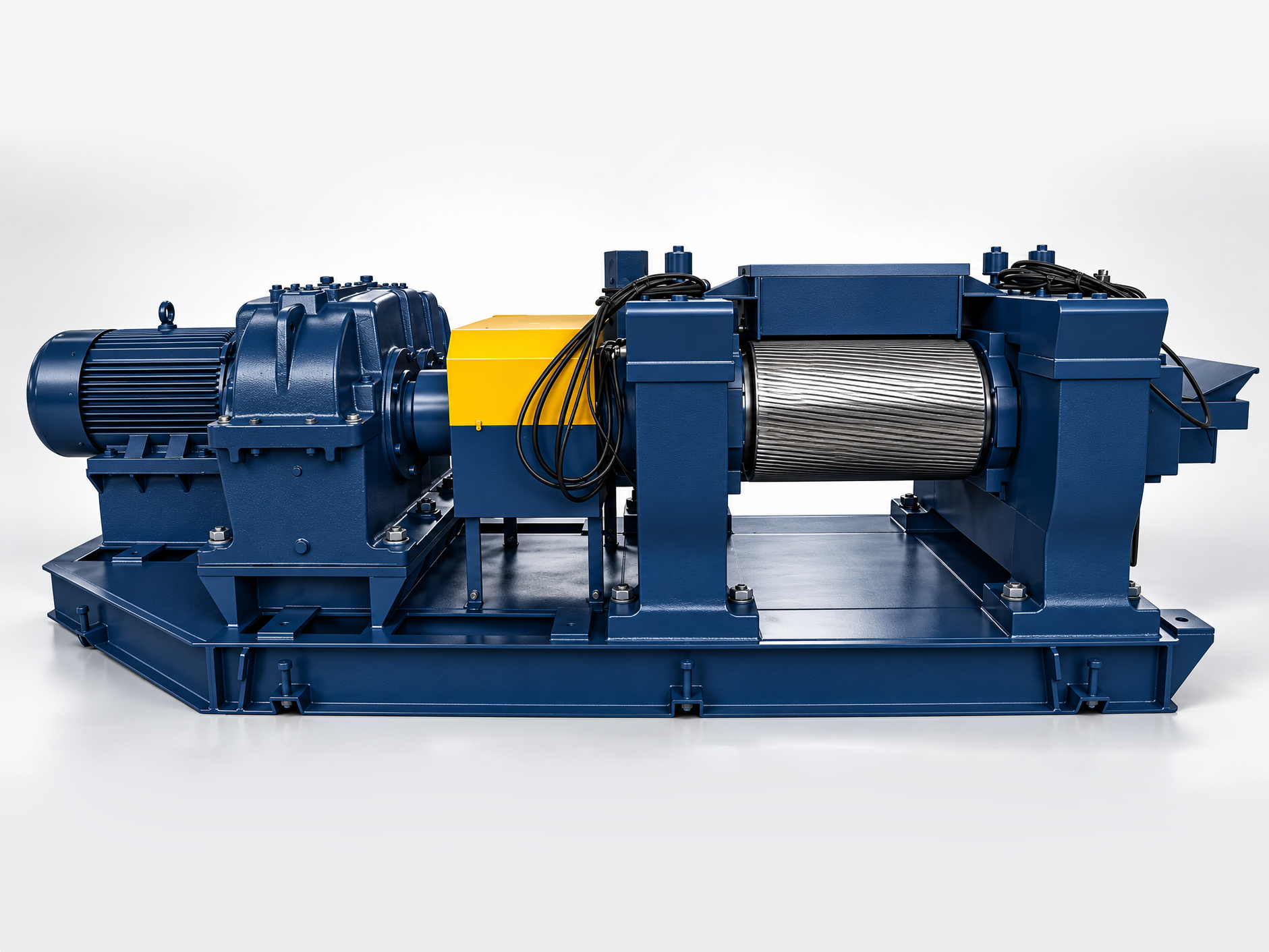
Double Roller Rubber Grinder: High-Efficiency Dual-Drive Cracker Mill
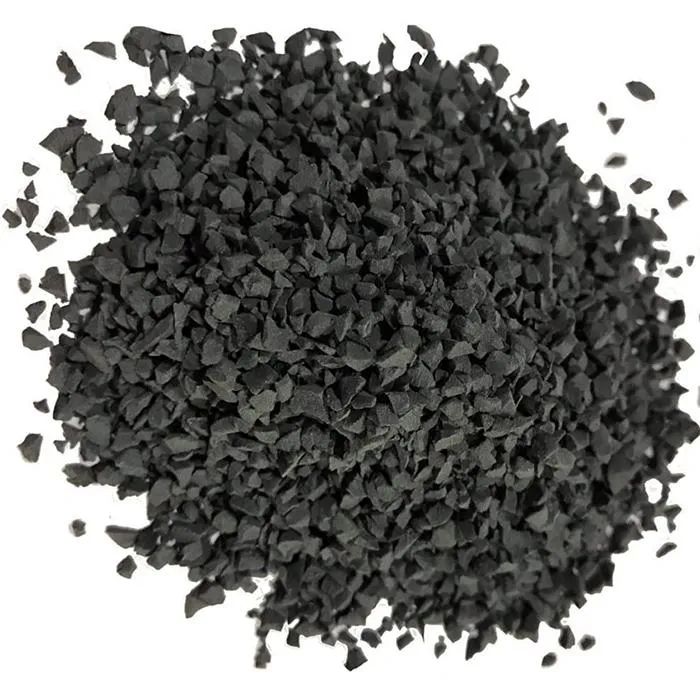
Engineered as the definitive fine grinding stage in tire recycling lines. Driven by independent dual VFD motors with chilled alloy cast iron rolls and internal water cooling, it converts 6–8 mm rubber granules into uniform 10–80 mesh (2–0.177 mm) fine powder via ambient differential shear—without liquid nitrogen.
Operating Economics & Technology Choice
Why Dual-Drive Ambient Cracking Outperforms Conventional Grinding
Conventional single-motor mills suffer from fixed gear friction ratios and scorching risks, while cryogenic liquid nitrogen mills carry prohibitive per-ton operating costs. Our dual-drive water-cooled cracker mill provides a high-yield, cost-efficient path to 10–80 mesh rubber powder.
Conventional & Cryogenic Limitations
- Prohibitive Liquid Nitrogen OPEX: Cryogenic grinding requires continuous liquid nitrogen replenishment, driving processing costs beyond commercial feasibility for standard crumb rubber markets.
- Fixed Mechanical Bull Gears: Traditional single-motor cracker mills use fixed gearboxes, making it impossible to adjust roller speed ratios when changing target mesh or rubber compound hardness.
- Thermal Scorching & Degradation: Inadequate roller cooling leads to rapid heat accumulation (>100°C), causing rubber smearing, roll glazing, degraded vulcanized polymer elasticity, and smoke hazards.
- Frequent Roll Wear & Re-machining: Inferior cast rolls quickly lose their corrugation profile under heavy shear, requiring frequent pull-outs and prolonged line downtime.
Energycle Dual-Drive Cracker Mill Solution
- Ambient Mechanical Shearing: Operates completely at ambient temperature without cryogenic fluids, cutting operating and consumables cost per ton by up to 70%.
- Independent Dual-Motor VFD Drive: Each roll is powered by an independent high-torque motor, enabling operators to digitally tune the Friction Ratio (speed differential) on the fly via PLC touchscreen.
- Continuous Internal Roller Water Cooling: Hollow rolls with high-flow rotary unions continuously circulate chilled water, holding roll surface temperatures below 55°C to preserve native rubber properties.
- Chilled Alloy Cast Iron (HSD 68–75): Centrifugally cast rolls with deep hardened chill depth and precision circumferential grooving resist abrasive wear from tire fillers and trace micro-wires.
Engineered For Heavy-Duty Reliability
Core Engineering & Operational Advantages
Designed specifically for processing pre-shredded 6–8 mm clean tire granules into fine powder with high throughput, tight particle sizing, and low maintenance overhead.
Dual Independent Drive with Variable Friction Ratio
Unlike single-motor mills coupled through bulky bull-and-pinion gears, each roller is driven directly by its own independent electric motor and variable frequency drive (VFD). Operators can freely adjust the Friction Ratio (speed differential) directly via the PLC touchscreen to optimize shear intensity for 10, 20, 40, or 80 mesh production targets.
Internal Roller Water Cooling
Both front and rear rollers are hollow-cast with high-capacity internal cooling channels and heavy-duty rotary unions. Continuous chilled water flow rapidly dissipates frictional heat, preventing rubber scorch, roll glazing, and thermal degradation.
Chilled Alloy Cast Iron Rolls
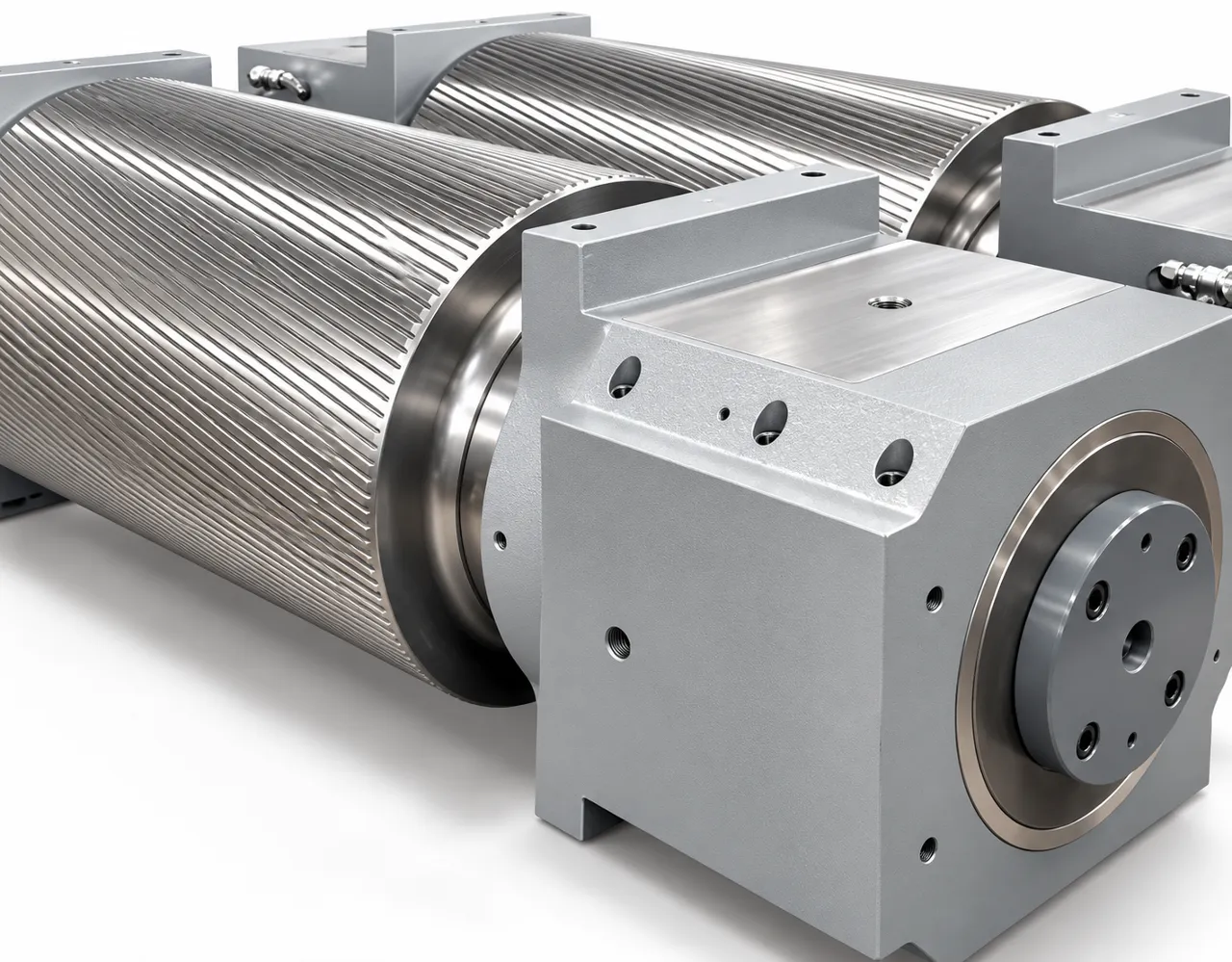
Manufactured using centrifugal casting with a surface hardness of HSD 68–75 and a chill depth of 10–20 mm. The front roll features aggressive circumferential corrugated grooves for tearing, while the back roll features smooth or micro-fluted surfacing for precision shear.
Micrometer Roll Gap Adjustment & Safety Shear
Roller nip clearance adjusts smoothly from 0.1 mm to 8.0 mm using precision manual ratchets or optional motorized gear drives with visual dial indicators. High-load bronze sleeve bearings with automated grease lubrication ensure smooth rotation, while replaceable mechanical safety shear blocks protect roll shafts against uncrushable tramp metal.
Centralized PLC & Overload Protection
Equipped with an intuitive touch-screen HMI that continuously monitors motor amperage, bearing temperatures, and water flow rates. Automatic load-sensing reverses roller rotation and triggers safety alarms in case of momentary feed surges or foreign object detection.
Mechanics of Fine Rubber Milling
Working Principle: Compression, Friction & Differential Shear
Vulcanized rubber is highly elastic and rebounds under pure impact crushing. The cracker mill pulverizes rubber through the synchronized action of high compression, heavy friction, and intense surface shear.
1. High-Pressure Nip Compression
Pre-cleaned 6–8 mm rubber granules drop from the vibratory feeder into the converging V-shaped nip between the counter-rotating rolls. Intense mechanical compression grips the elastic granules, flattening them and forcing them through the controlled micro-gap.
2. Differential Friction Ratio
The two rollers rotate in opposing directions at different peripheral velocities (speed ratio typically 1:1.10 to 1:1.35). This speed differential generates immense tearing and frictional shearing forces across the compressed rubber, shearing elastic bonds into fine powder.
3. Controlled Water-Cooled Grinding Zone
The mechanical deformation energy converted into heat is immediately extracted through the chilled cast iron roller shell by internal circulating cooling water. This keeps the material below its plasticizing threshold, maintaining particle crispness and crumb cleanliness.
Complete Tire Recycling Line Integration
Position in the Tire Recycling Process
The cracker mill acts as the pivotal fine grinding stage in our turnkey Tire Recycling Production Line, receiving wire-free 6–8 mm granules and processing them into 10–80 mesh crumb rubber in a closed-loop classification circuit.
Tire Shredding
Whole waste tires are shredded by primary shredders into 50–100 mm rough chips.
Wire & Fiber Separation
Granulators and magnetic separators remove steel bead wire and textile fluff, yielding clean 6–8 mm granules.
Dual-Drive Cracker Mill
Granules are milled by counter-rotating differential rollers with internal water cooling.
Screening & Sifting
High-frequency vibrating screens classify milled output into defined 10–80 mesh fractions.
Oversize Return & Bagging
Coarse oversize particles recirculate automatically to the mill, while on-spec powder is packed into bulk bags.
Tire Shredding
Whole waste tires are shredded by primary shredders into 50–100 mm rough chips.
Wire & Fiber Separation
Granulators and magnetic separators remove steel bead wire and textile fluff, yielding clean 6–8 mm granules.
Dual-Drive Cracker Mill
Granules are milled by counter-rotating differential rollers with internal water cooling.
Screening & Sifting
High-frequency vibrating screens classify milled output into defined 10–80 mesh fractions.
Oversize Return & Bagging
Coarse oversize particles recirculate automatically to the mill, while on-spec powder is packed into bulk bags.
Technische parameters
Double Roller Rubber Grinder Specifications
Factory engineering parameters benchmarked against industry standards (CM Dual Drive Crackermill class). Capacities and motor configurations are customizable to match your recycling plant line throughput.
| Apparatuur Type | Double Roller Rubber Grinder / Cracker Mill |
|---|---|
| Feedstock Material | Clean, steel-free & textile-free tire rubber granules |
| Inlet Feed Size | 6 – 8 mm |
| Output Fineness | 10 – 80 Mesh |
| Uitvoerdeeltjesgrootte | Approx. 2.0 – 0.177 mm |
| Working Method | Counter-rotating dual rollers, differential shear & compression |
| Drive Configuration | Dual independent electric motor drive with VFD |
| Roller Material | Chilled Alloy Cast Iron (surface hardness HSD 68–75, chill depth 10–20 mm) |
| Roller Surface Profile | Front roll corrugated flutes for tearing; rear roll smooth / fine fluted for shear |
| Friction Ratio (Speed Differential) | 1:1.10 – 1:1.35 (continuously adjustable via PLC frequency inverter controls) |
| Koelsysteem | High-flow internal roller water circulation with rotary unions |
| Roller Gap Adjustment Range | 0.1 – 8.0 mm (manual ratchet or motorized worm gear with precision positioning gauge) |
| Controlesysteem | Centralized PLC Touchscreen + Dual Variable Frequency Drive (VFD) |
| Veiligheidsmechanismen | Emergency stop trip cables, automatic reverse on overload, mechanical safety shear blocks |
| Typical Hourly Capacity | 300 – 1,200 kg/h (dependent on roll diameter, motor sizing, and target mesh output) |
Swipe horizontally to view full table details
Milling Technology Comparison
Cracker Mill vs. Alternative Rubber Pulverizing Systems
Comparing the three predominant tire rubber fine powder production methods to help you choose the ideal balance of capital investment and operational cost.
| Feature / Metric | Energycle Dual-Drive Cracker Mill | Traditional Single-Drive Mill | Cryogenic Liquid Nitrogen Mill |
|---|---|---|---|
| Operating Cost (OPEX / ton) | Laagste (Standard power & recirculating water) | Low to Moderate (Higher transmission losses) | Extremely High (Continuous LN2 consumption) |
| Friction Ratio Control | Digital VFD (Infinite variable speed ratio) | Fixed Ratio (Rigid mechanical bull gears) | N/A (Impact disc / pin mill rotor) |
| Thermal Management | High-Flow Internal Water Cooling | External water spray / basic cooling | Liquid Nitrogen Injection (-196°C) |
| Mesh Range Capability | 10 – 80 Mesh (Approx. 2.0 – 0.177 mm) | 10 – 30 Mesh (Limited fine grinding capability) | 40 – 120+ Mesh (Specialty micro-powder) |
| Capital Equipment Cost (CAPEX) | Moderate & Cost-Effective | Lowest initial investment | Very High (Cryogenic tank, piping & mill) |
| Rubber Polymer Integrity | Preserved (No thermal scorch or degradation) | Risk of surface glazing & heat scorch | Glassy fracture (altered surface morphology) |
| Maintenance & Downtime | Laag (Direct drive, no bull gear failure) | Frequent gear lubrication & roll resurfacing | High (Cryogenic seals, valves, thermal stress) |
High-Value End Markets
Commercial Applications for 10–80 Mesh Rubber Powder
Fine rubber powder produced by dual differential shearing features high specific surface area and excellent vulcanized structure retention, making it a sought-after feedstock across multiple industries.
Rubberasfalt (CRM)
Widely specified for highway asphalt binder modification. Improves high-temperature rutting resistance, low-temperature cracking durability, reduces tyre noise, and extends road repaving intervals.
Reclaimed Rubber & Compounding
Ideal feedstock for chemical devulcanization and reclaimed rubber sheet production. Compounded back into new passenger tires, conveyor belts, shoe outsoles, and technical molded rubber items.
Molded Rubber Mats & Tiles
Polyurethane-bound compression molding for commercial gym flooring, playground impact tiles, athletic tracks, ballistic shooting tiles, and acoustic vibration dampeners for rail tracks.
Thermoplastic Elastomers (TPE/TPV) & Waterproofing Membranes
Ultra-fine 60–80 mesh particles blend uniformly into virgin polypropylene (PP) or polyethylene (PE) to produce sustainable, low-cost thermoplastic elastomer compounds. Also blended with bitumen for self-adhesive roofing membranes and pipeline waterproofing coatings.
Synthetic Turf Infill & Porous Paving
Dust-free, uniform crumb granules used as high-rebound infill for FIFA-standard artificial football pitches, equestrian arena footing, and permeable rubber landscaping walkways.
Engineering Precision
Machine Gallery & Component Highlights
Inspect the heavy-duty construction, chilled cast iron roll surfaces, dual motor drive assemblies, and rotary cooling unions.
Complete Tire Recycling Ecosystem
Aanverwante apparatuur voor bandenrecyclinglijnen
Integrate the double roller cracker mill into our complete Tire Recycling Machine & Production Line alongside upstream shredding, wire extraction, and granulation modules.
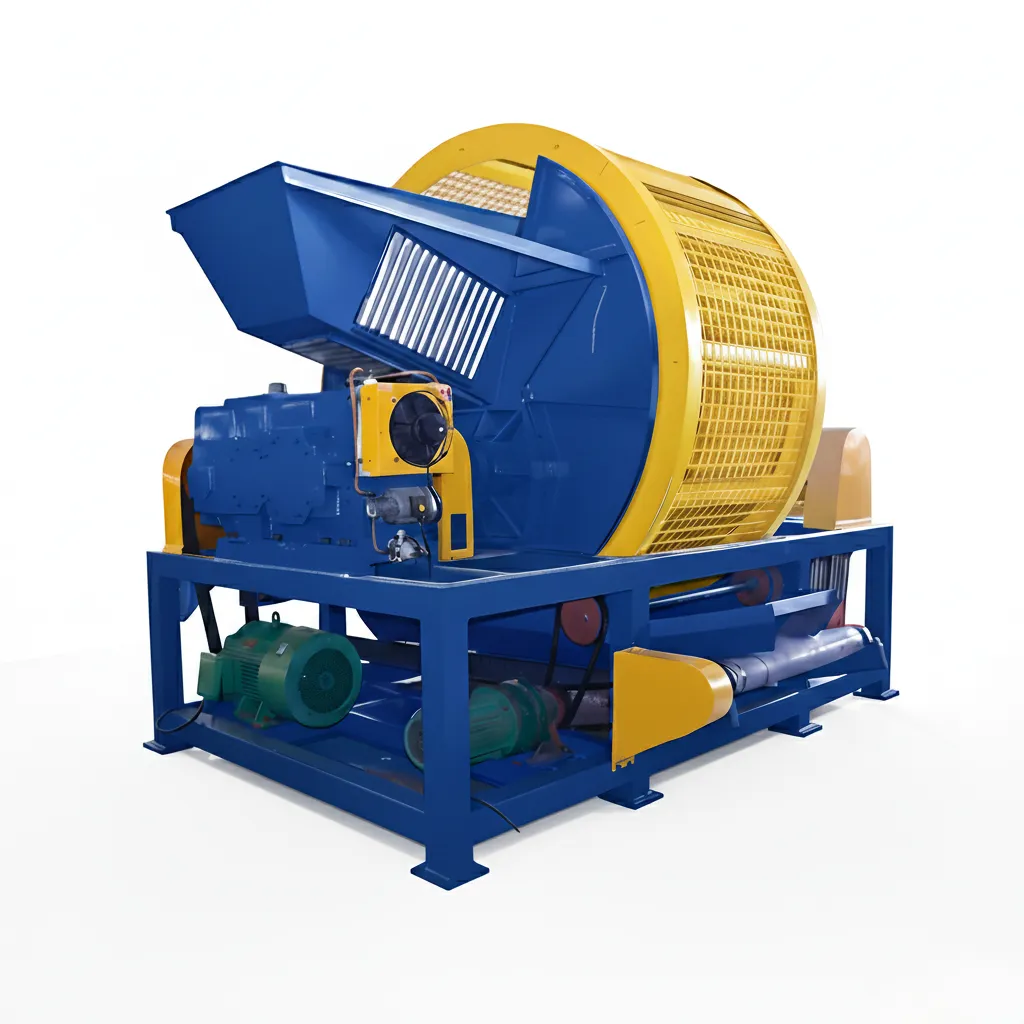
Heavy-Duty Tire Shredder
High-torque primary shredding of whole passenger and truck tires into 50–100 mm rough chips.
Learn More →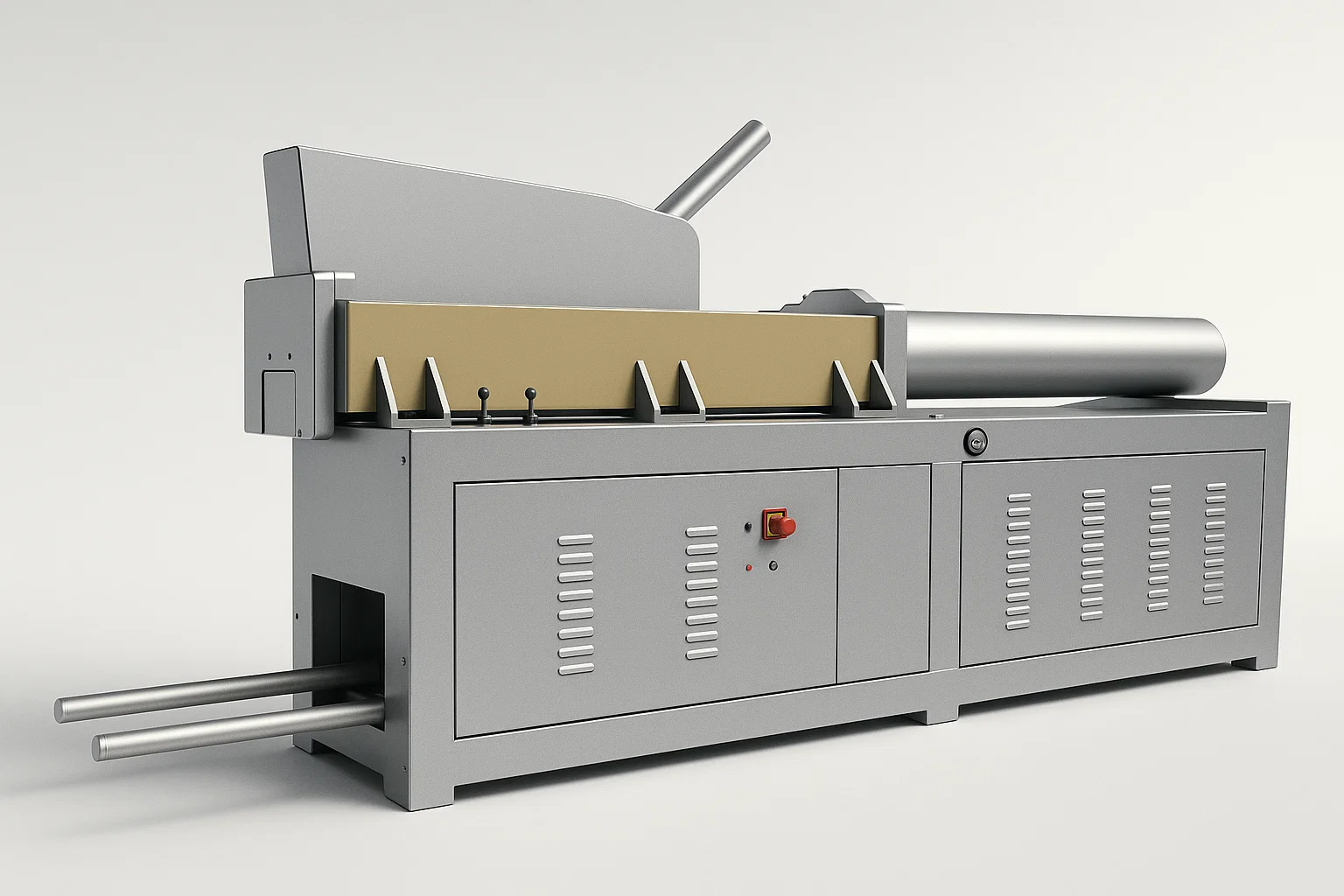
Tire Wire Debeader
Extracts high-tensile steel bead rings from tire carcasses prior to shredding to minimize blade wear.
Learn More →Comprehensive Engineering Support for Tire Recycling Plants
From initial plant layout and foundation design to on-site commissioning and roll re-grooving services, our technical team ensures your fine grinding operation runs at peak uptime.
1 jaar beperkte garantie
Comprehensive coverage against manufacturing defects on major structural, drive, and electrical components, including roll shafts, main motors, and reduction gearboxes.
Plant Layout & Commissioning Guidance
We provide complete civil foundation drawings, cooling water pipe routing, pneumatic ductwork schematics, and on-site or remote commissioning supervision.
Roll Re-Grooving & Spare Parts Supply
Direct factory supply of chilled cast iron replacement rolls, rotary unions, bronze sleeve bushings, safety shear blocks, and roll re-corrugation toolkits.
Process Optimization & Tuning
Our application engineers assist in fine-tuning your speed ratios, nip settings, and screening loops to maximize 40–80 mesh yields while minimizing specific power draw (kWh/ton).
Veelgestelde vragen
Technical Sizing & Operating Notes
Key questions recyclers ask when evaluating the Double Roller Rubber Grinder (Cracker Mill) for their production facility.
Configure Your Rubber Cracker Mill System
Share your feedstock details (granule size, tire type), target mesh specification (10 to 80 mesh), and required throughput (kg/h). Our engineering team will calculate motor sizing, friction ratios, and provide a comprehensive proposal with line layout drawings and pricing.