

Horizontal Balers for Waste Paper, Cardboard and Recyclables
Balandín horizontal semiautomático
Semi-automatic horizontal balers for waste paper, OCC, cardboard and selected plastic recycling applications. Compare seven WB and WS models with 30–100 ton pressing force, different chamber sizes and bale dimensions. Feeding, controls, tying and discharge arrangements are specified for your material and production needs; semi-automatic operation still requires operator involvement in tying and handling.

Choose a Horizontal Baler Around Your Material and Bale Requirements
Compare the WB and WS model specifications below, then confirm the feeding, tying and discharge configuration for your site. Throughput depends on the material and operating cycle, not pressing force alone.
Bale Discharge Matched to the Model
Open-gate discharge is available on the configurations shown. Confirm the gate arrangement, operating clearance and bale removal method for the selected model.
A Range of Chamber and Bale Sizes
The range covers compact 30–40 ton models and larger 60–100 ton machines. Match loose material volume, feed opening and finished bale dimensions to your operation.
Optional Scrap Collection Integration
For suitable paper trims and lightweight production scrap, an optional cyclone or collection system can feed the baler. Material suitability and integration are confirmed during selection.
Cutting Configuration for Paper Trims
A double-cutting configuration can assist with paper trims and cardboard offcuts. Confirm its availability and suitability for the selected model and feedstock.
Bales Sized for Storage and Transport
Select bale dimensions and tying arrangements around your handling equipment and buyer requirements. Bale density varies with the material, moisture and operating settings.
Controls and Hydraulic Configuration
Manual and PLC-based control configurations are selected to suit the model and work cycle. Confirm the controls, safety interlocks and operator tasks in the final proposal.
Materiales e industrias típicas
Paper and cardboard are core applications. PET bottles and PP/PE film require a suitable model, tying arrangement and feed preparation; confirm the configuration for each material rather than assuming one setup handles every stream.
Plantas de cartón y cartón
Compacta los recortes de cartón, los restos de cartón ondulado y los desechos de cartón corrugado en fardos más densos que son más fáciles de almacenar y transportar.
Fábricas de imprenta y papel
Adecuado para papel de periódico, revistas, papel cortado y residuos de fibra similares que se acumulan continuamente durante la producción.
Reciclaje de botellas PET
For bottle collection and recycling sites, subject to confirmation of bottle condition, feeding, bale density and tying requirements.
Procesamiento de películas de PP y PE
Útil para restos de película, recortes y residuos de embalaje cuando la reducción de volumen y una organización más limpia de la planta son prioridades.
Consolidación de residuos industriales
For factories and recycling centers consolidating sorted recyclable streams. Keep different materials in separate bales when required by downstream buyers.
Actualización de automatización intermedia
Suele elegirse como paso intermedio entre el empacado vertical manual y los sistemas horizontales totalmente automáticos alimentados por cinta transportadora.
Cómo funciona el proceso de empacado horizontal semiautomático
La máquina comprime el material reciclable suelto en balas listas para el transporte, con una estructura operativa más sencilla que la de una empacadora totalmente automática.
Alimentar el material
Load loose paper, cardboard or an approved recyclable stream into the feed opening. Manual, conveyor or cyclone feeding depends on the agreed configuration.
Compress Horizontally
The hydraulic ram compacts the material through repeated strokes. Controls and operator tasks depend on the selected model.
Reach the Bale Size
Build the bale to the required dimensions. The WB models list fixed reference bale dimensions; the WS models list a variable length L.
Ata la paca
The operator completes manual or assisted tying as specified. Semi-automatic does not mean fully automatic wire tying.
Discharge and Handle
Release and remove the tied bale using the selected discharge arrangement. Keep gate access and handling clearance in the equipment layout.
Compare Semi-Automatic, Fully Automatic and Vertical Balers
Compare the operating method as well as hourly volume. A larger semi-automatic model can suit substantial throughput, provided the site can support feeding, tying and bale handling.
| Factor de decisión | Balandín horizontal semiautomático | Empacadora horizontal totalmente automática | Empacadora vertical de PET |
|---|---|---|---|
| Mejor ajuste | Operaciones de tamaño mediano con flujo constante de material reciclable. | Grandes emplazamientos continuos con alto tonelaje diario. | Sitios de tamaño pequeño a mediano con carga por lotes |
| Nivel de automatización | Hydraulic compression with manual or assisted tying | Automatic tying with configured feeding and discharge | Más manipulación y atado manual |
| Método de alimentación | Alimentación directa o alimentación asistida por ciclón (opcional) | Carga continua alimentada por cinta transportadora | Carga manual por lotes |
| Huella y complejidad | Depends on model, infeed equipment and bale handling space | Máxima huella y complejidad del sistema | La solución más compacta |
| Cuándo elegir | Cuando necesitas dar un paso más allá del empacado vertical sin automatización completa. | Cuando el rendimiento a gran escala y la reducción de mano de obra lo justifican | Cuando el volumen se mantiene moderado y el espacio es limitado. |
Deslice horizontalmente para ver la tabla completa.
Especificaciones técnicas
Compare seven semi-automatic horizontal baler models for waste paper, cardboard and approved recyclable streams. Values are reference specifications; confirm the final machine configuration and achievable output for your material.
WB Models — Reference Bale Dimensions
| Modelo | RTM300WB7070 | RTM400WB7280 | RTM600WB10080 | RTM1000WB11085 | RTM1000WB110110 |
|---|---|---|---|---|---|
| Presión | 30 toneladas | 40 toneladas | 60 toneladas | 100 toneladas | 100 toneladas |
| Potencia del motor principal | 11 kW | 11 kW | 15 kW | 30 kW | 30 kW |
| Tiempo de ciclo | — | 19 s | 23 s | 36 s | 42 s |
| Depósito de petróleo | — | 240 L | 380 L | 1460 L | 1600 L |
| Número de correas | 3 líneas | 4 líneas | 4 líneas | 4 líneas | 5 líneas |
| Apertura de alimentación | 700 x 690 mm | 1000 x 700 mm | 1200 x 980 mm | 1400 x 1050 mm | 1800 x 1050 mm |
| Tamaño de la cámara | — | 2200 x 700 x 780 mm | 2400 x 980 x 780 mm | 3000 x 1050 x 830 mm | 3700 x 1050 x 1050 mm |
| Tamaño de la paca | 900 x 700 x 700 mm | 1000 x 720 x 800 mm | 1000 x 1000 x 800 mm | 1300 x 1100 x 850 mm | 1600 x 1100 x 1100 mm |
| Densidad de balas para OCC | 400 - 500 kg/m³ | 400 - 500 kg/m³ | — | — | — |
| Capacidad | 0,5 - 1 ton/h | 0,5 - 1 ton/h | 1 - 2 toneladas/h | 1,5 - 3 toneladas/h | 2 - 6 toneladas/h |
| Peso de la máquina | 4 toneladas | 4 toneladas | 5,2 toneladas | 12 toneladas | 18 toneladas |
| Dimensión general | 4200 x 1100 x 1900 mm | 5500 x 1100 x 2000 mm | 6100 x 1400 x 2000 mm | 7450 x 1600 x 2300 mm | 8200 x 1600 x 3500 mm |
Deslice horizontalmente para ver la tabla completa.
WS Models — Variable Bale Length
| Modelo | RTM400WS7280 | RTM1000WS110125 |
|---|---|---|
| Presión | 40 toneladas | 100 toneladas |
| Potencia del motor principal | 11 kW | 55 kW |
| Número de correas | 4 líneas | 5 líneas |
| Apertura de alimentación | 1000 x 690 mm | 2080 x 1076 mm |
| Tamaño de la paca | L x 720 x 800 mm | L x 1100 x 1250 mm |
| Densidad de balas para OCC | 350 - 450 kg/m³ | 400 - 500 kg/m³ |
| Capacidad | 0,5 - 1 ton/h | 5 - 8 toneladas/h |
| Peso de la máquina | 5 toneladas | 16,5 toneladas |
| Dimensión general | 4800 x 1500 x 2000 mm | 9100 x 2500 x 4300 mm |
Deslice horizontalmente para ver la tabla completa.
L denotes variable bale length. A dash means that the value is not listed and must be confirmed. OCC density values apply to corrugated cardboard, not every material. Throughput depends on feed density, moisture, feeding consistency, tying time and bale handling. RTM400WB7280 is also listed as RTM-400WB7280; it is shown once here.
Baler Configurations
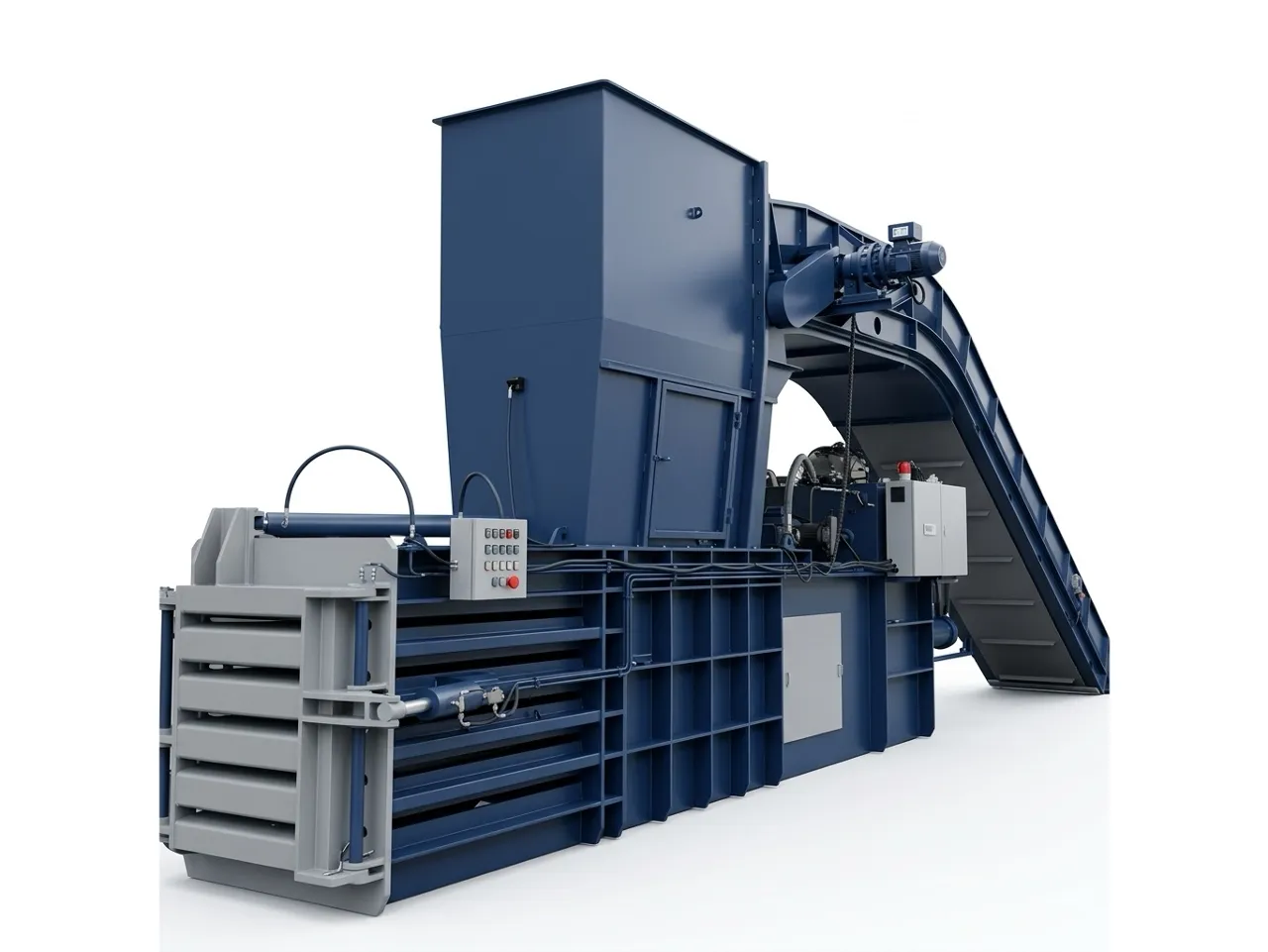
Reference equipment photos. The final gate, infeed and discharge arrangement depends on the selected model and configuration.
Vea la empacadora en acción.
Un breve vistazo a cómo la empacadora horizontal semiautomática gestiona la recogida de residuos y la formación de balas en un entorno industrial.
Preguntas frecuentes
Preguntas que suelen hacerse las plantas al evaluar una empacadora horizontal semiautomática.
Yes. Waste paper, OCC, carton offcuts and paper trims are core applications. Select the feed opening, chamber and bale dimensions around the size and volume of your material. PET bottles and PP/PE film require confirmation of the model and configuration.
The WB table lists reference bale dimensions for each model. The WS table uses L for variable bale length. The tables do not imply that gate design, controls or discharge arrangements are identical; confirm these details in the final proposal.
No. These machines require operator involvement in manual or assisted tying and bale handling. Manual or PLC-based controls can be specified by model, but the control system alone does not make tying fully automatic.
An optional cyclone or scrap collection system can be considered for suitable paper trims and lightweight scrap. Conveyor feeding may also be specified. Material characteristics, collection volume and plant layout must be checked before integration.
The equipment photos include an open-gate configuration. Gate design, bale release and handling clearance must be confirmed for the selected WB or WS model rather than assumed to be identical across the range.
The listed figures are reference values. Actual throughput depends on material bulk density, moisture, feeding consistency, tying time and handling. The listed OCC density ranges apply to corrugated cardboard and should not be used as guaranteed values for plastic film, bottles or other materials.
Share your material type and photos, hourly or daily volume, maximum feed size, required bale dimensions and density, shift pattern, power supply and available space. Also specify the feeding method, control preference and any collection equipment to be integrated.
¿Necesita la empacadora horizontal adecuada para su volumen de producción?
Envíenos el tipo de material, la producción por hora, los requisitos de pacas y la distribución de su planta. Le ayudaremos a determinar si esta empacadora horizontal semiautomática o una línea totalmente automática es la más adecuada.