

Horizontal Balers for Waste Paper, Cardboard and Recyclables
Pressa orizzontale semiautomatica
Semi-automatic horizontal balers for waste paper, OCC, cardboard and selected plastic recycling applications. Compare seven WB and WS models with 30–100 ton pressing force, different chamber sizes and bale dimensions. Feeding, controls, tying and discharge arrangements are specified for your material and production needs; semi-automatic operation still requires operator involvement in tying and handling.

Choose a Horizontal Baler Around Your Material and Bale Requirements
Compare the WB and WS model specifications below, then confirm the feeding, tying and discharge configuration for your site. Throughput depends on the material and operating cycle, not pressing force alone.
Bale Discharge Matched to the Model
Open-gate discharge is available on the configurations shown. Confirm the gate arrangement, operating clearance and bale removal method for the selected model.
A Range of Chamber and Bale Sizes
The range covers compact 30–40 ton models and larger 60–100 ton machines. Match loose material volume, feed opening and finished bale dimensions to your operation.
Optional Scrap Collection Integration
For suitable paper trims and lightweight production scrap, an optional cyclone or collection system can feed the baler. Material suitability and integration are confirmed during selection.
Cutting Configuration for Paper Trims
A double-cutting configuration can assist with paper trims and cardboard offcuts. Confirm its availability and suitability for the selected model and feedstock.
Bales Sized for Storage and Transport
Select bale dimensions and tying arrangements around your handling equipment and buyer requirements. Bale density varies with the material, moisture and operating settings.
Controls and Hydraulic Configuration
Manual and PLC-based control configurations are selected to suit the model and work cycle. Confirm the controls, safety interlocks and operator tasks in the final proposal.
Materiali e settori industriali tipici
Paper and cardboard are core applications. PET bottles and PP/PE film require a suitable model, tying arrangement and feed preparation; confirm the configuration for each material rather than assuming one setup handles every stream.
Piante in cartone e cartone
Compatta gli scarti di cartone, i ritagli di cartone ondulato e i rifiuti di cartone ondulato in balle più dense, più facili da immagazzinare e spedire.
Fabbriche di stampa e carta
Adatto per carta da giornale, riviste, carta tagliata e simili scarti di fibre che si accumulano continuamente durante la produzione.
Riciclaggio delle bottiglie in PET
For bottle collection and recycling sites, subject to confirmation of bottle condition, feeding, bale density and tying requirements.
Lavorazione di film in PP e PE
Utile per scarti di pellicola, ritagli e rifiuti di imballaggio quando la riduzione del volume e una migliore organizzazione dell'impianto sono prioritarie.
Consolidamento dei rifiuti industriali
For factories and recycling centers consolidating sorted recyclable streams. Keep different materials in separate bales when required by downstream buyers.
Aggiornamento intermedio dell'automazione
Spesso scelta come soluzione intermedia tra la pressatura verticale manuale e i sistemi orizzontali completamente automatici con alimentazione a nastro trasportatore.
Come funziona il processo di imballaggio orizzontale semiautomatico
La macchina comprime il materiale riciclabile sfuso in balle pronte per il trasporto, con una struttura operativa più semplice rispetto a una pressa completamente automatica.
Alimentare il materiale
Load loose paper, cardboard or an approved recyclable stream into the feed opening. Manual, conveyor or cyclone feeding depends on the agreed configuration.
Compress Horizontally
The hydraulic ram compacts the material through repeated strokes. Controls and operator tasks depend on the selected model.
Reach the Bale Size
Build the bale to the required dimensions. The WB models list fixed reference bale dimensions; the WS models list a variable length L.
Legare la balla
The operator completes manual or assisted tying as specified. Semi-automatic does not mean fully automatic wire tying.
Discharge and Handle
Release and remove the tied bale using the selected discharge arrangement. Keep gate access and handling clearance in the equipment layout.
Compare Semi-Automatic, Fully Automatic and Vertical Balers
Compare the operating method as well as hourly volume. A larger semi-automatic model can suit substantial throughput, provided the site can support feeding, tying and bale handling.
| Fattore determinante | Pressa orizzontale semiautomatica | Pressa orizzontale completamente automatica | Pressa verticale per PET |
|---|---|---|---|
| Miglior adattamento | Attività di medie dimensioni con flusso costante di materiale riciclabile | Grandi siti continui con elevato tonnellaggio giornaliero | Siti di piccole e medie dimensioni con caricamento a lotti |
| Livello di automazione | Hydraulic compression with manual or assisted tying | Automatic tying with configured feeding and discharge | Maggiore manipolazione e legatura manuale |
| Metodo di alimentazione | Alimentazione diretta o, in opzione, con l'ausilio di un ciclone. | Caricamento continuo tramite nastro trasportatore | Caricamento manuale del batch |
| Impronta e complessità | Depends on model, infeed equipment and bale handling space | Massima impronta a terra e complessità del sistema | La soluzione più compatta |
| Quando scegliere | Quando hai bisogno di un passo avanti rispetto alla pressatura verticale senza automazione completa | Quando la piena produttività e la riduzione della manodopera lo giustificano | Quando il volume rimane moderato e lo spazio è limitato |
Scorri orizzontalmente per visualizzare l'intera tabella.
Specifiche tecniche
Compare seven semi-automatic horizontal baler models for waste paper, cardboard and approved recyclable streams. Values are reference specifications; confirm the final machine configuration and achievable output for your material.
WB Models — Reference Bale Dimensions
| Modello | Modello RTM300WB7070 | Modello RTM400WB7280 | RTM600WB10080 | RTM1000WB11085 | RTM1000WB110110 |
|---|---|---|---|---|---|
| Pressione | 30 tonnellate | 40 tonnellate | 60 tonnellate | 100 tonnellate | 100 tonnellate |
| Potenza motrice principale | 11 kW | 11 kW | 15 kW | 30 kW | 30 kW |
| Tempo di ciclo | — | 19 secondi | 23 secondi | 36 secondi | 42 secondi |
| Riserva di petrolio | — | 240 litri | 380 L | 1460 L | 1600 L |
| Numero di cinghie | 3 linee | 4 linee | 4 linee | 4 linee | 5 linee |
| Apertura di alimentazione | 700 x 690 mm | 1000 x 700 mm | 1200 x 980 mm | 1400 x 1050 mm | 1800 x 1050 mm |
| Dimensioni della camera | — | 2200 x 700 x 780 mm | 2400 x 980 x 780 mm | 3000 x 1050 x 830 mm | 3700 x 1050 x 1050 mm |
| Dimensioni della balla | 900 x 700 x 700 mm | 1000 x 720 x 800 mm | 1000 x 1000 x 800 mm | 1300 x 1100 x 850 mm | 1600 x 1100 x 1100 mm |
| Densità delle balle per OCC | 400 - 500 kg/m³ | 400 - 500 kg/m³ | — | — | — |
| Capacità | 0,5 - 1 tonnellata/ora | 0,5 - 1 tonnellata/ora | 1 - 2 tonnellate/ora | 1,5 - 3 tonnellate/ora | 2 - 6 tonnellate/ora |
| Peso della macchina | 4 tonnellate | 4 tonnellate | 5,2 tonnellate | 12 tonnellate | 18 tonnellate |
| Dimensione complessiva | 4200 x 1100 x 1900 mm | 5500 x 1100 x 2000 mm | 6100 x 1400 x 2000 mm | 7450 x 1600 x 2300 mm | 8200 x 1600 x 3500 mm |
Scorri orizzontalmente per visualizzare l'intera tabella.
WS Models — Variable Bale Length
| Modello | Modello RTM400WS7280 | Modello RTM1000WS110125 |
|---|---|---|
| Pressione | 40 tonnellate | 100 tonnellate |
| Potenza motrice principale | 11 kW | 55 kW |
| Numero di cinghie | 4 linee | 5 linee |
| Apertura di alimentazione | 1000 x 690 mm | 2080 x 1076 mm |
| Dimensioni della balla | L x 720 x 800 mm | L x 1100 x 1250 mm |
| Densità delle balle per OCC | 350 - 450 kg/m³ | 400 - 500 kg/m³ |
| Capacità | 0,5 - 1 tonnellata/ora | 5 - 8 tonnellate/ora |
| Peso della macchina | 5 tonnellate | 16,5 tonnellate |
| Dimensione complessiva | 4800 x 1500 x 2000 mm | 9100 x 2500 x 4300 mm |
Scorri orizzontalmente per visualizzare l'intera tabella.
L denotes variable bale length. A dash means that the value is not listed and must be confirmed. OCC density values apply to corrugated cardboard, not every material. Throughput depends on feed density, moisture, feeding consistency, tying time and bale handling. RTM400WB7280 is also listed as RTM-400WB7280; it is shown once here.
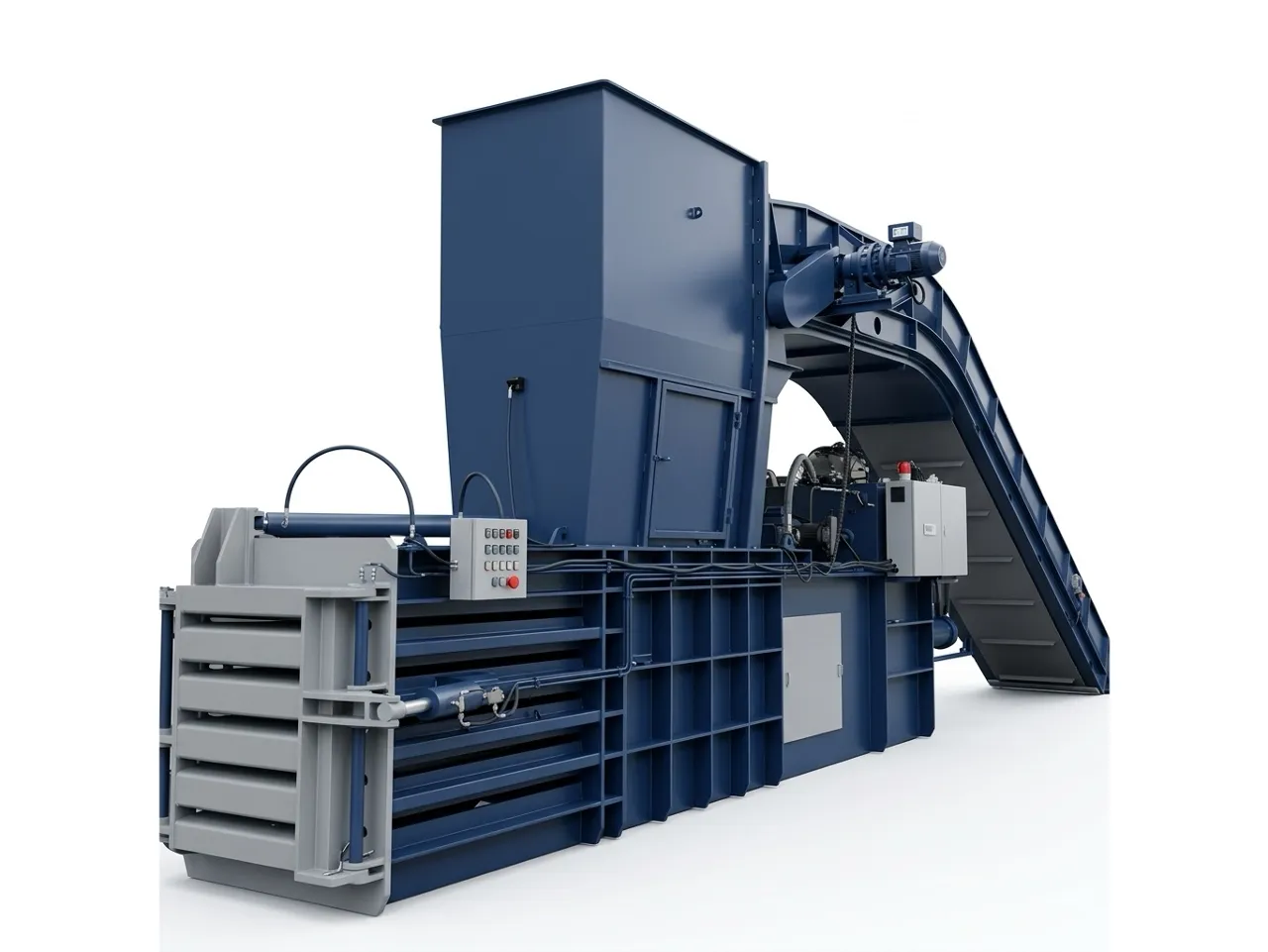
Baler Configurations
Reference equipment photos. The final gate, infeed and discharge arrangement depends on the selected model and configuration.
Guarda la pressa in azione
Una rapida panoramica su come la pressa orizzontale semiautomatica gestisce la raccolta dei rifiuti e la formazione delle balle in un contesto industriale.
Domande frequenti
Domande frequenti che le aziende pongono quando valutano una pressa orizzontale semiautomatica.
Yes. Waste paper, OCC, carton offcuts and paper trims are core applications. Select the feed opening, chamber and bale dimensions around the size and volume of your material. PET bottles and PP/PE film require confirmation of the model and configuration.
The WB table lists reference bale dimensions for each model. The WS table uses L for variable bale length. The tables do not imply that gate design, controls or discharge arrangements are identical; confirm these details in the final proposal.
No. These machines require operator involvement in manual or assisted tying and bale handling. Manual or PLC-based controls can be specified by model, but the control system alone does not make tying fully automatic.
An optional cyclone or scrap collection system can be considered for suitable paper trims and lightweight scrap. Conveyor feeding may also be specified. Material characteristics, collection volume and plant layout must be checked before integration.
The equipment photos include an open-gate configuration. Gate design, bale release and handling clearance must be confirmed for the selected WB or WS model rather than assumed to be identical across the range.
The listed figures are reference values. Actual throughput depends on material bulk density, moisture, feeding consistency, tying time and handling. The listed OCC density ranges apply to corrugated cardboard and should not be used as guaranteed values for plastic film, bottles or other materials.
Share your material type and photos, hourly or daily volume, maximum feed size, required bale dimensions and density, shift pattern, power supply and available space. Also specify the feeding method, control preference and any collection equipment to be integrated.
Hai bisogno della pressa orizzontale giusta per la tua capacità produttiva?
Inviaci il tipo di materiale, la produzione oraria, il numero di balle richieste e la configurazione dell'impianto. Ti aiuteremo a stabilire se questa pressa orizzontale semiautomatica o una linea completamente automatica sia la soluzione più adatta.