

Horizontal Balers for Waste Paper, Cardboard and Recyclables
Półautomatyczny poziomowy prasownik
Semi-automatic horizontal balers for waste paper, OCC, cardboard and selected plastic recycling applications. Compare seven WB and WS models with 30–100 ton pressing force, different chamber sizes and bale dimensions. Feeding, controls, tying and discharge arrangements are specified for your material and production needs; semi-automatic operation still requires operator involvement in tying and handling.

Choose a Horizontal Baler Around Your Material and Bale Requirements
Compare the WB and WS model specifications below, then confirm the feeding, tying and discharge configuration for your site. Throughput depends on the material and operating cycle, not pressing force alone.
Bale Discharge Matched to the Model
Open-gate discharge is available on the configurations shown. Confirm the gate arrangement, operating clearance and bale removal method for the selected model.
A Range of Chamber and Bale Sizes
The range covers compact 30–40 ton models and larger 60–100 ton machines. Match loose material volume, feed opening and finished bale dimensions to your operation.
Optional Scrap Collection Integration
For suitable paper trims and lightweight production scrap, an optional cyclone or collection system can feed the baler. Material suitability and integration are confirmed during selection.
Cutting Configuration for Paper Trims
A double-cutting configuration can assist with paper trims and cardboard offcuts. Confirm its availability and suitability for the selected model and feedstock.
Bales Sized for Storage and Transport
Select bale dimensions and tying arrangements around your handling equipment and buyer requirements. Bale density varies with the material, moisture and operating settings.
Controls and Hydraulic Configuration
Manual and PLC-based control configurations are selected to suit the model and work cycle. Confirm the controls, safety interlocks and operator tasks in the final proposal.
Typowe materiały i branże
Paper and cardboard are core applications. PET bottles and PP/PE film require a suitable model, tying arrangement and feed preparation; confirm the configuration for each material rather than assuming one setup handles every stream.
Zakłady produkujące kartony i tekturę
Kompaktuje skrawki kartonów, ścinki OCC i odpady tektury falistej w gęstsze bele, które są łatwiejsze do przechowywania i wysyłki.
Fabryki Druku i Papieru
Nadaje się do papieru gazetowego, czasopism, papieru ciętego i podobnych odpadów włóknistych, które stale gromadzą się w trakcie produkcji.
Recykling butelek PET
For bottle collection and recycling sites, subject to confirmation of bottle condition, feeding, bale density and tying requirements.
Przetwarzanie folii PP i PE
Przydatne w przypadku resztek folii, wycinków i odpadów opakowaniowych, gdy priorytetem jest redukcja objętości i czystsza organizacja zakładu.
Konsolidacja odpadów przemysłowych
For factories and recycling centers consolidating sorted recyclable streams. Keep different materials in separate bales when required by downstream buyers.
Modernizacja automatyki pośredniej
Często wybierane jako etap pośredni między ręcznym pionowym belowaniem a w pełni automatycznymi systemami poziomymi podawanymi za pomocą przenośnika taśmowego.
Jak działa półautomatyczny proces poziomego belowania
Maszyna kompresuje luźne materiały nadające się do recyklingu, formując bele gotowe do transportu, przy czym jej obsługa jest prostsza niż w przypadku w pełni automatycznej prasy.
Podaj materiał
Load loose paper, cardboard or an approved recyclable stream into the feed opening. Manual, conveyor or cyclone feeding depends on the agreed configuration.
Compress Horizontally
The hydraulic ram compacts the material through repeated strokes. Controls and operator tasks depend on the selected model.
Reach the Bale Size
Build the bale to the required dimensions. The WB models list fixed reference bale dimensions; the WS models list a variable length L.
Zawiąż belę
The operator completes manual or assisted tying as specified. Semi-automatic does not mean fully automatic wire tying.
Discharge and Handle
Release and remove the tied bale using the selected discharge arrangement. Keep gate access and handling clearance in the equipment layout.
Compare Semi-Automatic, Fully Automatic and Vertical Balers
Compare the operating method as well as hourly volume. A larger semi-automatic model can suit substantial throughput, provided the site can support feeding, tying and bale handling.
| Kryterium decyzyjne | Półautomatyczny poziomowy prasownik | W pełni automatyczna prasa pozioma | Pionowa prasa do PET |
|---|---|---|---|
| Najlepsze dopasowanie | Operacje średniej skali ze stałym przepływem materiałów nadających się do recyklingu | Duże, ciągłe stanowiska o dużym dziennym tonażu | Małe i średnie witryny z ładowaniem wsadowym |
| Poziom automatyzacji | Hydraulic compression with manual or assisted tying | Automatic tying with configured feeding and discharge | Więcej ręcznej obsługi i wiązania |
| Metoda karmienia | Podawanie bezpośrednie lub opcjonalne podawanie wspomagane cyklonem | Ciągłe ładowanie za pomocą przenośnika taśmowego | Ręczne ładowanie wsadowe |
| Ślad i złożoność | Depends on model, infeed equipment and bale handling space | Największa ilość zajmowanego miejsca i złożoność systemu | Najbardziej kompaktowe rozwiązanie |
| Kiedy wybrać | Kiedy potrzebujesz czegoś więcej niż belowania pionowego bez pełnej automatyzacji | Kiedy pełna przepustowość i redukcja pracy to uzasadniają | Gdy głośność pozostaje umiarkowana, a przestrzeń jest ograniczona |
Przesuń w poziomie, aby zobaczyć całą tabelę.
Dane techniczne
Compare seven semi-automatic horizontal baler models for waste paper, cardboard and approved recyclable streams. Values are reference specifications; confirm the final machine configuration and achievable output for your material.
WB Models — Reference Bale Dimensions
| Model | RTM300WB7070 | RTM400WB7280 | RTM600WB10080 | RTM1000WB11085 | RTM1000WB110110 |
|---|---|---|---|---|---|
| Ciśnienie | 30 ton | 40 ton | 60 ton | 100 ton | 100 ton |
| Moc głównego silnika | 11 kW | 11 kW | 15 kW | 30 kW | 30 kW |
| Czas cyklu | — | 19 sekund | 23 sekundy | 36 sekund | 42 sekundy |
| Zbiornik oleju | — | 240 litrów | 380 litrów | 1460 litrów | 1600 litrów |
| Liczba pasów | 3 linie | 4 linie | 4 linie | 4 linie | 5 linii |
| Otwór podawania | 700 x 690 mm | 1000 x 700 mm | 1200 x 980 mm | 1400 x 1050 mm | 1800 x 1050 mm |
| Rozmiar komory | — | 2200 x 700 x 780 mm | 2400 x 980 x 780 mm | 3000 x 1050 x 830 mm | 3700 x 1050 x 1050 mm |
| Rozmiar beli | 900 x 700 x 700 mm | 1000 x 720 x 800 mm | 1000 x 1000 x 800 mm | 1300 x 1100 x 850 mm | 1600 x 1100 x 1100 mm |
| Gęstość beli dla OCC | 400–500 kg/m³ | 400–500 kg/m³ | — | — | — |
| Przepustowość | 0,5–1 tony/h | 0,5–1 tony/h | 1–2 tony/h | 1,5–3 ton/h | 2–6 ton/h |
| Waga maszyny | 4 tony | 4 tony | 5,2 tony | 12 ton | 18 ton |
| Wymiary całkowite | 4200 x 1100 x 1900 mm | 5500 x 1100 x 2000 mm | 6100 x 1400 x 2000 mm | 7450 x 1600 x 2300 mm | 8200 x 1600 x 3500 mm |
Przesuń w poziomie, aby zobaczyć całą tabelę.
WS Models — Variable Bale Length
| Model | RTM400WS7280 | RTM1000WS110125 |
|---|---|---|
| Ciśnienie | 40 ton | 100 ton |
| Moc głównego silnika | 11 kW | 55 kW |
| Liczba pasów | 4 linie | 5 linii |
| Otwór podawania | 1000 x 690 mm | 2080 x 1076 mm |
| Rozmiar beli | Długość 720 x 800 mm | Długość 1100 x 1250 mm |
| Gęstość beli dla OCC | 350–450 kg/m³ | 400–500 kg/m³ |
| Przepustowość | 0,5–1 tony/h | 5–8 ton/h |
| Waga maszyny | 5 ton | 16,5 tony |
| Wymiary całkowite | 4800 x 1500 x 2000 mm | 9100 x 2500 x 4300 mm |
Przesuń w poziomie, aby zobaczyć całą tabelę.
L denotes variable bale length. A dash means that the value is not listed and must be confirmed. OCC density values apply to corrugated cardboard, not every material. Throughput depends on feed density, moisture, feeding consistency, tying time and bale handling. RTM400WB7280 is also listed as RTM-400WB7280; it is shown once here.
Baler Configurations
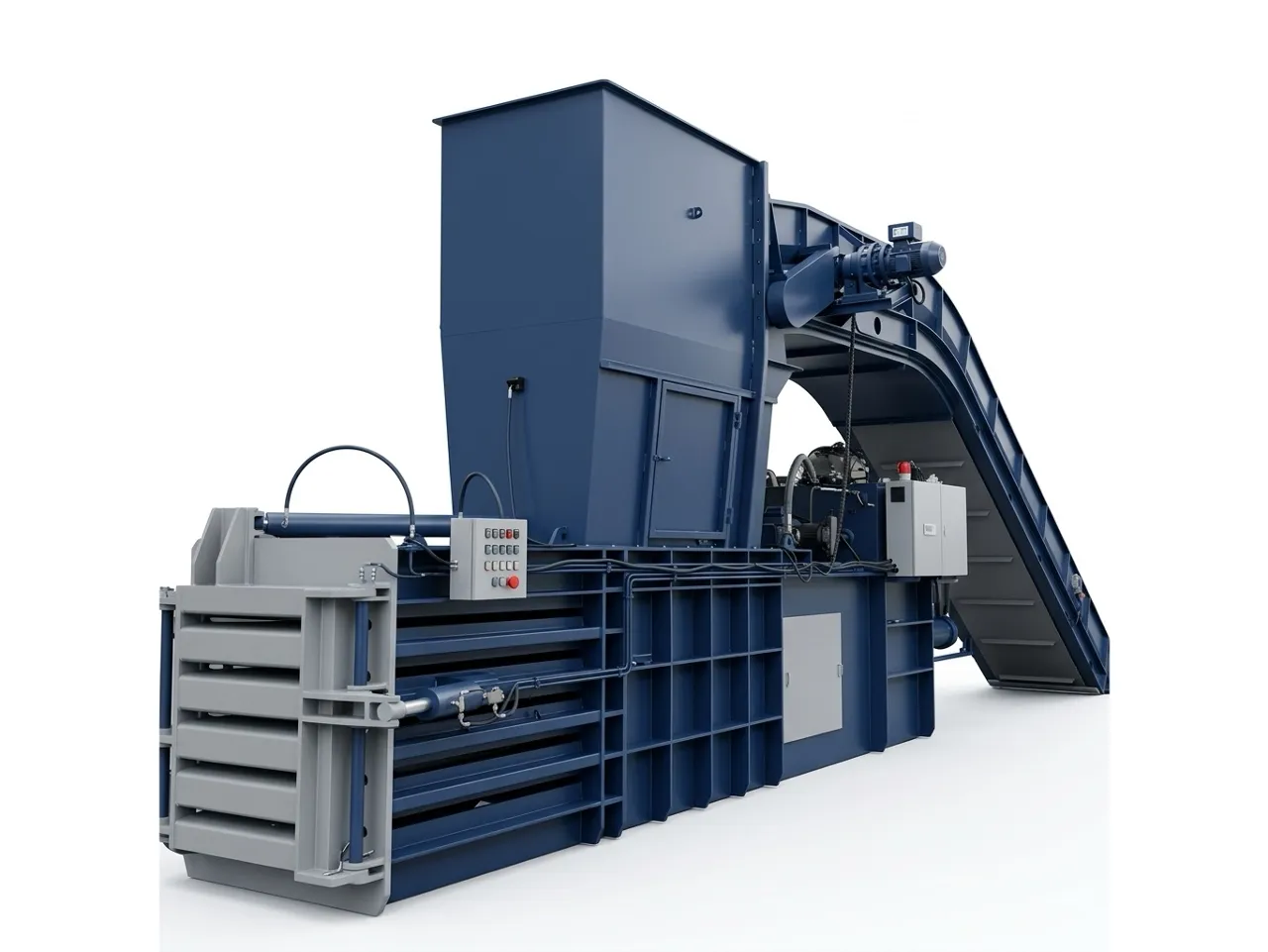
Reference equipment photos. The final gate, infeed and discharge arrangement depends on the selected model and configuration.
Obejrzyj prasę w akcji
Krótki przegląd tego, jak półautomatyczna pozioma prasa radzi sobie ze zbieraniem odpadów i formowaniem bel w warunkach przemysłowych.
Najczęściej zadawane pytania
Pytania, które zakłady najczęściej zadają podczas oceny półautomatycznej poziomej prasy belującej.
Yes. Waste paper, OCC, carton offcuts and paper trims are core applications. Select the feed opening, chamber and bale dimensions around the size and volume of your material. PET bottles and PP/PE film require confirmation of the model and configuration.
The WB table lists reference bale dimensions for each model. The WS table uses L for variable bale length. The tables do not imply that gate design, controls or discharge arrangements are identical; confirm these details in the final proposal.
No. These machines require operator involvement in manual or assisted tying and bale handling. Manual or PLC-based controls can be specified by model, but the control system alone does not make tying fully automatic.
An optional cyclone or scrap collection system can be considered for suitable paper trims and lightweight scrap. Conveyor feeding may also be specified. Material characteristics, collection volume and plant layout must be checked before integration.
The equipment photos include an open-gate configuration. Gate design, bale release and handling clearance must be confirmed for the selected WB or WS model rather than assumed to be identical across the range.
The listed figures are reference values. Actual throughput depends on material bulk density, moisture, feeding consistency, tying time and handling. The listed OCC density ranges apply to corrugated cardboard and should not be used as guaranteed values for plastic film, bottles or other materials.
Share your material type and photos, hourly or daily volume, maximum feed size, required bale dimensions and density, shift pattern, power supply and available space. Also specify the feeding method, control preference and any collection equipment to be integrated.
Potrzebujesz odpowiedniej prasy poziomej do swojej przepustowości?
Prosimy o podanie rodzaju materiału, wydajności godzinowej, zapotrzebowania na bele i układu instalacji. Pomożemy Państwu ustalić, czy lepszym wyborem będzie półautomatyczna belownica pozioma, czy w pełni automatyczna linia produkcyjna.