

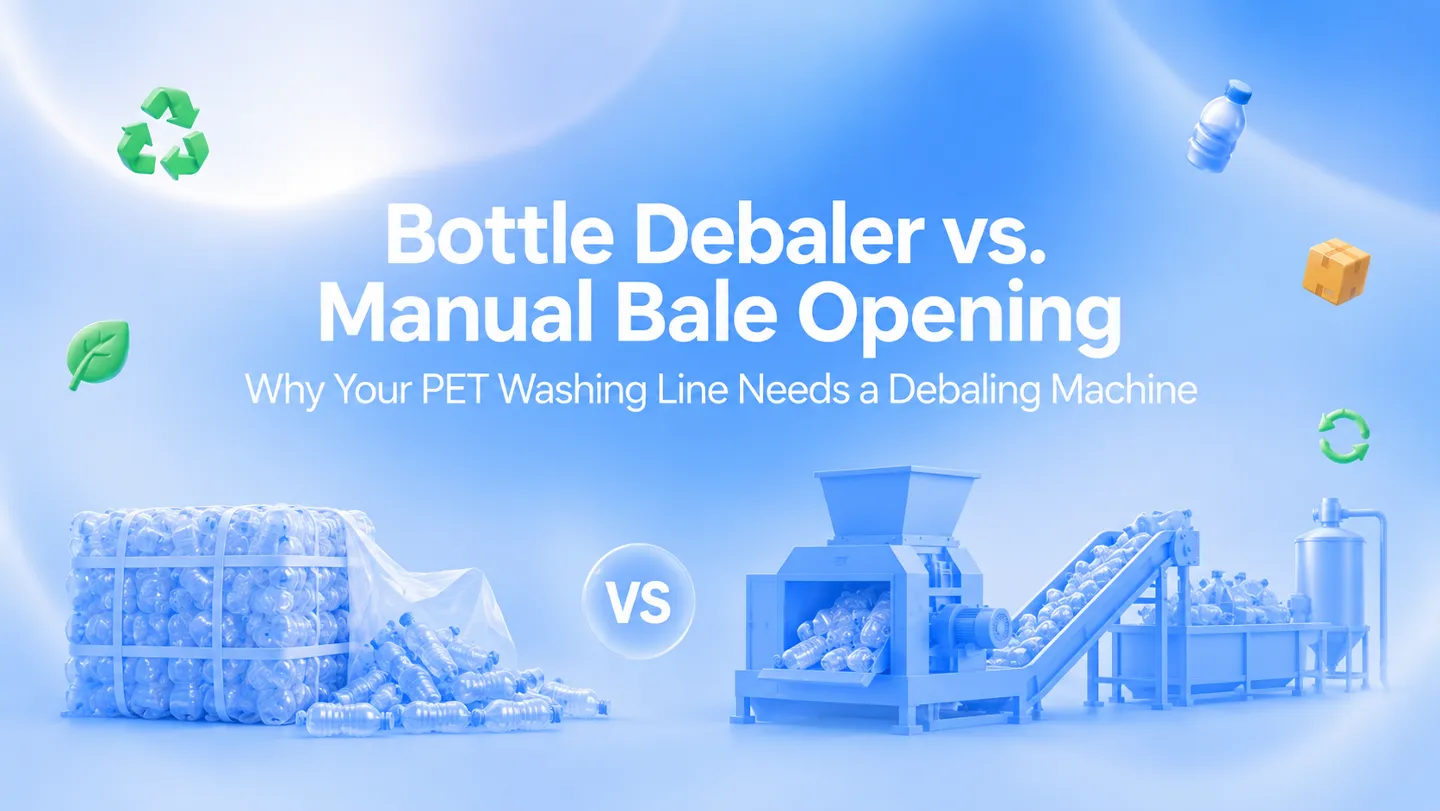
Efficiency in a plastic recycling plant begins at the very first step of the production line. When compacted bales of PET bottles or plastic films arrive at your facility, how you break them apart sets the tone for your entire operation.
For years, many facilities relied on manual labor to cut wires and pull apart compacted materials. However, as production capacities scale, the industry is rapidly shifting toward the automatic bottle debaler (also known as a bale opener machine).
If you are looking to upgrade your PET washing line or plastic recycling plant, understanding the immense value of automated debaling is crucial. In this guide, we will explore what a debaler machine is, compare it against manual labor, and explain why it is the ultimate safeguard for your downstream equipment.
What is a Bale Opener Machine?
A bale opener machine (or debaler) is a heavy-duty piece of industrial recycling equipment designed to break apart tightly compacted bales of plastic bottles, aluminum cans, or waste paper.
When plastic waste is collected and transported, it is usually compressed into dense, heavy blocks using a vertical or horizontal baler to save on shipping costs. Before these materials can be sorted, washed, or shredded, they must be loosened and separated into a steady, even flow.
Equipped with heavy-duty rotating shafts and durable tearing claws, a debaler machine effectively “claws” at the bale, pulling the compacted bottles apart without crushing them, ensuring a continuous and uniform feed to downstream equipment, such as a Trommel Screen or sorting conveyor.
The True Cost of Manual Debaling
Many smaller recycling plants still use manual workers equipped with wire cutters to open bales and pull apart the plastics. While this might seem like a cost-saving measure initially, manual bale opening carries significant hidden costs:
- Safety Hazards: Cutting the high-tension steel wires that hold bales together is dangerous. Wires can snap back and cause severe injuries to workers.
- Inconsistent Feeding: Human labor cannot provide a perfectly uniform flow of materials. Surges of plastic can overwhelm the conveyor belts, leading to bottlenecks and jamming.
- High Labor Costs: Manual debaling requires a dedicated team working continuously. As wages increase, this becomes a highly inefficient operational expense.
- Low Throughput: If your PET bottle recycling washing line is designed to process 1,000 kg to 3,000 kg per hour, manual labor simply cannot keep up with the required feeding rate.
How an Automatic Bottle Debaler Protects Downstream Equipment
Investing in an automatic bale opener machine isn’t just about saving labor; it’s about protecting your multimillion-dollar recycling line. Here is how a debaler acts as the first line of defense:
1. Removing Tramp Metal and Contaminants
Bales often contain hidden contaminants, including heavy metal pieces, rocks, or tools that were accidentally baled at the collection facility. An automatic debaling process loosens the material completely, allowing it to spread thinly over the conveyor belt. This makes it significantly easier for your Eddy Current Separator or overband magnet to detect and remove tramp metals before they cause catastrophic damage.
2. Protecting Your Plastic Crusher and Shredder
If a dense, unbroken clump of PET bottles enters your plastic crusher or shredder, the sudden surge in load can cause the machine’s motor to over-amp and shut down. By ensuring a steady, metered flow of loosened bottles, a debaler machine prevents equipment jamming, extends the lifespan of your crusher blades, and prevents costly downtime.
Key Specs to Look For in a Plastic Debaler
When sourcing a debaling machine for your recycling plant, consider the following specifications to ensure you get the best ROI:
- Rotor and Claw Design: Look for machines with replaceable, wear-resistant tearing claws. The design should pull the bale apart without grinding or destroying the bottles, which would make optical sorting difficult later on.
- Variable Speed Control (VFD): The ability to adjust the speed of the feeding conveyor and the rotor allows you to perfectly match the throughput of your downstream washing or pelletizing line.
- Heavy-Duty Construction: Bales can weigh hundreds of kilograms. The debaler must feature a reinforced steel frame and a high-torque gearbox capable of handling massive shock loads.
- Overload Protection: An intelligent PLC control system should automatically reverse the rotor if an unbreakable object causes a jam, preventing motor burnout.
Maximize Your Recycling Efficiency Today
The debaling process may be the first step in recycling, but it dictates the rhythm, safety, and efficiency of your entire factory. By upgrading from manual bale opening to an automatic bottle debaler, you immediately reduce labor costs, eliminate feeding bottlenecks, and drastically reduce the risk of damaging your shredders and granulators.
If you are planning to optimize your plastic recycling line, contact our team of experts today. We can help you integrate the perfect high-capacity bale opener machine tailored to your specific material and throughput requirements.
