

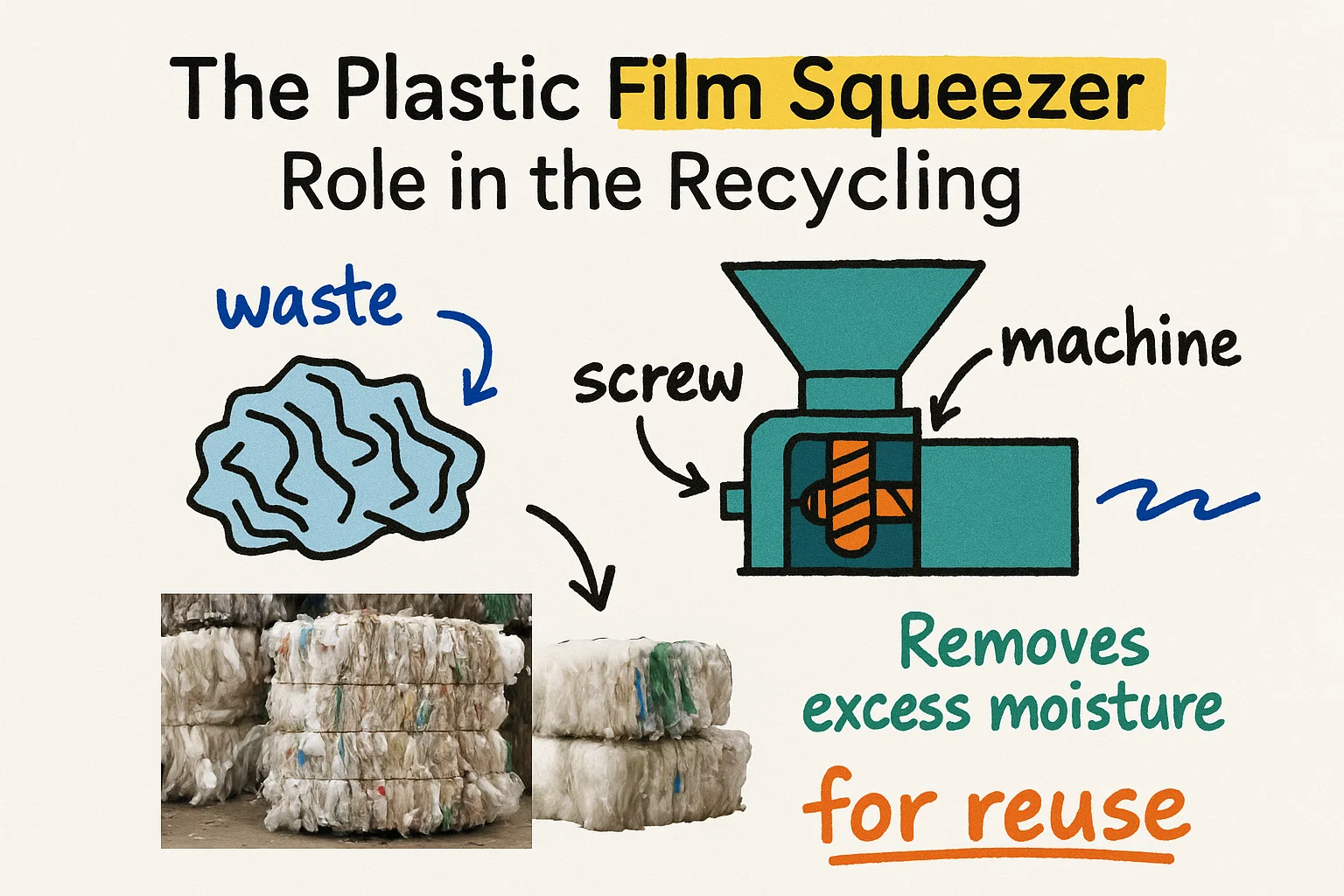
플라스틱 필름 스크위저는 씻은 PE나 PP 필름에서 물을 제거하고 가벼운 파편을 더 밀도 있고 안정적인 원료로 압축합니다. 그것은 씻기와 엑스트루젼 또는 저장 사이에 위치합니다. 그 역할은 물 제거와 원료 준비입니다. 씻기, 고분자 분리 또는Pellet 품질 보장은 아닙니다.
Why washed film needs a dedicated dewatering step
ultra-thin film은 큰 표면 면적을 가지고 있으며, 접힘에 물을 잡고 매우 낮은 흩어진 체적 밀도를 가집니다. 씻기 후 이 조합은 열 건조기에 과부하를 일으킬 수 있으며, silo에서 교차하고 엑스트루저에 불균형하게 공급할 수 있습니다. 고정 파편 장비는 같은 재료를 효과적으로 처리할 수 없습니다.
압축기는 슬리브와 바럴에 기계적 압력을 가하여 물을 배출합니다. 일부 설계는 배출 전 필름을 연화하고 밀도를 높이기 위해 조절된 열이나 마찰을 사용합니다. 올바른 배치는 포리머, 필름 두께, 오염 및 하류 공급 규격에 따라 달라집니다.
Where the squeezer fits in a film washing line
- Sorting and size reduction: PE나 PP 흐름을 정의하고 씻을 수 있는 크기를 만듭니다.
- Prewashing and friction washing: release soil, paper, food residue and other target contamination.
- Rinsing and separation: 제거된 오염물을 제거하고 물 회로를 관리합니다.
- 기계적 탈수: a squeezer expresses free and surface water.
- Densified discharge: 재질은 조정된 운반 또는 공급에 적합한 밀집된 조각으로 남습니다.
- Final preparation: 출력 요구 사항에 따라 추가 건조, 보완, 병합 또는 펠릿화가 이어질 수 있습니다.
CEFLEX describes size reduction and washing in flexible-packaging recycling. 물분리 단계 전에 공급 구조와 부속 구성 요소를 고려해야 합니다.
How the screw-squeezing process works
세척된 필름이 공급 구간에 진입하여 스크류에 의해 잡혀 들어갑니다. 채널 부피나 출구 제한이 변화하면 압력이 증가하고 물이 스크린이나 배수 구멍을 통해 탈출합니다. 재질은 배출로 이동하면서 더욱 밀도가 높아집니다.
성능은 안정된 공급, 스크류 기하학, 속도, 스크린 상태, 압력, 출구 제한 및 열이 사용되는 온도에 따라 달라집니다. 과도한 제한은 모터 부하를 증가시키거나 재질을 과열시킬 수 있습니다. 부족한 제한은 출력이 습하고 흐릿하게 남을 수 있습니다.
What a film squeezer can and cannot do
| 기능 | Reasonable expectation | Important boundary |
|---|---|---|
| 기계 탈수 | 세척된 필름에서 자유와 표면 물을 제거합니다. | Final moisture depends on feed, machine condition and test method |
| 고밀화 | Raises bulk density and improves material handling | 에스트루더와의 호환성을 증명하지 않습니다 |
| Feed stabilisation | 하위 장비로 이동하는 거품을 줄일 수 있습니다 | Requires a matched conveyor, buffer and pelletizer |
| Heating in some designs | 습도 제거와 밀도 있는 배출을 지원할 수 있습니다 | 재료를 무제한적으로 분해하거나 결합시키지 말아야 합니다. |
| 오염 제거 | 물과 일부 흩어진 미세한 입자는 스크린을 통해 나갑니다 | 정리와 씻기 대체물이 아닙니다 |
Squeezer versus other drying and densifying equipment
| 장비 | Main role | Typical decision |
|---|---|---|
| 센트리푸지 드라이어 | Uses rotor action to remove surface water | Useful where material form and screen system allow stable separation |
| Screw press | Mechanically expresses water through a screened barrel | 출력 형태, 압력 및 처리를 공급에 비교하세요 |
| 필름 슀이저 | Dewaters and compacts flexible flakes | 저체적 밀도와 습기가 하류 공급을 방해할 때 사용하세요 |
| 열기 건조기 | Evaporates remaining moisture with heated air | 경제적인 기계적 제거 후 및 기록된 습도 목표에 적용하세요 |
| Agglomerator or compactor | 재료를 밀도화하고 조건화하여, 일반적으로 extrusion 전에 적용 | Not a primary washing or contamination-removal stage |
그만큼 thermal drying machine guide explains the evaporation step. Our film densification cost guide 고정된 비율 주장 없이 운영 절감을 모델링하고 운영 절감 방법에 대해 설명합니다.
스크리저를 선택하기 전에 공급을 정의하세요
포말리큐머, 필름 유형, 인쇄, 레이어 구조, 파티클 크기, 흩어진 볼륨 밀도, 들어오는 습도 및 오염을 기록하세요. 농업 필름, 소비 후 포장재 및 깨끗한 생산 트림은 매우 다르게 행동할 수 있습니다.
미네랄 채운 필름, 알루미늄 레이어, 줄, 라벤더 및 비폴리올레핀 재료는 압력, 닦힘 및 녹는 행동을 바꿀 수 있습니다. 물 기반 분리제는 비채운 PE와 PP를 신뢰할 수 없게 나눌 수 없으므로, 과정 초기에 혼합 또는 분리된 출구에 대해 동의해야 합니다.
Capacity must be reported on one basis
용량이 습식 입력, 건조 고체 또는 수용 가능한 압축된 출력을 가리키는지 명시하세요. 스퀴저에서 제거된 습도는 이 값이 다르게 만들어집니다. 들어오는 및 나가는 습도를 하나의 방법으로 기록하고, 질량 균형을 위해 건조 고체를 계산하세요.
During an acceptance test, measure stable feed, accepted output, expelled water, rejects, electricity, downtime and output bulk density. A short peak rate does not represent a shift’s sustained saleable output.
pelletizer와 함께 습도 및 볼륨 밀도 제한을 설정하세요
모든 필름 재활용 라인에 대해 일반적인 최종 습도나 볼륨 밀도는 없습니다. 하류 extruder 공급업체나 재료 구매자는 수용 제한 및 샘플링 방법을 제공해야 합니다. 저장이나 공급 전에 출력이 식히거나 버퍼링되거나 추가로 건조되어야 하는지 확인하세요.
볼륨 밀도는 반복 가능한 컨테이너, 채우는 방법 및 조건화를 사용하여 측정해야 합니다. 재료가 과열되거나 과대 크기의 조각으로 녹아버리거나 측정하기 어려워지면 높은 값이 자동적으로 더 나은 것은 아닙니다.
Energy evaluation
기계적 수분 제거는 나중에 증발해야 할 양을 줄일 수 있지만, 절약은 측정된 입력 및 출력 수분, 압축기 전력 및 추가된 열에 따라 달라집니다. 수용된 건조 톤당 전체 시스템 에너지를 계산하세요.
Compare at least two cases on the same feed: existing mechanical plus thermal drying, and the proposed squeezer configuration. Include motors, heaters, fans, cooling and idle periods. The result should not be inferred from motor nameplates or a supplier’s generic percentage.
Common operating problems
| 징후 | 가능한 원인 | 체크 무늬 |
|---|---|---|
| Wet, loose output | Feed surge, worn screw, blocked drainage, low restriction or different film | Moisture, current, screen, pressure and feed lot |
| Motor overload | Overfeeding, excessive restriction, jam, foreign object or mechanical wear | Isolate safely; inspect feed path, screw and drive |
| Overheated or fused output | High restriction, temperature-control fault, long residence or incompatible resin | Sensor accuracy, zone temperatures, speed and feed continuity |
| Unstable pelletizer feed | Variable bulk density, oversize lumps, hot discharge or poor buffering | Output distribution, cooling and conveying |
| Water leaks or solids loss | Damaged screen, seals, blocked drainage or excessive fines | Screen integrity, wastewater solids and particle size |
Safety and maintenance
The feed screw, compaction zone, drive and discharge can store mechanical, electrical, hydraulic and thermal energy. Guard access points and isolate all hazardous energy before clearing film or opening screens. OSHA’s hazardous-energy guidance provides a baseline for site procedures.
스크류와 바렐의 닳음, 스크린, 배수, 밀봉, 변속기, 베어링, 모터 전류, 온도 센서 및 설치된 경우 배출 컷터를 검사하세요. 유지보수 주기를 공급 부식 및 상태 기록에 맞추고, 다른 설치에서 캘린더를 복사하는 대신 맞추세요.
Frequently asked questions
플라스틱 필름 스크루프가 씻기 대신 사용됩니까?
번호. 깨끗한 후 물을 제거하고 재활성화합니다. 불일치하는 폴리머, 기름, 레이블 또는 내장된 오염물을 안정적으로 제거할 수 없습니다.
압축 필름이 직접 펠렛화기에 들어갈 수 있나요?
Only if moisture, bulk density, temperature, particle form and contamination meet the pelletizer’s written feed specification. Cooling, buffering or further drying may be required.
How should a film squeezer’s capacity be tested?
대표적인 습식 원료를 사용하여 건조고체를 보고하며, 수용 가능한 출력, 입력 및 최종 습도, 볼륨 밀도, 에너지, 불량 및 정지 시간을 안정적인 운영 기간 동안 보고합니다.
Test the complete dewatering handoff
Energycle 대표에게 씻은 필름, 입자 크기, 습식 공급률, 수분 결과 및 하류 extruder 규격을 보내세요. 플라스틱 필름 압착기 그것과 함께 공급 전달기, 수분 배수, 냉각 및 펠릿화기 전환을 평가해야 합니다.

댓글은 닫혔습니다.