

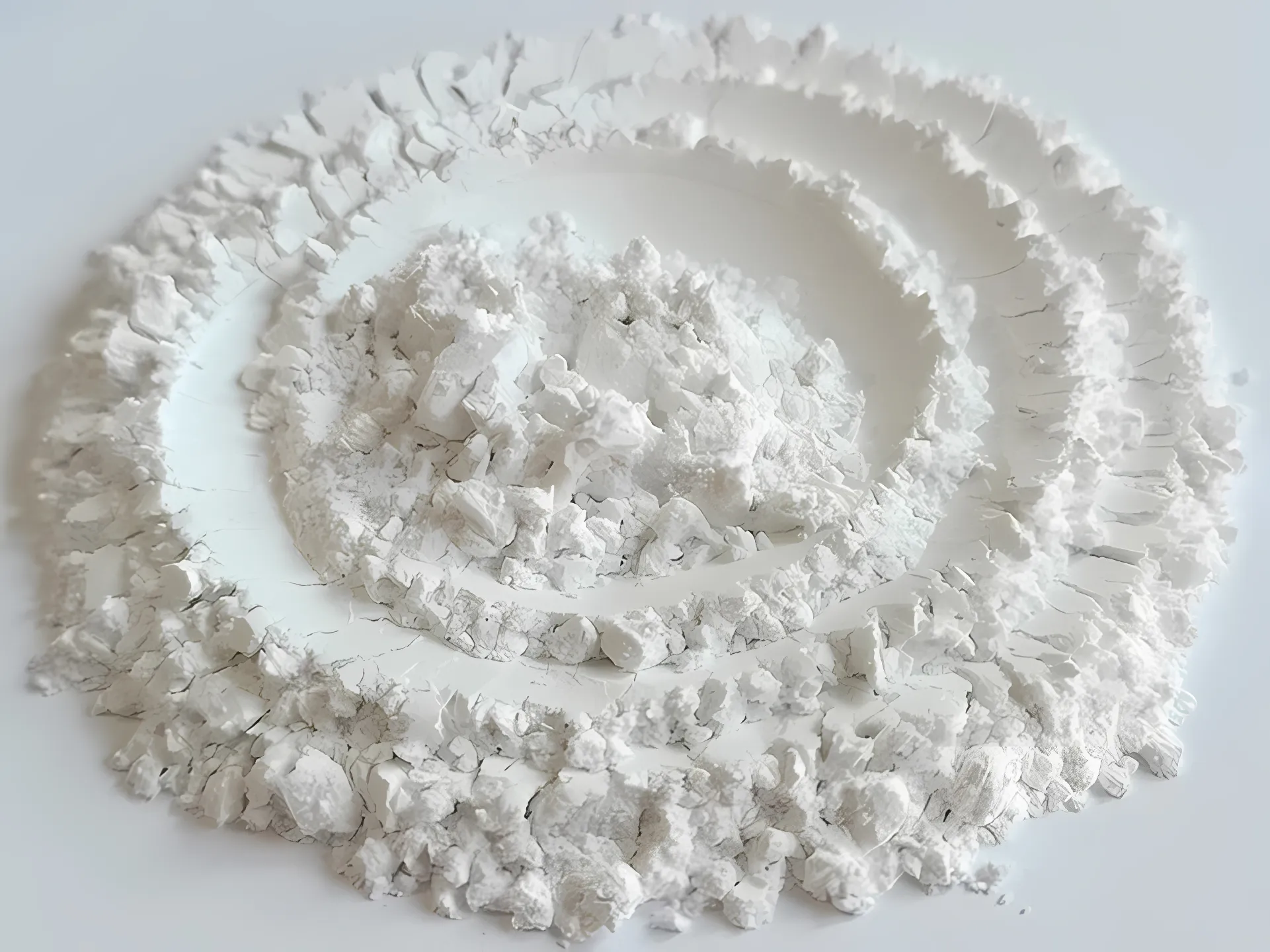
Calcium carbonate content can change how a PVC product fractures, feeds, produces dust, and wears a grinding system, but filler percentage alone does not predict machine performance. Particle size, mineral purity, dispersion, product formulation, foreign grit, knife condition, and the required output all matter. Test the actual scrap before setting equipment limits.
What Calcium Carbonate Changes in PVC Scrap
| Observed change | Possible explanation | What to verify |
|---|---|---|
| More brittle fracture | Higher mineral loading or changed formulation | Filler content, impact modifier, temperature, and product history |
| Rising dust or fines | Brittle feed, excessive recutting, dull knives, or unsuitable screen | Particle-size distribution, knife clearance, screen condition, and airflow |
| Faster wear | Mineral impurities, soil, glass, metal, high throughput, or poor blade setup | Feed contamination, blade material, wear pattern, and current trend |
| Higher motor load or heat | Overfeeding, blocked screen, dull knives, buildup, or formulation change | Feed rate, current, temperature, clearance, and cooling |
Do Not Treat Calcium Carbonate as the Only Wear Cause
Calcium carbonate is a common PVC filler. Its effect depends on particle morphology, size, surface treatment, concentration, dispersion, and the rest of the formulation. A peer-reviewed study of calcium-carbonate-filled PVC confirms that particle size and content change composite behavior. It does not establish a universal blade material or a filler percentage at which every grinder must be upgraded.
Unexpected wear can come from quartz-rich dirt, glass, metal, stones, or a change in feed geometry. Inspect the wear surface and analyze representative feed rather than attributing every damaged knife to calcium carbonate. Harder tooling can extend service in some abrasive applications, but it may cost more, require different sharpening, and respond differently to impact from metal contamination.
How to Measure Filler Instead of Guessing
Color, weight, and brittleness are not reliable filler measurements. Use supplier formulation data when available and a defined laboratory method for unknown scrap. Ash testing can estimate total inorganic residue, while additional analysis may be needed to identify calcium carbonate and other minerals. Sampling must represent the full batch because profiles, pipe layers, fittings, and mixed suppliers can have different formulations.
Record the method, sample location, number of samples, and result units. Do not use one “ideal” calcium percentage for all rigid PVC products. The acceptable range comes from the downstream formulation, product specification, regulatory requirements, and the recycling process.
Grinding Trial for Filled PVC
- Prepare representative feed: include normal variations in wall thickness, filler, dirt, and product type, while removing hazardous foreign objects.
- Establish a clean-machine baseline: document knife geometry, clearance, screen, rotor speed, feed rate, airflow, and starting wear condition.
- Measure the process: record throughput, motor current, temperature, vibration, dust loading, particle distribution, recirculation, and reject material.
- Inspect wear: compare knife edges, screen openings, chamber surfaces, and bearings at planned intervals.
- Confirm downstream quality: check whether the regrind or powder meets the next process for size, contamination, ash, color, and formulation consistency.
Machine Adjustments Based on Evidence
If fines rise, check knife sharpness, clearance, screen open area, and repeated recutting before reducing screen size. If temperature or current rises, reduce unstable feeding and inspect for blockage or buildup. If wear is localized, examine alignment and material flow. If wear is uniform and feed analysis confirms an abrasive stream, compare wear-resistant components through a controlled cost-per-ton trial.
Use contained dust collection and safe housekeeping. OSHA includes plastic dust and additives among materials that can present combustible-dust hazards in some workplaces. The hazard depends on the material and process, so the site should use safety data and a qualified assessment.
Energycle’s PVC grinding machine, PVC pipe and profile crusher, and PVC pulverizing system serve different particle-size stages. Select the sequence before selecting blade or disc materials.
Frequently Asked Questions
Does more calcium carbonate always increase grinder wear?
No. Wear also depends on mineral impurities, foreign grit, metal, feed shape, throughput, blade setup, screen condition, and machine design.
Can filler content be estimated from PVC appearance?
Not reliably. Use formulation records and representative laboratory testing, such as an appropriate ash method followed by additional identification when needed.
Is there one ideal calcium carbonate percentage for grinding?
No. The suitable formulation depends on the product and downstream specification. Grinding trials should evaluate process stability and output quality, not set the product formulation by one universal number.
Technical Sources and Related Reading
- Study: calcium carbonate particle size and content in PVC composites
- OSHA Combustible Dust National Emphasis Program
- PVC varieties and grinding requirements
- PVC profile crusher versus standard crusher
Base the Machine Choice on a Feed Test
Send Energycle representative PVC scrap, available formulation or ash data, contamination details, target particle size, and annual throughput. We can define a trial that separates filler effects from feeding, contamination, and machine-condition problems.
