


Pelletizing plastic turns mixed scrap, film, fiber, or post-consumer flake into uniform pellets that injection molders, extruders, and compounders will actually pay for. The method you choose — strand, water-ring, underwater, or hot-die-face — decides your throughput ceiling, pellet quality, power bill, and resale price per ton. This guide compares the four core methods, maps each one to PET, HDPE, PP, and PE film, and gives realistic 2026 equipment cost ranges so you can size the right line on the first try. If you want to see the hardware first, browse our 플라스틱 펠릿 제조기 라인업.
목차
- What pelletizing plastic actually means
- The four pelletizing methods compared
- Pelletizing line layout: every stage explained
- Material-specific guides: PET, HDPE, PP, PE film
- Choosing a plastic granulator vs a pelletizer
- Throughput sizing and 2026 cost ranges
- Common mistakes that kill pellet quality
- 자주 묻는 질문
What pelletizing plastic actually means
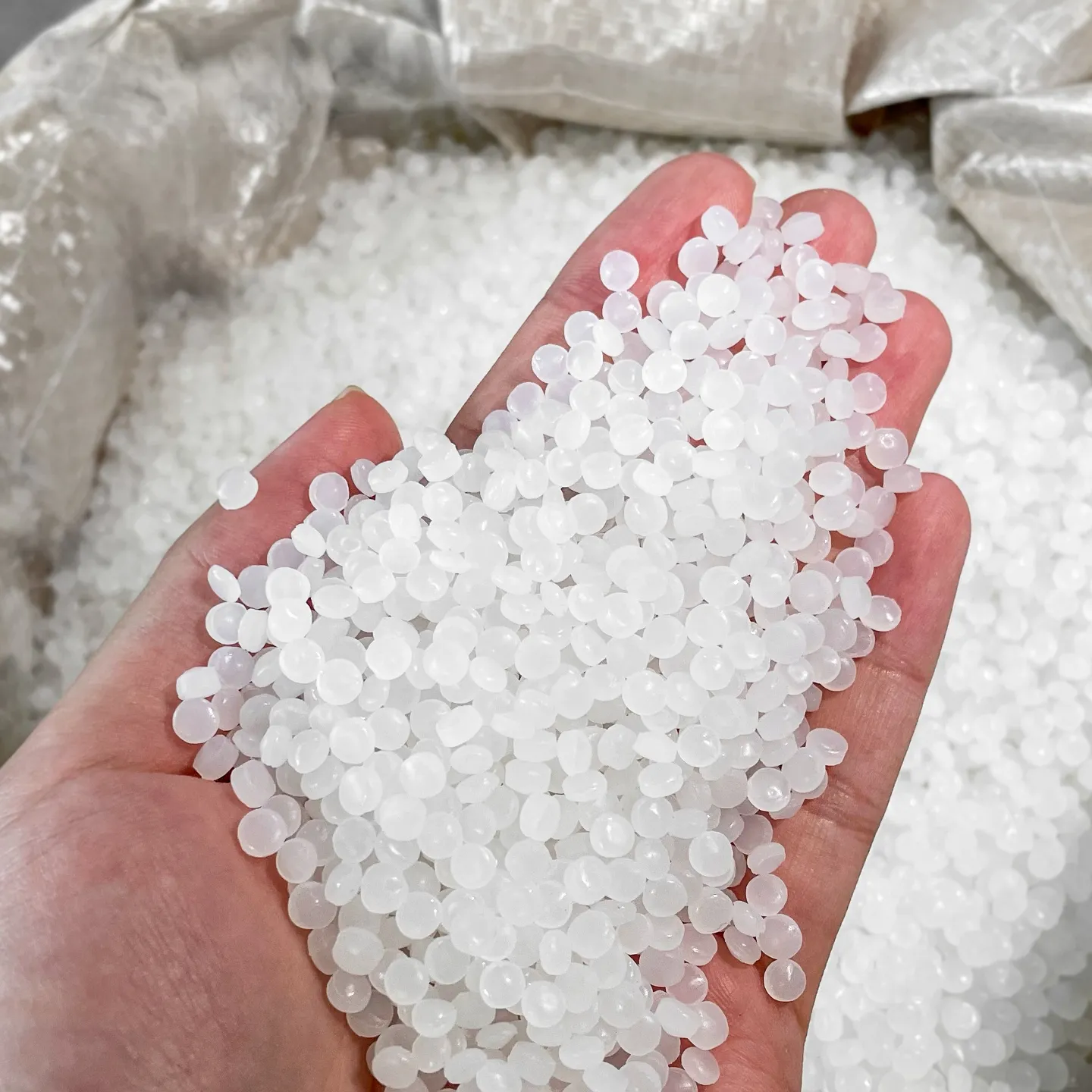
Pelletizing plastic is the conversion of shredded, washed, or molten plastic waste into small, uniform granules — typically 2–5 mm — that can be remelted in standard processing equipment. The pellet is the trading unit of the recycling industry: brokers quote per ton of pellet, not per ton of scrap, because pellet shape and bulk density determine how a downstream machine feeds.
A plastic recycling pelletizing machine sits at the end of a recycling line. Upstream you shred, wash, and dry; the pelletizer melts the clean flake, filters it, extrudes it, and cuts it. The cut method is what separates the four pelletizing technologies covered below.
Key takeaway: “Pelletizing” is the cutting step, not the whole line. Pick the cutting method first, then size the extruder and feed system around it.
The four pelletizing methods compared
Every commercial plastic pelletizer uses one of four cutting principles. Each suits a different material and pellet spec.
| 방법 | How it cuts | 가장 좋은 | Typical throughput | 펠릿 모양 | Energy (kWh/ton) |
|---|---|---|---|---|---|
| Strand pelletizing | Strands run through a water bath, then dry-cut by a rotating blade | Rigid HDPE, PP, ABS, PS | 100–2,000 kg/h | 원통형 | 280–380 |
| 수조형 펠릿화 | Blade cuts molten strands at the die face; water ring quenches | PE, PP, masterbatch | 150–1,500 kg/h | Lens / disc | 250–340 |
| Underwater pelletizing | Die face is submerged; pellets cut and cooled simultaneously | PET, engineering resin, high-output PE | 300–6,000 kg/h | Near-spherical | 220–310 |
| Hot-die-face / air-cooled | Blade cuts at die face; pellets fall, cooled by air | Soft PE film, foam, low-melt material | 80–800 kg/h | Lens / teardrop | 200–280 |
When strand pelletizing wins
Strand pelletizing is the workhorse for clean rigid scrap — bottle flake, industrial regrind, fiber waste. Tooling is cheap, blade changes take minutes, and pellet length is easy to tune. The weak point is wet material: strands break in the water bath if moisture is above ~1%, causing stop-starts that wreck throughput.
When water-ring pelletizing wins
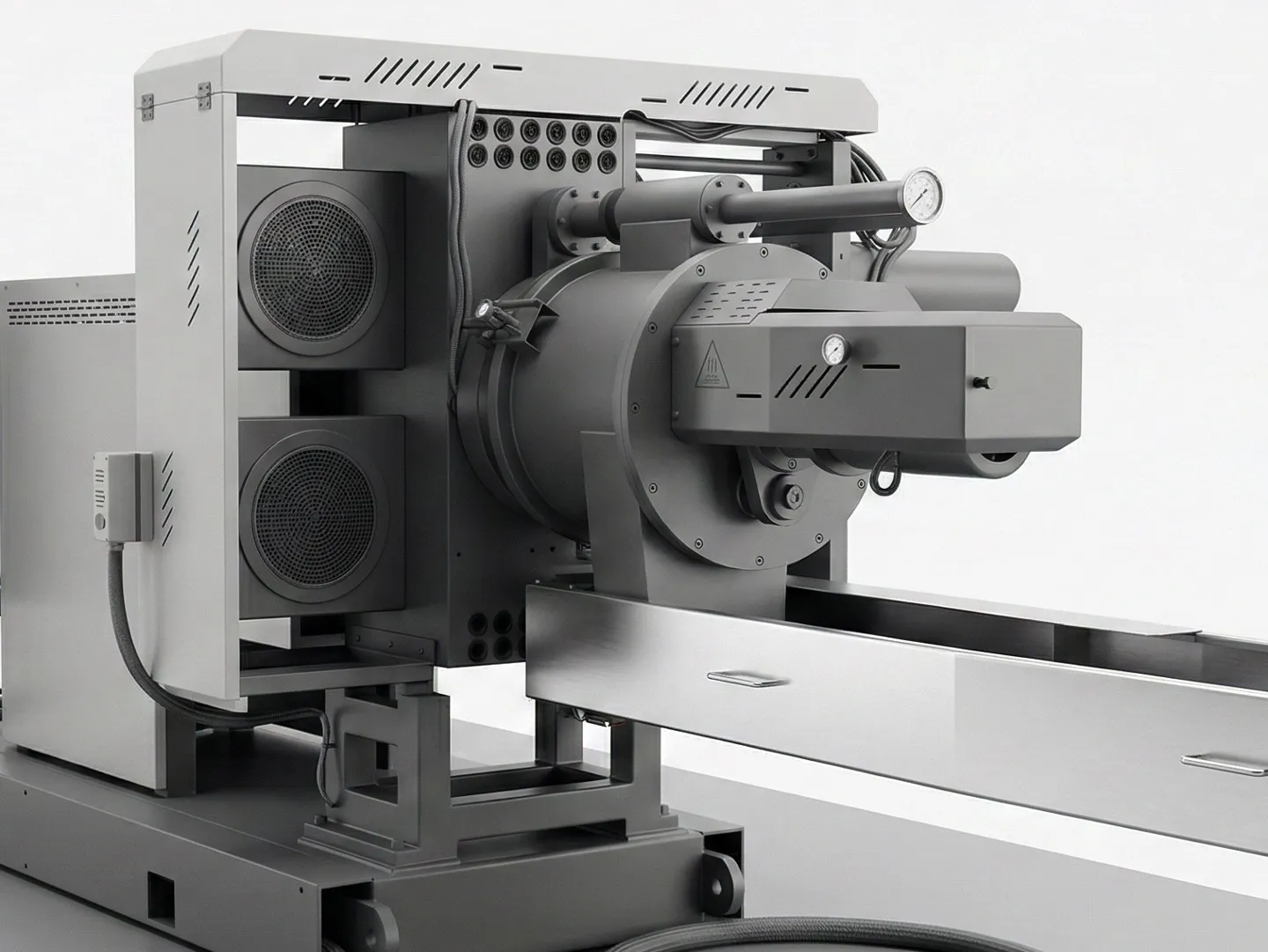
Water-ring sits between strand and underwater. The die face is in the open air but a high-velocity water ring quenches the pellet the instant it is cut. Operators get underwater-style pellet shape without the operating complexity of a pressurized water chamber. It is the default for PE/PP masterbatch lines under 1,500 kg/h.
When underwater pelletizing wins
Underwater is the only sensible choice for PET 펠릿화 above 500 kg/h and for any line that has to crystallize pellets inline (most PET bottle-to-bottle plants). The submerged cut gives a perfectly spherical pellet, which improves dryer airflow and downstream feeding consistency. The trade-off: tighter process control, higher capex, and dies that cost 3–5× a strand die.
When hot-die-face air-cooled wins
Air-cooled pelletizing is the rescue method for materials that hate water. Soft LDPE film with high MFI, EVA, hot-melt adhesives, and some TPEs all stick or clump in water. Air cooling gives a forgiving process at the cost of lower output and a slightly irregular pellet.
Pelletizing line layout: every stage explained
A pelletizing machine for plastic recycling is one node in a longer chain. A typical post-consumer film line looks like this:
- Infeed and metering — belt conveyor with metal detector; weight-loss feeders for masterbatch or additives
- Pre-compaction (for film/fiber) — single-shaft compactor or agglomerator densifies low-bulk-density material to 300–450 kg/m³ so the extruder can feed it
- 압출 — single-screw for clean scrap, twin-screw for contaminated or multi-material feed; degassing zones remove moisture and volatiles
- 용융 여과 — screen changer (continuous or backflush) holds 80–250 µm screens to catch paper, aluminum, gels
- Die and pelletizing head — strand die, water-ring die, or underwater die plate; pellet size set by hole diameter and blade speed
- 냉각 및 건조 — water bath + centrifugal dryer (strand), or pellet/water separator + dewatering screen (underwater)
- Classification and storage — vibrating sieve removes fines and oversize; pellets go to silo or big-bag station
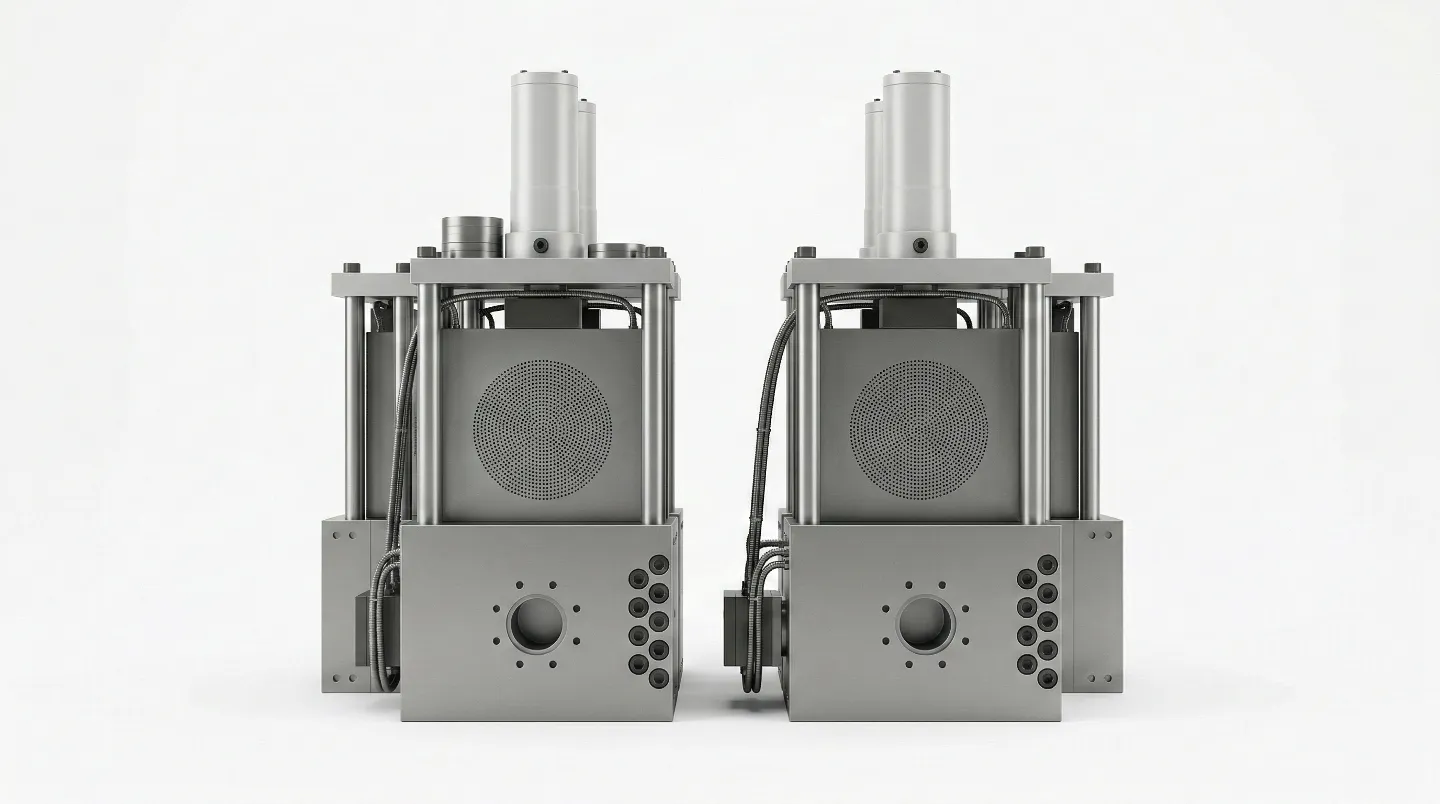
The single most-skipped stage is 용융 여과. Buyers spec pellet contamination in ppm; a backflush filter at 80 µm is the difference between a $900/ton resale price and a $400/ton one.
Watch a Pelletizing Line in Operation
A complete film pelletizing line running the stages described above — feeding, extrusion, filtration, and cutting.
Material-specific guides: PET, HDPE, PP, PE film
PET 펠릿화
PET hydrolyzes when melted wet. Every PET recycling pelletizing machine needs: For bottle-to-bottle projects, the European PET Bottle Platform design guidelines set out what makes a bottle stream recyclable in the first place.
- Crystallizer + dryer ahead of the extruder (drop moisture below 50 ppm)
- Twin-screw extruder with two vacuum vents, or single-screw with high-vacuum degassing
- Underwater pelletizer with inline pellet crystallizer (otherwise pellets stick in storage)
Skip any of these and intrinsic viscosity (IV) drops from ~0.80 to ~0.65 dl/g, which kills bottle-grade resale. PET 펠릿화 lines are the highest capex per ton/hour of any common plastic — budget 2–3× a comparable PP line. For washed PET bottle flake at 300–1,500 kg/h, a dedicated PET bottle flake single-screw pelletizer gives the best cost-per-ton — single-screw simplicity with PET-specific screw geometry and a vacuum vent sized for bottle-grade moisture.
HDPE 펠릿화
에이 HDPE 펠릿화기 최대한 용납할 수 있는 것입니다. HDPE 병 파이프, 블로우 모olding 스캔, 파이프 재생재 모두가 물링 펠릿제이저나 스트랜드 펠릿제이저와 함께 단일 스크루 엑스트루더에서 깨끗하게 운영됩니다. 표준 라인: 쇼더 → 씻기 → 드라이어 → 120–160 mm 단일 스크루 엑스트루더 → 백플러시 필터 → 물링 펠릿제이저. 에너지 사용량은 280–320 kWh/톤에 달하며, 펠릿 재판매는 원생 HDPE에 대해 20–35% 할인으로 추적됩니다.
PP pelletizing
에이 PP 펠릿화기 uses the same building blocks as HDPE, with two adjustments: a longer L/D screw (33:1 or 36:1) to handle PP’s narrower melt window, and a slightly cooler die. PP fiber and raffia waste — common at woven-bag plants — needs an agglomerator first because shredded fiber has a bulk density under 100 kg/m³.
PE film pelletizing
PE film pelletizing 최대한 많은 신입 라인이 실패하는 곳입니다. 필름은 직접 엑스트루더에 공급할 수 없으며, 스크루는 공기만 밀어냅니다. 해결책은 필름을 스크루에 도달하기 전에 약 400 kg/m³로 밀도를 높이는 측면 공급 컴팩터입니다. 또한 인쇄 필름은 인쇄물과 접착제를 가지고 있어 강력한 배기가 필요합니다. 이 분야에서는 투스크루 엑스트루더가 8–12%의 세척에서 살아남은 오염물을 용납하기 때문에 주를 이룹니다.
Choosing a plastic granulator vs a pelletizer
The terms get mixed up daily. The distinction matters when you write a purchase order. Resin identification follows ASTM D7611, the coding standard behind the familiar 1–7 resin symbols.
| 플라스틱 분쇄기 | Plastic pelletizer | |
|---|---|---|
| What it produces | Irregular flake, 6–20 mm | Uniform pellet, 2–5 mm |
| Heat involved | None — mechanical cutting only | Yes — material is melted |
| Position in line | Upstream (size reduction) | Downstream (final product) |
| Typical anchor part | Rotor with fixed knives | Extruder + die + cutter |
| Resale value of output | Low (intermediate) | High (drop-in replacement for virgin) |
에이 플라스틱 과립기 reduces bulky scrap to a size your washer and extruder can handle. 플라스틱 분쇄기 do not melt anything — if your supplier calls a melting machine a “granulator,” they are using the term loosely. For a complete recycling line you need both: a granulator to prepare feed and a pelletizer to finish it.
Energycle builds both stages — see the plastic granulator range for size-reduction equipment and the plastic pelletizer range for finished-pellet lines.
Throughput sizing and 2026 cost ranges
가장 큰 Capex 오류는 평균 공급물에 맞춘 펠릿제이저를 사는 것이 아니라 최대 공급물에 맞춘 펠릿제이저를 사는 것입니다. 평균 공급에서 70–80%의 활용도를 목표로 하세요; 공간은 공급물 변동과 필터 교환 시간을 흡수합니다.
| Line size | 처리량 | Typical extruder | Indicative 2026 capex (USD, line only) | Power install |
|---|---|---|---|---|
| Small / pilot | 150~300kg/시간 | 75 mm single-screw | $55,000 – $110,000 | 75–110 kW |
| Mid | 500~800kg/시 | 120 mm single-screw or 65 mm twin-screw | $140,000 – $260,000 | 180–260 kW |
| 산업 | 1,000–1,500 kg/h | 160 mm single-screw or 75 mm twin-screw | $280,000 – $480,000 | 320–450 kW |
| 크기가 큰 | 2,000–3,000 kg/h | 180 mm single-screw or 92 mm twin-screw | $520,000 – $850,000 | 550–780 kW |
| PET bottle-to-bottle | 1,500–4,000 kg/h | Twin-screw + crystallizer + SSP | $1.2M – $3.5M | 700–1,400 kW |
라인 전용(엑스트루더, 필터, 펠릿제이저, 드라이어, 제어)입니다. 설치, 건물 개조, 예비 부품에 15–25%를 추가하세요. 씻기 라인, 쇼더, 창고는 별도입니다.
정확한 투자 회수 기간을 추정하려면, 다음 간단한 계산식에 여러분의 수치를 대입해 보세요:
회수 기간(년) = 자본 지출 ÷ ((펠릿 가격 − 고철 가격 − 전력비 − 인건비) × 연간 톤수)
전력 요금이 $0.08/kWh이고, 스크랩에서 펠릿 생산 시의 스프레드가 $250/톤인 지역의 중형 HDPE 생산 라인은 일반적으로 18~28개월 내에 투자 비용을 회수합니다.
Common mistakes that kill pellet quality
시운전 과정에서 발생하는 펠릿 품질 관련 불만 사항의 대부분은 다음 다섯 가지 실수에서 기인합니다:
- 금속 탐지기를 거치지 않고 지나간다. 스테인리스 볼트 하나만으로도 스크린 팩이 파손되고, 나사에 흠집이 생기며, 아무도 눈치채기 전에 검은 반점이 흩뿌려진 규격 미달 펠릿 200kg이 생산된다.
- 용융물 필터 크기가 너무 작습니다. 시간당 1,000kg 처리 용량의 라인에 장착된 200메쉬 스크린은 4분마다 역세척됩니다. 필터 사양은 가장 깨끗한 원료가 아닌, 예상되는 가장 오염된 원료를 기준으로 정하십시오.
- 수조가 너무 뜨겁습니다. 60 °C 이상에서는 HDPE 가닥이 고무처럼 변해 펠릿화기 칼날이 자르지 못하고 씹어 버립니다. 냉각기를 사용하여 용액 입구 온도를 30–40 °C로 유지하십시오.
- 해당 소재에 적합하지 않은 나사 L/D 값입니다. PE용으로 제작된 25:1 비례의 스크류로는 PP를 제대로 용융하고 탈기할 수 없습니다. 이 경우 펠릿에 용융되지 않은 입자와 육안으로 확인 가능한 젤이 생깁니다.
- 펠릿 체가 없습니다. 미세 입자(5 mm)는 하류 공급 장치에 막힘을 일으킵니다. 2단 진동 체의 가격은 $4,000 미만이며, 이를 통해 이러한 문제를 해결할 수 있습니다.
유지보수 필수 사항
- 일일다이 플레이트의 막힌 구멍이 있는지 검사하고, 스크린 체인저를 청소하고, 냉각 시스템의 물 온도를 확인합니다.
- 주간스크류 토크와 모터 전류량을 확인하십시오(전류량 증가는 배럴 마모를 나타냅니다). 펠릿 절단기 날을 점검하십시오.
- 월간 간행물기어박스 윤활; 각 구역의 히터 밴드 작동 점검; 스크린 체인저 씰 점검
- 2,000~4,000시간마다나사와 배럴의 마모 상태를 측정하십시오 (양쪽 측면의 간극이 0.5mm를 초과하면 교체하십시오).
- 매년스크류, 배럴, 다이 플레이트, 기어박스 및 전기 시스템에 대한 전체 검사
종합적인 유지보수 프로그램에 대해서는 당사 웹사이트를 참조하십시오. 펠릿 제조기 유지보수 체크리스트 그리고 펠릿화 방법 안내.
자주 묻는 질문
압출 펠릿화와 압축 펠릿화의 차이점은 무엇인가요?
압출 펠릿화 공정은 스크류 압출기에서 플라스틱을 녹인 뒤 다이에서 잘라내는 방식으로, 이 가이드에 소개된 모든 플라스틱 재활용 펠릿화 기계가 이 방식을 따릅니다. 압축 펠릿화(바이오매스 및 일부 분말에 사용됨)는 재료를 완전히 녹이지 않은 상태에서 링 다이를 통해 압축하여 펠릿을 만듭니다. 압축 방식의 장비는 열가소성 플라스틱 폐기물을 재판매 가능한 등급의 펠릿으로 가공할 수 없습니다.
한 대의 펠릿화 기계로 PET, HDPE, PP를 모두 처리할 수 있나요?
기계적으로는 예, 상업적으로는 아닙니다. 스크루 기계학적 구조, 디에이스 온도, PET의 하류 건조는 HDPE/PP와 충분히 다르므로 재료를 바꾸면 전면적인 중단, 스크루 제거, 4–8 시간의 청소가 필요합니다. 고분자별로 전용 라인은 대부분 “대용 universal” 라인이 50%의 시간을 운영하는 것보다 빠르게 회수됩니다.
플라스틱 재활용 펠릿화 기계는 얼마나 작아질 수 있나요?
상업적으로 운영 가능한 가장 작은 생산 라인은 65mm 단일 스크류 압출기를 사용하여 시간당 약 80~100kg의 생산량을 내며, 2026년 기준 가격은 약 $35,000~$55,000입니다. 이보다 작은 규모는 취미용 장비에 해당하며, 연구 개발이나 3D 프린팅 필라멘트 준비 용도로는 적합하지만, 양산 및 재판매용으로는 적합하지 않습니다.
구매자들은 어느 정도의 펠릿 오염 수준을 용인하나요?
For commodity HDPE and PP regrind, buyers typically accept 200–500 ppm of foreign particles. Food-grade and fiber-grade specs drop to under 50 ppm, which requires a continuous backflush filter and often a second melt-filtration stage. Buyer specifications generally follow the APR Design® Guide, the reference most North American reclaimers write their acceptance criteria against.
펠릿화 블레이드의 수명은 얼마나 되나요?
깨끗한 PE/PP 스크랩의 경우, 스트랜드 커터 블레이드는 재연마 없이 800~2,000시간 동안 작동합니다. 유리 섬유가 함유되거나 광물 성분이 첨가된 컴파운드의 경우, 블레이드 수명은 100시간 미만으로 떨어집니다. 따라서 마모성이 강한 원료를 처리할 때는 텅스텐 카바이드 또는 코팅 처리된 블레이드를 사용할 수 있도록 예산을 책정해야 합니다.
공기 냉각식 펠릿화 공정이 수중 냉각식보다 비용이 더 저렴합니까?
Capex는 예, 공기 쉘드 헤드는 물하 헤드보다 30–50% 싸습니다. 운영 비용은 재료에 따라 다릅니다. 부드러운 LDPE와 EVA는 공기 쉘드가 두 가지 측면에서 승리합니다. 고출력 PE나 PET은 기계 비용이 더 높지만, 운영 비용은 톤당 물하 헤드가 승리합니다.
펠릿화 라인에는 얼마나 많은 바닥 면적이 필요합니까?
A 500 kg/h line fits in roughly 25 × 8 m (200 m²) including the cooling section and pellet silo. A 2,000 kg/h PET line with crystallizer and SSP needs 60 × 15 m (900 m²) plus the wash plant.
다음 단계
The right pelletizing line is whichever one matches your feedstock, your power tariff, and your target buyer spec — in that order. If you know the material and approximate tonnage, Energycle’s engineering team will spec the extruder, pelletizer, and filtration in a one-page proposal.
Request a pelletizing line quote →
Get Your Pelletizing Line Specified
Send your material, approximate tonnage, and target pellet spec. Our engineering team will spec the extruder, pelletizer, and filtration in a one-page proposal — including the throughput and cost ranges discussed above.
견적 요청
Related reading:
- How to make plastic pellets: 7-step process — process tutorial that pairs with this selection guide
- Plastic pelletizer machines — the full Energycle plastic pelletizing machine range
- PET bottle flake single-screw pelletizer — dedicated PET bottle-flake line
- 필름 펠릿화 기계 — dedicated PE film line
- 트윈스크류 압출기 시스템 — for contaminated or multi-material feed
- 플라스틱 분쇄기 — size-reduction equipment that feeds the pelletizer
- 단일 샤프트 분쇄기 — first stage for bulky scrap
