

Pellettizzazione del plastico trasforma scarti misti, pellicole, fibre o scarti post-consumatore in granuli uniformi che i moldatori ad iniezione, gli estrusori e i compounding machine sono disposti a pagare. Il metodo che scegliete - filo, anello idrico, subacqueo o a caldo a faccia die - determina il tetto di produzione, la qualità del granulo, la bolletta energetica e il prezzo di rivendita per tonnellata. Questa guida confronta i quattro metodi principali, li mappa per PET, HDPE, PP e pellicola PE, e fornisce intervalli di costo reale delle attrezzature per il 2026 in modo da poter dimensionare la linea giusta al primo tentativo. Se desiderate vedere prima l'hardware, esplorate la nostra plastic pelletizing machines lineup.
Indice
- Cosa significa pellettizzare il plastico
- Confronto tra i quattro metodi di pellettizzazione
- Layout della linea di pellettizzazione: spiegato ogni stadio
- Guide specifiche per materiali: PET, HDPE, PP, pellicola PE
- Scegliere un granulatore in plastica rispetto a un pellettizzatore
- Dimensionamento della produzione e intervalli di costo per il 2026
- Errori comuni che uccidono la qualità del granulo
- Domande frequenti
Cosa significa pellettizzare il plastico
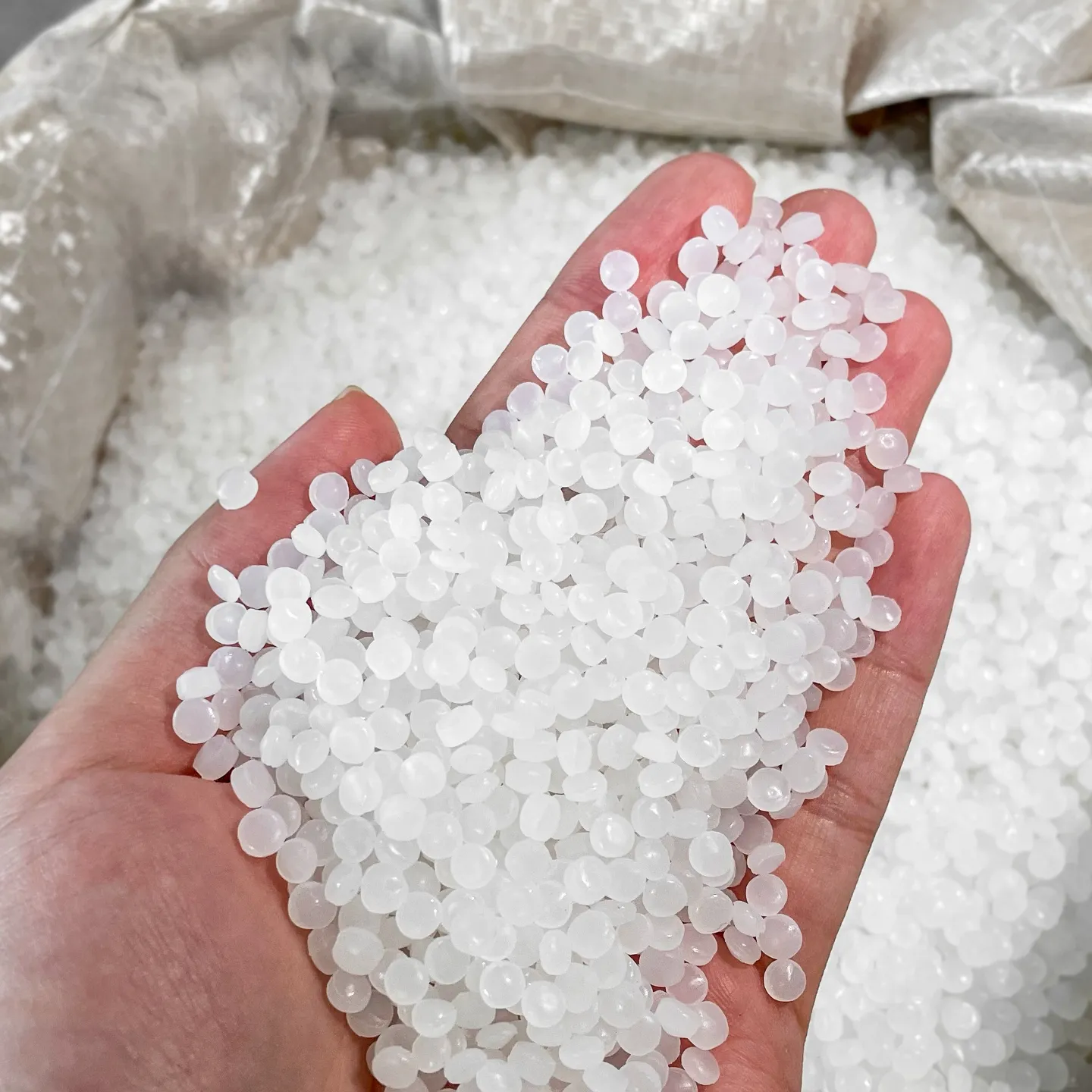
La pellettizzazione del plastico è la conversione di scarti di plastica trinciati, lavati o fusi in piccoli granuli uniformi - tipicamente 2-5 mm - che possono essere ririscaldati in attrezzature di processo standard. Il granulo è l'unità di scambio dell'industria di riciclaggio: gli intermediari quotano per tonnellata di granulo, non per tonnellata di scarto, poiché la forma e la densità volumetrica del granulo determinano come il macchina a valle lo alimenti.
Una macchina pellettizzatrice di riciclaggio del plastico si trova alla fine di una linea di riciclaggio. In alto, trinciate, lavate e asciugate; il pellettizzatore fonde il scaglie pulite, lo filtra, lo estrude e lo taglia. Il metodo di taglio è ciò che distingue le quattro tecnologie di pellettizzazione trattate di seguito.
Il risultato principale è che “Pellettizzazione” è il passo di taglio, non l'intera linea. Scegliete prima il metodo di taglio, poi dimensionate l'estrusore e il sistema di alimentazione intorno a esso.
Confronto tra i quattro metodi di pellettizzazione
Ogni pellettizzatore commerciale utilizza uno dei quattro principi di taglio. Ognuno si adatta a un materiale e a una specifica di granulo diversi.
Le quattro si dividono in due famiglie. Taglio a freddo solidifica il polimero prima che la lama lo tocchi - si tratta di pelletizzazione a filo, a volte venduta come una macchina da taglio a portale, dove le filiere raffreddate vengono alimentate attraverso un set di lamiere montate su un ponte. Taglio a caldo taglia il fusibile alla testa di forma e lo raffredda successivamente, coprendo così il raffreddamento a cerchio d'acqua, sott'acqua e raffreddamento a testa di forma a caldo ad aria.
| Metodo | Come taglia | Ideale per | Portata tipica | Forma a pellet | Energia (kWh/t) |
|---|---|---|---|---|---|
| Strand pelletizing | Strand passano attraverso un bagno d'acqua, poi vengono tagliati asciutti da un disco rotante | HDPE rigido, PP, ABS, PS | 100-2.000 kg/h | Cilindrico | 280-380 |
| pellettizzazione ad anello d'acqua | Il disco taglia le strisce fuse alla faccia del die; il cerchio d'acqua raffredda | PE, PP, masterbatch | 150-1.500 kg/h | Lente / disco | 250-340 |
| Pellettizzazione sott'acqua | La faccia del die è immersa; i granuli vengono tagliati e raffreddati contemporaneamente | PET, resina ingegnerizzata, PE ad alta produzione | 300-6.000 kg/h | Quasi sferici | 220-310 |
| Hot-die-face / air-cooled | Blade cuts at die face; pellets fall, cooled by air | Soft PE film, foam, low-melt material | 80–800 kg/h | Lens / teardrop | 200–280 |
When strand pelletizing wins
La granulizzazione a filo è l'animale da lavoro per i rifiuti rigidi puliti — scaglie di bottiglia, riciclaggio industriale, scarto di fibra. Gli utensili sono economici, il cambio delle lame richiede minuti, e la lunghezza del granulo è facile da regolare. Il punto debole è il materiale umido: i fili si rompono nella vasca d'acqua se l'umidità è superiore al ~1%, causando stop-start che distruggono la produttività.
When water-ring pelletizing wins
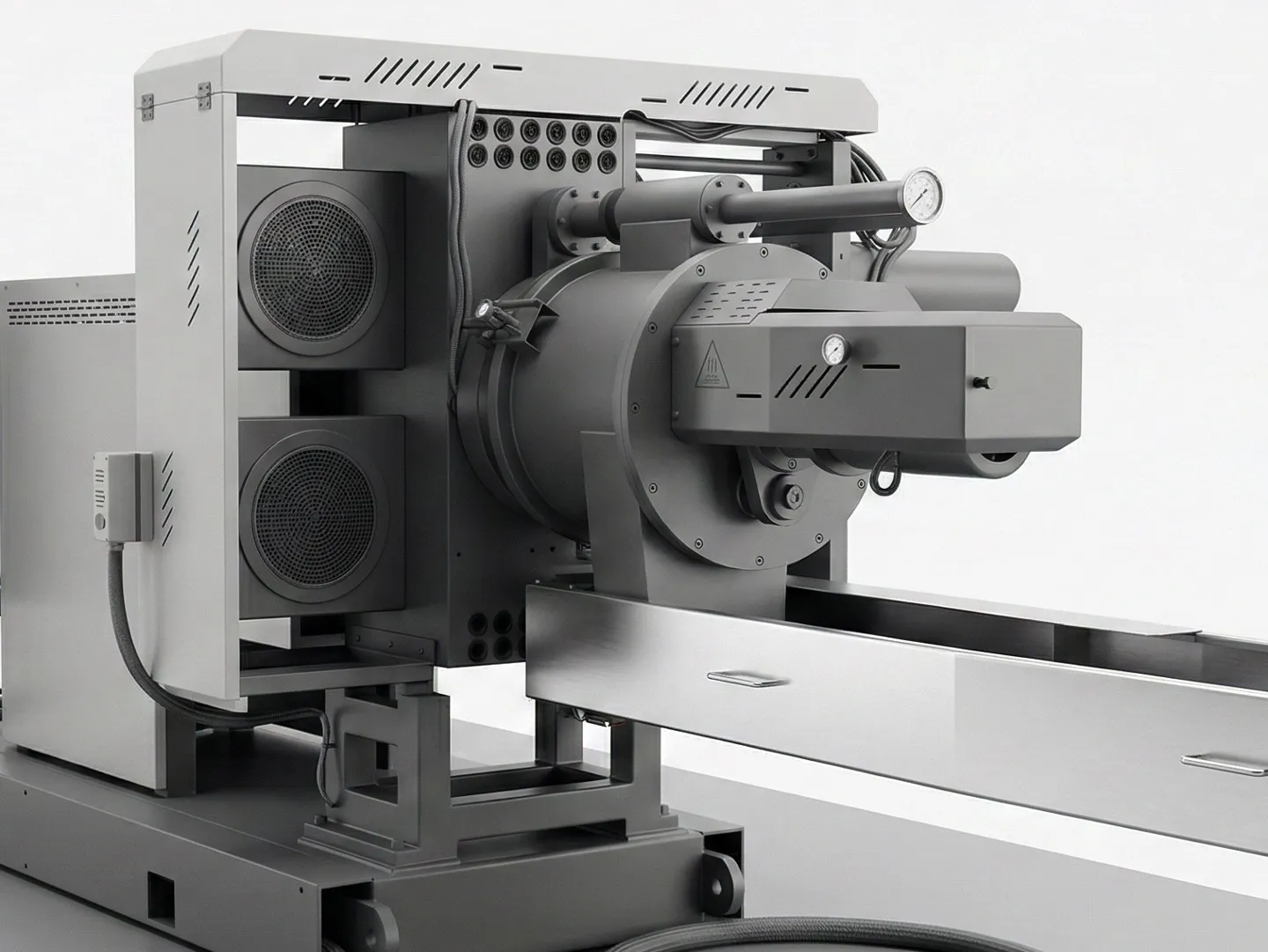
Il cerchio d'acqua si colloca tra il filo e l'underwater. La piastra di calibro è all'aperto, ma un cerchio d'acqua ad alta velocità raffredda il granulo istantaneamente dopo il taglio. Gli operatori ottengono la forma del granulo sott'acqua senza la complessità operativa di una camera d'acqua a pressione. È la scelta predefinita per le linee di masterbatch PE/PP sotto i 1.500 kg/h.
When underwater pelletizing wins
L'underwater è l'unica scelta sensata per Pellettizzazione PET superiore ai 500 kg/h e per qualsiasi linea che debba cristallizzare granuli in linea (la maggior parte delle impianti da bottiglia a bottiglia in PET). La tagliatura sommersa fornisce un granulo perfettamente sferico, migliorando l'ariaflusso del seccatore e la consistenza di alimentazione a valle. Il compromesso: controllo del processo più rigoroso, maggiore costo di capitale e dies che costano 3–5× un die per filamento.
When hot-die-face air-cooled wins
La granulizzazione a raffreddamento ad aria è il metodo di salvataggio per materiali che odiano l'acqua. Pellicola LDPE morbida con alto MFI, EVA, adesivi a fusione termica e alcuni TPE si attaccano o si ammassano nell'acqua. Il raffreddamento ad aria offre un processo più tollerante al costo di una produzione inferiore e granuli leggermente irregolari.
Layout della linea di pellettizzazione: spiegato ogni stadio
Una macchina per la granulizzazione di plastica per il riciclaggio è un nodo in una catena più lunga. Una linea di pellicola post-consumatore tipica ha questo aspetto:
- Infeed and metering — trasportatore a nastro con rilevatore metallico; dosatori a perdita di peso per masterbatch o additivi
- Pre-compaction (for film/fiber) — compressore o agglomeratore a singolo asse per materiali a bassa densità volumica che viene densificato a 300–450 kg/m³ in modo che l'estrusore possa alimentarlo
- Estrusione — monovite per scarti puliti, bivite per alimentazione contaminata o multi-materiale; le zone di degasaggio eliminano umidità e sostanze volatili
- Filtrazione a fusione — screen changer (continuous or backflush) holds 80–250 µm screens to catch paper, aluminum, gels
- Die and pelletizing head — die a filo, die a cerchio d'acqua o piastra a immersione; dimensione dei granuli regolata dal diametro dei fori e dalla velocità della lama
- Cooling and drying — water bath + centrifugal dryer (strand), or pellet/water separator + dewatering screen (underwater)
- Classification and storage — schermo vibrante rimuove le polveri e i granuli di troppa dimensione; i granuli vanno al silo o alla stazione di big-bag
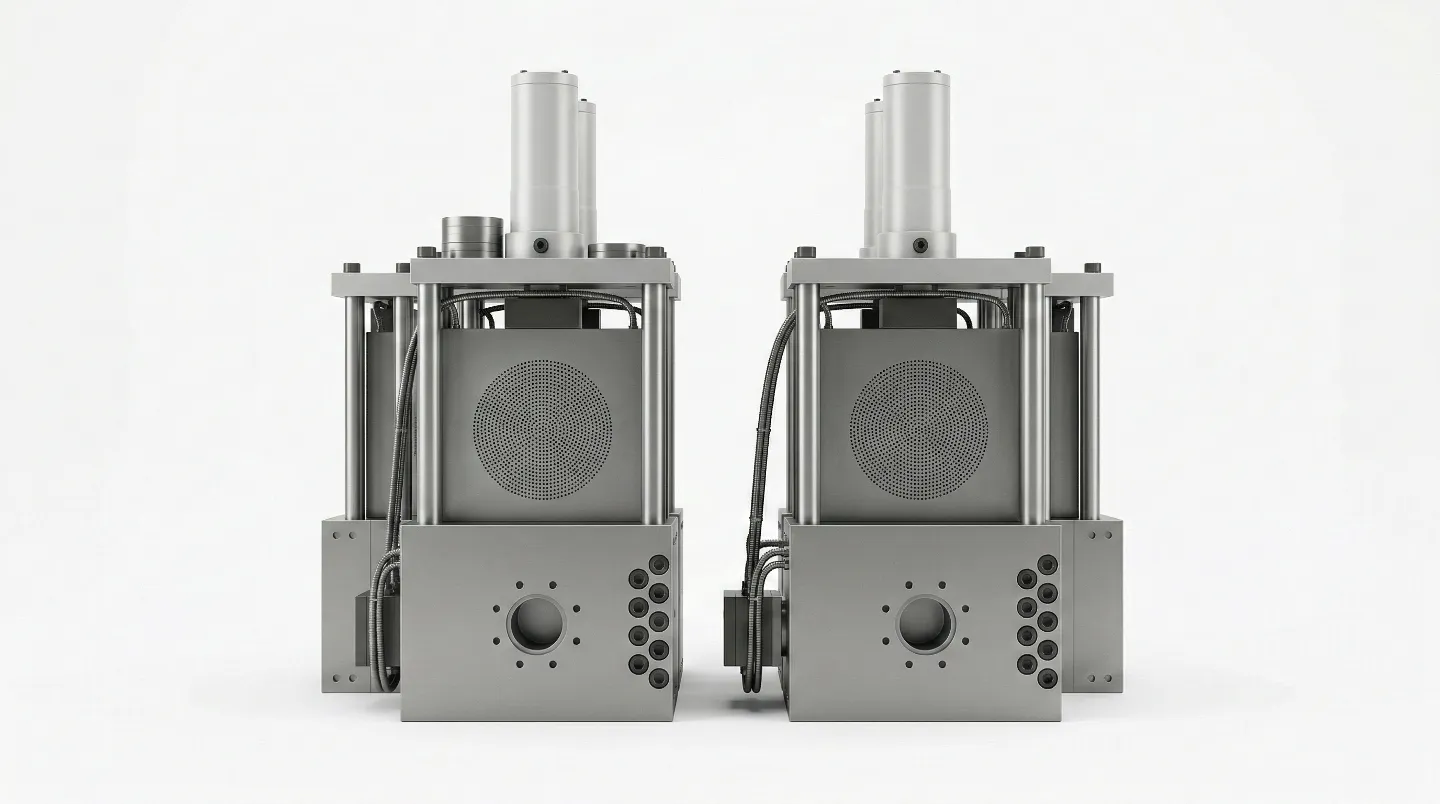
The single most-skipped stage is filtrazione a fusione. Gli acquirenti specificano la contaminazione dei granuli in ppm; un filtro di backflush a 80 µm è la differenza tra un prezzo di rivendita di $900/ton e uno di $400/ton.
Watch a Pelletizing Line in Operation
A complete film pelletizing line running the stages described above — feeding, extrusion, filtration, and cutting.
Guide specifiche per materiali: PET, HDPE, PP, pellicola PE
Pellettizzazione PET
L'idrolisi del PET avviene quando fuso umido. Ogni macchina di granulizzazione per il riciclaggio del PET necessita: Per progetti bottle-to-bottle, il European PET Bottle Platform design guidelines set out what makes a bottle stream recyclable in the first place.
- Crystallizer + dryer ahead of the extruder (drop moisture below 50 ppm)
- Estrusore a doppio rullo con due sfiati a vuoto, o a singolo rullo con degassaggio a alta vuoto
- Pellettizzatore a immersione con cristallizzatore a filo in linea (altrimenti i granuli si attaccano durante lo stoccaggio)
Salta qualsiasi di questi e l'viscosità intrinseca (IV) scende da ~0.80 a ~0.65 dl/g, il che uccide il rivendita di bottiglia di grado. Pellettizzazione PET linee rappresentano il capex più alto per tonnellata/ora tra le plastiche comuni — pianificare 2–3× una linea PP comparabile. Per il flake di bottiglia PET lavato a 300–1,500 kg/h, una PET bottle flake single-screw pelletizer offre il miglior costo per tonnellata — semplicità di un estrusore a singolo rullo con geometria specifica per PET e un sfiato vuoto dimensionato per l'umidità di grado bottiglia.
Pellettizzazione di HDPE
UN Macchina per la pellettizzazione di HDPE È la più permissiva della serie. La polvere di bottiglia in HDPE, i rifiuti di iniezione soffiata e il riciclaggio di tubi si eseguono chiaramente su un estrusore a singolo rullo con un pellettizzatore a cerchio d'acqua o a filo. Linea tipica: trituratore → lavaggio → essiccatore → estrusore a singolo rullo da 120–160 mm → filtro di backflush → pellettizzatore a cerchio d'acqua. L'uso di energia si attesta tra 280–320 kWh/ton; la vendita di pellet traccia l'HDPE vergine con uno sconto di 20–35%.
PP pelletizing
UN Macchina per pellettizzazione PP uses the same building blocks as HDPE, with two adjustments: a longer L/D screw (33:1 or 36:1) to handle PP’s narrower melt window, and a slightly cooler die. PP fiber and raffia waste — common at woven-bag plants — needs an agglomerator first because shredded fiber has a bulk density under 100 kg/m³.
PE film pelletizing
PE film pelletizing È qui che falliscono molte linee per principianti. Il film non può essere alimentato direttamente in un estrusore; la vite spingerà solo aria. La soluzione è un compattatore a rifornimento laterale che densifica il film a ~400 kg/m³ prima di raggiungere la vite, più un degassaggio pesante poiché il film stampato contiene inchiostri e adesivi. Gli estrusori a doppio rullo dominano questo settore perché tollerano l'inquinamento di 8–12% che sopravvive al lavaggio.
Scegliere un granulatore in plastica rispetto a un pellettizzatore
I termini si mescolano quotidianamente. La distinzione è importante quando si scrive un ordine di acquisto. L'identificazione della resina segue ASTM D7611, the coding standard behind the familiar 1–7 resin symbols.
| Granulatore di plastica | Plastic pelletizer | |
|---|---|---|
| What it produces | Irregular flake, 6–20 mm | Uniform pellet, 2–5 mm |
| Heat involved | None — mechanical cutting only | Yes — material is melted |
| Position in line | Upstream (size reduction) | Downstream (final product) |
| Typical anchor part | Rotor with fixed knives | Extruder + die + cutter |
| Resale value of output | Low (intermediate) | High (drop-in replacement for virgin) |
UN macchina granulatrice in plastica riduce lo scarto ingombrante a una dimensione gestibile dalla tua lavatrice e estrusore. Granulatori in plastica Non fondere nulla — se il tuo fornitore chiama una macchina di fusione un “granulatore”, sta utilizzando il termine in modo non rigoroso. Per una linea di riciclaggio completa, ti serve entrambi: un granulatore per preparare il materiale e un estrusore per finire il processo.
Energycle costruisce entrambi i livelli — vedi la gamma di granulatori in plastica per l'attrezzatura di riduzione delle dimensioni e la gamma di estrusori in plastica per le linee di pelletatura finale.
Dimensionamento della produzione e intervalli di costo per il 2026
L'errore di capitale più grande è l'acquisto di un pellettizzatore abbinato al tuo materiale di alimentazione di picco invece che alla tua media. Mirare a un utilizzo del 70–80% alla media di alimentazione; la margine assorbe le variazioni del materiale di alimentazione e i tempi di sostituzione della rete.
| Dimensione della linea | Capacità | Estrusore tipico | Investimento in capitale indicativo 2026 (USD, solo linea) | Installazione di potenza |
|---|---|---|---|---|
| Piccola / pilota | 150–300 kg/h | 75 mm singolo rullo | $55,000 – $110,000 | 75–110 kW |
| Medio | 500–800 kg/ora | 120 mm singolo rullo o 65 mm doppio rullo | $140,000 – $260,000 | 180–260 kW |
| Industriale | 1,000–1,500 kg/h | 160 mm singolo rullo o 75 mm doppio rullo | $280,000 – $480,000 | 320–450 kW |
| Grande | 2,000–3,000 kg/h | 180 mm singolo rullo o 92 mm doppio rullo | $520,000 – $850,000 | 550–780 kW |
| Bottiglia di PET da bottiglia a bottiglia | 1,500–4,000 kg/h | Doppio rullo + cristallizzatore + SSP | $1.2M – $3.5M | 700–1,400 kW |
Le gamme sono lineari (estrusore, filtro, pellettizzatore, essiccatore, controllo). Aggiungere 15–25% per l'installazione, modifiche strutturali e ricambi. Le linee di lavaggio, i trituratori e l'archiviazione sono separate.
Per una stima onesta del recupero, inserisci i tuoi numeri in questa formula di base:
Payback (years) = Capex ÷ ((Pellet price − Scrap price − Power cost − Labor) × Annual tons)
Una linea di HDPE di medie dimensioni in una regione con energia elettrica a $0.08/kWh e un range di trasformazione scarto-a-pellet a $250/ton, di solito si ripaga in 18-28 mesi.
Errori comuni che uccidono la qualità del granulo
Questi cinque errori sono alla base della maggior parte delle lamentele sulla qualità dei pellet che vediamo durante la messa in servizio:
- Skipping the metal detector. Un singolo bullone in acciaio inossidabile distrugge un set di schermi, graffia la vite e produce 200 kg di pellet fuori specifica con macchie nere prima che qualcuno se ne accorga.
- Undersized melt filter. Un filtro a 200 mesh su una linea da 1.000 kg/h si svuota ogni 4 minuti. Specifica il filtro per la tua alimentazione più sporca, non per la più pulita.
- Water bath too warm. Sopra i 60 °C, le estrizioni in HDPE rimangono gomose e la lama del pelletizzatore masticano invece di tagliare. Mantieni l'ingresso del bagno a 30-40 °C con un refrigeratore.
- Wrong screw L/D for the material. Un avvolgimento a 25:1 costruito per PE non scioglie correttamente e degassa PP — ottieni materiali non sciolti e gel visibile nei pellet.
- No pellet sieve. Fines (5 mm) jam downstream feeders. A 2-deck vibrating sieve costs under $4,000 and removes the complaint.
Maintenance Essentials
- Quotidiano: Ispezionare la piastra di calibro per fori ostruiti; pulire lo scambiatore di schiuma; controllare la temperatura dell'acqua nel sistema di raffreddamento
- Settimanale: Verificare la coppia del cilindro e l'amperaggio del motore (l'aumento degli amperaggi indica l'usura del cilindro); ispezionare le lame del tagliatore di granuli
- Mensile: Lubricate gearbox; check heater band function on each zone; inspect screen changer seals
- Every 2,000–4,000 hours: Misurare l'usura del cilindro e del barile (sostituire quando la tolleranza supera 0,5 mm per lato)
- Annualmente: Full inspection of screw, barrel, die plate, gearbox, and electrical systems
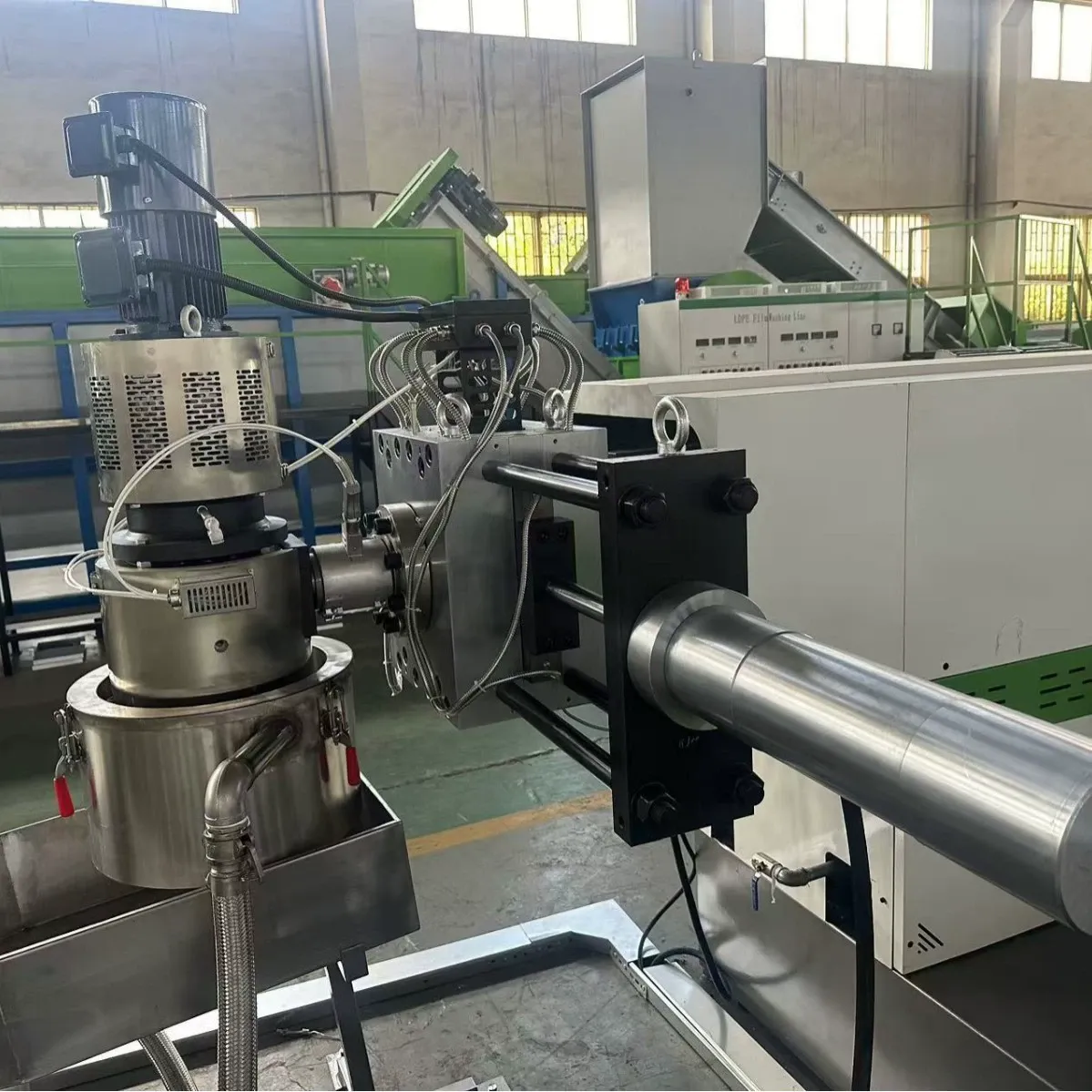
For complete maintenance programs, see our pelletizer maintenance checklist e il La stessa testa installata su una linea di riciclaggio di film - serbatoio dell'estrusore a destra, cambiatore di schermo al centro e il tagliatore verticale che si inserisce direttamente nella camera del cerchio d'acqua. Le teste a cerchio d'acqua si montano compattamente perché i pellet lasciano come una sospensione piuttosto che avere bisogno di un canale di raffreddamento. Sopra.
Domande frequenti
La differenza principale tra l’estrazione a estrusione e la granulazione per compressione risiede nella tecnologia di formazione del pellet: nella prima il materiale plastico viene fuso e successivamente estruso attraverso un ugello di uscita, mentre nella seconda il materformato in palline è ottenuto mediante compressione meccanica.
La pelletizzazione per estrusione scioglie la plastica in un estrusore a vite e la taglia dopo il die — è questo che fa ogni macchina di pelletizzazione di riciclaggio di plastica in questa guida. La pelletizzazione a compressione (usata per biomassa e alcuni polveri) preme il materiale attraverso un die a anello senza scaldarlo completamente. L'attrezzatura a compressione non può trasformare i rifiuti termoplastici in pellet di qualità vendibile.
Una macchina di pelletizzazione può gestire PET, HDPE e PP?
Sì meccanicamente, no commercialmente. La geometria della vite, la temperatura del die e il secco a valle per il PET sono abbastanza diversi da HDPE/PP da richiedere un arresto completo, la rimozione della vite e 4–8 ore di pulizia per il passaggio di materiali. Linee dedicate per polimero quasi sempre ripagano più rapidamente di una “linea universale” che funziona il 50% del tempo.
How small can a plastic recycling pelletizing machine get?
La linea commercialmente più piccola funziona circa 80-100 kg/h su un estrusore a vite singola da 65 mm, valutato intorno a $35.000-$55.000 nel 2026. Qualsiasi cosa al di sotto è un'unità hobby — adeguata per R&D o preparazione del filamento per la stampa 3D, non per la produzione di vendita.
What pellet contamination level do buyers accept?
Per il riciclaggio di HDPE e PP commerciali, i clienti accettano solitamente 200-500 ppm di particelle estranee. Le specifiche di qualità alimentare e fibra scendono sotto i 50 ppm, il che richiede un filtro di backflush continuo e spesso una seconda fase di filtraggio del materiale fuso. Le specifiche del cliente seguono generalmente la APR Design® Guide, il riferimento contro cui la maggior parte dei riciclatori nordamericani scrive i loro criteri di accettazione.
How long do pelletizing blades last?
Sull'-scarto PE/PP pulito, le lame del taglierino durano 800–2,000 ore tra riciclaggi. Sui materiali riempiti di vetro o minerali, la durata delle lame scende sotto le 100 ore — pianificare l'uso di lame in carburo di tungsteno o rivestite per il materiale abrasivo.
Is air-cooled pelletizing cheaper than underwater?
Il capitale sì — una testa refrigerata ad aria è 30–50% più economica rispetto all'acqua. L'operazione dipende dal materiale. Per LDPE e EVA morbidi, la refrigerazione ad aria vince su entrambi gli assi. Per PE ad alta produzione o qualsiasi PET, la refrigerazione sott'acqua vince sull'operazione per tonnellata anche se la macchina costa di più.
How much floor space does a pelletizing line need?
Una linea da 500 kg/h si inserisce approssimativamente in un'area di 25 × 8 m (200 m²), inclusa la sezione di raffreddamento e il silo a granuli. Una linea da 2,000 kg/h per PET con cristallizzatore e SSP richiede 60 × 15 m (900 m²) più la centrale di lavaggio.
Passo successivo
La linea di granulazione giusta è quella che si adatta al tuo materiale di partenza, alla tua tariffa energetica e alle specifiche del tuo acquirente target — in quest'ordine. Se conosci il materiale e la tonnellata approssimativa, il team di ingegneria di Energycle specificerà l'estrusore, il granulatore e la filtrazione in una proposta di una pagina.
quattro metodi di pelletizzazione confrontati Pronto a specificare una linea? Esplora la gamma di macchine pelletizzatrici in plastica contattare il nostro team di ingegneria contatta il nostro team di ingegneria direttamente.
Approfondimenti correlati:
- Come fare granuli di plastica: processo in 7 passaggi — guida al processo che si accompagna a questa guida alla selezione
- Plastic pelletizer machines — the full Energycle plastic pelletizing machine range
- PET bottle flake single-screw pelletizer — linea dedicata a flake di bottiglia in PET
- Macchina per granulazione dei film — linea dedicata a pellicola in PE
- Sistema di estrusore bivite — per materiali contaminati o multi-materiali
- Granulatori in plastica — attrezzature di riduzione delle dimensioni che alimentano il granulatore
- trinciatore a singolo asse — prima fase per scarti ingombranti
