

Melt Filtration for Stable Pellet Quality
Hydraulic Screen Changer for Plastic Pelletizing Lines
Match melt filtration to feedstock contamination, extrusion output, and final pellet grade. Energycle supplies custom hydraulic slide-plate, dual-column continuous, and self-cleaning backflush screen changers sized around each recycling pelletizing line.
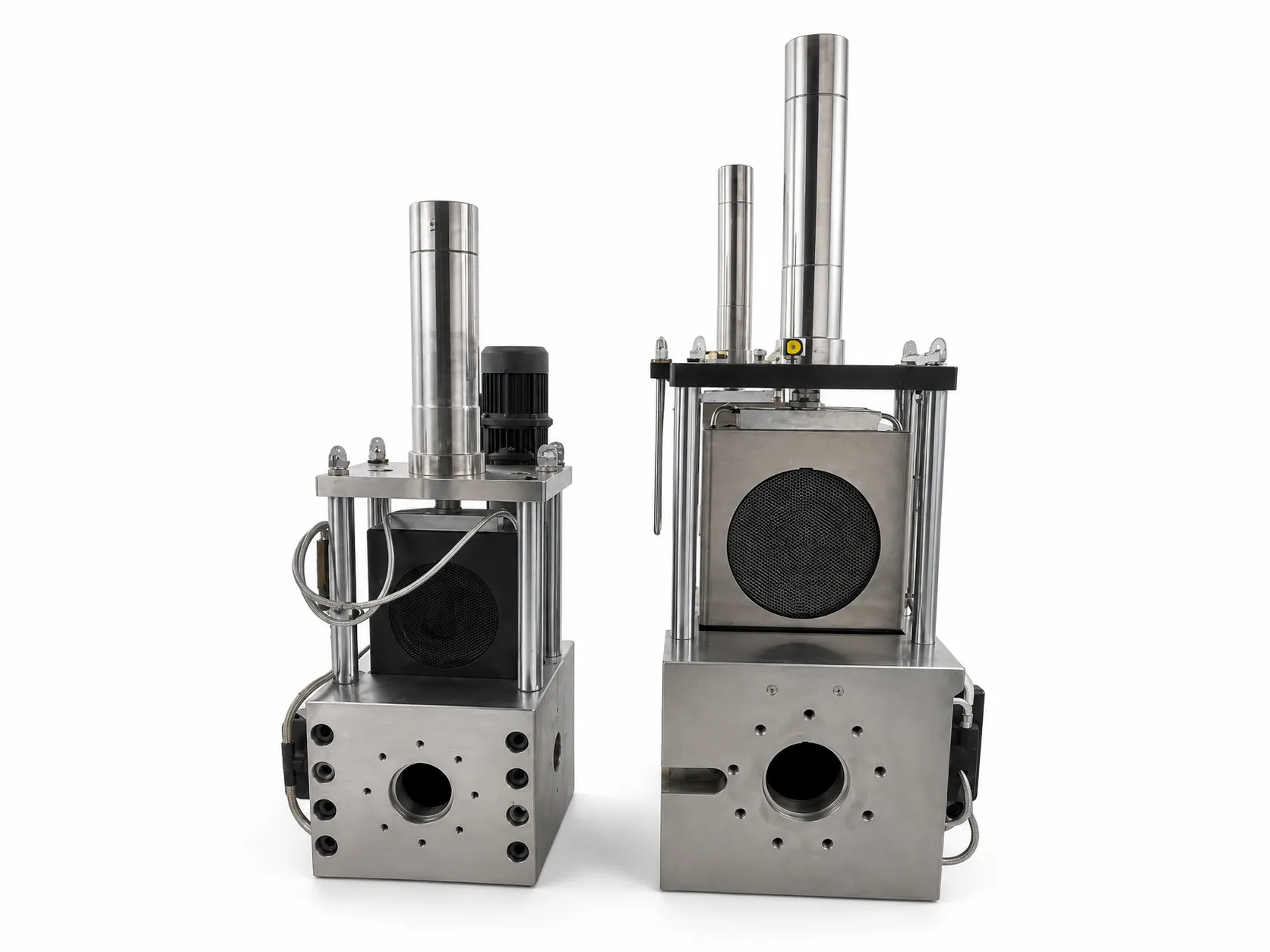
Three Filtration Routes
Choose the Screen Changer Around Contamination and Output
The right design is not simply the largest filter. It must hold stable melt pressure without creating excessive residence time, heat history, or interruption at the pelletizing head.
Hydraulic Slide-Plate Type
Best for clean post-industrial scrap and washed PP/PE flakes with low to moderate contamination. It is compact, economical, and easy to service, but a screen change can create a brief pressure fluctuation.
Dual-Column Continuous Type
One filtration channel remains online while the second screen is changed. This supports longer production runs and steadier die pressure on medium-contamination recycling lines with higher output.
Self-Cleaning Backflush Type
Reverse-flow cleaning removes accumulated contamination from the active filter area. It suits higher dirt loads, long campaigns, and lines where frequent manual screen changes would reduce output.
Screen Changer Type Comparison
Use contamination level, acceptable pressure variation, and required production continuity as the first three selection criteria.
| Auswahlfaktor | Hydraulic Slide-Plate | Dual-Column Continuous | Self-Cleaning Backflush |
|---|---|---|---|
| Recommended Feed | Clean film scrap, washed flakes, post-industrial regrind | Washed post-consumer flakes and mixed recycled feed | Higher paper, label, ink, or fine solid load |
| Production Continuity | Short pressure disturbance during change | Near-continuous with one filter channel online | Continuous cleaning with periodic contaminant purge |
| Pressure Stability | Good on clean, consistent feed | Very good during screen replacement | Best for long runs with changing dirt load |
| Betriebskomplexität | Niedrigster | Mäßig | Highest; needs tuned backflush logic |
| Best Project Fit | Cost-controlled standard pelletizing | Commercial lines where downtime is expensive | High-output recycling with difficult contamination |
Pellet Grade Control
Selecting an 80-250 µm Filter Opening
A smaller opening captures finer contamination but increases melt resistance and can shorten the interval between cleaning or screen replacement. Selection must balance pellet quality, pressure stability, and net throughput.
| Filter Opening | Typical Finished Grade | Typical Use | Operating Tradeoff |
|---|---|---|---|
| 180-250 µm | Utility / commodity recycled pellets | Internal reuse, thick-wall products, non-appearance parts | Lower pressure rise and longer screen life |
| 120-150 µm | Standard commercial recycled pellets | General extrusion and injection applications | Balanced cleanliness, output, and change frequency |
| 80-100 µm | Higher-value, fine-filtered pellets | More demanding surface finish and downstream consistency | Higher differential pressure; needs larger area or continuous cleaning |
Commercial impact: The single most-skipped stage is melt filtration. Buyers spec pellet contamination in ppm; a backflush filter at 80 µm is the difference between a $900/ton resale price and a $400/ton one.
Actual pellet value still depends on polymer purity, color, odor, moisture, melt flow, and contracted buyer specifications.
Pressure-Based Operation
Set Screen Changes by Differential Pressure, Not the Clock Alone
Record the clean-screen baseline at stable material, screw speed, and melt temperature. A rising pressure difference across the filter then becomes a direct indicator of contaminant loading.
Record the Clean Baseline
Measure pressure before and after the changer only after melt temperature and output are stable.
Trend the Pressure Difference
If screw speed and temperature are steady while P1 rises and P2 remains stable, the screen is loading.
Change Before Output Falls
Trigger screen change or backflush before pressure approaches the approved limit or begins to destabilize die flow and pellet cutting.
Tune the Maintenance Interval
Use actual pressure curves and contamination records to optimize filter opening, screen area, and cleaning frequency.
Record the Clean Baseline
Measure pressure before and after the filter at stable operating conditions.
Trend Differential Pressure
Separate genuine filter loading from temperature or output changes.
Change Before Instability
Act before pressure affects extrusion output or die-head cutting.
Tune the Interval
Optimize screen opening and area from real production data.
Reference Screen-Change Frequency
Time-based frequency is only a starting point. The final trigger must follow differential pressure, pellet quality, and the approved pressure ratings of the extruder, changer, and die.
Sauberer postindustrieller Schrott
Often one change per shift or longer when polymer type and feed preparation remain consistent.
Washed Post-Consumer Feed
Commonly requires checks every 1-4 hours, depending on paper, labels, aluminum, ink, and washing performance.
Difficult or Variable Feed
Manual screens may load in 10-60 minutes; a larger dual-column or backflush design can recover productive run time.
Systemintegration
Match the Screen Changer to the Extruder and Pelletizing Head
The filtration section sits between melt generation and pellet formation. Incorrect sizing can restrict the extruder upstream or create unstable flow at the die downstream.
Extruder Output and Melt Viscosity
Screen area must support the real kg/h at the polymer’s operating temperature and viscosity. Heat-sensitive or high-viscosity materials need lower residence time and more conservative pressure loading.
Upstream MatchConnection and Flow Channel
Inlet, outlet, flange, heating zones, and internal flow path must match the extruder barrel and downstream adapter without dead zones.
Heating and Instrumentation
Independent heating and pressure measurement before and after the filter make startup safer and differential-pressure decisions reliable.
Pelletizing Head Stability
Water-ring, strand, and underwater pelletizing heads all require steady melt flow. The screen change sequence must avoid starving or surging the die.
Pressure Interlocks
Alarm and change thresholds must remain below the approved limits of the extruder, hydraulic changer body, adapters, and pelletizing die.
Produktgalerie
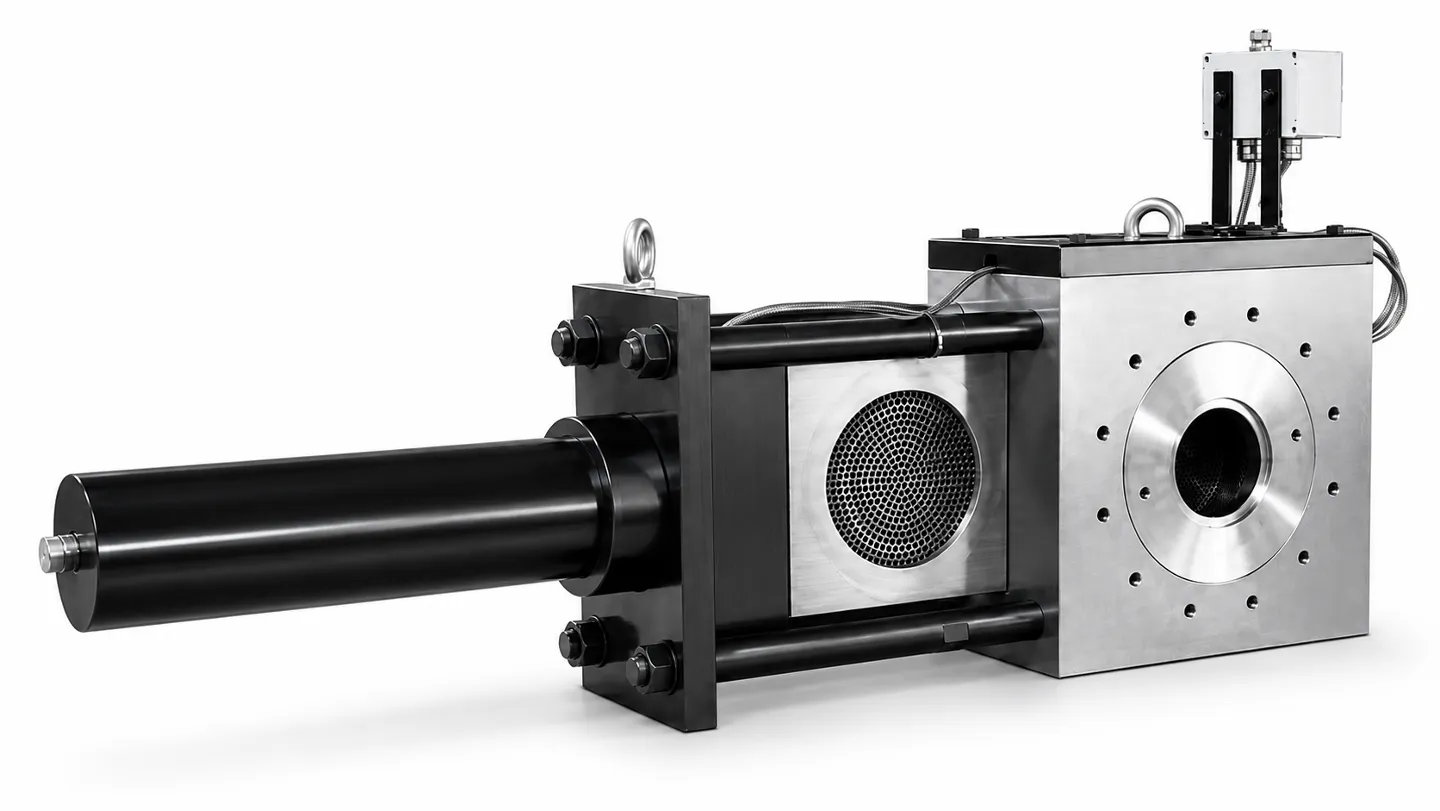
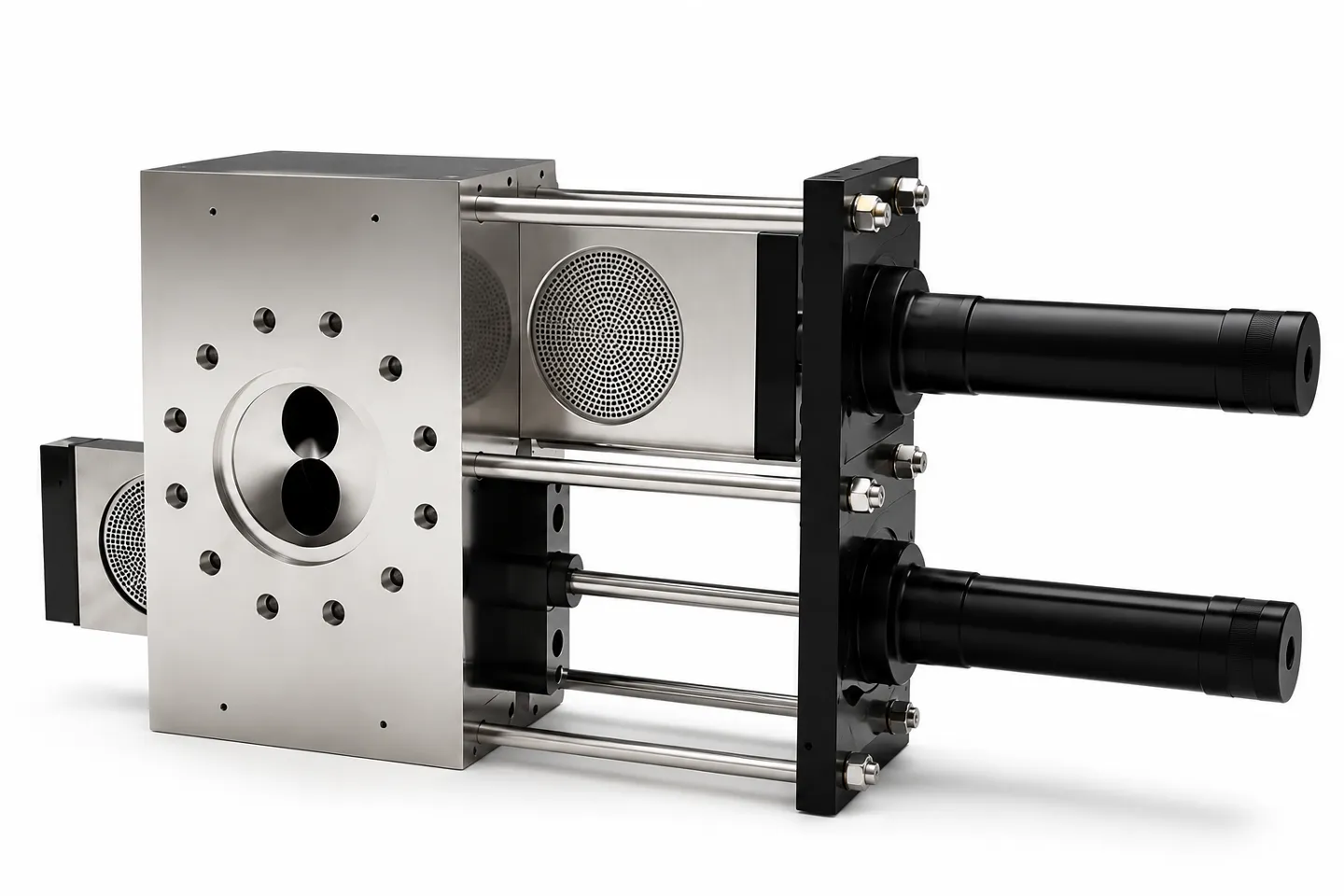
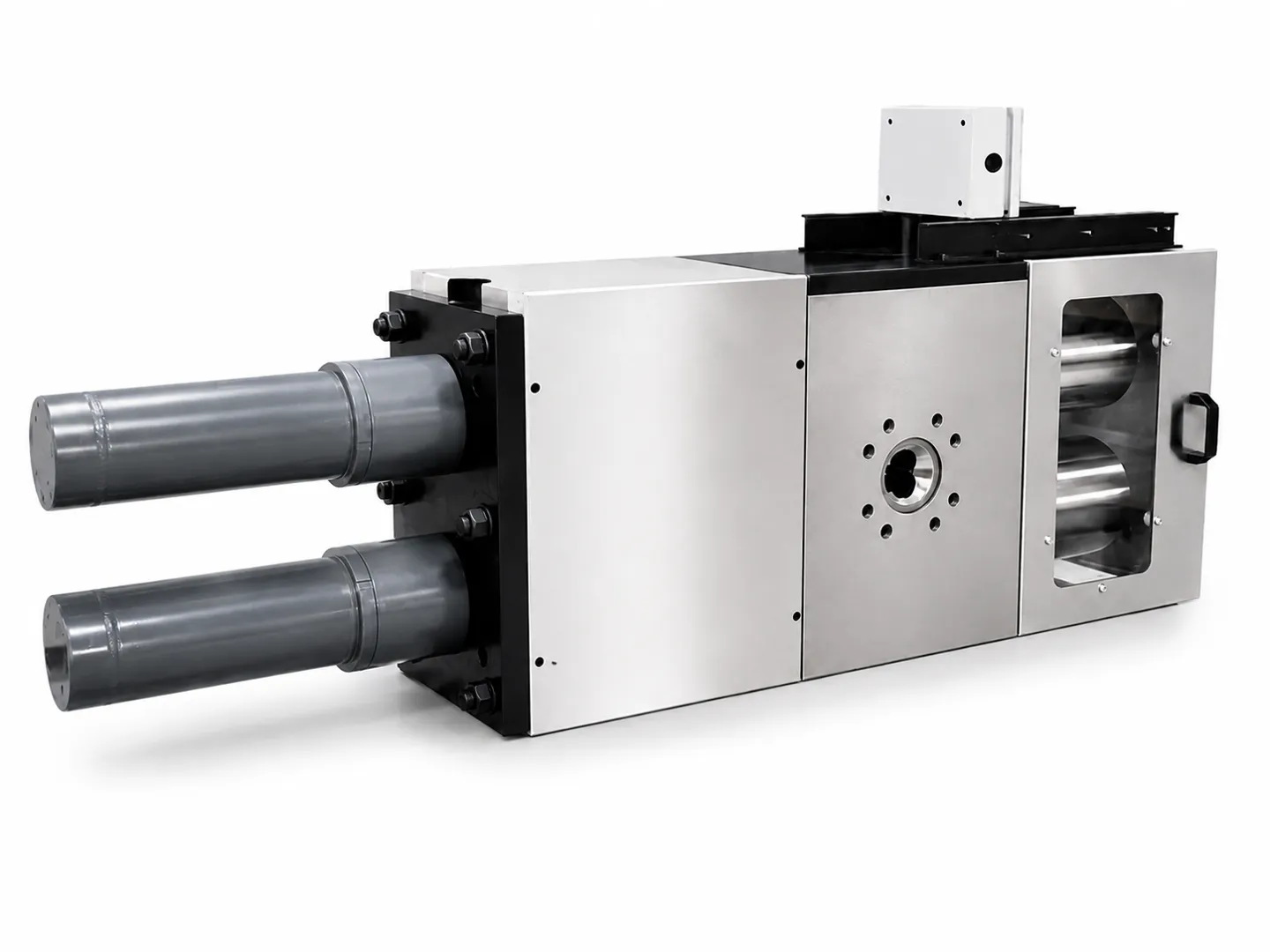
Hydraulic Screen Changer Configurations
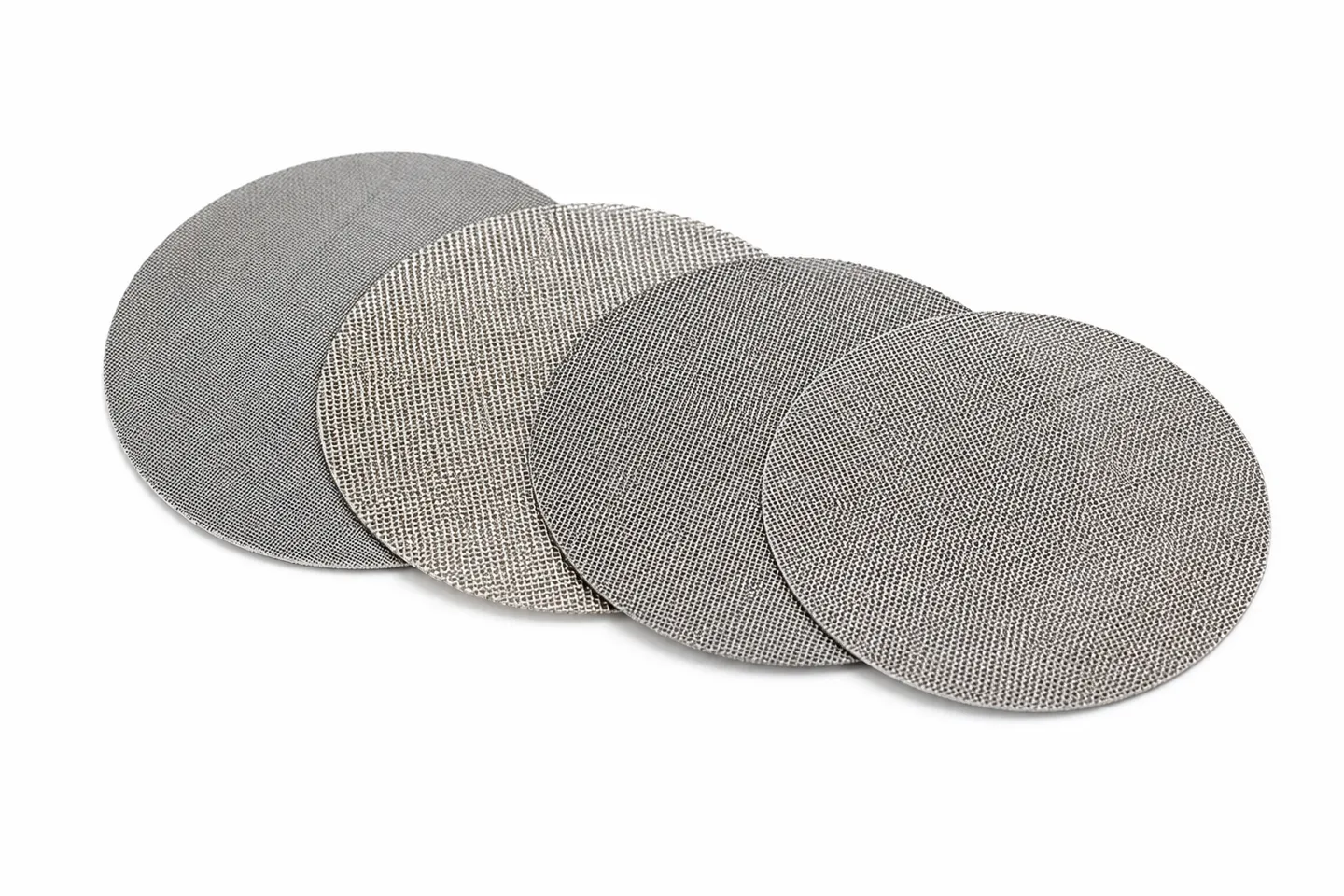
Reference views of custom single-plate, double-plate, dual-column, and replaceable melt filter screen configurations.
Related Pelletizing Equipment
Use the screen changer as part of a complete filtration and pellet production route.
Einschnecken-Pelletierer
Standard recycling extrusion for prepared flakes, regrind, and selected flexible plastics.
Schneidwerk-Verdichter-Pelletieranlage
Integrated densification, extrusion, filtration, and pelletizing for film and raffia.
Doppelscheiben-Kompositionsanlage
Advanced mixing, devolatilization, melt filtration, and pelletizing for recycled compounds.
Selection Questions
Hydraulic Screen Changer FAQ
Answers to common questions about filter opening, differential pressure, screen life, and pelletizing-line integration.
Choose a hydraulic slide-plate changer for cleaner feed and cost-controlled lines, a dual-column continuous changer when pressure stability and uptime matter, and a self-cleaning backflush system for higher contamination and long production campaigns.
Use 180-250 micron filtration for utility-grade pellets and lower pressure drop, 120-150 micron for balanced commercial output, and 80-100 micron when the buyer requires finer contamination control. The smaller opening needs more filter area or more frequent cleaning.
Track pressure before and after the filter at stable screw speed and melt temperature. A sustained increase in differential pressure indicates screen loading. Set the change threshold below the approved pressure limits and before die flow or pellet cutting becomes unstable.
Clean industrial scrap may run for a shift or longer. Washed post-consumer material may need checks every 1-4 hours. Difficult feed can load a manual screen in 10-60 minutes, which is where a larger continuous or backflush configuration becomes valuable.
No. Melt filtration removes solid contamination. Drying and vacuum degassing handle moisture and volatiles, while sorting and washing must control mixed polymers before extrusion.
Send the polymer type, contamination description, target kg/h, required filter opening, extruder screw diameter and output, melt temperature, connection dimensions, pelletizing method, and the current pressure before the die.
Match Melt Filtration to Your Pellet Grade
Tell us your polymer, contamination level, target throughput, filter opening, extruder size, and pelletizing method. We will recommend the screen changer type, effective filter area, pressure instrumentation, and connection layout.