

Feuchtzerkleinerer · Flaschengranulator · Einmaschinen-Vorwaschung
Nass-Crusher und Flaschen-Granulator
A wet plastic granulator combines size reduction, cooling, and initial rinsing. Water injection helps carry away loose contamination and control heat buildup as sorted plastic is cut, preparing the regrind for downstream washing, separation, and drying.
Wet Granulation for Contaminated Plastic Streams
Water is added directly to the cutting chamber to combine size reduction with cooling and an initial rinse. Match the machine and water circuit to the feedstock, contamination, and downstream washing process.
Integrierte Vorwäsche während des Zerkleinerns
Water helps carry away loose dirt and dust released during cutting. Label fragments, caps, and adhesive residues may still need dedicated downstream separation and washing.
Kontinuierliche Kühlung
Die Kühlung im Inneren der Kammer trägt dazu bei, die Wärmeentwicklung zu begrenzen, sodass die Flocken während der Granulierung weniger wahrscheinlich verschmieren, weich werden oder sich zersetzen.
Cooling and Blade Care
Water helps control cutting temperature. Blade wear also depends on sand, metal contamination, blade material, clearance, and maintenance; water injection alone does not guarantee longer service life.
Regrind Quality Control
Flake-size distribution and fines depend on feedstock, rotor geometry, knife condition, screen opening, and feeding rate. Check the regrind against downstream washing and processing requirements using representative material.
Wet Line Integration
Integrates with washing lines for sorted PET bottles or HDPE and PP containers. Coordinate wet crushing with upstream contaminant removal and downstream washing, separation, and drying.
Benutzerdefinierte Klingen- und Bildschirmkonfiguration
Match rotor geometry, blade grade, cutting clearance, and screen opening to the feedstock and required regrind. Confirm the selected configuration in the equipment specification.
Typische Anwendungen für einen Nasskunststoffgranulator
Diese Maschine ist besonders wertvoll, wenn das Material vor dem nächsten Wasch- oder Trocknungsschritt sowohl zerkleinert als auch nass gereinigt werden muss.
Post-Consumer-Flaschen und -Behälter
Crushes sorted PET bottles or HDPE and PP containers within the approved feed dimensions. Plan each material stream around its downstream separation and washing requirements.
Interne Nassschrottverwertung
Nützlich zur Umwandlung von Form-, Blasform- oder Beschnittabfällen in sauberere, wiederverwendbare Flocken, wenn Verunreinigungen vorhanden sind.
Vorbereitung des Waschanlagen-Rohmaterials
Prepares screened regrind for sink-float tanks, friction washers, dewatering machines, and thermal dryers. Match the particle-size distribution to the next process stage.
Recycling von starren und flexiblen Kunststoffen
Selected configurations can process sorted rigid plastics or PE/PP film. Film requires matched feeding, rotor, screen, and wet discharge arrangements; confirm suitability with representative material.
Wie das Nasskunststoffzerkleinerungsverfahren funktioniert
Ein kontinuierlicher Nassgranulationsprozess, der Schneiden, Waschen, Kühlen und Austragen in einem Schritt kombiniert.
Zuführmaterial mit Wassereinspritzung
Kunststoff gelangt in die Schneidkammer, während Wasser auf den Zuführ- und Schneidbereich gesprüht wird.
Zerkleinern und Granulieren
The rotor and fixed knives cut the material while water helps control heat buildup. Blade grade and cutting geometry depend on the selected configuration.
Lose Verunreinigungen abwaschen
Wasser hilft dabei, Schmutz, Papier, Staub und andere leichte Rückstände, die beim Schneiden entstehen, abzutransportieren.
Mahlgut in der Austragsgröße
Regrind passes through the selected screen and moves to downstream washing and separation, followed by dewatering and drying. Confirm the required particle-size distribution with a material trial.
Nasskunststoffgranulator vs. Standard-Trockengranulator
A dry granulator can suit clean, dry production scrap. Consider wet granulation when the material needs washing and the line can handle wet discharge, water treatment, and subsequent drying.
| Auswahlfaktor | Nasskunststoff-Granulator | Standard-Trockengranulator | Nach dem Trockenzerkleinern separat waschen |
|---|---|---|---|
| Umgang mit kontaminiertem Material | Suited to sorted contaminated feed entering a wet process | Besser für sauberere Rohstoffe | Cleaning begins in the downstream washing stage |
| Schaufelkühlung | Injected water helps control cutting temperature | Typically no water injection; cooling depends on design | Cooling depends on the selected dry granulator |
| Vorwascheffekt | Initial rinsing during size reduction | Keine integrierte Waschanlage | Erfordert anschließend einen vollständig separaten Waschgang. |
| Bester Anwendungsfall | Sorted bottles, containers, or suitable film in a wet line | Reinigung von internen Abfällen und vorgereinigten Materialien | Wird verwendet, wenn die Anlagenanordnung das Zerkleinern und Waschen bereits trennt. |
| Linienintegration | Combines cutting and rinsing; requires a water circuit | Can operate without a washing stage for suitable clean scrap | Separate crushing, transfer, and washing equipment |
Horizontal wischen, um die vollständige Tabelle zu sehen.
Technische Daten
Reference models for wet crushing and granulation of plastic waste. Throughput depends on material, bulk density, contamination, screen opening, and feeding conditions. Confirm blade grade and rotor configuration in the quotation and validate output with representative feedstock.
| Modell | Rotordurchmesser | Drehzahl | Motorleistung | Klingenmaterial | Kapazität (kg/h) |
|---|---|---|---|---|---|
| ERM-WPG-500 | 500 mm | 550 U/min | 45 kW | SKD11 / D2 | 500 – 800 |
| ERM-WPG-600 | 600 mm | 500 U/min | 55 kW | SKD11 / D2 | 800 – 1500 |
| ERM-WPG-700 | 700 mm | 428 U/min | 90 kW | SKD11 / D2 | 1500 – 2000 |
| ERM-WPG-800 | 800 mm | 370 U/min | 110 kW | SKD11 / D2 | 2000 – 2500 |
Horizontal wischen, um die vollständige Tabelle zu sehen.
Maschinengalerie
Wichtige Komponenten und Ansichten von Nassgranulatoren, die in Kunststoffrecyclinganlagen eingesetzt werden.
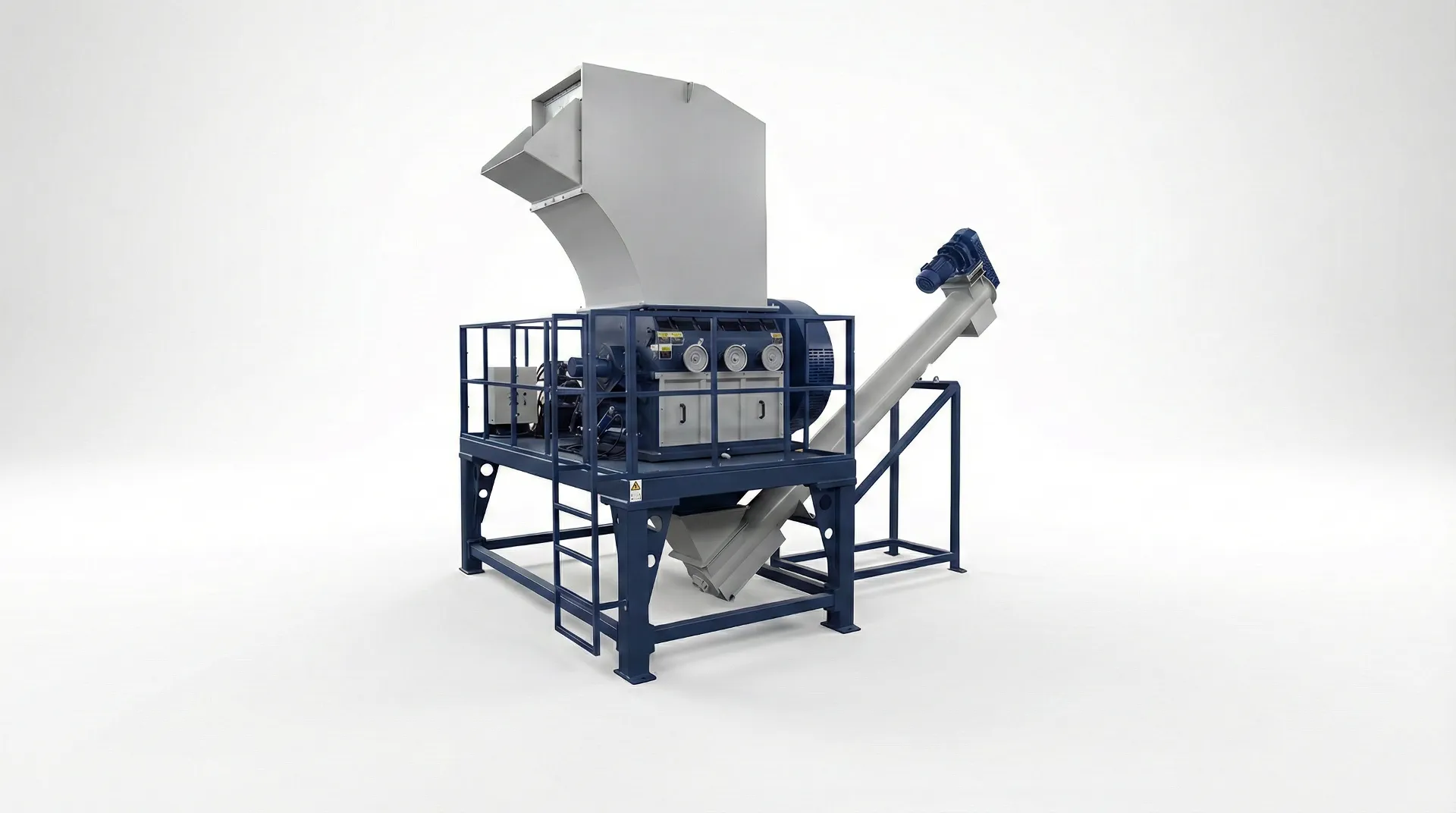
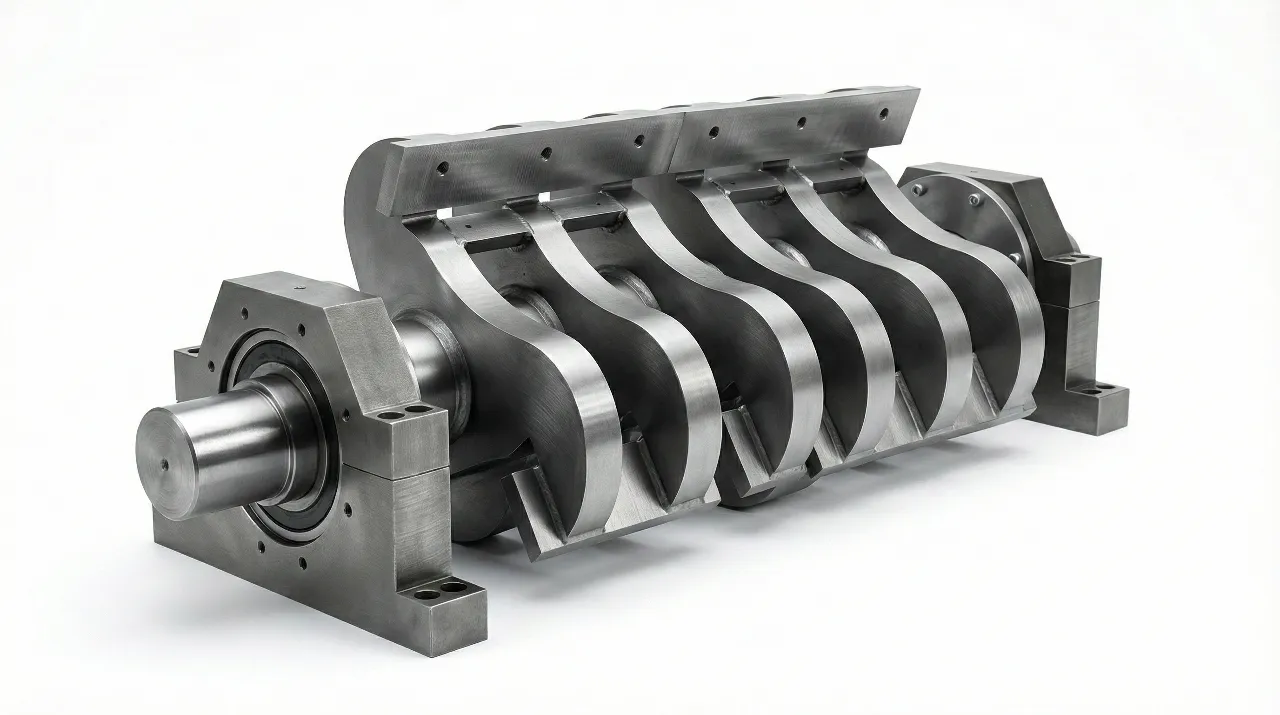
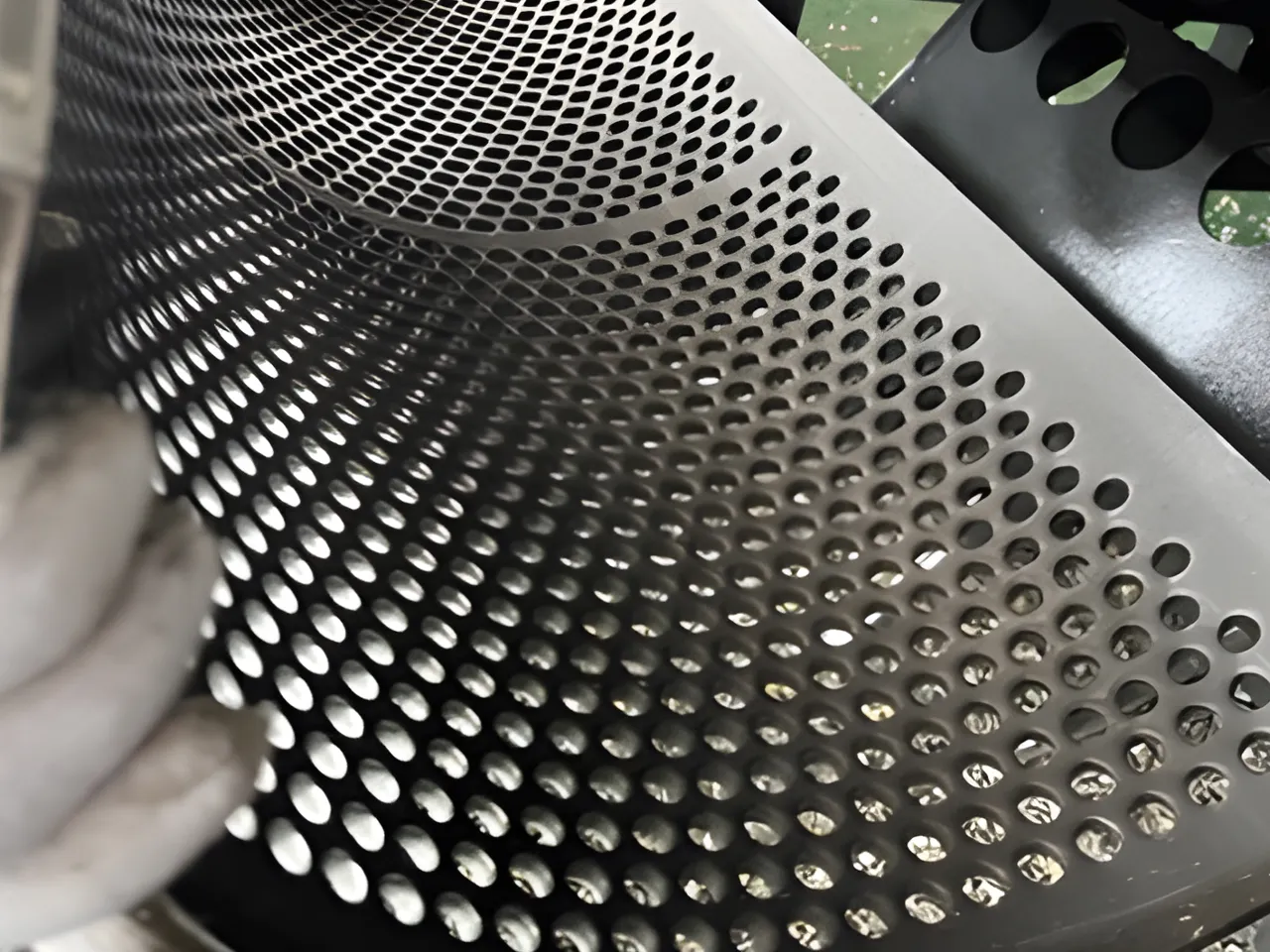
Kunststoffflaschenzerkleinerer: PET & HDPE Flaschenrecycling
Used as a Plastflaschen-Zerkleinerer, the wet granulator reduces sorted PET or HDPE bottles to regrind while providing cooling and an initial rinse. Separate pre-washing, label removal, and downstream cleaning depend on the incoming contamination and required output quality.
PET-Flaschenzerkleinerung
Processes sorted PET bottles within the approved feed dimensions. Screen selection and operating conditions determine the flake-size distribution. Released cap and label fragments still require downstream separation, while adhesives may require hot or friction washing.
HDPE-Behälterzerkleinerung
Processes sorted HDPE milk and detergent bottles after emptying and suitable pretreatment. Water rinsing does not neutralize chemical residues or establish food-contact suitability; assess the feedstock and complete recycling process.
Rotor and Screen Setup for Bottles
Where specified, V-cut geometry provides a shearing action on hollow bottles. Confirm rotor design, knife clearance, and screen opening for the selected model. Screen aperture alone does not guarantee flake dimensions or fines content.
Vorwaschung während des Zerkleinerens
Specify injection flow, recirculating-water treatment, and fresh-water make-up separately. Required flow and cleaning performance depend on throughput, contamination, and the water circuit; verify them with representative feedstock.
Zuverlässiger Support über den gesamten Lebenszyklus der Anlage hinweg
Von der Anlagenplanung bis zur routinemäßigen Wartung sorgt unser Serviceteam dafür, dass Ihre Anlagen sicher, zuverlässig und effizient betrieben werden.
1 Jahr eingeschränkte Garantie
Die Garantie umfasst Herstellungsfehler an wesentlichen mechanischen und elektrischen Komponenten für ein Jahr. Normale Verschleißteile und Schäden, die durch unsachgemäßen Betrieb verursacht wurden, werden gesondert behandelt.
Installationshinweise
Wir unterstützen bei der Anlagenplanung, den Fundamenten, den Versorgungsanschlüssen, den Platzanforderungen, der Anbindung an die Produktionslinie sowie der Inbetriebnahme, um eine reibungslose Installation und einen zuverlässigen Betriebsstart zu gewährleisten.
Ersatzteilversorgung
Ersatzteile für Verschleißteile, Lager, Dichtungen, Sensoren, elektrische Komponenten und andere Wartungsartikel sind für die planmäßige Wartung und den langfristigen Betrieb erhältlich.
Technische Unterstützung
Fernfehlerbehebung, Betriebsempfehlungen, Wartungsanleitungen und optionaler Vor-Ort-Service stehen zur Verfügung, wenn Ihr Projekt zusätzliche Unterstützung benötigt.
Häufig gestellte Fragen
Häufig gestellte Fragen zu Nasszerkleinerung, Schaufelkonfiguration, Wasserverbrauch und Linienintegration.
Water injection combines cutting with cooling and an initial rinse. It can help carry away loose contamination before downstream washing. Results depend on the material, contamination, knife condition, screen opening, and water circuit.
No. Wet granulation provides size reduction and initial rinsing. Depending on the feedstock and required output, a line may also need pretreatment, hot or friction washing, separation, rinsing, and drying. Wet crushing alone does not establish suitability for food-contact use.
The reference models list SKD11 / D2 blades. Confirm the blade grade, rotor geometry, cutting clearance, and screen opening for the selected model in the quotation. Validate flake-size distribution and fines with representative material.
Applications include sorted PET bottles, HDPE or PP containers, and suitable production scrap. PE/PP film requires matched feeding, rotor, screen, and discharge arrangements. Confirm each material stream, feed dimensions, contamination, and required output before choosing the configuration.
Confirm water injection flow, circulating flow, and fresh-water make-up separately. Requirements depend on throughput, contamination, discharge design, and water treatment. A recirculation loop needs appropriate solids removal and water-quality control; there is no single water-use figure for every model and material.
Konfigurieren Sie einen Nasskunststoffgranulator für Ihre Recyclinglinie
Senden Sie uns bitte Ihre Materialart, den Verunreinigungsgrad, den angestrebten Durchsatz und den nachgelagerten Prozess. Wir empfehlen Ihnen dann das passende Nassbrechermodell, die optimale Schaufelkonfiguration und die erforderliche Zusatzausrüstung.