

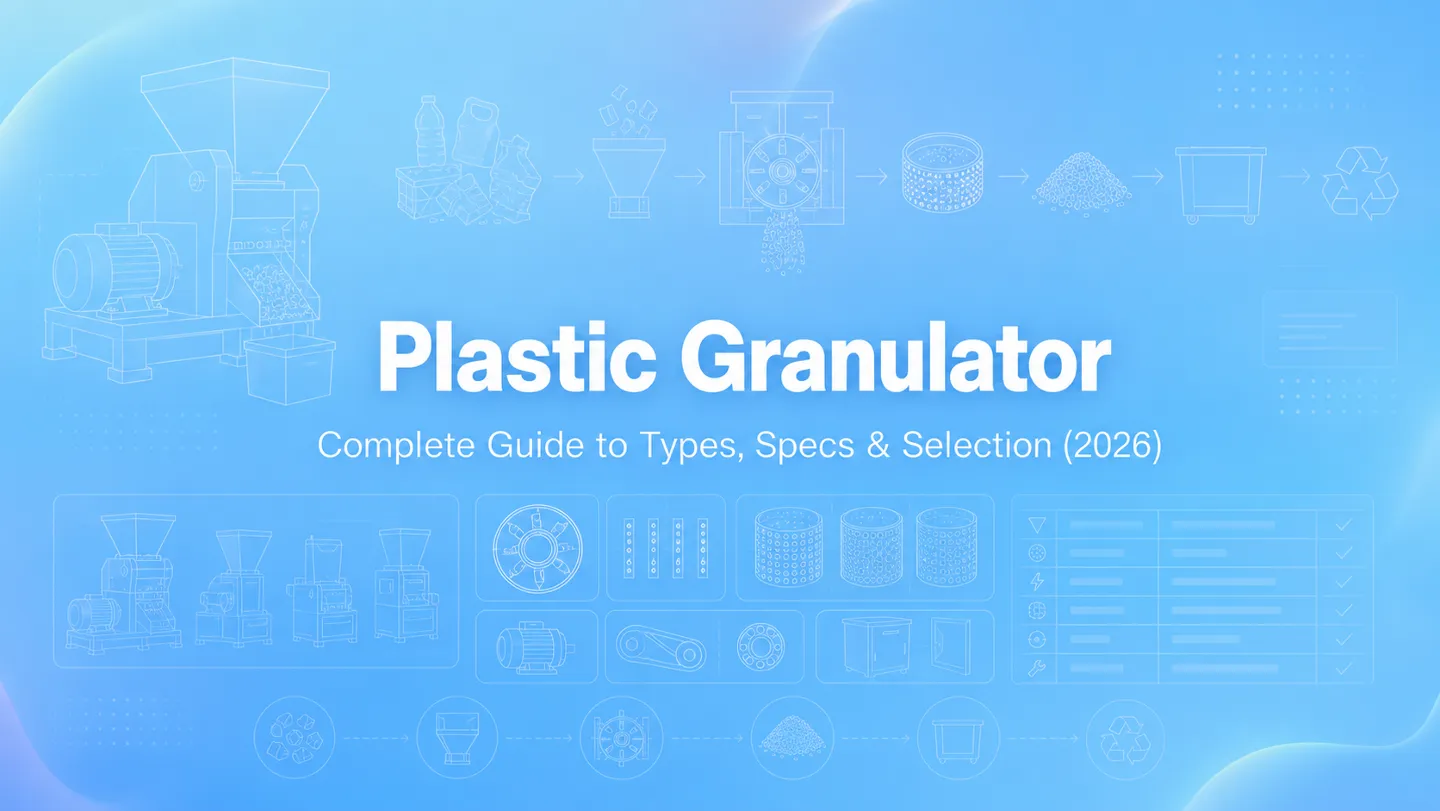
A granulator plastiku Redukuje odpady z plastiku — rurki, odlewki, butelki, rury, profile, folia — do jednolitych łusek o wymiarach 6–15 mm (nazywane regranulat) gotowych do mycia, kompozycji lub bezpośredniego wtrysku. Odpowiedni granulator zależy od rodzaju wejściowego materiału, przepustowości i procesu pośredniego; niewłaściwy wybór oznacza niską pojemność, częste zatory lub przedwczesne zużycie noży, co podwaja koszty operacyjne. Ta podręcznikowa instrukcja obejmuje 5 głównych typów granulatorów do plastiku, kluczowe specyfikacje, które mają znaczenie, wybór materiału-specific, kompromisy dotyczące materiału noży, wskaźniki energii, szczeble kosztów kapitałowych ($8,000–$200,000+), 5-krotny framework wyboru, powszechne problemy awaryjne, certyfikaty i różnice w cenie regionalnej.
Dla głębszych zagłębień w podtematach, zobacz nasze specjalistyczne przewodniki na temat selecting plastic granulator blades, wybierania odpowiedniego granulatora maszyny, granulatory do mokrego plastikuoraz 10 kluczowych specyfikacji do sprawdzenia. Artykuł ten pełni rolę kompleksowego punktu odniesienia łączącego wszystkie te tematy.
Szybkie decyzje: Granulator vs Crushers vs Shredder
Kupujący często mylą się między tymi trzema maszynami. Najprostsza zasada decyzji:
| Maszyna | Wielkość wejściowa | Rozmiar wyjściowy | Zastosowanie |
|---|---|---|---|
| Niszczarka do plastiku | Duże odpady wielkogabarytowe (rury, wiadra, baliki, elementy o długości 1+ m) | 40–150 mm chips | Pierwotna redukcja rozmiaru (pierwszy etap) |
| Granulator plastiku | Przedzwiertne chipsy, odlewki, butelki, mniejsze części (poniżej 200 mm) | 6–15 mm flakes | Druga redukcja rozmiaru (ostateczny rozmiar łusek) |
| Kruszarka do plastiku | Średniej wielkości odpady, często części puste (przekrycie obu) | 10–30 mm chunki | Pomiędzy ściskaczem a granulatorem; czasami używany samodzielnie do grubej ścianki rury |
Dla większości linii recyklingu plastiku przetwarzających przedselekcjonowane materiały o wymiarze wejściowym poniżej 200 mm (wtryskowe odlewki, łuski butelek, starte rury), granulator plastikowy jest odpowiednim wyborem. Dla odpadów nadmiernych (pełne rury, wiadra, baliki), zacznij od ściskacza i dostarcz materiał do granulatora. Czasami te terminy są używane zamiennie — “plastikowy ściskacz” i “plastikowy granulator” pokrywają się w nazewnictwie produktów między producentami — ale różnica w funkcji powyżej utrzymuje się w liniach produkcyjnych.
Czym jest granulator plastiku?
Granulator plastikowy to maszyna do precyzyjnej redukcji rozmiaru, która tnie odpady z plastiku na jednolite łuski o wymiarach 6–15 mm nazywane regranulatem. Standardowe granulatory plastikowe (również sprzedawane jako maszyny do granulowania plastiku, maszyny do granulowania plastiku lub w niektórych rynkach jako ściskacze plastiku) używają wysokiej prędkości wirnika z nożami tnącymi, które przechodzą przeciwko stałym nożom stołowym, napędzanym silnikiem o mocy 7.5–110 kW przy obrotach 400–800 RPM. Przeźroczysta siatka poniżej komory tnącej kontroluje rozmiar wyjściowych łusek. Regranulat z plastiku wyjście przez siatkę i dostarcza do następnego etapu procesu — mycia, kompozycji, suszenia lub wytwarzania granulatów.
Granulatory plastikowe różnią się od ściskaczy plastiku w dwóch sposóbach. Po pierwsze, granulatory obsługują mniejsze części wejściowe (poniżej 200 mm) przy wyższych prędkościach wirnika (400–800 RPM w porównaniu do 50–150 RPM dla ściskaczy); po drugie, granulatory produkują jednolite wyjście kontrolowane przez siatkę (6–15 mm), podczas gdy ściskacze produkują zmienną kawałki (40–150 mm). Większość linii recyklingu plastiku używa obu: ściskacza jako pierwszego etapu redukcji rozmiaru, a następnie granulatora dla ostatecznego rozmiaru łusek wymaganych przez wtrysk.
Jak działa granulator plastikowy (4-krotny proces)
- Podajnik materiałów — odpady z plastiku wchodzą do komory tnącej przez rurkę, taśmę transportową lub bezpośrednie połączenie obok prasy. Przepustowość jest kontrolowana przez czujniki lub dawkowanie operatora.
- Akcja cięcia — wysoki wirnik (zwykle 400–800 RPM) z 3–6 nożami tnącymi przechodzi przeciwko 2–3 stałym nożom stołowym. Scissor-like cutting action shears plastic into smaller pieces. Knife gap (the clearance between rotor blade and bed knife) is precisely set to 0.2–0.3 mm for clean cutting without metal-on-metal contact.
- Wymiary siatki — perforated screen (5–25 mm hole diameter) below the cutting chamber controls output flake size. Material below screen size passes through; oversized pieces stay in the chamber for additional cuts. Screen hole size determines final regrind specification.
- Wypisać — regrind płatków opuszcza przez siatkę do zbiornika zbiorczego lub przewodu pneumatycznego, który transportuje go do następnego etapu procesu (linia mycia, system suszenia lub zbiornika zasilania granulek).
Cały cykl od wejścia materiału do wyjścia łusek trwa 2–8 sekund w zależności od twardości materiału i rozmiaru siatki. Typowy przepustowość granulatora plastikowego w punkcie projektowym wynosi 100–3,000 kg/h w zależności od mocy silnika, średnicy wirnika i przetwarzanego materiału.
5 typów granulatorów plastikowych
1. Centralny granulator plastikowy
Centralny granulator plastikowy obsługuje odpady z plastiku z wielu linii produkcyjnych zebranych w centralnym miejscu. Typowa pojemność 500–3,000 kg/h z silnikiem o mocy 30–110 kW. Najlepszy dla: zakładów recyklingowych, MRF (material recovery facilities), i dużych zakładów produkcyjnych, gdzie odpady z wielu źródeł są konsolidowane. Koszt kapitałowy: $15,000–$80,000 w zależności od pojemności, materiału noży i poziomu automatyzacji. Najbardziej powszechna konfiguracja w dedykowanych operacjach recyklingu plastiku.
2. Granulator obok prasy
Zainstalowany bezpośrednio obok maszyny do wtryskowego formowania lub ekstrudowania, ten kompaktowy granulator przetwarza osady i sprężyny natychmiast po ich wytworzeniu. Typowa pojemność 50–300 kg/h z silnikiem o mocy 5,5–18,5 kW. Działa przy niższych prędkościach (300–500 obr./min) dla cichszej pracy i minimalnej ilości pyłu odpowiedniej dla środowiska produkcyjnego. Koszt inwestycyjny: $5,000–$25,000. Najlepszy dla: wtryskowników przetwarzających własne czyste odpady z zamkniętym obrotem recyklingu wewnętrznego. Wytwarzane płatki wracają do tej samej maszyny wtryskowej – typowe stężenie materiałów przetworzonych 15–30% mieszane z surowym polimerem.
3. Mokry granulator plastiku
A wilgotny granulator plastiku wtryskuje wodę do komory cięcia podczas działania. Woda chłodzi ostrza, zmywa zanieczyszczenia powierzchniowe z płatków, zmniejsza ilość pyłu i poprawia wydajność cięcia na brudnym lub zanieczyszczonym materiale. Typowa pojemność 500–2,500 kg/h z silnikiem o mocy 22–75 kW. Najlepszy dla: strumieni plastiku po konsumpcji (butelki, film, rury z powierzchniowymi zanieczyszczeniami), recyklingu płatków butelek PET, oraz każdej operacji, gdzie materiał wejściowy ma ziarno, pył lub etykiety, które korzystają z procesu mycia w trakcie produkcji. Koszt inwestycyjny: $20,000–$80,000 (wyższy niż suchy granulator ze względu na zarządzanie wodą).
4. Granulator plastiku o dużej wytrzymałości
zajmuje się grubszościannymi lub twardymi odpadami plastikowymi – rury HDPE, części samochodowe ABS, blachy PC, rury PVC, komponenty nylonowe, sztywne pojemniki. Wzmocniona oś wałka, większe łożyska i wytarte ostrza SKD-11 lub z węglików spiekanych przedłużają żywotność na trudnych materiałach. Typowa pojemność 800–3,500 kg/h z silnikiem o mocy 45–150 kW. Najlepszy dla: zakładów wytwarzających rury, recyklerów beczek, odzysku plastiku samochodowego. Koszt inwestycyjny: $35,000–$200,000 – górna granica obejmuje specjalne konfiguracje takie jak duży krążownik HDPE do rozdrabniania dla odpadów przemysłowych rur.
5. Specjalistyczny: Granulator PVC i krusher do rur
Granulatory PVC wymagają twardych noży (SKD-11 lub z węglików spiekanych) i systemu ssania pyłu, aby zarządzać wydzielaniem chloru podczas cięcia. Prędkość obrotowa wirnika wynosi 25–35% niższa niż w granulatorach HDPE (300–500 RPM), aby zapobiec nadmiernemu powstawaniu drobnych frakcji. W tej samej klasie maszyn znajdują się również zgniatacze rur — dodatkowo szerokie otwory zasilające do przyjmowania kawałków rur z górnego zgniatacza. Koszt kapitałowy: $25,000–$120,000 z odpowiednią konfiguracją PVC. Najlepsze do: recyklingu rur PVC, odpadów z podłóg winylowych, odzysku przewodów elektrycznych. — potwierdź, że ocena dotyczy Twojego materiału i rozmiaru ekranu. Oceny producenta są często najlepszymi przypadkami (czysty sztywny HDPE na ekranie 16 mm). Rzeczywista wydajność w rzeczywistych warunkach na ekranie 8 mm na zanieczyszczonym materiale może wynosić 30–50% mniej.
Specyfikacje granulatora plastiku, które mają znaczenie
Dokumenty producenta wymieniają 30+ specyfikacji. Te 8 są tymi, które rzeczywiście określają wydajność:
- Motor power (kW) — zazwyczaj 7,5–110 kW w zależności od przepustowości. Zasada praktyczna: 1 kW na 8–15 kg/h pojemności dla sztywnych plastików; 1 kW na 5–10 kg/h dla trudnych materiałów (PVC, ABS, nylon).
- Średnica wirnika (mm) — zazwyczaj 150–500 mm. Większy wirnik = wyższy moment obrotowy, ale niższe obroty. Dla grubszościannych materiałów, priorytetem jest średnica wirnika nad obrotami.
- Obroty wirnika — zazwyczaj 400–800 obr./min dla standardowych granulatorów; 300–500 obr./min dla ciężkich/PCA. Wyższe obroty = więcej cykli cięcia, ale więcej ciepła i hałasu.
- Liczba ostrz wirnika — zazwyczaj 3–6 ostrz. Więcej ostrz = gładziej cięcie, ale mniejszy pojedynczy kawałek na cięcie.
- Liczba noży stożkowych — zazwyczaj 2–3. Przestrzeń cięcia (odległość między wirnikiem a nożami stożkowymi) musi wynosić 0,2–0,3 mm dla czystego cięcia bez kontaktu z metalem.
- Rozmiar siatki (mm) — zazwyczaj 5–25 mm średnicy otworu. Standardowe wyjścia: 6 mm (premium pellet feed), 8 mm (ogólny cel), 12 mm (szybsza przepustowość, większy płatek), 16+ mm (tylko zmniejszenie objętości).
- Cutting chamber dimensions — szerokość i głębokość określają maksymalny rozmiar elementu wejściowego. Dla butelek HDPE, komora 350×500 mm typowa; dla odpadów rur, 600×800 mm lub większa.
- Przepustowość (kg/h) — potwierdź, że ocena dotyczy Twojego materiału i rozmiaru ekranu. Oceny producenta są często najlepszymi przypadkami (czysty sztywny HDPE na ekranie 16 mm). Rzeczywista wydajność w rzeczywistych warunkach na ekranie 8 mm na zanieczyszczonym materiale może wynosić 30–50% mniej.
Dla bardziej szczegółowej listy kontrolnej obejmującej twardość ostrz, dopuszczalny zużycie siatki, rezerwę momentu obrotowego silnika i funkcje PLC, zobacz nasze top 10 technicznych specyfikacji granulatora plastiku.
Wybór granulatora dostosowanego do materiału
Prawidłowa konfiguracja granulatora zmienia się znacznie w zależności od materiału wejściowego. Poniższa tabela pokazuje zalecane konfiguracje dla powszechnych plastików:
| Tworzywo | Najlepszy typ granulatora | Materiał ostrza | Obroty wirnika | Specjalne wymagania |
|---|---|---|---|---|
| HDPE / PP sztywny | Centralny lub mokry | Stal narzędziowa D2 | 500–700 | Standardowa konfiguracja |
| Granulat z butelek PET | Granulator mokry | D2 lub SKD-11 | 400–600 | Wtrysk wody do usuwania etykiet |
| Rury i profile z PVC | Ciężki sprzęt + odessanie pyłu | SKD-11 lub węglik | 300–500 | Niższe obroty do zmniejszenia pyłu + system odessania |
| Inżynieria ABS/PC | Ciężki sprzęt | SKD-11 | 400–600 | Zwiększony wirnik do wysokiego uderzenia |
| Nylon (PA6, PA66) | Ciężki sprzęt | Węglikowy | 300–500 | Węglikowe ostrza do ścieralnych wypełnień nylonowych |
| Mieszane odpady sztuczne | Centralny z ekranem bezpieczeństwa | SKD-11 | 400–600 | Wymagana detekcja metali na wstępie |
| Film (PE, PP) | Roter anty-zwijający się | D2 z profilem do cięcia filmu | 600–800 | Standardowe zawijanie i zatrzymanie granulatora – użycie projektu specyficznego dla filmu |
| Ścinek rur (po rozdrabniaczu) | Ciężki sprzęt do rozdrabniania rur | SKD-11 | 300–500 | Szeroki wtrysk do obsługi chipów |
Operacje przetwarzające wiele materiałów powinny konfigurować granulator do najbardziej wymagającego materiału w mieszaninie. Przełączanie rozmiaru ekranu lub konfiguracji ostrzy między materiałami jest wykonalne przez operatora, ale zajmuje 30–60 minut na każdą zmianę. Dedykowane granulatory jednomateriałowe zawsze przewyższają wielomateriałowe urządzenia w specyficznym materiale, na który są skonfigurowane.
Blaszki do granulatora z tworzywa sztucznego: Materiały, Wiek życia & Wybór
Blaszki do granulatora z tworzywa sztucznego (również nazywane nożami) są głównym elementem zużywalnym i największym pojedynczym elementem kosztów operacyjnych. Wybór ostrzy wpływa na przepustowość, jakość wyjściową, zużycie energii i częstotliwość konserwacji. Trzy poziomy materiałów ostrzy obejmują większość zastosowań:
- Stal narzędziowa D2 – standardowa opcja dla większości zastosowań granulatora z tworzywa sztucznego. Twardość HRC 58–62. Wiek życia 600–1,200 godzin pracy na HDPE/PP. Koszt: $80–$300 za ostrze w zależności od rozmiaru. Ostrze można szlifować 3–5 razy przed wymianą.
- SKD-11 stal narzędziowa do prac chłodnych — premiumna opcja dla twardych materiałów (ABS, PC, nylon, PVC). Twardość HRC 60–62. Żywotność 1 500–2 500 godzin. Koszt: $200–$600 za ostrze. Lepsza retencja krawędzi na materiałach ściernych; zalecana dla każdej operacji przetwarzającej więcej niż 1 000 kg/h.
- Ostre noże z węgla szlachetnego — specjalna opcja dla bardzo ściernych materiałów (nylony wypełnione szkłem, tworzywa sztuczne wzmocnione włóknami, zanieczyszczone strumienie). Żywotność 3 000–6 000 godzin. Koszt: $400–$1 200 za ostrze. Krawędź tnąca z węgla szlachetnego odporna na zużycie 3–5× lepiej niż D2, ale kosztuje 2–4× więcej od razu.
Wybór noży stołowych (stała belka tnąca) powinien być zgodny z materiałami. Both rotor blades and bed knives should match material grade — using D2 rotor blades against SKD-11 bed knives causes uneven wear and shortens both components’ lives.
Praktyczne wskazówki: dla pierwszego roku operacji na standardowym HDPE/PP, zacznij od noży D2, aby zarządzać kapitałem. Przejdź na SKD-11 w drugim roku, gdy już zmierzyłeś rzeczywistą żywotność noży na swoim materiale — 3-5× wydłużenie żywotności typowo zwraca różnicę w cenie noży w ciągu 6 miesięcy. Dla operacji na PVC, ABS lub nylonu, zacznij od SKD-11 od pierwszego dnia. Dla kompleksowych wskazówek dotyczących wyboru noży, w tym ustawienia rozstawu noży i procedur ponownego ostrzenia, zobacz nas przewodnik do wyboru noży do granulatora plastikowego.
Wskaźniki Zużycia Energii (kWh/Ton)
Zużycie energii granulatora plastikowego waha się 3–5× w zależności od materiałów i konfiguracji. Poniższe liczby są typowymi wskaźnikami dla dobrze utrzymanego sprzętu działającego w pobliżu projektowanej wydajności:
| Tworzywo | Typowe Zużycie Energii (kWh/Ton) | Notatki |
|---|---|---|
| HDPE sztywny (butelki, wiadra) | 40–60 | Najniższe zużycie energii wśród sztywnych plastików |
| PP sztywny (kapsle, skrzynki) | 45–65 | Podobne do HDPE |
| Granulat z butelek PET | 50–75 | Trochę wyższe ze względu na kruchność |
| Rury i profile z PVC | 70–110 | Zmniejszenie obrotów na tonę energii |
| ABS/PC (inżynieryjne) | 80–120 | Twardy materiał zwiększa obciążenie |
| Nylon (wypełniony) | 100–150 | Wypełnienie szkłem podwaja podstawową energię |
| Mieszane odpady sztuczne | 60–90 | Zależy od dominującego materiału |
| Ścinki rur (ciężki) | 70–100 | Gruba ściana zwiększa obciążenie silnika |
Dla granulatora 1 tony/godzina działającego 4,000 godzin rocznie na sztywnych odpadach HDPE przy $0.10/kWh, roczny koszt energii wynosi około $20,000–$24,000. Dla tej samej operacji na PVC, koszt energii wzrasta do $28,000–$44,000. Efektywność energetyczna znacznie się poprawia, gdy granulatory działają w pobliżu mocy nominalnej — działanie przy 50% mocy nominalnej typowo zwiększa koszt energii na tonę o 30–40%, ponieważ stałe straty (bezczynny silnik, wentylator, sterowniki) stają się większą częścią całkowitego zużycia.
Koszty inwestycyjne maszyn do granulacji plastiku
Cena granulatora plastikowego waha się 25× w zależności od konfiguracji. Trzy realistyczne poziomy obejmują 95% decyzji kupujących:
- Kompaktowy / obok prasy: $5,000–$25,000 — pojemność 50–300 kg/h, silnik 5.5–18.5 kW. Najlepszy dla: przetwórców wtryskowych przetwarzających odpady wewnętrzne, małych linii produkcyjnych, laboratoriów/R&D.
- Średni poziom centralny: $15,000–$80,000 — pojemność 500–2,000 kg/h, silnik 22–75 kW. Najlepszy dla: dedykowanych operacji recyklingu plastiku, MRF, średnich recyklingów odpadów produkcyjnych. Najczęściej sprzedawana konfiguracja na całym świecie.
- Ciężki przemysłowy: $35,000–$200,000+ — pojemność 1,500–3,500 kg/h, silnik 75–150 kW z wzmocnionym wałem, premium nożami, zaawansowanym PLC. Najlepszy dla: linii recyklingu rur, dużych reclaimerów PET, operacji twardego plastiku (ABS motoryzacyjny, blaty PC).
Dodaj 15–25% do kosztu sprzętu za instalację: roboty fundamentowe, podłączenie elektryczne, system ssania pyłu, połączenia przenośników z urządzeniami górnymi/dolnymi. Całkowity koszt projektu wynosi zazwyczaj 1.2–1.5× cenę sprzętu.
5-krotny ramowy wybór granulatora plastiku
Krok 1: Zdefiniuj materiał wejściowy i źródło
Jakie plastik wchodzi do granulatora? Butelki HDPE, PP runners, rury PVC, płatki PET, mieszane twarde? Każdy materiał wymaga różnego materiału noży, prędkości wirnika i rozmiaru siatki. Jakość źródła również ma znaczenie — czyste odpady poindustrialne pozwalają na noże D2 i standardową konfigurację; zanieczyszczone odpady pozużytkowe wymagają noży SKD-11, wyższego rezerwy momentu obrotowego silnika i możliwie wilgotnej operacji.
Krok 2: Oblicz wymagany przepływ
Zwiększ dzienny cel wolumenu o rozsądny margines bezpieczeństwa (1.3–1.5×). Linia przetwarzająca 8 ton/dni przez 8-godzinny zmianę potrzebuje średniej mocy 1,000 kg/h, co oznacza, że wymagana jest moc nominalna 1,300–1,500 kg/h, aby radzić sobie z szczytami i zmiennością materiału. Wydajność producenta zazwyczaj mierzona na idealnym materiale; rzeczywista pojemność na Twoim konkretnym materiale jest często 60–80% ratingu.
Krok 3: Określ rozmiar płatka wyjściowego
Dolny proces określa wymagany rozmiar płatka. Pelletowanie butelek PET do butelek wymaga 6–8 mm. Standardowe rPellets akceptują 8–10 mm. Eksperymentowanie rur lub duża objętość kompozycji mogą używać 12–15 mm. Mniejszy rozmiar siatki zmniejsza przepustowość o 15–30% — wybierz największą siatkę, która spełnia Twoje specyfikacje dolnego procesu.
Krok 4: Potwierdź warunki lokalizacji i mocy
Potwierdź dostępną powierzchnię podłogi (średnie granulatory wymagają 4–6 m²; ciężkie 8–12 m²), wysokość sufitu (3–4 m typowe), moc elektryczną (silnik + obciążenia pomocnicze do 130 kW dla ciężkich), i ograniczenia hałasu (75–95 dB w zależności od konfiguracji). Dla mokrych granulatorów potwierdź dostawę wody (200–500 L/h) i zdolność do odprowadzania ścieków.
Krok 5: Przeprowadź próbną operację materiału przed zakupem
Wyślij 50–200 kg Twojego konkretnego odpadu plastikowego do producenta na próbną operację. Potwierdź rzeczywistą przepustowość, jakość wyjściową, zużycie energii i hałas na Twoim materiale — nie na próbkę referencyjną producenta. Dostawcy odmawiający próbną operację materiału sygnalizują problemy z pojemnością. Dla kompleksowej instrukcji procesu zakupowego zobacz nasze przewodnik wyboru mielarki plastikowej.
Częste problemy z granulatorami plastiku i ich rozwiązania
Problem: Niska przepustowość mimo odpowiedniej mocy
Przyczyny: zardzewiałe noże (najbardziej powszechne), nieprawidłowy rozmiar noży (powyżej 0.4 mm zmniejsza efektywność cięcia o 30–50%), nieprawidłowy rozmiar siatki (zbyt mały dla materiału) lub mokry/zlepiony materiał zatkanie siatki. Rozwiązania: sprawdź i wyważaj noże co 600–1,200 godzin; potwierdź rozmiar noży za pomocą miernika do wkrętów miesięcznie; przejdź na większą siatkę, jeśli to pozwala dolny proces; dodaj przedwysychanie dla wilgotnych wejść.
Problem: Nadmierna ilość drobnych cząstek (pyłu) w wyjściu
Przyczyny: prędkość wirnika zbyt wysoka dla materiału, zardzewiałe noże zgniatające zamiast cięcia, kruche materiały (PET, PVC) przy standardowej prędkości wirnika. Rozwiązania: zmniejsz prędkość wirnika o 15–25% dla kruchych materiałów; zastąp zardzewiałe noże; zainstaluj ekran drobnych frakcji, aby oddzielić pył od regranulatu.
Problem: Częste przerwania obciążenia silnika
Przyczyny: nadmiernie duże elementy wejściowe, obce przedmioty (odłamki metalu, kamień), zużyte paski napędowe, silnik o za małej mocy dla rzeczywistej gęstości materiału. Rozwiązania: potwierdź rozmiar wejścia poniżej 200 mm; zainstaluj detektor metali upstream (obowiązkowy dla mieszanego odpadu); sprawdź paski napędowe co 500 godzin; zaktualizuj silnik, jeśli przetwarzasz gęstszy materiał niż oryginalna specyfikacja.
Problem: Nadmierna hałas i wibracja
Przyczyny: zużyte łożyska wirnika, niewyrównany wirnik (często z powodu wzoru zużycia noży), luźne śruby fundamentowe, pęknięty wał wirnika. Rozwiązania: zastąp łożyska przy pierwszym znaku degradacji; obróć lub zrównoważ noże co 200 godzin; sprawdź śruby fundamentowe miesięcznie; sprawdź wał wirnika na pęknięcia, jeśli pojawia się nagle wibracja.
Certyfikaty i standardy bezpieczeństwa
Standardy bezpieczeństwa granulatorów plastiku różnią się w zależności od regionu. Pięć certyfikatów ma znaczenie dla kupujących przemysłowych w 2026 roku:
- Znaczenie CE (UE) — wymagane dla każdego granulatora sprzedawanego na rynkach UE. Obejmuje Dyrektywę Maszynową 2006/42/EC, Dyrektywę Niskiego Napięcia oraz Dyrektywę EMC. Potwierdź, że certyfikat CE jest autentyczny (testowany przez trzecią stronę), a nie deklarowany samodzielnie.
- UL (USA) — certyfikacja Underwriters Laboratories dotycząca bezpieczeństwa elektrycznego. Wymagane przez większość towarzystw ubezpieczeniowych dla operacji przemysłowego recyklingu plastiku.
- Zgodność z OSHA (USA) — granulatory muszą spełniać standardy ochrony maszyn 29 CFR 1910: zamknięta komora cięcia, zabezpieczone drzwi, przycisk awaryjnego zatrzymania dostępny z pozycji operatora, przepisy lockout/tagout (LOTO) dla konserwacji.
- ISO 12100 (Bezpieczeństwo Maszyn) — międzynarodowy standard oceny ryzyka. Większość granulatorów certyfikowanych zgodnie z CE jest również zgodna z ISO 12100.
- ISO 14001 (Zarządzanie Środowiskiem) — dla operacji, a nie dla sprzętu. Wymagane przez wielu dużych przemysłowych kupców granulatów recyklingowych — certyfikat ISO 14001 producenta granulatora wspiera ścieżkę certyfikacji Twojej instalacji.
Zawsze potwierdzaj certyfikaty niezależnie — żądaj numerów certyfikatów i potwierdź z organem wydawającym.
Podstawki cenowe regionalne dla granulatorów plastikowych
Ceny granulatorów plastikowych różnią się 2–3-krotnie w zależności od regionu. Te same specyfikacje generują różne koszty całkowite w zależności od miejsca produkcji, kosztów transportu, cła i wymagań wsparcia po sprzedaży:
| Region źródłowy | Granulator średniego zasięgu (1 t/h, 45 kW) | Granulator o dużej wytrzymałości (2,5 t/h, 110 kW) | Rozważania |
|---|---|---|---|
| Bezpośrednio z Chin | $15,000–$30,000 | $45,000–$90,000 | Najniższa cena, najdłuższy czas dostawy (90–150 dni), wymagana dokładna ocena dostawcy |
| Bezpośrednio z Indii | $12,000–$25,000 | $40 000–$80 000 | Niewyższa cena niż w Chinach dla niektórych konfiguracji, ustanowiony rynek eksportowy |
| Turcja / Europa Wschodnia | $25,000–$50,000 | $70,000–$140,000 | Średnia cena z certyfikatem CE UE, szybsza dostawa na rynki UE |
| Zachodnia UE (Niemcy, Włochy) | $45,000–$90,000 | $120,000–$250,000 | Cena premium, wsparcie techniczne 10+ lat, pełna zgodność z CE/UL, szybsze dostawy części zamiennych |
| Ameryka Północna | $50 000–$100 000 | $130 000–$280 000 | Ceny z segmentu premium, najsilniejsza lokalna sieć serwisowa, projekty zgodne z wymogami OSHA |
Dla większości nabywców przemysłowych spoza Chin i Indii zaopatrzenie z Turcji lub Europy Wschodniej zapewnia najlepszy stosunek ceny do jakości — sprzęt ten jest znacznie tańszy niż urządzenia z krajów zachodniej części UE lub Ameryki Północnej posiadające podobny certyfikat CE, a terminy dostaw są krótsze niż w przypadku bezpośredniego importu z Chin. Bezpośredni import z Chin sprawdza się w przypadku nabywców dysponujących wiedzą techniczną pozwalającą na weryfikację jakości oraz gotowych pogodzić się z dłuższymi terminami logistycznymi.
Najczęściej zadawane pytania
Co to jest granulator plastikowy?
Rozdrabniacz do tworzyw sztucznych to precyzyjna maszyna do rozdrabniania, która tnie odpady z tworzyw sztucznych na jednolite płatki o wielkości 6–15 mm, zwane „regrindem”. Standardowe w branży granulatory do tworzyw sztucznych wykorzystują szybkobieżny wirnik (400–800 obr./min) wyposażony w 3–6 ostrzy tnących, które współpracują z 2–3 stałymi nożami stacjonarnymi, napędzany silnikiem o mocy 7,5–110 kW. Perforowane sito umieszczone poniżej komory tnącej reguluje wielkość wytwarzanych płatków. Na niektórych rynkach granulatory do tworzyw sztucznych są również sprzedawane jako maszyny do granulacji tworzyw sztucznych, maszyny do rozdrabniania tworzyw sztucznych lub kruszarki do tworzyw sztucznych — ich funkcja jest taka sama.
Jaka jest różnica między granulatorem a tnikiem plastikowym?
Rozdrabniacze do tworzyw sztucznych przetwarzają duże, nieporęczne odpady (rury, beczki, bele o długości powyżej 1 metra) i wytwarzają wióry o wielkości 40–150 mm przy niskich prędkościach obrotowych wirnika (50–150 obrotów na minutę). Granulatory do tworzyw sztucznych przetwarzają wstępnie rozdrobnione wióry lub mniejsze elementy (poniżej 200 mm) i wytwarzają płatki o wielkości 6–15 mm przy wysokich prędkościach obrotowych wirnika (400–800 obr./min). Większość linii do recyklingu tworzyw sztucznych wykorzystuje oba urządzenia: najpierw rozdrabniacz do wstępnego zmniejszenia rozmiarów, a następnie granulator do uzyskania końcowej wielkości płatków wymaganej na kolejnych etapach procesu, takich jak mycie lub wytłaczanie.
Ile kosztuje granulator do recyklingu plastiku?
Cena granulatora plastikowego ma trzy poziomy: kompakt/obok prasy $5,000–$25,000 (50–300 kg/h, recykling odpadów z wewnętrznej iniekcji); średni zakres centralny $15,000–$80,000 (500–2,000 kg/h, dedykowane operacje recyklingowe); przemysłowy $35,000–$200,000+ (1,500–3,500 kg/h, recykling rur/dętek/twardych plastików). Dodaj 15–25% za instalację. Ceny bezpośrednio z Chin są o 30–60% niższe niż odpowiedniki z Europy Zachodniej/NA, ale wymagają dłuższych terminów dostawy i starannego oceny dostawcy.
Jak długo trwają noże w granulatorze do recyklingu plastiku?
Ostrza ze stali narzędziowej D2 (standardowe) wytrzymują 600–1 200 godzin pracy przy obróbce HDPE/PP; można je ostrzyć 3–5 razy przed wymianą przy wydajności $80–$300 na ostrze. Ostrza z SKD-11 (klasa premium) wytrzymują 1 500–2 500 godzin przy wydajności $200–$600 na ostrze — zalecane do twardych materiałów (ABS, PC, nylon, PVC) lub do pracy przy wydajności powyżej 1 000 kg/h. Ostrza z węglików spiekanych do materiałów o wysokiej ścieralności wystarczają na 3 000–6 000 godzin przy wydajności $400–$1 200 na ostrze. Zobacz naszą przewodnik do wyboru noży do granulatora plastikowego aby zapoznać się z zaleceniami dotyczącymi poszczególnych materiałów.
Jaka jest różnica między mokrym a suchym granulatorem plastikowym?
Granulator mokry do tworzyw sztucznych wtryskuje wodę do komory tnącej podczas pracy — woda chłodzi ostrza, zmywa zanieczyszczenia z powierzchni płatków, ogranicza pylenie oraz poprawia jakość cięcia zanieczyszczonego materiału. Najlepiej sprawdza się w przypadku strumieni odpadów pokonsumpcyjnych (butelki z etykietami, zabrudzone odpady rurowe, mieszane zanieczyszczenia). Granulator suchy pracuje bez wody — zajmuje mniej miejsca, nie wymaga utylizacji ścieków i nadaje się do czystych odpadów poprzemysłowych. Większość linii do recyklingu butelek PET wykorzystuje granulatory mokre; w recyklingu odpadów z wtrysku stosuje się głównie granulatory suche. Zobacz naszą Przewodnik po rozdrabniaczach do mokrego tworzywa sztucznego.
Czy granulator do recyklingu plastiku może przetwarzać PVC?
Tak, z odpowiednią konfiguracją. Granulatory PVC wymagają: noży SKD-11 lub z węglików spiekanych (PVC jest kruchy i ścieralny); niższej prędkości wirnika (300–500 RPM w porównaniu do 600–800 dla HDPE) w celu zapobiegania nadmiernemu powstawaniu drobnych frakcji; zintegrowanego systemu ssania pyłu do zarządzania wydzielaniem chloru podczas cięcia; oraz materiałów konstrukcyjnych odpornych na kwas. Standardowe granulatory konfiguracji HDPE działające na PVC mają 25–35% niższą wydajność i zużywają noże 2–3× szybciej. Dla operacji o dużej zawartości PVC, specyfikuj konfigurację PVC od zakupu, zamiast próbować dostosować standardowy granulator.
Jakie rozmiary kawałków powinna wytworzyć plastikowa granulacja?
Wielkość płatków na wyjściu jest ustalana przez sito zamontowane poniżej komory tnącej. Standardowe rozmiary: 6 mm (pellety premium do recyklingu typu „butelka do butelki”), 8 mm (pellety rPellets ogólnego przeznaczenia do formowania wtryskowego), 10 mm (większość linii do mycia), 12 mm (mieszanki do wytłaczania rur), 16+ mm (wyłącznie do redukcji objętości, nie do bezpośredniej ekstruzji). Mniejsze sito zmniejsza wydajność o 15–30% — należy wybrać największe sito, które spełnia wymagania specyfikacji dalszego procesu.
Jak utrzymać w dobrym stanie granulator plastikowy?
Codziennie: oględziny komory tnącej, kontrola szczeliny między nożami (0,2–0,3 mm), stan sita. Co tydzień: kontrola ostrości ostrzy, napięcie paska napędowego, monitorowanie temperatury łożysk. Co miesiąc: pełny obrót ostrzy/ostrzenie w razie potrzeby, wymiana sita w przypadku powiększenia otworów, kontrola wyważenia wirnika. Co kwartał: ocena konieczności wymiany łożysk, pełna kontrola wirnika. Co roku: pełny przegląd wirnika, kontrola silnika, weryfikacja instalacji elektrycznej. Systematyczna konserwacja wydłuża żywotność sprzętu z typowych 8–10 lat do 12–15 lat oraz zapobiega nieoczekiwanym awariom, które stanowią 70%+ całkowitych kosztów przestojów.
Wniosek
Wybór odpowiedniego rozdrabniacza do tworzyw sztucznych zależy od rodzaju materiału wsadowego, wydajności, wymaganej wielkości płatków na wyjściu oraz skali działalności. Pięć typów granulatorów pokrywa większość zastosowań: centralne (zakłady recyklingowe), przyprasowe (odpady z wtrysku), mokre (zanieczyszczone odpady pokonsumpcyjne), do ciężkich zastosowań (rury/twarde tworzywa sztuczne) oraz specjalistyczne do PVC. Koszt inwestycyjny wynosi od $5 000 do $200 000+; zużycie energii wynosi 40–150 kWh/tonę w zależności od materiału. Największe błędy popełniane przez nabywców to dokonywanie zakupów w oparciu o wydajność znamionową zamiast wyników testów materiałowych, wybieranie ostrzy D2, gdy materiał wymaga ostrzy SKD-11 lub węglikowych, oraz pomijanie certyfikatów (CE, UL, OSHA), które mają wpływ na ubezpieczenie i wartość odsprzedaży.
Firma Energycle produkuje pełną gamę rozdrabniaczy do tworzyw sztucznych — centralnych, montowanych przy prasie, mokrych, o zwiększonej wytrzymałości oraz specjalistycznych modeli do PVC, o wydajności od 100 kg/h do 3 500 kg/h. Skontaktuj się z naszym zespołem inżynierii biorąc pod uwagę specyfikacje materiału, docelową wydajność oraz wymagania dotyczące kształtu płatków — zaproponujemy odpowiednią konfigurację rozdrabniacza wraz ze szczegółową ofertą cenową, doborem ostrzy, rozmiarem sit oraz protokołem testów materiałowych.
Przemysłowy rozdrabniacz tworzyw sztucznych: kiedy jest potrzebny
Przemysłowy granulator do tworzyw sztucznych to urządzenie klasy ciężkiej, zaprojektowane z myślą o ciągłej pracy z dużą wydajnością w zakładach recyklingowych oraz dużych zakładach formowania wtryskowego. W porównaniu z urządzeniami montowanymi przy prasach granulator przemysłowy przetwarza 500–3 000 kg/h, przyjmuje nieporęczne odpady o wymiarach do 800 mm bez konieczności wstępnego cięcia oraz wykorzystuje silniki o mocy 75–250 kW z wzmocnionymi wirnikami, które radzą sobie z twardymi tworzywami sztucznymi, odcinków rur oraz bel z odpadów pokonsumpcyjnych.
Warto wybrać przemysłowy rozdrabniacz do tworzyw sztucznych, jeśli spełniony jest którykolwiek z poniższych warunków:
- Stała wydajność powyżej 500 kg/h — urządzenia przyprasowe i jednostki centralne nie nadążają
- Surowce mieszane — butelki, bryły, oczyszczanie, rury, blachy – wszystko na tej samej linii
- Działalność przez całą dobę, 7 dni w tygodniu — cykl pracy wymagający zastosowania łożysk przemysłowych, uszczelnionej skrzyni przekładniowej oraz wzmocnionej komory tnącej
- Sekcja końcowa zasila linię do granulacji — przemysłowe rozdrabniacze zapewniają wystarczająco jednolitą wielkość płatków, by można je było podawać do wytłaczarki bez konieczności ponownego rozdrabniania
Informacje na temat parametrów technicznych, kosztów inwestycyjnych oraz porównania głównych konfiguracji klasy przemysłowej można znaleźć w sekcjach „Poziomy kosztów inwestycyjnych” i „Szczegóły dotyczące materiałów” powyżej.
Complete Recycling Lines with Granulators
Granulatory rzadko działają w pojedynkę. Oto najczęstsze konfiguracje linii, gdzie granulator pełni rolę kluczowego elementu:
PET Bottle Recycling Line
Rozpakowacz balów → usuwacz etykiet → mokry granulator → gorąca mycie → myjka tarczowa → płukanie → odwadnianie → suszenie → sortowanie płatków. Wyjście: czyste płatki PET do butelki do butelki lub ekstruzji włókien. Zobacz nasze PET bottle granulator selection guide I Netherlands PET line case study.
PE/PP Film Recycling Line
Shredder → wet granulator → friction washer → sink-float tank → dewatering → drying → peletyzacja. Output: PE/PP pellets. See our BOPP film recycling line I cutter compactor granulating line.
Linia do recyklingu sztywnego plastiku
Shredder → granulator → washer → dryer → color sorter → granulator. Output: clean rigid plastic pellets ready for injection molding. See our rigid PP/HDPE pelletizing process guide.
PVC Pipe Recycling Line
Kruszarka → granulator pionowy → separator metali → rozpryskiwacz → mieszalnik → ekstruder. Wyjście: kompozyt rPVC do nowych rur i profili. Nasze Granulator rur PVC handles pipes up to Ø600 mm diameter.
Urządzenia i akcesoria do granulatora
Pełna instalacja granulatora obejmuje te komponenty wsparcia:
- Detektory metali/separatory — chronią ostrza przed zanieczyszczeniem metalicznym (obowiązkowe dla strumieni post-konsumenckich)
- Przenośniki taśmowe lub systemy dozowania pneumatycznego — automatyczne przetwarzanie materiałów dla centralnych instalacji
- Systemy dmuchawy i cyklonu — evacuują granulki z maszyny do zbiorników magazynowych
- Ochrona przed hałasem — zmniejsza hałas do <75 dB dla instalacji sąsiednich operatora
- Systemy zbierania pyłu — łapią unoszące się drobiny, szczególnie ważne dla przetwarzania PVC
- Maszyny do szlifowania ostrzy — umożliwiają wewnętrzne ostrzenie, zmniejszając koszty ostrzy o 60–70%
Szczegółowy przegląd znajdziesz w naszej instrukcji urządzeń i akcesoriów do granulatora.
Zastosowania przemysłowe
Granulatory służą każdemu sektorowi produkującemu lub recyklingowi plastiku:
- Formowanie wtryskowe — ponowne rozdrobnienie półfabrykatów i odrzutów bezpośrednio przy prasie pozwala na powrót 100% odpadów do produkcji
- Formowanie ciśnieniowe — obróbka końcowa i odpady z butelek, pojemników i zbiorników
- Wyrzucenie — obróbka krawędzi, odpady startowe i nie spełniające specyfikacji rur, profili i arkuszy
- Formowanie termiczne — odpady szkieletowe z produkcji kubków, blistrów i blachówek
- Ośrodki recyklingu — przetwarzanie plastików pozużytkowych i po przemysłowym z 500–3,000 kg/h
- Automobilowy — recykling osłon, desek rozdzielczych i wykładzin wewnętrznych
- Budowa — recykling rur PVC, profili okiennych i membran dachowych
Dla szczegółowych wskazówek dotyczących zastosowań według rodzaju materiału, przeczytaj nasz maszyny do granulacji w rozwiązaniach recyklingowych przegląd i zastosowania od folii do grubej blachy.
Powiązane zasoby
- Jak wybrać odpowiednią maszynę do granulacji tworzyw sztucznych
- Top 10 Specyfikacji Technicznych Maszyny do Granulacji Plastiku
- Przewodnik do wyboru noży do granulatora plastikowego
- Mokry granulator plastikowy: Przypadki użycia i konfiguracja
- Przewodnik do wyboru mielarki plastikowej
- Duży średnicowy krążownik HDPE (Produkt)
- Mokry granulator plastikowy (Produkt)
- Zintegrowana maszyna tnąco-granulująca (Produkt)
- Maszyna do recyklingu plastiku: Kompletny przewodnik
- Przewodnik cen maszyn recyklingowych
