

Data reviewed: 12 August 2026. PVC production and disposal statistics are often combined from sources with different years, regions and definitions. This guide separates global all-plastics data from PVC-specific European programme data and explains what each number can—and cannot—show.
Verified figures and their scope
| Metrisch | Reference year | Reported value | Scope and limitation |
|---|---|---|---|
| Global plastics production | 2019 | 460 million tonnes | All plastics; OECD estimate, not PVC production alone |
| Global plastic waste | 2019 | 353 Millionen Tonnen | All plastics; OECD estimate |
| Ultimately recycled plastic waste | 2019 | 9% | All plastics after recycling losses; not a PVC recycling rate |
| Incinerated plastic waste | 2019 | 19% | All plastics; global OECD model |
| Landfilled plastic waste | 2019 | Almost 50% | All plastics; sanitary-landfill category in OECD reporting |
| Mismanaged plastic waste | 2019 | 22% | All plastics; uncontrolled dumping, open burning or leakage |
| PVC waste recycled within VinylPlus | 2025 | 765,972 tonnes | European VinylPlus framework; not global PVC recycling |
Sources: the OECD Global Plastics Outlook and VinylPlus Progress Report 2026 highlights. Values are reproduced with their original scope rather than blended into a new global PVC rate.
Why there is no single current “global PVC production” number here
Public PVC figures come from resin-production estimates, demand forecasts, polymer consumption, converter use and trade data. They may cover virgin resin only or include compounds and recycled content; regions and calendar years also differ. Commercial market reports often publish estimates without a fully accessible method.
A defensible global PVC production value should identify the reporting organisation, year, geography, unit, product boundary and whether the method is available. Without those fields, a precise-looking value can mislead comparisons.
What the OECD numbers mean
The OECD estimated that annual global plastics production rose from 234 million tonnes in 2000 to 460 million tonnes in 2019, while plastic waste increased from 156 million tonnes to 353 million tonnes. After accounting for recycling losses, it reported that 9% of plastic waste was ultimately recycled.
These figures provide global context for plastics as a whole. They must not be presented as PVC-specific production, disposal or recycling rates. PVC has different product lifetimes and applications from short-lived packaging polymers; construction products can remain in use for decades, so annual resin production and annual PVC waste generation are not interchangeable.
What the latest VinylPlus figure means
VinylPlus reports that 765,972 tonnes of PVC waste were recycled within its framework in 2025. Its public summary states that 58.8% was pre-consumer waste and 41.2% was post-consumer waste. The report is a current, auditable measure of the programme’s European activity.
It is not the total amount of PVC recycled worldwide, the total PVC waste generated in Europe or a global recycling rate. Programme boundaries, participating countries, data verification and counted streams should remain attached whenever the number is quoted.
PVC applications make waste timing difficult to compare
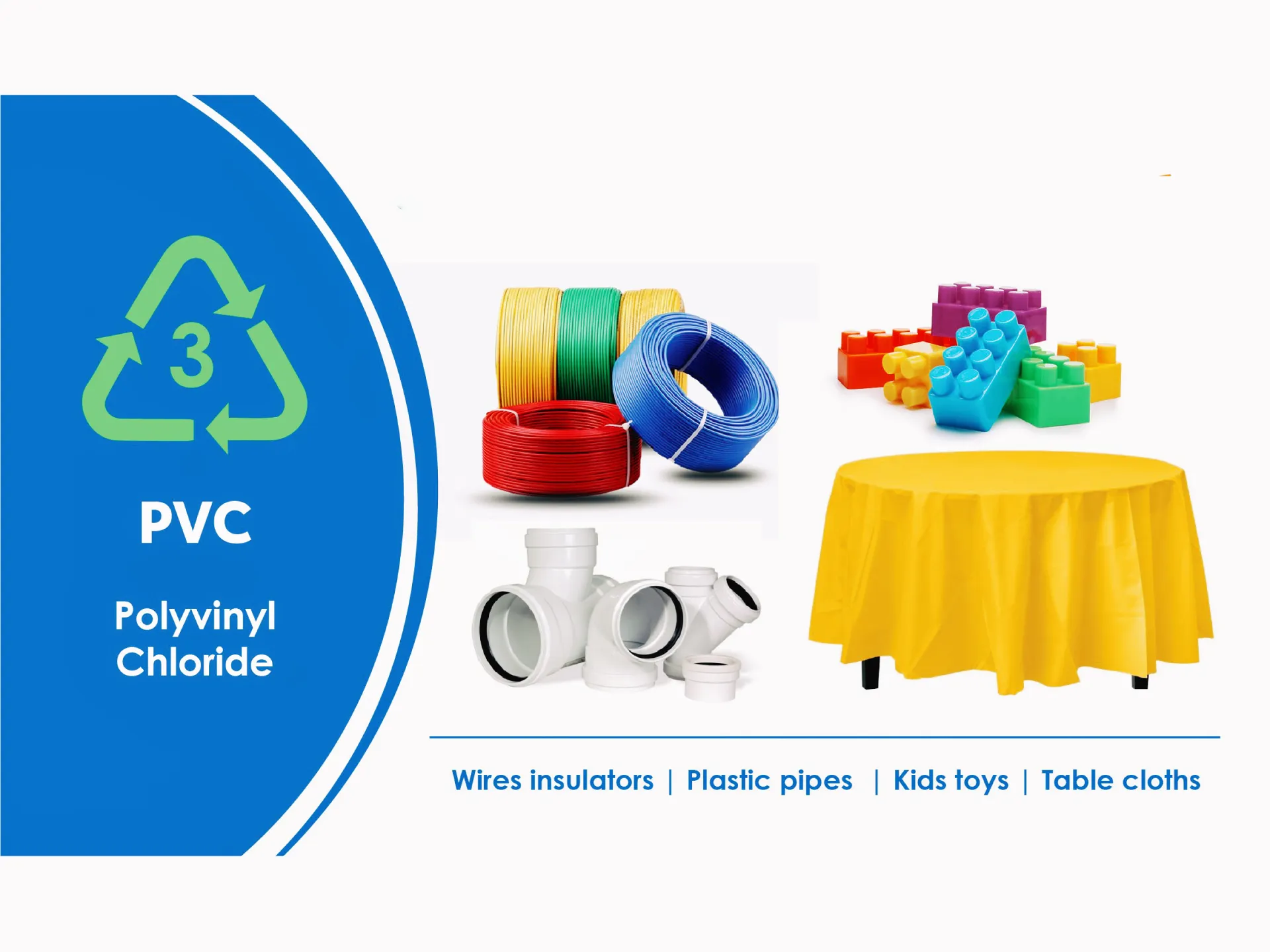
PVC is used in long-life building products such as profiles, pipes, flooring and cables, as well as shorter-life packaging and consumer products. Additives, fillers, plasticisers, stabilisers, colours and composite construction vary across these applications.
A production total for one year does not become waste in the same year. A useful material-flow study needs product lifetimes, imports and exports, stock in use, demolition activity and collection. This is why a production number should not be combined directly with a current recycling tonnage to calculate a PVC recycling percentage.
Disposal terms must be defined
“Disposal” can mean landfill only, or it can be used loosely for all non-recycled material. OECD separates recycling, incineration, sanitary landfill and mismanaged waste for its 2019 all-plastics model. National statistics may use different categories, especially where energy recovery is reported separately.
When comparing PVC data, check whether incineration includes energy recovery, whether exported waste is assigned to the exporting or receiving country, and whether recycling is measured at collection, sorting input or accepted recyclate output.
Why PVC matters in PET bottle recycling
PVC is a critical contaminant in PET recycling because both materials commonly report to the sink fraction in a water-based tank. Density separation can remove many floating PE or PP closures from sinking PET, but it cannot reliably split PVC from PET.
PVC can degrade under PET processing conditions and affect colour and material properties. The allowable level depends on the buyer, application and test method rather than one universal threshold. The Association of Plastic Recyclers’ PET rigid design guidance treats PVC components as detrimental to PET reclaiming.
See the separate technical article on PVC contamination in PET bottle recycling zur Detektion und Prozesskontrolle.
Wie Recycler PVC-haltige Ströme kontrollieren
- Definieren Sie den Strom: Behalten Sie PET-Flaschen, PVC-Profilen, Rohren, Kabel, Bodenbelägen und gemischten festen Abfällen unter getrennten Einfuhrvorschriften, wo praktisch.
- Sortieren vor dem Zerkleinern: entfernen Sie erkennbare nichtzielgerichtete Produkte, solange sie groß genug sind, um sie zu erkennen.
- Verwenden Sie validierte Detektion: optische oder andere Sensor-Sortierung sollte auf tatsächliche Farbe, Form, Etiketten und Durchsatz getestet werden.
- Anwenden Sie die Dichte-Trennung korrekt: verwenden Sie sie für kompatible Schwimm-/Tiefgang-Paare, nicht als Beweis dafür, dass PET und PVC getrennt wurden.
- Kontrollieren Sie Additive und Altprodukte: definieren Sie beschränkte Substanzen und Anwendungen mit dem Abnehmer und den anwendbaren Vorschriften.
- Testen Sie die Ausgänge: verwenden Sie ein Laborverfahren und eine Frequenz, die den Spezifikationen des Käufers entsprechen.
Ausrüstung macht nicht jeden PVC-Strömung gleichwertig
A Waschlinie fur starre Kunststoffe kann für eine definierte PVC- oder gemischte-feste Fütterung konfiguriert werden, aber die Reinigung beseitigt die Zielkontamination der Oberfläche; sie löscht nicht die Polymer-, Additiv- oder Produktionshistoriedifferenzen. Ein fester PVC-Profil-Strömung und ein flexibles PVC-Kabel-Komplex könnten unterschiedliche Sortierung, Größe reduzieren, Staubkontrolle und Ausgänge erfordern.
Wählen Sie Schredder, Granulator, Wascher, Trenner und Trockner nur nach Dokumentation des Materials und der endgültigen Spezifikation. Halten Sie ein trockenes Massenbilanz von Futter, Abfall und angenommenem Produkt bei, damit Recyclingansprüche auf den tatsächlichen Ausgang beziehen.
Wie man PVC-Statistiken verantwortungsvoll zitiert
- nennt den ursprünglichen Verleger und verlinkt die genaue Quelle;
- geben Sie das Referenzjahr, die Region und den Polymer-Bereich an;
- unterscheiden Sie Produktion, Verbrauch, Müllentstehung, Sammlung und angenommenes Recyclingmaterial;
- geben Sie an, ob die Daten gemessen, von Teilnehmern berichtet oder modelliert wurden;
- verwandeln Sie keine Programmtonnage in eine globale Recyclingrate um;
- zeigen Sie das Datum an, wenn die Daten-Tabelle zuletzt überprüft wurde.
Häufig gestellte Fragen
Wie viel PVC wird weltweit jährlich produziert?
Veröffentlichte Schätzungen variieren je nach Jahr und Produktgrenze. Dieser Artikel wiederholt keinen einzigen Wert ohne eine aktuelle, transparente Quelle, die Resin, Compounds, recycelten Inhalt und Geografie definiert.
Ist die Recyclingquote 9% der OECD eine PVC-Recyclingquote?
Nein. Es ist die OECD-Schätzung für alle globalen Kunststoffmüll in 2019 nach Recyclingverlusten, nicht eine PVC-spezifische Rate.
Kann ein Sink-Float-Tank PVC aus PET entfernen?
Nicht zuverlässig, da beide im Wasser häufig sinken. PET-Recycler benötigen vorgelagerte Sortierung, validierte Detektion und Ausgangstestung zur PVC-Kontrolle.
Verwenden Sie scoped Daten in Projektentscheidungen
Für ein PVC-Recyclingprojekt, stellen Sie Energycle mit dem Produktstrom, der Region, der jährlichen gesammelten Masse, den Additivinformationen und der Käuferspezifikation zur Verfügung. Statistiken können Kontext schaffen, aber Equipmentskapazität und Outputansprüche müssen aus repräsentativen Materialversuchen stammen.
